
Reviewed · MOSTAR TOURS
Mostar Shelters tour in Mostar
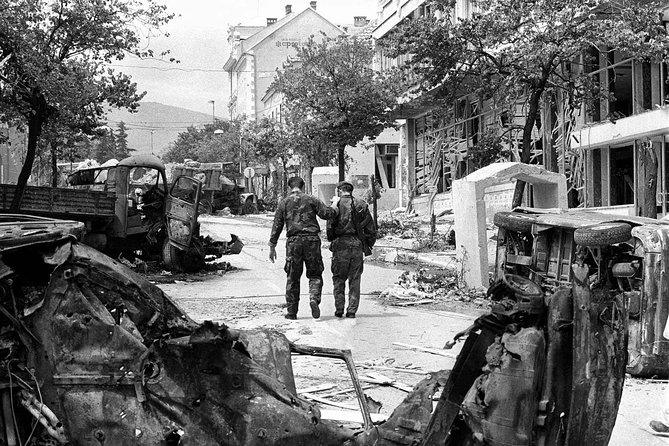
Mostar’s famous bridge is only part of the story. This tour takes you beyond the postcard center to artillery positions, trench lines, and damaged urban areas tied to the 1992 to 1995 war. Along the way, a local guide explains how people lived through the fighting and what happened afterward.
I like two things right away: the mix of driving and short walks lets you cover more ground than a standard city walk, and guides such as Miran and Dario use photographs, video, and personal stories to make a complicated subject easier to follow. The views from the mountain cross are another strong point.
The subject is painful, and the tour does not soften it. That is the point, but it may feel heavy if you are looking for a light afternoon activity. The outing can also run closer to three hours, so leave room in your schedule.
Key points about Mostar Shelters
- Wartime Mostar beyond the Old Bridge: Visit places connected with artillery fire, trenches, and the urban front line.
- A half-driving, half-walking format: Reach sites outside the center without giving up the chance to walk and look around.
- Guides who explain the human cost: Miran and Dario use personal stories, images, and video as part of the commentary.
- A mountain view over the city: The stop near the cross offers a different angle on Mostar and its surrounding hills.
- Small-group setting: The maximum group size is 16 people, which gives the guide room to handle questions.
- Strong value at $41.20: Hotel pickup is included from selected hotels, and the tour is offered at several times during the day, with the listed start at 5:00 pm.
Why Mostar’s war story belongs in your visit
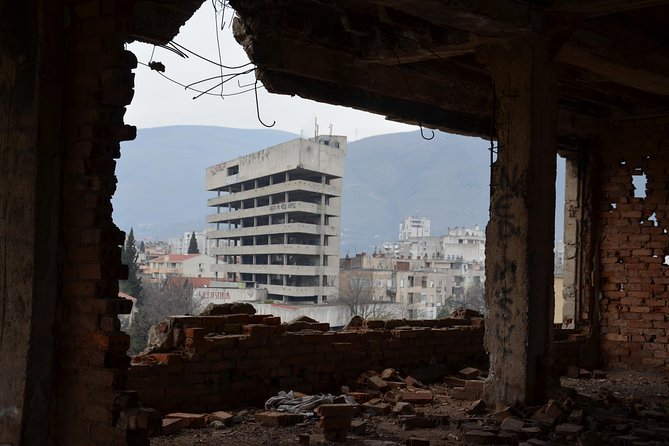
Mostar is easy to reduce to its stone bridge, river, old lanes, and souvenir shops. Yet bullet holes and burned buildings remain visible in and around the center. If you look at them without context, you may understand that fighting took place here but not why certain streets, buildings, and hills mattered.
Mostar Shelters is designed to answer those questions. It focuses on the city’s experience during the Bosnian War, rather than trying to cover every part of the wider breakup of Yugoslavia. That narrower focus is useful. You get a clearer picture of how the conflict affected Mostar itself, how front lines shaped daily life, and how the damage still affects the city’s appearance.
The tour also addresses what happened to people after the war. That matters because a war tour can otherwise become a tour of ruins, with the human story pushed aside. Here, the guide connects military positions and damaged buildings with the people who lived through them.
I would treat this as a serious history experience, not a sightseeing stop with a dramatic title. The subject calls for attention and respect. If you are willing to spend an afternoon thinking about recent European history, it can give the rest of your Mostar visit a sharper focus.
A few more things to do around Mostar
- From Dubrovnik: Mostar and Kravica Waterfall Day Trip
★ 4.7 · 4,709 reviews - Dubrovnik: Kravica Waterfalls, Mostar and Pocitelj Day Trip
★ 4.5 · 3,045 reviews - Dubrovnik: Mostar & Kravica Waterfalls Day Trip
★ 4.8 · 1,970 reviews
Starting at Onešćukova 32
The stated meeting point is Onešćukova 32 in Mostar, with the tour ending back there. The listed start time is 5:00 pm, though the experience is offered at multiple times during the day according to availability. Hotel pickup is included from selected hotels, so check your accommodation details before assuming a vehicle will come to you.
A mobile ticket keeps the arrival simple. Confirmation is sent at booking, and at least two people are required for a booking. If you are traveling alone, this minimum is worth checking before you commit to the date.
The tour is conducted in English and includes live commentary. Since much of the explanation comes while driving, the vehicle is not just transport between stops. It is part of the teaching format, letting the guide put each site into a larger story before you arrive.
The group limit is 16 people. That is not a private tour, but it is small enough to keep the guide’s explanation personal and allow questions. You should also expect children to be accompanied by an adult. Public transportation is nearby, and the activity is described as suitable for most participants.
From the Old Town to the wartime sites
The tour starts with the familiar Mostar setting, then moves beyond the routes most people follow between the bridge, river, and market streets. The shift is important. You see how quickly the polished visitor center gives way to buildings and streets marked by the war.
The guide points out bullet-riddled buildings, burned houses, and locations connected with the fighting. These are not isolated scars with no explanation. The commentary covers the questions that naturally come up when you see them: who controlled a position, why a site mattered, and how civilians experienced the fighting.
The exact order of stops can vary, so I would not expect a rigid museum-style sequence. The value is in the connections between places. A building in the city center makes more sense when you later see the high ground from which artillery could reach it. A trench line becomes easier to understand when the guide explains how close the front was to ordinary homes.
This is also where the local perspective matters. Guides Miran and Dario are praised for making difficult material accessible, without treating the subject as a dry list of dates. Their approach includes time for questions, and no topic is treated as off limits. That does not mean every answer will be comfortable, but it does make the tour more useful than a quick look at war damage.
Artillery positions and trench lines
The military sites are among the most distinctive parts of the experience. You may see places linked with artillery positions and trench lines, locations that reveal the physical shape of the conflict better than a general lecture can.
A trench is not simply a historical object. It shows how close opposing forces could be and how the hills around Mostar affected movement and visibility. An artillery position helps explain why certain buildings were hit and why some parts of the city suffered repeated damage.
Expect the guide to use images and video to fill in what is no longer visible. This is especially helpful when a position has been altered by time or is difficult to read at first glance. The visual material gives you a before-and-after sense of the area and helps tie the present-day view to the years of fighting.
The short walks make these stops more direct than seeing them through a window. You can stand in the places being discussed and look toward the city. Still, this is not a long hiking tour. The walks are described as brief, while much of the time is spent in the vehicle, so bring practical footwear but do not expect a demanding trek.
Same base, a different kind of day out:
- Dubrovnik: Mostar and Kravice Waterfalls Small-Group Tour
★ 4.8 · 1,194 reviews - From Dubrovnik: Mostar and Medjugorje Full-Day Tour
★ 4.4 · 898 reviews - Discover Herzegovina Day Tour from Mostar: Kravice Waterfalls, Blagaj, Počitelj
★ 5.0 · 742 reviews - From Split: Mostar and Kravice Waterfalls Tour
★ 4.8 · 620 reviews
The urban front line and civilian life
The urban front line gives the tour its strongest connection to daily life. Mostar’s war was not something happening far away from the population. Fighting reached the city, and residents had to live with damaged buildings, dangerous streets, and the constant presence of military positions.
The guide explains how people lived during that period and what happened to them later. That personal angle keeps the tour from becoming only a study of weapons and battle lines. It also helps you understand why a building with holes in its walls can carry meaning well beyond its appearance.
Miran’s tours are described as using real footage and photographs, while Dario is praised for combining personal stories with the broader events. Those tools matter for visitors who know the general outline of the Bosnian War but need help understanding Mostar’s particular story.
The subject can be intense for three hours, especially when personal accounts are included. I would not schedule this immediately before a celebratory dinner if you need a quick emotional reset. On the other hand, the guide’s conversational style and invitation to ask questions help prevent the material from becoming a nonstop lecture.
The mountain viewpoint near the cross
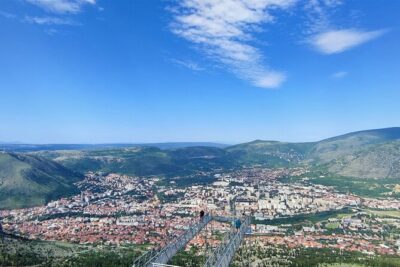
One stop takes you up toward the mountain cross, where you get a broad view over Mostar. This is a welcome change of pace after the enclosed feeling of streets, shelters, and wartime buildings.
The view is not just a photo stop. From higher ground, you can better understand the city’s position among the surrounding hills and why elevated locations had military importance. The guide can connect what you see below with the artillery positions and front-line areas visited during the tour.
Bring a camera if you want one of the clearest overall views of Mostar, but keep the stop in perspective. The tour is about the war story, not a scenic drive with a little history added. The viewpoint works because it supports the explanation.
There is also a practical consideration: the route includes driving up to a high viewpoint, but the supplied details do not specify the exact walking surface or length of the walk there. If you have mobility concerns, ask the operator before booking rather than assuming every stop is step-free.
Miran, Dario, and the guide’s role
The guide can make or break a tour about recent conflict. Here, Miran and Dario are the names associated with the experience, and both are praised for their ability to explain difficult material clearly and personally.
Miran uses photographs and real video footage as teaching aids. That is particularly helpful when the current view does not show the full scale of the damage or when several groups and events must be kept separate in your mind.
Dario’s style is described as personal and passionate, with stories woven into the historical explanation. The useful part is not simply emotion. His approach helps connect the large events of the war with the people and places in Mostar.
You should still expect an interpretation shaped by a local guide. That is a strength when you want the city’s own perspective, but it also means the experience is not a neutral audio guide or an academic seminar. Ask questions if you want more detail or need a point clarified. The tour is built for that kind of exchange.
What $41.20 buys you
At $41.20 per person, the cost is reasonable for a roughly two-hour guided experience that includes transportation between several sites, live commentary, and hotel pickup from selected hotels. The tour also appears to run longer on some days, with an expected duration of two to three hours.
The value comes from access and context. You could walk around Mostar and spot damaged buildings on your own, but you would not easily reach every artillery position, trench line, or mountain viewpoint. You would also miss the explanation linking them together.
The price does not include food or drinks, so plan to eat before or after. That is not a serious drawback for a two-hour tour, but the late afternoon start may place it near dinner time.
The group limit of 16 keeps the price below a private tour while preserving some room for questions. If you want a one-on-one discussion or a custom route, this is not that product. If you want more than a basic city walk without paying private-tour rates, the balance is good.
Who will appreciate this tour most
I would recommend Mostar Shelters to you if you want to understand the city beyond its famous bridge. It suits history-minded visitors, people studying the Bosnian War, and anyone who has looked at the bullet holes in Mostar and wanted a clear explanation.
It is also useful if you have limited time. The driving format lets you cover several parts of the city and nearby high ground without spending the whole day walking between them. Hotel pickup from selected hotels adds another practical benefit.
Families can participate, but adults should decide if the subject is suitable for their children. Children must be accompanied by an adult, and the tour deals openly with war, destruction, and personal suffering.
I would choose another activity if you want a relaxed introduction to Mostar, a food-focused outing, or a light evening walk. This tour asks you to concentrate. Its reward is not entertainment in the usual sense. It is a clearer understanding of the place you are visiting.
Booking, timing, and cancellation
The experience is offered in English and accepts mobile tickets. Confirmation arrives when you book, and a minimum of two people is required for each booking.
The published start time is 5:00 pm, with multiple departure times offered during the day. Because the tour may last closer to three hours, do not place a tight restaurant reservation immediately afterward.
Free cancellation is available if you cancel at least 24 hours before the local start time. Cancellations or changes made less than 24 hours ahead are not accepted for a refund.
Should you book Mostar Shelters?
Yes, if you want the difficult part of Mostar’s story explained by someone from the city. The tour’s strongest features are its access to sites outside the usual center, its mix of vehicle travel and short walks, and the way Miran or Dario connects military facts with personal experience.
Book it with the right expectations. You are not signing up for a cheerful sightseeing loop, and the subject may stay with you long after the vehicle returns to Onešćukova 32. But if you have time for one serious, useful activity in Mostar, the $41.20 price offers strong value and a much fuller picture of the city.
FAQ
How long does the Mostar Shelters tour last?
The stated duration is approximately two hours, though it may take between two and three hours depending on the tour.
What language is the tour offered in?
The tour is offered in English and includes live commentary from a professional guide.
Where does the tour start and finish?
The meeting point is Onešćukova 32, Mostar 88000, Bosnia and Herzegovina. The activity ends back at the same meeting point.
Is hotel pickup included?
Hotel pickup is included from selected hotels. Check whether your hotel qualifies when booking.
What is included in the price?
The price includes a professional guide, live commentary on board, and hotel pickup from selected hotels. Food and drinks are not included.
Can I cancel for a refund?
Yes. You can cancel at least 24 hours before the experience’s local start time for a full refund. Cancellations or changes made less than 24 hours before the start are not accepted for a refund.
Just added around Mostar
- From Split or Trogir: Tour to Mostar and Kravice Waterfalls★ 4.3 · 4 reviews
- Pocitelj City Tour★ 4.5 · 3 reviews
- Walking Tour in Old Town Mostar★ 5.0 · 5 reviews
- Mystical Sutjeska National Park★ 5.0 · 3 reviews
- Mostar gastro and historical treasures★ 5.0 · 6 reviews
- Mostar War Heritage Walking Tour★ 5.0 · 6 reviews
- Private group city tour of Mostar and the Old Bridge★ 5.0 · 6 reviews
- Mostar Guided Tour & Sweet Delights★ 5.0 · 3 reviews
Mostar Tours, compared.
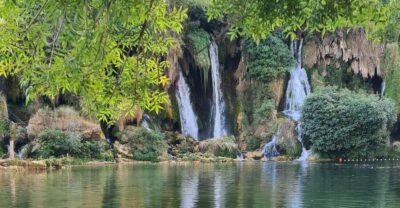
Kravica Waterfalls, Mostar and Pocitelj Day Trip
Read our review →
Mostar and Kravice Waterfalls Small-Group Tour
Read our review →
Discover Herzegovina Day Tour from Mostar: Kravice Waterfalls, Blagaj, Počitelj
Read our review →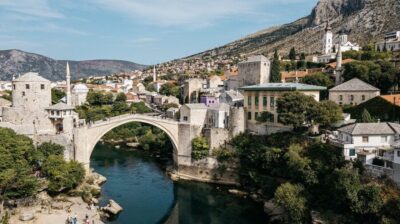
Browse the lists this tour appears in