
Reviewed · HISTORICAL TOURS
Mostar War Heritage Walking Tour
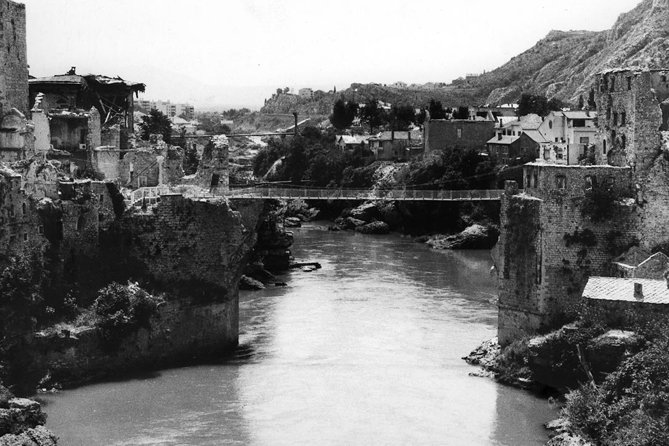
Mostar’s beauty can make it easy to miss the pain behind the postcard view. This war heritage walking tour brings the recent past into focus as you move from the Old Bridge to former front-line areas, burial grounds, and buildings that carry the marks of a divided city. You also hear personal stories, including accounts from guides who lived through the war as young people.
I like the way the tour joins Mostar’s famous landmarks with quieter places such as Liska Park and the Carinski Bridge. I also like the private format: your group alone takes the walk, so you can ask questions and set the pace. The main consideration is emotional weight. This is not a light sightseeing stroll, and some stories may be difficult to hear.
Key points at a glance
- Personal war stories: Guides such as Elma and Serdin explain Mostar’s recent past in direct, human terms.
- Former front line: The walk connects ordinary streets and bridges with the conflict that shaped modern Mostar.
- Old Bridge context: You learn about the bridge’s Ottoman design, construction, and importance before considering its wartime meaning.
- Private group format: Only your party joins the activity, making it easier to ask questions or pause at serious sites.
- Short historical film: The film adds background before or during the walk and helps place the city’s recent events in context.
- Compact morning outing: The two to three-hour route begins at 9:00 a.m. and ends back at the meeting point.
Why this walk matters in Mostar
Mostar is often introduced through one image: the Old Bridge arcing over the Neretva. That view is worth your time, but it gives only part of the story. The city’s recent past includes war, divided communities, civilian and military deaths, and a long process of rebuilding.
This tour asks you to look beyond the postcard. You walk through the old center, but you also stop at a burial site created during the 1992 to 1995 war, visit Spanish Square, and follow a route connected with the former front line. The result is a more serious reading of Mostar.
I appreciate that the tour does not treat the war as a separate subject detached from daily life. The route links historic bridges, schools, shops, public squares, and cemeteries. That connection helps you see how conflict changed places people still use.
The personal side is important. Elma is described as friendly and flexible, while Serdin led another private walk through the city and pointed out both major sights and less obvious places. One guide also experienced the war as an adolescent and speaks about it from personal memory. That can make the experience more immediate than a standard date-filled city tour.
A few more things to do around Mostar
- Mostar gastro and historical treasures
★ 5.0 · 6 reviews - Sarajevo Full Day Tour: History, Culture, Nature, War & Olympics
★ 5.0 · 27 reviews - Sarajevo genuine walking tour: Steps through history
★ 5.0 · 22 reviews
Starting at Spanish Square at 9:00 a.m.
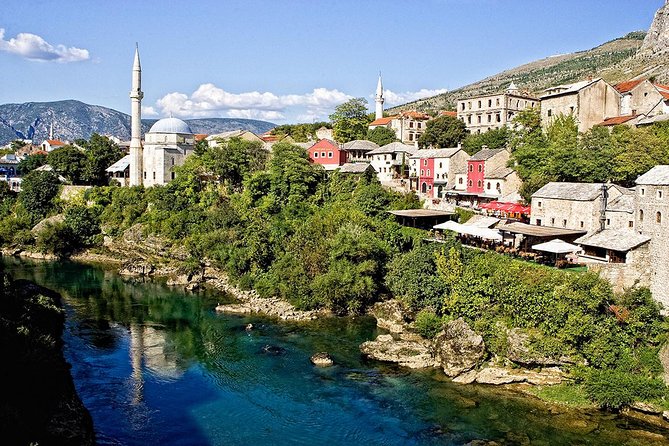
You meet at the skate plaza on Spanish Square, listed at 8RV4+9QM, Španski trg. The early start is practical. Mostar’s old center is easier to walk before the day becomes busy, and beginning at Spanish Square puts you directly beside one of the city’s most meaningful modern sites.
The square received its name in 1995 in honor of 21 Spanish UNPROFOR troops killed during the war. That detail gives the place a solemn purpose, even though it is also a normal urban meeting point.
The main building here is the Old Gymnasium, completed in 1902. Its Moorish Revival design recalls the period when Bosnia and Herzegovina was under Austro-Hungarian rule. The building was once named for the poet Aleksa Šantić and is listed as a national monument.
Your guide uses the square to connect several layers of Mostar: Austro-Hungarian architecture, education, international peacekeeping, and the city’s war years. The stop lasts about five minutes, so expect a focused explanation rather than a long architectural visit.
Because this is a private activity, you can ask for more detail if the square interests you. If the war material feels heavy, you can also let the guide know. The tour is designed for conversation, not a fixed lecture delivered to a large crowd.
The Old Bridge and the story beneath the view
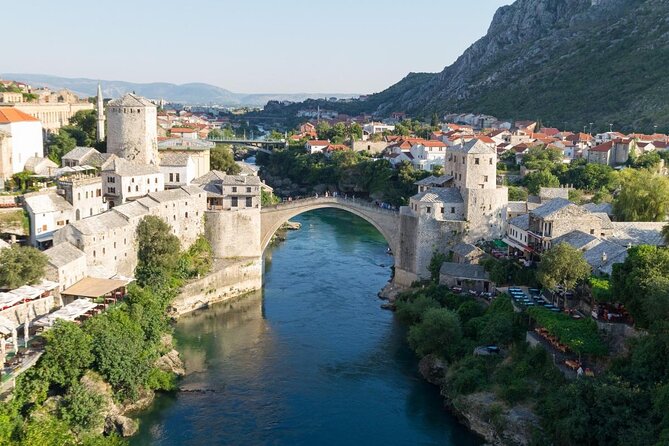
The Old Bridge, or Stari Most, is the tour’s best-known stop. You have about 15 minutes here, with no admission charge.
The bridge began with a much simpler crossing. When the Turks arrived in Mostar, a wooden bridge hung on chains at this location. By the middle of the 16th century, it had worn out, and local people asked authorities in Istanbul for a stronger replacement.
The bridge was designed by Hajrudin, a pupil of the celebrated Ottoman architect Sinan. Completed in July or August 1566, it has one large stone arch spanning 28.70 meters. It is 4.49 meters wide, with the road sitting about 21 meters above the summer water level.
The construction details are worth hearing on site. Square stones were joined with iron hooks and set with lead. The result is both elegant and practical, which helps explain why the bridge became the heart of Mostar’s old center.
You will likely want your own photos here, but this tour gives you a reason to pause before moving on. The bridge is not only a striking structure. It anchors the old town, with forts, towers, and gates growing around it over time.
The Old Bridge stop also provides a useful contrast with the war sites later in the walk. You first see Mostar as a place shaped by centuries of building and trade. Then the guide shows how quickly that continuity can be threatened by modern conflict and how the city has worked to rebuild.
Liska Park and the cost of wartime burial
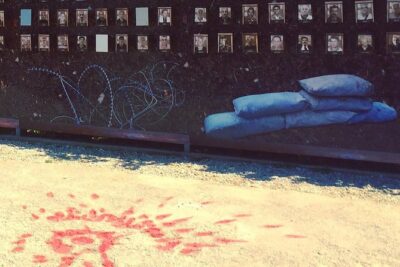
Mezarje, or Groblje Liska Park, is a brief five-minute stop, but its subject is serious. The green space was created in 1954. During the 1992 to 1995 war, it became a burial place for civilians and soldiers of different nationalities because other cemeteries could not accommodate the dead.
That detail says a great deal without requiring a long speech. A public park became a cemetery because the existing systems of the city had been overwhelmed. It also reflects the mixed identities and complicated divisions that shaped Mostar during the conflict.
Do not expect this stop to feel like a regular sightseeing attraction. It is a place for quiet attention. The short visit may suit you if you want meaningful context without spending the entire morning in memorial sites, but you should be prepared for the subject matter.
I find this kind of stop valuable because it slows down the tour. The Old Bridge is easy to admire. Liska Park asks you to think about the people who lived and died in the same city.
Same base, a different kind of day out:
- From Dubrovnik: Mostar and Kravica Waterfall Day Trip
★ 4.7 · 4,709 reviews - Dubrovnik: Kravica Waterfalls, Mostar and Pocitelj Day Trip
★ 4.5 · 3,045 reviews - Dubrovnik: Mostar & Kravica Waterfalls Day Trip
★ 4.8 · 1,970 reviews - Dubrovnik: Mostar and Kravice Waterfalls Small-Group Tour
★ 4.8 · 1,194 reviews
Spanish Square, the Old Gymnasium, and international memory
The tour begins at Spanish Square, but the guide also uses it as a key point in the city’s war story. The square honors the 21 Spanish troops killed while serving with UNPROFOR, the United Nations peacekeeping force.
The Old Gymnasium gives the place a different tone. Finished in 1902, it was one of the oldest schools in the former Yugoslavia. Its Neo-Moorish appearance adds a visual reminder that Mostar’s architecture reflects several political and cultural periods.
This is one of the more useful stops for visitors who want to understand that Mostar’s story did not begin in the 1990s. The tour moves between Ottoman, Austro-Hungarian, Yugoslav, and postwar layers without treating them as isolated chapters.
You will spend about five minutes here, so the guide’s explanation matters more than a long visit inside the building. The activity includes a short film about Mostar’s history as well. Together, the square, school, and film help fill in the background that the streets alone cannot provide.
Kujundziluk and the old town’s working life
Kujundziluk is the old bazaar area on the left bank of the Neretva. Its name comes from the many coppersmiths, known as kujundžije, who once worked here. Tailors and leather workers were also part of the district, with tanners especially numerous.
Today, the area has small artisan workshops and handicrafts. It is a more cheerful section of the route, but the guide’s earlier explanations change how you see it. These lanes were not created simply for visitors. They grew from work, trade, and the practical needs of a town built around the river and bridge.
Allow yourself time to look at the small shops, even though the planned stop is about 15 minutes. The activity is not presented as a shopping tour, so purchases are up to you. Still, the bazaar gives you a chance to see a living part of the old center rather than only monuments.
Kujundziluk also offers a needed change of pace after the cemetery and war discussion. Mostar’s story includes loss, but it also includes crafts, commerce, and ordinary routines that continue.
The Carinski Bridge and a quieter crossing
The Carinski Bridge, or Customs Bridge, is north of the Old Bridge and receives less attention from day visitors. It crosses the Neretva and dates from the Austro-Hungarian period.
Its importance comes from its practical role. The bridge connected different parts of Mostar and served as a vital crossing point. That makes it a useful stop for understanding how the city functions beyond its most famous monument.
The supplied route does not give a set visit length for this stop, so the exact timing may depend on your guide and the pace of your private group. That flexibility is helpful if you want to ask how the river crossings related to movement through the city during the war.
Do not expect the same visual drama as the Old Bridge. The value here is the added context. Mostar is not one bridge and one old quarter. It is a connected city, and its crossings help explain how people moved between its sections.
Crooked Bridge and a smaller version of the famous arch
The Crooked Bridge, or Kriva Ćuprija, sits in the old quarter over the Radobolja River. It is believed to be a miniature prototype of the Old Bridge and dates from the 16th century.
The stop lasts about five minutes. That is enough to admire the arch and compare its shape with Stari Most, though you should not expect a long architectural lecture unless you ask for one.
This is a pleasant final landmark because it brings the tour back to the older face of Mostar. After hearing about wartime burials, international troops, and the former front line, you finish with a smaller bridge that shows the city’s Ottoman-era design in a more intimate setting.
The Crooked Bridge is also a reminder that Mostar’s architectural story is broader than its most famous view. If you have extra time after the tour, this area is worth revisiting at a slower pace.
What the private format adds
The price is $47.66 per person. For a two to three-hour private walk with an authorized guide, that is a reasonable choice if you care about conversation and recent history rather than simply checking off sights.
The value comes from the guide’s interpretation. You are not paying for entrance tickets, lunch, or transport. The listed stops are free, and lunch is optional and not included. You are paying mainly for the route, the short film, and the chance to ask questions about a painful period that can be hard to understand from plaques alone.
A private tour can be especially useful in Mostar because the subject is sensitive. With only your group present, you can ask for clarification without holding up a larger party. You can also spend more time at a place that matters to you, within the overall two to three-hour schedule.
The tradeoff is that the price per person may feel high if you are traveling alone or mainly want a quick orientation to the old town. If your main goal is architecture and photographs, a general city walk may cover the main sights for less. This activity earns its cost through personal testimony and war-focused context.
Who will get the most from this experience
I would choose this walk if you want to understand how Mostar became the city you see today. It suits adults interested in modern European history, visitors who prefer direct local explanation, and anyone who wants more than a photo at the Old Bridge.
It is also a good fit for a couple, family, or small group that values privacy. The activity is listed as suitable for most participants, near public transportation, and open to service animals.
You should think carefully about the emotional tone. The tour includes a cemetery, wartime deaths, former front-line areas, and personal accounts. It is not designed as a carefree morning of sightseeing. That is its strength, but it is also the main reason some people may prefer a different activity.
The guides named in the available information are Elma and Serdin. Elma is described as flexible and friendly, while Serdin led a particularly small private outing through the city. Guide assignments can vary, so you should not assume one specific guide is guaranteed unless confirmed at booking.
Practical details before you book
The meeting point is the Spanish Square skate plaza in Mostar. The activity starts at 9:00 a.m. and finishes back at the same meeting point.
Plan for a walking morning. The supplied information does not specify the exact distance or surface conditions, so comfortable shoes are sensible. The route includes old-town streets, bridges, squares, and park areas.
The tour is offered in English and includes a professional authorized guide. A mobile ticket is available, and group discounts are listed. Confirmation is normally sent at booking, although bookings made within five hours of departure are confirmed as soon as possible if space remains.
Free cancellation is available if you cancel at least 24 hours before the start time. Cancellations or changes made inside that window are not refunded or accepted. Tips are not included, so carry a little extra if you want to thank your guide.
Should you book the Mostar War Heritage Walking Tour?
Book it if you want the Old Bridge to mean more than a beautiful photograph. The combination of Ottoman landmarks, Austro-Hungarian buildings, a wartime burial site, former front-line context, and personal stories gives you a clear way to read Mostar’s complicated past.
I would be less likely to choose it if you have only a short stop in town and want a relaxed old-town walk with no serious subject matter. For everyone else, the private format and the chance to speak directly with a guide make the $47.66 price easier to justify.
The best reason to go is simple: you leave with a better sense of the people and events behind Mostar’s monuments. That is the kind of city experience that stays useful after the photos are stored away.
FAQ
Where does the Mostar War Heritage Walking Tour start?
It starts at the Spanish Square skate plaza, 8RV4+9QM, Španski trg, Mostar 88000, Bosnia and Herzegovina.
What time does the tour begin?
The tour begins at 9:00 a.m.
How long does the walking tour last?
The expected duration is approximately two to three hours.
Is the tour private?
Yes. Only your group participates in the activity.
What language is the tour offered in?
The tour is offered in English.
Is lunch included?
No. Lunch is not included, though it is listed as optional.
Can I cancel for a full refund?
Yes, if you cancel at least 24 hours before the experience start time. Cancellations made less than 24 hours in advance are not refunded.
Just added around Mostar
- From Split or Trogir: Tour to Mostar and Kravice Waterfalls★ 4.3 · 4 reviews
- Pocitelj City Tour★ 4.5 · 3 reviews
- Mystical Sutjeska National Park★ 5.0 · 3 reviews
- Mostar gastro and historical treasures★ 5.0 · 6 reviews
- Walking Tour in Old Town Mostar★ 5.0 · 5 reviews
- Mostar Shelters tour in Mostar★ 5.0 · 9 reviews
- Mostar & Herzegovina Tour★ 3.5 · 6 reviews
- Private group city tour of Mostar and the Old Bridge★ 5.0 · 6 reviews
Historical Tours, compared.
Sarajevo Full Day Tour: History, Culture, Nature, War & Olympics
Read our review →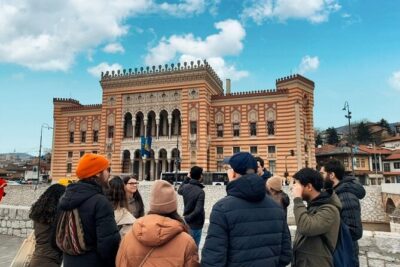
Sarajevo genuine walking tour: Steps through history
Read our review →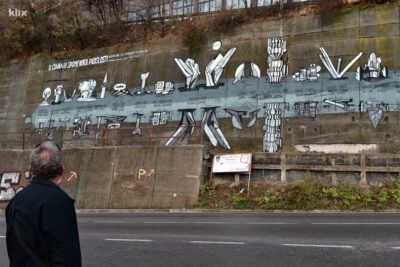
SARAJEVO STREET ART TOUR (art, history & mystery) – sARTajevo!
Read our review →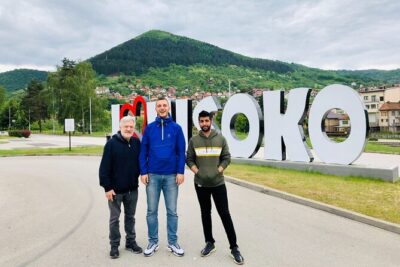
BOSNIAN PYRAMIDS TOUR (nature, history & archeology)
Read our review →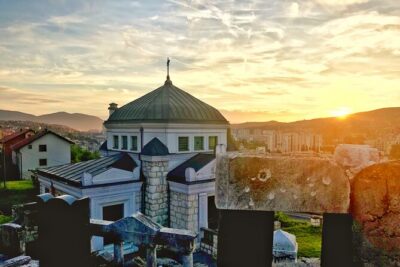
Browse the lists this tour appears in