
Reviewed · PRIVATE DRIVERS
Sarajevo to/from Belgrade UNESCO Transfer Day Tour (Fees Incl.)
The remarkable thing about this transfer is how much it packs into one long day. You cross from Bosnia and Herzegovina into Serbia while visiting medieval tombstones, an Ottoman bridge, an Orthodox monastery, a film-set village, a mountain railway, and a famous river viewpoint. This is not simply a ride from one city to another.
I like the door-to-door service, especially when you have luggage and are crossing an international border. I also like that the main admission costs are included, including the Drina boat ride, Drvengrad, and the Šargan Eight train.
The trade-off is time. Expect about 12 to 13 hours, much of it on winding mountain roads rather than a motorway. The group can reach 15 people, and anyone prone to motion sickness should consider medication before setting off.
Key points to know before booking
- A sightseeing transfer, not a basic shuttle: You travel from Sarajevo to Belgrade, or in the reverse direction, while stopping at major cultural and natural sights.
- Two UNESCO-related highlights: The route includes the Borak stećci necropolis and Mehmed Paša Sokolović Bridge in Višegrad.
- Included boat and train rides: A short cruise on the Drina and the Šargan Eight railway add variety to a long road day.
- Border crossing by road: You need a current valid passport, and the tour crosses between Bosnia and Herzegovina and Serbia.
- Small-group format: The maximum group size is 15, with an English-speaking guide and driver.
- A full day on mountain roads: The views are excellent, but the roads twist and climb, so this is not the right choice if you want a fast motorway transfer.
Why this is more than a Sarajevo to Belgrade transfer
At $174.99 per person, this trip costs more than hiring a simple car transfer. You are paying for a full sightseeing day, a professional English-speaking guide and driver, door-to-door pickup and drop-off, and several included admissions.
The value comes from the route. A normal transfer gets you from one city to the other. This one gives you access to parts of eastern Bosnia and western Serbia that are difficult to visit without a car, including Borak, Dobrun, Mokra Gora, Tara National Park, and the Drina valley.
The price also covers the Šargan Eight train ride, listed at 11 EUR per person, the Drina cruise at 5.50 EUR, Drvengrad admission at 2.50 EUR, and the nature park eco tax. Food and drinks are extra, so budget for lunch at Drvengrad and water during the day.
You leave at about 7:00 am. Pickup is available from your chosen address in Sarajevo, and the end point can be your preferred address in Belgrade. The same service can be taken from Belgrade to Sarajevo, although the order of stops changes.
More private transfers running from Sarajevo
- Sarajevo to/from Dubrovnik Transfer Tour via Mostar & Herzegovina
★ 5.0 · 115 reviews - Sarajevo to Belgrade: Transfer With East Bosnia Tour
★ 5.0 · 63 reviews - Sarajevo to Split (or opposite): Transfer With Herzegovina Tour
★ 5.0 · 28 reviews
The forest necropolis near Rogatica
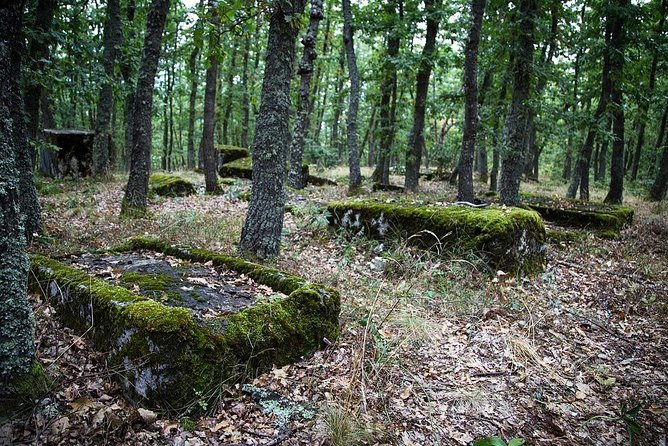
The first major stop is a group of medieval stećci tombstones near Rogatica. These large limestone markers are associated with medieval Bosnia and Herzegovina, and the necropolises offer a direct connection with the medieval Bosnian Kingdom.
The Borak necropolis, reached after a drive through Stjenice and a short hike through dense forest, is the more secluded of the two stops. Allow about 30 minutes there, plus roughly 20 minutes of driving from Rogatica. The walk is described as short, but it is still a hike through woodland, so wear shoes with a firm sole.
This part of the day rewards curiosity rather than speed. The stones are not displayed in a polished museum setting. They sit in the countryside, surrounded by trees, which helps you understand how widely these monuments are scattered across Bosnia and Herzegovina.
The first stop near Rogatica lasts about 45 minutes and has no separate admission charge. The Borak stop also has no admission fee.
Višegrad and the Drina River
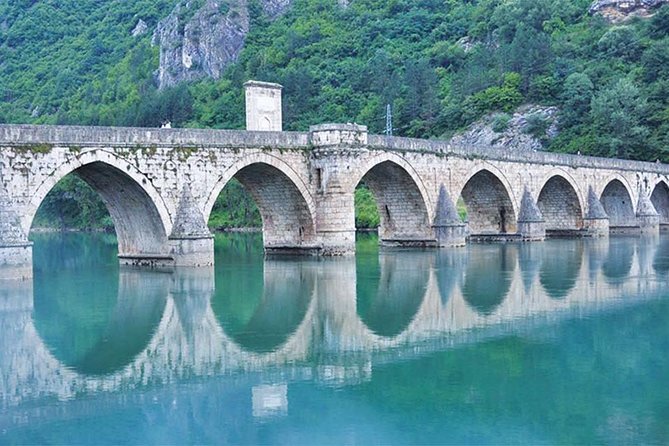
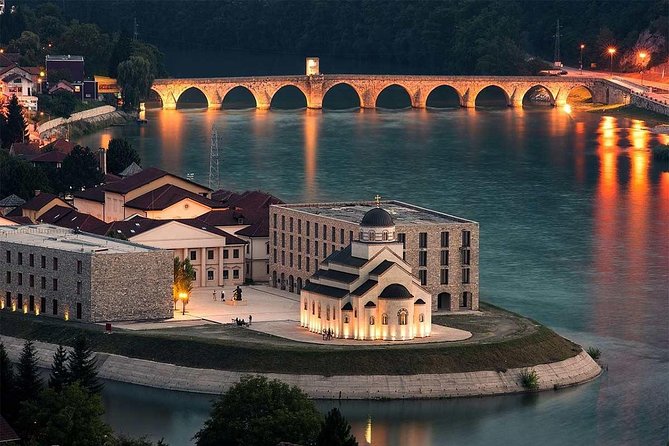
After roughly another hour through the mountains, you reach Višegrad and the Mehmed Paša Sokolović Bridge. Built in 1577 during the Ottoman period, the bridge is one of the route’s major architectural sights and a UNESCO World Heritage site.
You can walk across it, then see it from the water on a short boat cruise along the green Drina River. I like this pairing because the bridge makes more sense from both angles. On foot, you notice the stone arches and broad structure. From the boat, you see how it sits in the river valley.
The bridge is closely linked with Ivo Andrić, the Bosnian-born writer and Nobel Prize winner. His novel The Bridge on the Drina focuses on Višegrad and gives the town a wider literary importance. You do not need to read the book before going, but it can add meaning to the guide’s explanation of the bridge and the region.
About 45 minutes is scheduled at the bridge, with admission included. The boat cruise is also included. Bring a light layer, since the open-air ride can feel cooler than the road vehicle.
Andrićgrad: unusual, modern, and worth seeing
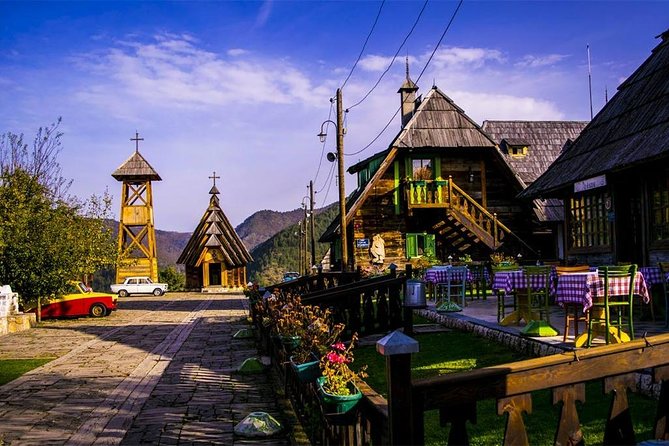
After the bridge and boat ride, you visit Andrićgrad, a small stone-built town dedicated to Ivo Andrić. It was created recently and also reflects the work of film director Emir Kusturica, including the history of Yugoslav cinema.
This is one of the more unusual stops because it is not an untouched medieval town. It is a designed place, with stone buildings, cafés, shops, a cinema, and an Orthodox church. Some people find the setting fascinating, while others may find it too new or theatrical compared with the older sites on the route.
You have about 15 minutes here, so think of it as a brief orientation stop rather than a long visit. The short time is understandable because the day already includes many stops, but you should not expect a leisurely coffee or detailed exploration.
A few more things to do around Sarajevo
- Sarajevo to Dubrovnik: Transfer With Herzegovina Tour
★ 5.0 · 26 reviews - Sarajevo: Private Transfer to and from Sarajevo Airport
★ 5.0 · 19 reviews - Transfer from Sarajevo to Kotor+Herzegovina tour
★ 5.0 · 17 reviews - Private transfer Dubrovnik and Mostar
★ 5.0 · 42 reviews
Dobrun Monastery and the Serbian border
The route continues to Dobrun Monastery, one of the important Serbian Orthodox monasteries in the area. It was first built in 1343, and its preserved frescoes make it a valuable stop for both religious and artistic reasons.
The monastery is scheduled for about 20 minutes. That is enough to look around and hear the local story, though not enough for a slow visit. The setting is part of the appeal, with wooded hills and a quieter pace after Višegrad.
You then cross the border from Bosnia and Herzegovina into Serbia. Keep your current valid passport handy. Border formalities can affect the exact timing, so you should avoid booking a fixed evening activity immediately after arrival in Belgrade.
Drvengrad and the film-world of Mećavnik
Once in Serbia, the route enters the Šargan-Mokra Gora nature park. The first Serbian stop is Drvengrad, also called Timber Town, Küstendorf, or Mećavnik.
Film director Emir Kusturica designed the village for Life Is a Miracle. Its wooden buildings and carefully planned streets give it a strong film-set quality. It also won the Philippe Rotthier European Architecture Award from the Brussels Foundation for Architecture.
You have about an hour here, often including lunch. This is a useful pause in the middle of a long day because you can eat, walk around, and stretch your legs before the train ride. Food is not included, so plan to pay separately.
One practical point: an hour passes quickly. If you want lunch, photographs, and a proper look at the village, you will need to keep moving. One person on a past trip felt there was barely time to finish a drink before departing. I would treat Drvengrad as a compact visit, not a full afternoon.
The Šargan Eight railway
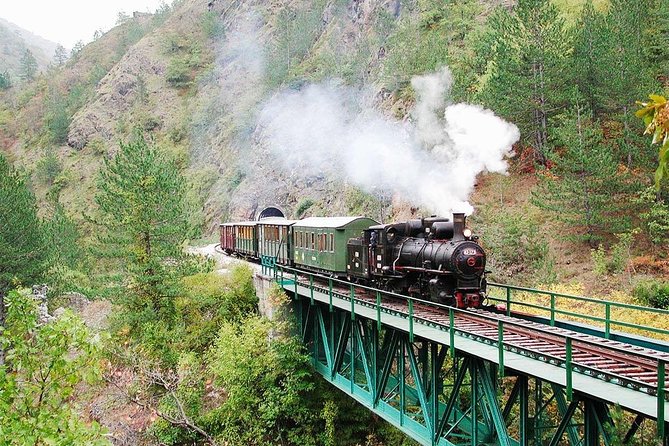
The 45-minute Šargan Eight ride is one of the tour’s signature activities. This narrow-gauge railway was built in 1925 and once connected Sarajevo with Belgrade. Its name comes from the figure-eight shape of the track when viewed from above.
The railway climbs about 300 meters over a short distance of 3,500 meters, using 22 tunnels and five bridges. The route now operates for sightseeing after closing in 1974.
The ride gives the transfer a welcome change of pace. You are no longer sitting in the vehicle, and the railway’s engineering story is a good link between the two cities. The route passes through wooded mountain country, so the scenery is pleasant but not an uninterrupted series of grand views.
Do not assume the train will always be pulled by an old steam locomotive. The railway is historic, but a modern diesel-electric engine may operate the service. If the steam engine is the main reason you want to book, keep that distinction in mind.
The train ticket is included in the tour price. The schedule can be affected by railway operations, so the exact order and duration may vary.
Tara National Park and Banjska Stena
After the train, you continue through Tara National Park. The park was declared in 1981 and is known for biological variety, hiking areas, wildlife, and the rare Picea omorika spruce.
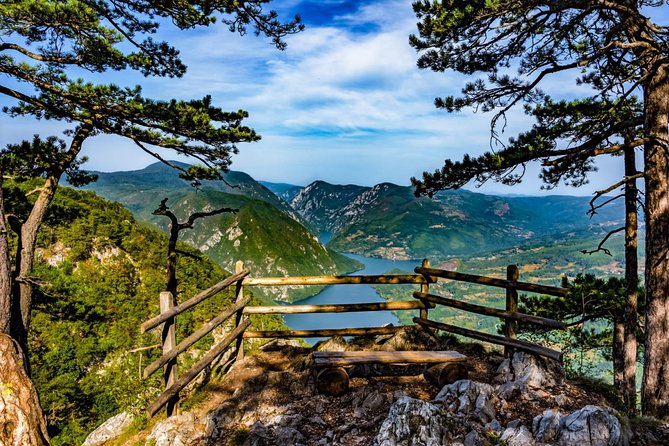
The key stop is Banjska Stena, a viewpoint above Perućac Lake. From here, you look across the lake and the Drina valley near the natural border between Bosnia and Herzegovina and Serbia.
About 30 minutes is planned for this stop. That gives you time for photographs and a short look around, but not a serious hike. The road through the park is part of the experience, with climbs, descents, and bends. If you get carsick, take precautions before leaving Sarajevo and tell the guide if you need a short break.
The drive beside Perućac Lake adds another scenic stretch. The lake was formed by a dam on the Drina, and the water provides a sharp contrast to the thickly wooded hills around it.
The Drina River House and the final drive to Belgrade
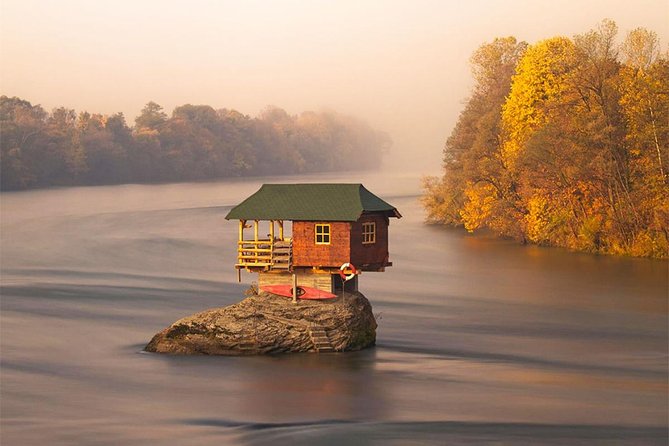
The last brief stop is the House on the Drina near Bajina Bašta. This small structure sits on a rock in the river and has become one of the area’s most recognizable photographs.
You spend about 15 minutes there. It is a quick final stop, but a good one after a long day because it gives you one more clear image of the Drina before the final road section.
From this point, the drive to Belgrade takes roughly three hours. The planned arrival is no later than about 8:00 pm, though traffic near Belgrade can change that. The driver drops you at your chosen address, which is especially useful if you arrive with luggage after a day on winding roads.
Guides, vehicles, and the pace of the day
The experience includes an air-conditioned vehicle and a professional English-speaking guide and driver. Past guide assignments have included Tarik, Enis, Ajdin, Amar, Ajla, Annis, Zlata, and Doris, so your specific guide will depend on the date.
The strongest part of the guiding is the historical storytelling. You can expect explanations of the Ottoman period, the medieval Bosnian Kingdom, Orthodox culture, Yugoslav cinema, local writers, and the complicated links between Bosnia and Serbia. Several guides have also been praised for patience, safe driving, flexibility, and help with photography.
The small-group limit of 15 is important. It is not a private tour by default, but it should feel more manageable than a large coach excursion. A medical condition was accommodated during one past trip, but you should still explain any needs when booking.
The day is long, and some stops are short. I would bring water, snacks, a phone charger, comfortable walking shoes, and clothing suitable for changing mountain weather. Drinks and food are not included.
Who should book this transfer?
I would choose this tour if you want to connect Sarajevo and Belgrade while seeing the countryside between them. It works particularly well for a first visit to the region, for anyone interested in Ottoman, Orthodox, medieval, and Yugoslav history, and for people who would otherwise struggle to reach the smaller sites.
It also suits you if you prefer a guided route rather than working out border transport, rural buses, train tickets, and local taxis on your own. The included admissions remove several small costs and simplify the day.
I would hesitate if you dislike long car rides, winding roads, early starts, or tightly planned sightseeing. This is not a relaxed transfer with hours to linger in each town. It is a carefully packed road journey with frequent changes of scene.
Should you book it?
Book it if the journey itself matters as much as reaching Belgrade. The combination of stećci tombstones, Višegrad Bridge, the Drina boat ride, Dobrun Monastery, Drvengrad, the Šargan Eight, Tara National Park, and the Drina River House gives you a far fuller day than a standard transfer.
Skip it if you want the quickest route or if mountain roads make you uncomfortable. For most people who want culture, scenery, and practical door-to-door transport in one package, $174.99 is a fair price, provided you are ready for a 12 to 13 hour day.
Free cancellation is available until 24 hours before departure. Changes or cancellations made inside that period are not accepted for a refund.
FAQ
How long does the Sarajevo to Belgrade transfer take?
The experience lasts approximately 12 to 13 hours. It begins around 7:00 am, with planned arrival in Belgrade by about 8:00 pm.
Can I take the tour from Belgrade to Sarajevo?
Yes. The service operates in both directions between Sarajevo and Belgrade. The order of stops changes depending on your starting city.
Is hotel pickup and drop-off included?
Yes. Complimentary pickup and drop-off are offered at your chosen addresses in Sarajevo or Belgrade.
Is the train ride included?
Yes. The Šargan Eight train ride is included in the price. The scheduled ride lasts about 45 minutes.
Is the Drina River boat cruise included?
Yes. The short Drina River boat cruise is included, along with the listed admission fees and taxes.
Do I need a passport?
Yes. You need a current valid passport on the day of the tour because the route crosses the border between Bosnia and Herzegovina and Serbia.
Is food included?
No. Food and drinks are not included. Lunch is possible during the stop at Drvengrad, but you pay separately.
How many people can join the tour?
The maximum group size is 15 people. The tour includes an air-conditioned vehicle and an English-speaking guide and driver.
Just added around Sarajevo
- Downhill Sarajevo MTB Mountain Biking Adventure on Trebevic – Half Day Tour★ 5.0 · 3 reviews
- Skakavac Waterfall Mountain Biking Tour from Sarajevo MTB★ 5.0 · 11 reviews
- Sarajevo War Tour with TRAVELPLUS★ 5.0 · 11 reviews
- SARAJEVO STREET ART TOUR (art, history & mystery) – sARTajevo!★ 5.0 · 18 reviews
- Sarajevo – Mostar Herzegovina Adventures Day Tour★ 5.0 · 18 reviews
- Cable Car Olympic Tour With Museum★ 5.0 · 17 reviews
- Canyoning Rakitnica river★ 4.5 · 11 reviews
- Sarajevo to Dubrovnik: One-Way Tour via Mostar, Kravica Falls, Blagaj & Pocitelj★ 5.0 · 12 reviews
Private Drivers, compared.
Sarajevo to/from Dubrovnik Transfer Tour via Mostar & Herzegovina
Read our review →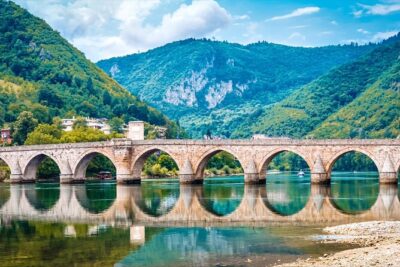
Sarajevo to Belgrade: Transfer With East Bosnia Tour
Read our review →
Sarajevo to Split (or opposite): Transfer With Herzegovina Tour
Read our review →
Transfer Mostar to Dubrovnik with Kravice Waterfalls, Blagaj and Počitelj tour
Read our review →
Sarajevo to Dubrovnik: Transfer With Herzegovina Tour
Read our review →
Browse the lists this tour appears in