
Reviewed · YUGOSLAV HISTORY TOURS
Sarajevo Full Day Tour: History, Culture, Nature, War & Olympics
Sarajevo’s story is unusually concentrated. In one day, you can move from the clear springs that gave Bosnia its name to a wartime tunnel, a scarred Olympic track, Ottoman lanes, Austro-Hungarian buildings, and the bridge tied to the start of World War I. The range is the real attraction. This is not just a city walk.
I like the mix of nature and hard history, and I like having a local guide explain Sarajevo’s complicated past in plain terms. Guides such as Enes, Elvis, Edis, Ahmed, Adnan, and Alan have been singled out for their warmth, humor, personal war stories, and ability to answer questions. The drawback is pace: eighteen stops in six to seven hours means some visits are brief, and lunch timing may need clarification.
Key things to know before booking
- You cover Sarajevo’s biggest themes in one day: Ottoman rule, several faiths, the 1984 Winter Olympics, the Siege of Sarajevo, and the city’s natural setting.
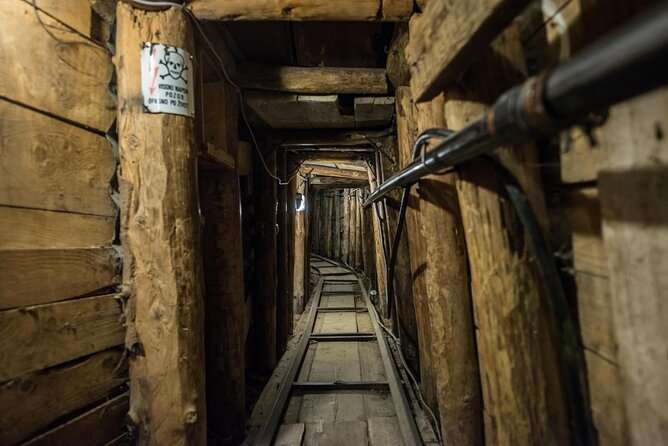
- The War Tunnel and Olympic bobsled track are the emotional anchors: one explains survival during the siege, while the other shows how war altered an Olympic venue.
- You get both driving and walking: an air-conditioned vehicle handles the outlying sights, then the Old Town is explored on foot.
- Hotel pickup, lunch, Bosnian coffee, water, and two entrance fees are included: that makes the $114.45 price easier to assess.
- The group can reach 15 people: small enough for questions, though not the same as a private tour.
- Plan for a full, fast day: several stops last only 5 to 15 minutes, and some admission fees are not included.
Why this Sarajevo tour works as a first-day overview
I would consider this tour for a first full day in Sarajevo, especially if you are unsure how to organize a city with so many different layers. The route gives you a basic map in your head: mountains and springs outside town, wartime sites on the edges, viewpoints above the center, then the Old Town and its meeting point between East and West.
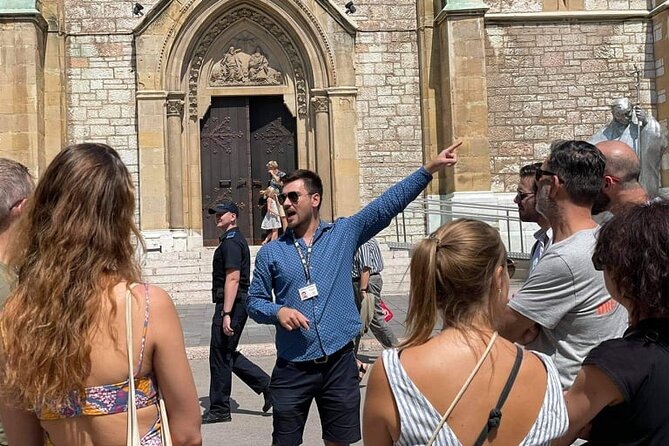
The tour begins at 9:00 a.m. with pickup from your hotel lobby or another location in Sarajevo. A maximum of 15 people keeps it more personal than a large coach trip, and the air-conditioned vehicle matters when the day includes both hillside stops and a long walking section.
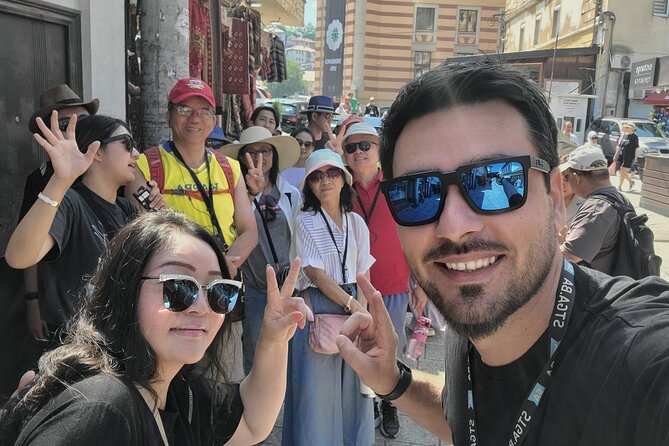
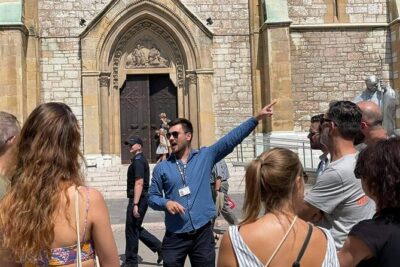
The guides are a major part of the experience. Enes is described as funny, clear, and especially good at explaining Bosnia and Herzegovina to first-time visitors. Elvis is praised for his thorough presentations and friendly manner. Edis has shared family experiences from the war, while Ahmed and Adnan have also brought personal stories to the history.
That personal connection can make the Siege of Sarajevo easier to understand. It also means the tone may become emotional. You are not getting a dry list of dates, and you should be ready for difficult subjects involving civilians, snipers, shortages, and the war’s effect on modern society.
More Yugoslav-era history tours in Sarajevo
- Fall of Yugoslavia, Sarajevo War Tour with Tunnel of Hope Museum and Frontlines
★ 5.0 · 1,314 reviews - Tunnel Museum: Bosnian & Yugoslav Wars Tour with War Veteran
★ 5.0 · 551 reviews - Sarajevo Grand Tour: Old Town, War Tunnel, Olympic Sites & More
★ 5.0 · 73 reviews
Vrelo Bosne: Sarajevo begins at the river springs
The first stop is Vrelo Bosne, the source area of the Bosna River. You get about 40 minutes here, with admission included.
This is a good opening because it gives you a quiet sense of the country before the tour turns to war and politics. The springs are presented as a key part of Bosnian identity, since the country takes its name from the river. You might find this stop most appealing if you want trees, running water, and a break from the built-up center.
Forty minutes is enough for a look and some photographs, but not for a long walk through the park. The value is less about a detailed nature visit and more about seeing the setting that shaped Sarajevo and the wider country.
The War Tunnel and the Siege of Sarajevo
The Sarajevo War Tunnel Museum is one of the day’s most important stops. About 40 minutes are set aside, and the entrance fee is included.
The tunnel was built during the Siege of Sarajevo and provided a link for people, supplies, and aid when normal routes were blocked. Inside, you get a direct sense of the practical problems faced by a city under attack. The site is small and focused, so the guide’s explanation matters greatly.
This is also where the tour’s personal approach can have its strongest effect. Guides have described growing up during the war and have shared family photographs and memories from that period. That context can help you connect the museum’s physical remains with the lives behind the statistics.
I would not treat this as a light sightseeing stop. It deals with recent trauma, and the guide may discuss the Dayton Agreement, the role of UN forces, journalists, and outside support. The short visit is enough to make the point, though anyone wanting a long museum study will need additional time elsewhere.
The 1984 Olympic track and Sarajevo from above
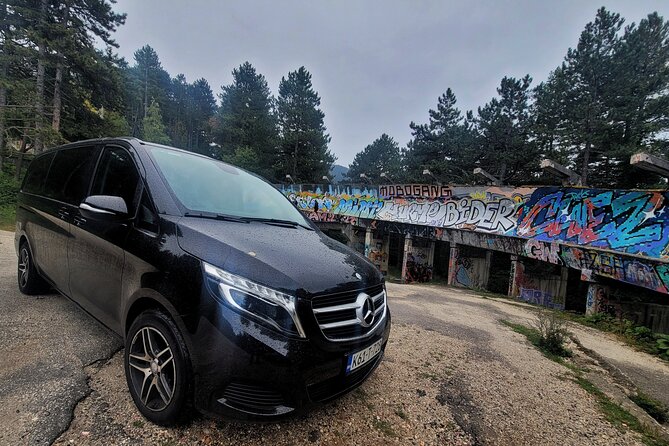
The Sarajevo Olympic Bobsleigh and Luge Track takes you into a different chapter. The 1984 Winter Olympics brought the city international attention. The track was later abandoned and stood on the front line during the war.
About 40 minutes are planned here, with no admission fee. The contrast is striking: an athletic venue built for celebration became part of a conflict zone. You can see how Sarajevo’s recent past is not confined to museums. It is visible in the remains of places built for ordinary public life.
The stop also gives the guide room to explain the Olympics and the war together. That pairing helps you see how quickly the city’s public image changed. Some people especially enjoy this part because it combines history, mountain air, and a memorable physical site.
At the Yellow Fortress, you get roughly 30 minutes for one of the best elevated views of Sarajevo. This is a photo stop, but it is also useful geography. After hearing about different neighborhoods and fronts, you can look down and understand the city’s long, narrow setting between hills.
A few more things to do around Sarajevo
- Sarajevo genuine walking tour: Steps through history
★ 5.0 · 22 reviews - SARAJEVO STREET ART TOUR (art, history & mystery) – sARTajevo!
★ 5.0 · 18 reviews - BOSNIAN PYRAMIDS TOUR (nature, history & archeology)
★ 5.0 · 17 reviews - Sarajevo: Jewish Heritage Tour
★ 5.0 · 13 reviews
Yellow Fortress, Jewish Cemetery, and Sniper Alley
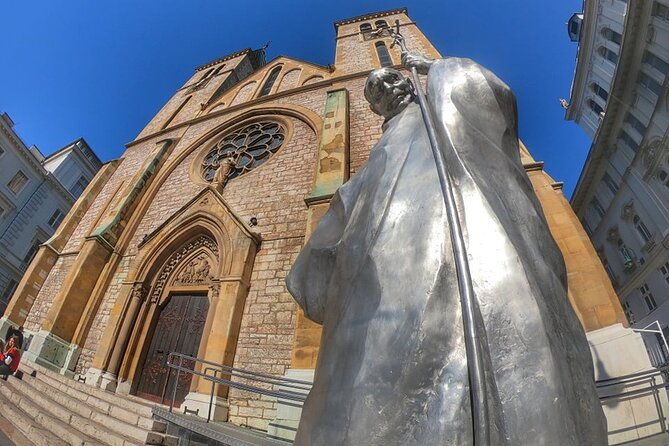
The Jewish Cemetery is both a heritage site and a wartime viewpoint. The visit lasts around 30 minutes. You can learn about Sarajevo’s Jewish community and see why elevated positions around the city mattered during the siege.
The next hour focuses on Sniper Alley and nearby locations. The guide points out the war hotel, the Bosnian Rome and Juliette Bridge, and places connected with UN forces, journalists, and international supporters of Sarajevo.
This section is best understood with a guide rather than on your own. Names and buildings can look ordinary today, while their wartime roles are difficult to recognize without explanation. You may also hear about how the conflict affected daily movement through the city.
The subject is heavy, but the route does not treat the war as a distant museum topic. It connects streets, bridges, hotels, and neighborhoods with the people who lived through the siege. If you prefer a relaxed sightseeing day with little serious discussion, this tour may feel intense.
City Hall and the city’s imperial layers
Sarajevo City Hall is visited inside for about 30 minutes. The admission fee is not included, so check the cost when planning your budget.
The building helps shift the focus from the 1990s back to Sarajevo’s Austro-Hungarian period. Its location also makes it a useful bridge between the modern city and the Ottoman Old Town. The visit is worthwhile because the tour does not reduce Sarajevo to its wartime identity.
From here, the route moves into the center on foot. Walking is where the city’s cultural mixture becomes easiest to see. You move through streets shaped by Ottoman trade, Austro-Hungarian planning, and several religious communities living close together.
Kazandziluk and Bascarsija: Sarajevo’s working Old Town
Kazandziluk is the old copper-smith street. The stop is brief, around 10 minutes, but it gives you a glimpse of an old craft tradition rather than just a landmark designed for photographs.
Bascarsija Square and Sebilj are the heart of the Old Town. You get another 10 minutes here, enough to orient yourself and see the square’s famous fountain. The area was shaped by trade, and it remains the clearest place to feel Sarajevo’s Ottoman character.
Do not expect long free time at either stop. The strength of this tour is the connection between many sites, not extended shopping or independent wandering. If you want to browse copperware, taste several foods, or linger in cafes, return to Bascarsija later on your own.
Morica Han and a proper Bosnian coffee pause
Morica Han is a former caravanserai, an inn used by merchants during the Ottoman period. The group spends about 20 minutes here and drinks Bosnian coffee, which is included.
This is one of the day’s more pleasant pauses. After the war sites and viewpoints, a quiet Ottoman courtyard gives you time to absorb what you have seen. Bosnian coffee is served strong and traditionally, and the setting helps explain how trade and travel once worked in the city.
Lunch is also included, along with bottled water. The exact meal and timing are not specified, so I would confirm when lunch takes place at the start of the day. One past schedule left the group hungry by midafternoon, while later tour information includes lunch as part of the package. That makes clarification sensible, especially if you eat early or have dietary needs.
Mosque, clock tower, and Ottoman Sarajevo
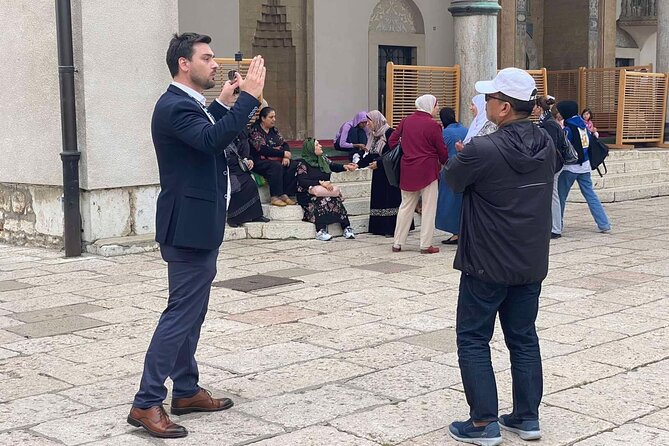
Gazi Husrev-beg Mosque is the largest mosque in the Old Town. The stop lasts about 10 minutes, and admission is not included.
The guide explains Gazi Husrev-beg and his role in developing the city. The mosque is part of a larger Ottoman urban system, not an isolated monument. Nearby, the Old Sarajevo Clock Tower receives only about five minutes. Its lunar time display is a small but memorable detail, and it shows how local religious and civic life once organized the day.
Gazi-Husrev Beg’s Bezistan is a covered Ottoman market, visited for around 10 minutes. Taken together, these stops show a city built around worship, trade, education, and public life. The short timings let you see the pattern, but anyone who wants to examine architecture closely will need another visit.
Latin Bridge and the meeting of East and West
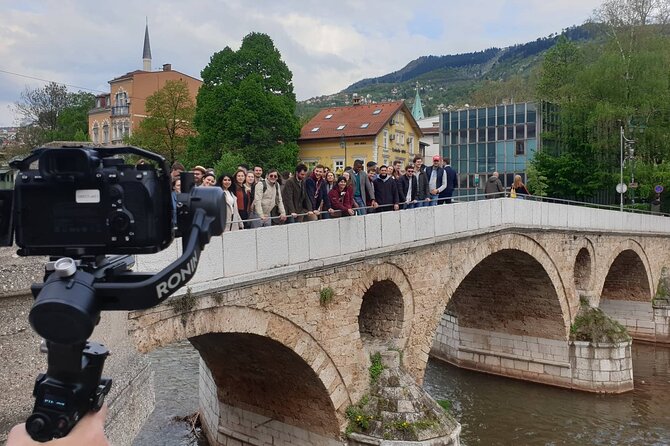
Latin Bridge is tied to the assassination that triggered World War I. You get about 15 minutes here.
The location is easy to pass without context, which is why the guide’s explanation helps. The stop connects Sarajevo to a world event while keeping the focus on the city itself. It is a compact example of how much history can sit in an ordinary-looking urban corner.
The Sarajevo Meeting of Culture is an even shorter stop, about five minutes. It marks the point where the Ottoman and Austro-Hungarian parts of the city meet. This is one of the clearest visual ideas of the entire day: East and West are not abstract labels here. They are visible in the streets, buildings, shops, and religious sites around you.
Jewish Museum, Catholic Cathedral, and Orthodox Cathedral
The Jewish Museum of Bosnia and Herzegovina covers Jewish heritage from the 16th century to today. About 15 minutes are planned, and admission is not included.
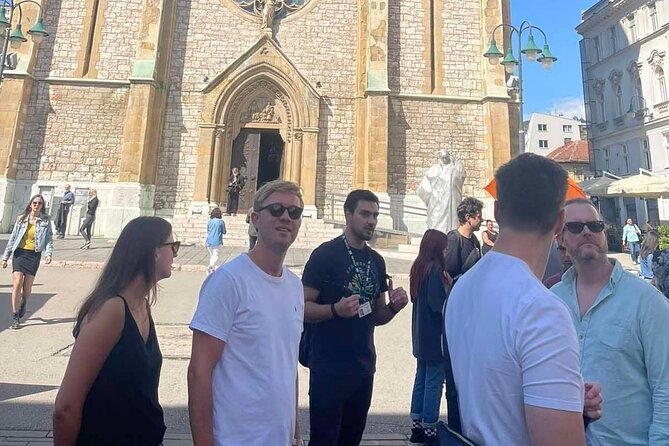
The Catholic Cathedral receives around 10 minutes, followed by another 10 minutes at the Serbian Orthodox Cathedral. These visits are short, but they complete the picture of Sarajevo as a city shaped by different faiths living near one another.
The route does not pretend that this mixture has always been simple or peaceful. Instead, it gives you enough places and context to see the city’s religious variety. I appreciate that the tour includes these buildings alongside the mosque and Jewish sites, rather than treating one tradition as the whole story.
Is $114.45 a fair price?
At $114.45 per person, this is not the cheapest way to see Sarajevo. It becomes better value when you count the hotel pickup, air-conditioned transport, guide, bottled water, lunch, Bosnian coffee, and admission to Vrelo Bosne and the War Tunnel.
You are also paying for route planning. Vrelo Bosne, the tunnel, Olympic track, Jewish Cemetery, Yellow Fortress, and Old Town are spread across different parts of the city. Arranging that combination independently would take time, especially if you do not know which sites need a vehicle.
Several admissions remain outside the package, including City Hall, Gazi Husrev-beg Mosque, and the Jewish Museum. Tips are also not included. The price makes most sense if you have only one or two days in Sarajevo and want context as much as sightseeing.
Who should book this day?
I would choose this tour if you want a fast but meaningful first look at Sarajevo, especially if you care about recent history, architecture, religion, and local stories. It suits people who prefer an informed guide to sorting out transport and sequence on their own.
It is also a strong choice for anyone who wants the war placed within a larger story. You see the city before and after the siege: Ottoman markets, imperial buildings, Olympic facilities, wartime sites, and today’s streets.
I would hesitate if you dislike a packed schedule, want extended museum time, or prefer to spend a whole day slowly eating and shopping in the Old Town. The walking section can feel full, and the day’s serious subject matter deserves some quiet afterward.
Pickup begins at 9:00 a.m., and the experience lasts about six to seven hours. Most people can participate, but the supplied information does not give a detailed accessibility assessment. Free cancellation is available up to 24 hours before the start, while poor weather or failure to reach the minimum group size can lead to a new date or full refund.
Should you book it?
Yes, if this is your first day in Sarajevo and you want the city explained rather than simply photographed. The strongest reasons are the War Tunnel, the Olympic track, the personal stories from guides such as Enes, Elvis, Edis, Ahmed, and Adnan, and the way the Old Town walk brings Sarajevo’s faiths and empires together.
Before you set out, confirm the lunch timing and ask which optional entrance fees you may want to pay. If you do that and accept the quick pace, this tour gives you a useful, emotional, and unusually broad introduction to Sarajevo.
FAQ
What is included in the tour price?
The price includes hotel pickup, an air-conditioned vehicle, a tour guide, bottled water, lunch, Bosnian coffee, admission to the War Tunnel Museum, and admission to Vrelo Bosne.
What is not included?
Tips are not included. Admission to Sarajevo City Hall, Gazi Husrev-beg Mosque, and the Jewish Museum of Bosnia and Herzegovina is also not included.
Where does the tour start?
Pickup is available from the lobby of your hotel or another location in Sarajevo.
What time does the tour begin?
The tour begins at 9:00 a.m.
How long does the experience last?
The tour lasts approximately six to seven hours.
Is the tour offered in English?
Yes. The experience is offered in English.
How many people can join?
The group has a maximum of 15 participants.
Does the tour include the Sarajevo War Tunnel?
Yes. The entrance fee to the Tunnel Museum is included, and about 40 minutes are scheduled for the visit.
Does the tour include the 1984 Olympic bobsled track?
Yes. The tour visits the Sarajevo Olympic Bobsleigh and Luge Track. Admission is free.
Can I cancel for a full refund?
You can cancel for a full refund up to 24 hours before the experience begins. Changes or cancellations made less than 24 hours before the start are not accepted for a refund.
More Full-Day in Sarajevo
- From Sarajevo: Full-Day Hike to Lukomir Village
★ 5.0 · 59 reviews - From Dubrovnik: Mostar and Medjugorje Full-Day Tour
★ 4.4 · 898 reviews - Mostar and Kravice Waterfalls Full-Day Tour from Split
★ 4.8 · 308 reviews - Full-Day Tour in Herzegovina, Blagaj, Počitelj, and Kravice
★ 5.0 · 33 reviews
Just added around Sarajevo
- Downhill Sarajevo MTB Mountain Biking Adventure on Trebevic – Half Day Tour★ 5.0 · 3 reviews
- Sarajevo War Tour with TRAVELPLUS★ 5.0 · 11 reviews
- Skakavac Waterfall Mountain Biking Tour from Sarajevo MTB★ 5.0 · 11 reviews
- Sarajevo: Private Transfer to and from Sarajevo Airport★ 5.0 · 19 reviews
- From Sarajevo: Visoko And Bosnian Pyramid Mistery★ 5.0 · 18 reviews
- Bosnian Traditional Handicraft, half-day – do it yourself – Coppersmith Workshop★ 5.0 · 13 reviews
- Hiking Prenj, Velika Kapa★ 5.0 · 14 reviews
- Three day Tara River Rafting and Jeep Safari Durmitor Tour★ 5.0 · 12 reviews
Yugoslav History Tours, compared.
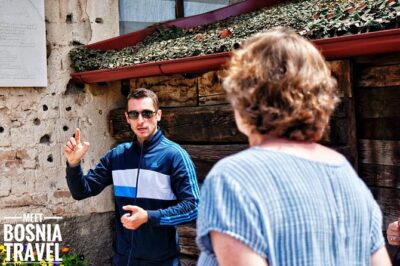
Fall of Yugoslavia, Sarajevo War Tour with Tunnel of Hope Museum and Frontlines
Read our review →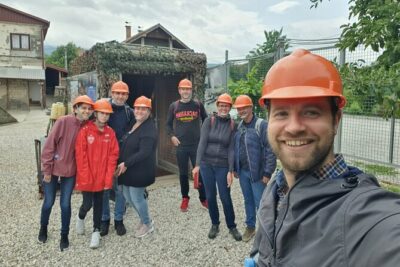
Tunnel Museum: Bosnian & Yugoslav Wars Tour with War Veteran
Read our review →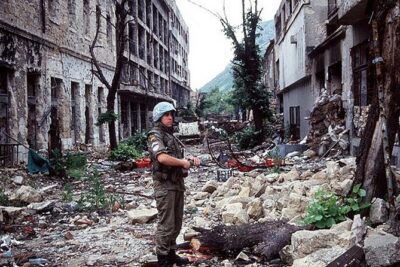
Break-up of Yugoslavia & The War in Mostar: Life Under Siege
Read our review →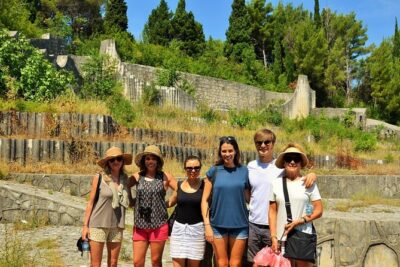
Sarajevo Grand Tour: Old Town, War Tunnel, Olympic Sites & More
Read our review →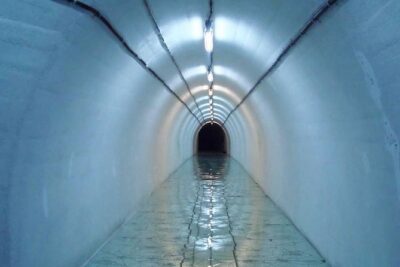
Utopia of Tito’s Yugoslavia, Tito’s Bunker & Siege of Sarajevo
Read our review →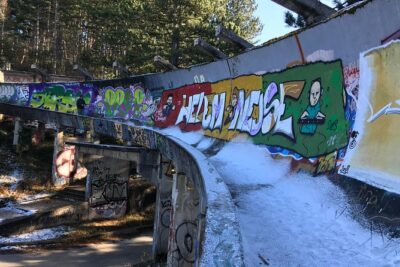
Olympic Mountains and Spring of Bosna River Tour
Read our review →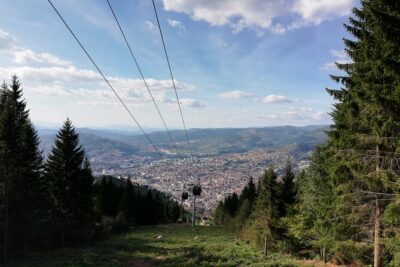
Browse the lists this tour appears in