
Reviewed · 1-DAY TOURS
Sarajevo: Day Trip to Bosnian Castles Vranduk, Tešanj & Srebrenik
The best thing about this day trip is its focus: three medieval Bosnian fortresses that sit well beyond Sarajevo’s usual sightseeing circuit. You travel through rural northern Bosnia with guide Adis, visiting Vranduk, Tešanj, and Srebrenik rather than spending another day among city museums and cafés.
I like the very small group, capped at three people, and I like the mix of castle views, local food, and clear historical context. The main drawback is the long day. You will spend far more time in the car than inside the fortresses, and the full route can run from about 10 hours 35 minutes to 10 hours 45 minutes.
Key points at a glance
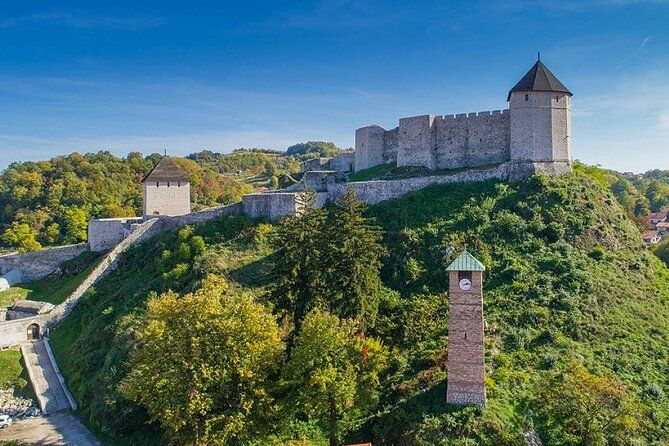
- Three very different fortresses: See Vranduk above the Bosnia River, Tešanj’s large fortified complex, and Srebrenik’s dramatic rock-top stronghold.
- A genuinely small outing: The group has a maximum of three people, allowing Adis to adjust the pace and respond to individual requests.
- Entry fees are included: Admission to Vranduk, Tešanj, Srebrenik, and the listed museums is covered.
- Lunch and local treats: The day includes lunch near Tešanj, plus cake tasting and Bosnian coffee near Srebrenik.
- A countryside day, not a quick castle sampler: Driving is a major part of the experience, with roughly two hours and 35 minutes spent visiting the fortresses.
- A personal touch from the guide: Adis is praised for his historical knowledge, kindness, flexibility, and, on some outings, drone footage of the castles.
Why these three castles make a worthwhile day from Sarajevo
Sarajevo gives you Ottoman streets, Austro-Hungarian buildings, museums, and the memory of the 20th century. This trip shifts the focus to medieval Bosnia and takes you into parts of the country that many visitors miss.
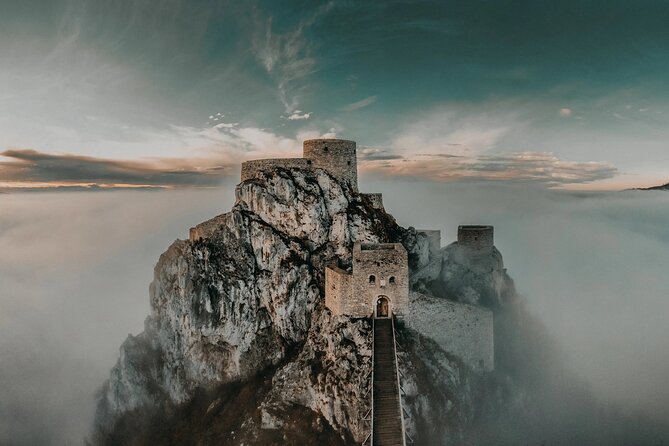
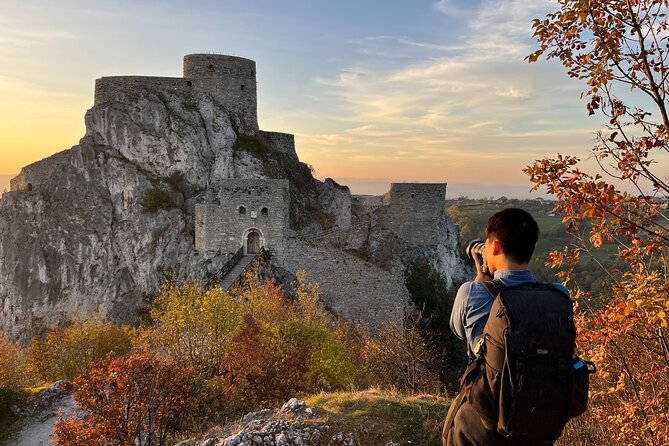
The three sites also work well together because they are not copies of one another. Vranduk is compact and perched above a river. Tešanj spreads across a much larger fortified area and includes museum displays. Srebrenik feels the most dramatic, with its walls set on a steep rock and a small bridge leading to the entrance.
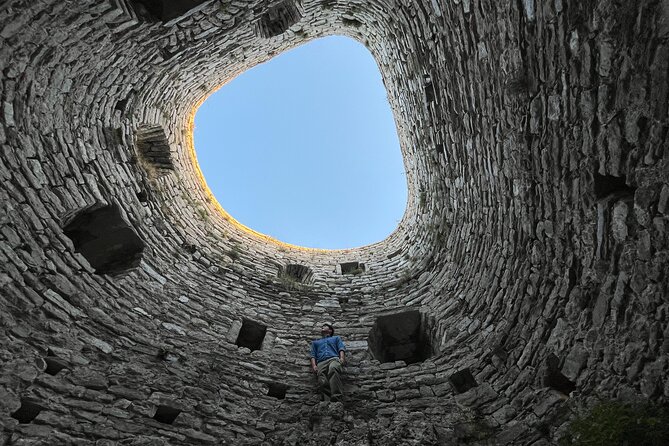
You should come for the combination of architecture, countryside, and local interpretation, not for long guided tours inside polished museum spaces. These are old fortresses with limited time on site. Their power comes from location, stonework, views, and the stories attached to them.
The price is $149 per person. That is a serious spend, but it covers a private-style vehicle experience for no more than three people, air conditioning, water, snacks, lunch, fortress admissions, museum admission, cake tasting, and Bosnian coffee. If you tried to arrange the same route independently, you would also need to manage the long drive, navigation, parking, admission costs, and the historical background.
A few more things to do around Sarajevo
- Visit Herzegovina from Sarajevo in one day
★ 5.0 · 80 reviews - From Dubrovnik: Mostar and Kravica Waterfall Day Trip
★ 4.7 · 4,709 reviews - Dubrovnik: Kravica Waterfalls, Mostar and Pocitelj Day Trip
★ 4.5 · 3,045 reviews
Starting at Aria Mall and heading north
The official meeting point is Trg djece Sarajeva 1, near Aria Mall, with an 8:30 a.m. start. Pickup from your hotel or apartment can also be arranged, and Adis will return you to your Sarajevo accommodation or another chosen address at the end.
The vehicle is air-conditioned, and water and snacks are provided. That matters on this route because the trip covers three cities and several long stretches of road. You are not simply moving between nearby attractions.
The group limit of three is one of the strongest practical features. A small party makes it easier to stop for questions, adjust the pace, or shorten the day if fatigue becomes a problem. One couple did exactly that because of jet lag, visiting two castles and leaving out Srebrenik.
Do not book this as a light morning excursion. It is a full day out, and the driving time is included in the stated duration. The exact total is described as approximately 10 hours 35 minutes in one place and 10 hours 45 minutes elsewhere, so plan for the longer figure.
Vranduk Fortress above the Bosnia River
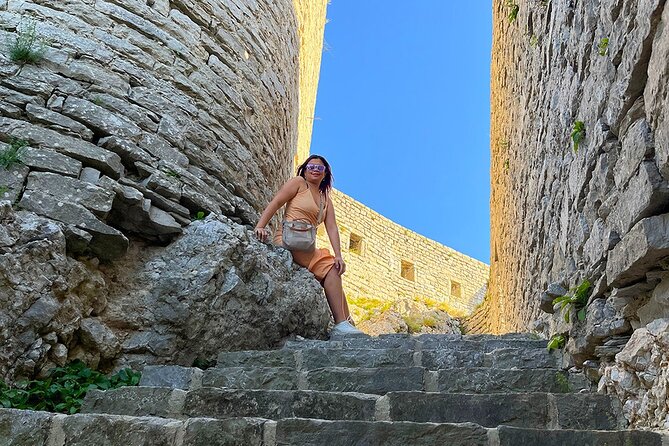
Your first major stop is Vranduk Fortress, about a 30-minute visit. The fortress sits on a sheer rock above the River Bosnia, giving you an immediate sense of why this position mattered.
Vranduk dates to the period of the Bosnian Kingdom and is associated with the 15th-century Bosnian King Stjepan Tomas. Its layout follows a familiar medieval pattern: a citadel with a main tower, protective walls, and the remains of a fortified settlement inside.
I like Vranduk as an opening stop because it quickly explains the logic of Bosnian castle building. Height, river access, and control of movement mattered more than decorative grandeur. From the fortress, you get broad views of the surrounding countryside and a useful setting for Adis to explain the political role of medieval towns.
The visit is short, so you should not expect a long museum session or a detailed archaeological tour. Instead, focus on the position of the fortress, the remaining walls, and the view. Vranduk has been declared a national monument of Bosnia and Herzegovina, and its appeal comes from that combination of history and setting.
Tešanj Castle and its museum displays
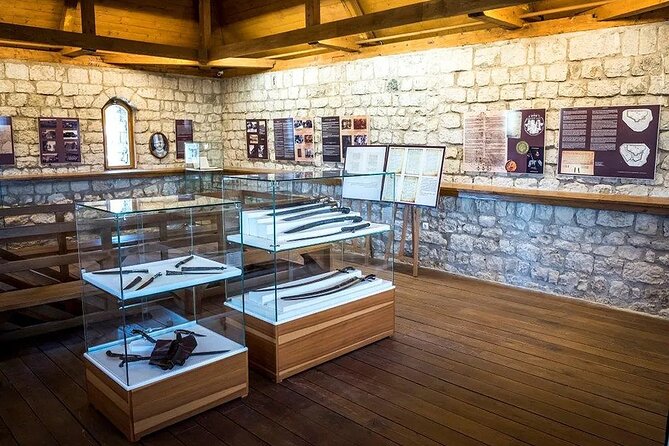
Tešanj receives about 35 minutes, followed by lunch in the town. The fortress is one of Bosnia and Herzegovina’s largest historic defensive complexes, covering about 6,296 square meters.
Its story reaches back to the Bronze Age, with later additions and changes linked to the Romans, Slavs, and Ottomans. During Ottoman rule, the castle held a permanent Ottoman army garrison. That layered past gives Tešanj more historical range than a single-period medieval ruin.
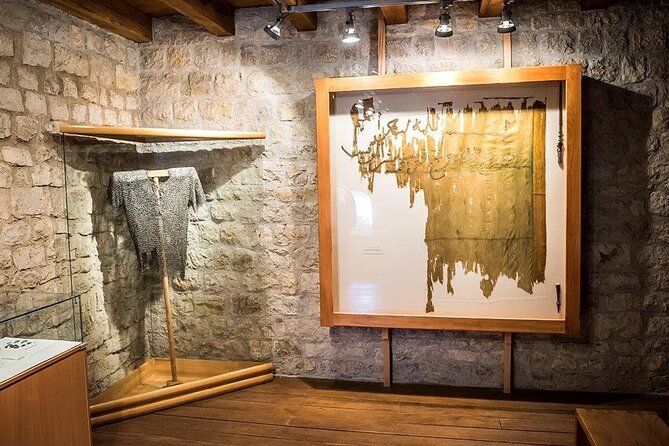
The basic structure includes a citadel, main tower, protective wall, and the remains of a medieval town. Three museums are located within the castle complex. Displays include an Ottoman Turkish flag connected with the Battle of Mohács, along with material about Tešanj in the 19th and 20th centuries and figures such as mayor Hamdibey Ajanovic and politician Zijad-bey Djonlagic.
The short visit means you will need to keep moving. If you enjoy reading every museum label, the schedule may feel tight. If you prefer a broad introduction followed by views and conversation, the timing is more manageable.
Tešanj is also where the day gets a welcome food break. Lunch is served at Kapija Grill House near the castle, with grilled meats, salads, and homemade soups listed among the choices. Lunch is included, though the exact menu and any dietary arrangements should be confirmed before departure.
Same base, a different kind of day out:
- Sarajevo: Mostar, Konjic, Blagaj Tekke, Pocitelj & Waterfall
★ 4.9 · 1,335 reviews - Fall of Yugoslavia, Sarajevo War Tour with Tunnel of Hope Museum and Frontlines
★ 5.0 · 1,314 reviews - Sarajevo: Mostar, Konjic, Sufi House, Pocitelj & Kravice Falls
★ 5.0 · 1,179 reviews - ROSES OF SARAJEVO (Official WAR + CITY tour)- Story of a Survivor
★ 5.0 · 770 reviews
Lunch in Tešanj, with a practical pause
The lunch stop lasts about 30 minutes. That is not a long restaurant meal, but it breaks up the driving and gives you time to eat before the final fortress.
The food focus is straightforward Bosnian grill rather than a formal tasting menu. You can expect the kind of meal that suits a day on the road: grilled dishes, fresh salad, and soup in a relaxed setting.
This is also a good moment to tell Adis if you need a slower pace later. The small group format gives you more room for that kind of communication than a large coach tour. Still, the route has three planned fortresses, so any major change may mean skipping a stop.
Srebrenik Fortress and the small bridge entrance
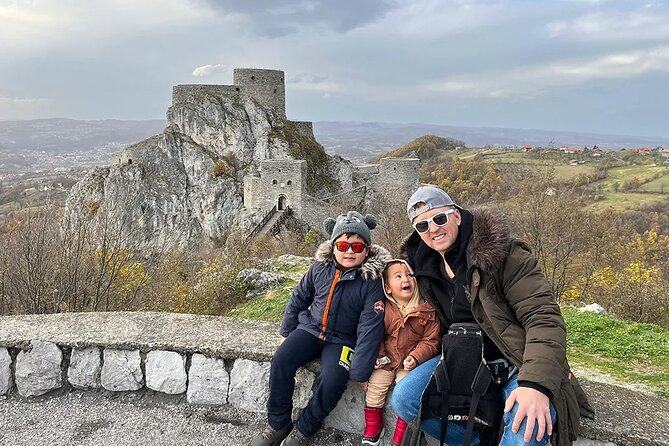
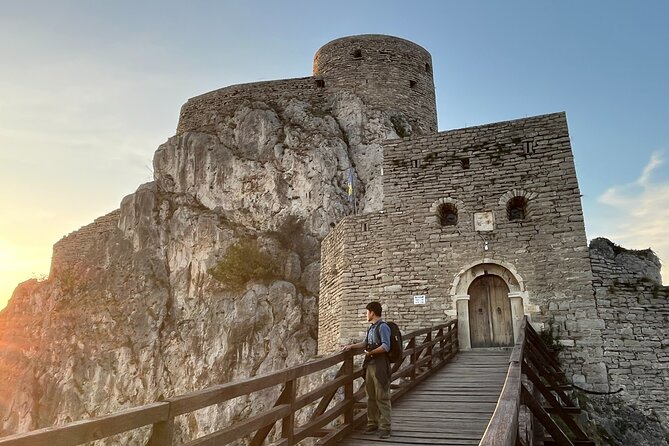
Srebrenik is the most visually striking stop for many visitors. You have about 35 minutes to explore this well-preserved fortress, which dates to 1333.
The castle sits on a steep, almost inaccessible rock on the northeastern slopes of the Majevica mountain area. A deep trench lies below it, and the only entrance is reached by a small bridge. That approach makes the fortress easy to understand as a defensive site before you even hear the history.
Srebrenik was occupied by the Ban of Bosnia, Stephen II Kotromanić, until his death in 1353. It has been a national monument of Bosnia and Herzegovina since 2004.
You should allow time to look outward as well as inward. The views and the position are central to the experience. The fortress is not a large modern attraction with extensive facilities, so the visit is about stone walls, access, terrain, and the story of medieval power.
The short stop may be frustrating if Srebrenik becomes your favorite site. You will have enough time to see it, but not enough for a slow, detailed exploration of every corner. This is one reason the small group helps: Adis can focus the explanation on what interests you most.
Cake tasting and Bosnian coffee near Srebrenik
The day includes cake tasting and Bosnian coffee near Srebrenik. This is a small but valuable local touch, since it gives the route a social pause instead of making the castles feel like a series of quick photo stops.
Coffee is part of everyday hospitality in Bosnia and Herzegovina, and this stop gives you a chance to sit, talk, and process what you have seen. It also provides a little energy before the return drive to Sarajevo.
The supplied schedule does not give an exact duration for this break, so you should treat it as part of the flexible food and refreshment time rather than a separately timed attraction.
What the drive adds, and what it costs
This is not an efficient route if your only goal is to collect castle entrances. The fortresses are spread across northern Bosnia, and driving is a large part of the day.
That time is not wasted if you enjoy watching the countryside change and talking with a local guide. Several people praised the rural views and the chance to see a side of Bosnia that is easy to miss from Sarajevo. Adis also brings personal insight into the country’s past and the losses caused by its many wars.
The tradeoff is simple: more road time means more variety. You get three distinct sites and a broader sense of the country, but you give up the relaxed pace of a single-site excursion.
The vehicle, water, snacks, and included meals make the long day easier. Even so, I would not choose this tour if you dislike road journeys, need frequent unscheduled stops, or prefer to spend most of the day walking through one large museum.
Adis as guide and the value of a very small group
The guide is Adis, and the strongest praise centers on his warmth, flexibility, historical explanations, and care with small details. He is described as friendly, timely, easy to talk with, and willing to accommodate individual requests.
On some outings, Adis has also used a drone to record the castles and the group’s experience from above. That is an unusual extra, but it should not be treated as the core reason to book. The core value is having someone explain Bosnia’s medieval kingdoms, fortress locations, and later political changes while you are standing in the places themselves.
The maximum group size is three. That is closer to a private tour than a standard group excursion, though the price is still charged per person. It can suit couples, families, or solo visitors who want conversation and flexibility.
The small group also makes the tour more personal when the day runs long. You are not trying to keep up with 30 other people, but you still need to respect the overall route and return time.
Practical facts before you reserve
Pickup is offered from your hotel or apartment, while the listed meeting point is Trg djece Sarajeva 1 by Aria Mall. The start time is 8:30 a.m., and the tour returns to Sarajevo.
English is the offered language. Service animals are allowed, public transportation is nearby, and most people can participate according to the supplied activity information.
Admission is included for Vranduk Fortress, Tešanj Castle, Srebrenik Fortress, and the listed museum visits. Lunch, snacks, bottled water, cake tasting, and Bosnian coffee are also included.
Free cancellation is available up to 24 hours before the start time. Changes or cancellations inside that 24-hour window are not accepted for a refund. The activity also requires a minimum number of participants, and if that minimum is not met, you are offered another date, another experience, or a full refund.
Who should book this castle day trip
I would choose this excursion if you want medieval Bosnia, quiet countryside, and a guide who can connect the stones to the country’s larger story. It is especially suited to people who enjoy architecture, local history, scenic drives, and lesser-known places.
Families may like the variety, since the day includes short site visits, food, views, and a moving vehicle rather than one long museum block. Couples and solo visitors may appreciate the small group and the chance to set the conversational pace.
I would think twice if you have only limited energy, are badly affected by jet lag, or want a slow day. The earlier departure and long return make it a demanding outing. You can ask to shorten the route, as one couple did, but that means missing one of the three castles.
Should you book it?
Book this tour if the journey matters as much as the monuments. For $149, you get transport, a very small group, three fortress visits, admissions, lunch, snacks, coffee, and a guide who brings local context to places you might struggle to reach alone.
Skip it if you want long, unhurried time inside each castle or if a 10-hour road day sounds tiring. For the right visitor, though, this is one of the better ways to move beyond Sarajevo and see the country’s medieval past in its actual setting.
FAQ
Where does the tour start?
The listed meeting point is Trg djece Sarajeva 1 in Sarajevo, near Aria Mall. Pickup from your hotel or apartment is also offered.
What time does the tour begin?
The scheduled start time is 8:30 a.m.
How long does the tour last?
The duration is approximately 10 hours 35 minutes. The additional information also gives a total of about 10 hours 45 minutes, so you should plan for a full day.
Which castles are included?
The route includes Vranduk Fortress, Tešanj Castle, and Srebrenik Fortress.
How much time is spent at the fortresses?
The stated visiting time for the castles and fortresses totals about two hours and 35 minutes. The rest of the day includes driving, lunch, refreshments, and other stops.
Is lunch included?
Yes. Lunch is included and is planned at Kapija Grill House near Tešanj Castle.
Are entrance fees included?
Yes. Admission to Vranduk Fortress, Tešanj Castle, Srebrenik Fortress, and the listed museums is included.
Is the tour private?
The activity has a maximum of three travelers, making it a very small group experience. It is not described as exclusively private for every booking.
Is the tour offered in English?
Yes. English is the listed language.
Can I cancel for a full refund?
Yes, if you cancel at least 24 hours before the experience start time. Cancellations or changes made less than 24 hours before departure are not refunded.
Just added around Sarajevo
- Downhill Sarajevo MTB Mountain Biking Adventure on Trebevic – Half Day Tour★ 5.0 · 3 reviews
- Sarajevo War Tour with TRAVELPLUS★ 5.0 · 11 reviews
- Skakavac Waterfall Mountain Biking Tour from Sarajevo MTB★ 5.0 · 11 reviews
- BOSNIAN PYRAMIDS TOUR (nature, history & archeology)★ 5.0 · 17 reviews
- Sarajevo: Mostar Konjic Blagaj Pocitelj Fortica Skywalk Waterfall★ 5.0 · 14 reviews
- CENTRAL BOSNIA | A medieval tour (Jajce + Travnik + Pliva lakes)★ 5.0 · 11 reviews
- Balkan trip★ 5.0 · 11 reviews
- Sarajevo Uncovered: Old Town Tour with Coffee and Food Tasting★ 5.0 · 12 reviews
1-Day Tours, compared.
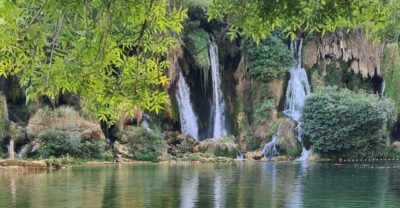
Kravica Waterfalls, Mostar and Pocitelj Day Trip
Read our review →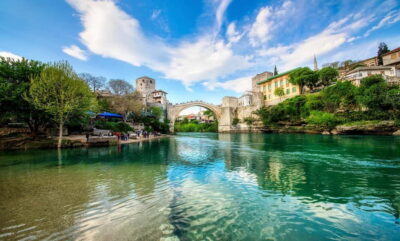
Mostar & Kravice Waterfalls: Guided Day Trip from Dubrovnik
Read our review →
Browse the lists this tour appears in