
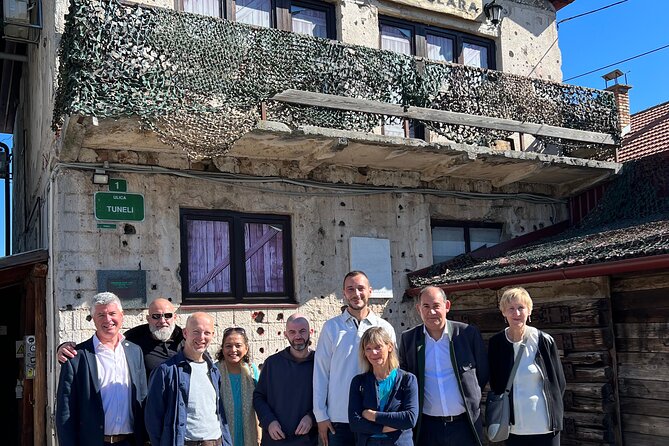
Reviewed · CITY TOURS
ROSES OF SARAJEVO (Official WAR + CITY tour)- Story of a Survivor
Sarajevo’s story becomes personal on this tour. You do not just see the Tunnel of Hope, Sniper Alley, or the Olympic bobsled track. You connect those places to the life of a survivor who grew up during the siege and can explain what the city endured.
I like the small-group format, with no more than 15 people and a maximum of eight assigned to one guide. I also like the way the route joins Sarajevo’s Ottoman, Austro-Hungarian, Yugoslav, Olympic, Jewish, and wartime chapters in one day. The main consideration is emotional: the tour deals directly with death, shelling, displacement, and childhood trauma.
Key points at a glance
- A survivor’s account: Mak is the guide most often named, and his childhood memories give the Siege of Sarajevo a human scale.
- The Tunnel of Hope: Walk through part of the wartime tunnel and visit the museum, with the €10 entrance fee paid separately.
- A full-city route: See the Presidency, Sniper Alley, East Sarajevo, Trebević, the Olympic sites, Jewish Cemetery, Latin Bridge, City Hall, and Yellow Fortress.
- Strong mountain views: Trebević, Urijan Dedina, and Yellow Fortress offer some of the clearest views across Sarajevo.
- Useful political context: The route explains Bosnia and Herzegovina’s two entities and the complicated structure of its present government.
- Good value for a first visit: At $53.21, the tour combines transport, guiding, major sights, and a personal wartime account in about four hours.
Why this Sarajevo tour feels different
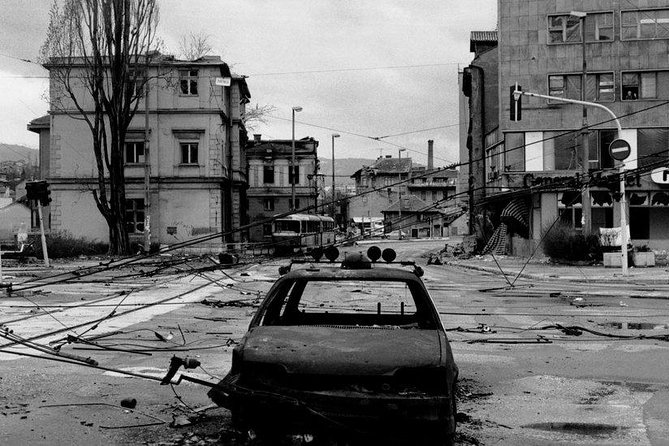
Many city tours can point out a shell hole and name a date. This one tries to explain how the shelling changed daily life, families, neighborhoods, and the future of the country.
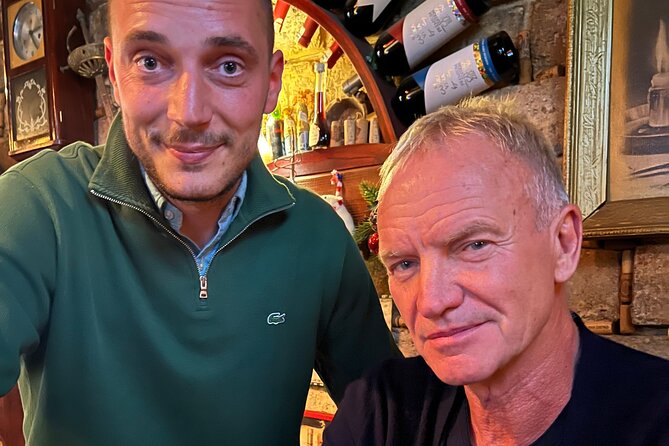
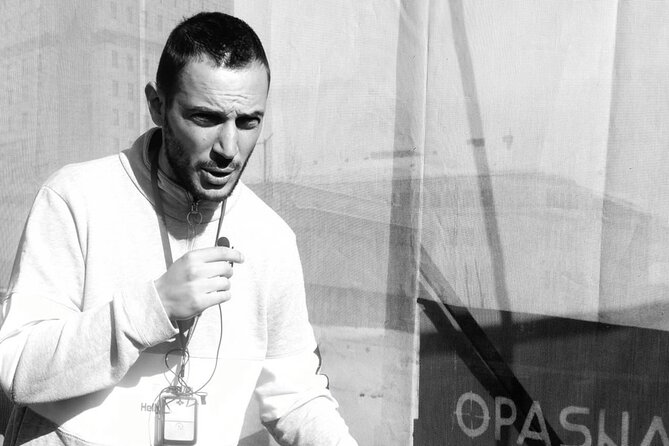
Mak is the guide most frequently named in the feedback, though Alen and Alnan are also mentioned. Mak’s personal account is the center of the experience. He was a child during the Siege of Sarajevo, and the route includes the part of Dobrinja where he was born, near one of the main front lines.
That detail matters. You are not hearing only a military timeline. You are hearing about growing up before, during, and after the war, including the effect on his family and the difficulty of returning to life after the conflict. His style also includes warmth and humor, which gives the tour some breathing room during difficult subjects.
I would not call this a light sightseeing outing. The guide discusses victims, minefields, shelling, sniper fire, forced separation, and the political causes and consequences of the war. The tone is serious, but it is not without beautiful views, old architecture, and moments of everyday Sarajevo.
A few more things to do around Sarajevo
- Delicious Sarajevo: Eat, Walk & Discover City Tour
★ 4.5 · 37 reviews - Sarajevo City SIghtseeing / War Bike Tour
★ 5.0 · 13 reviews - Mostar city Tour
★ 5.0 · 34 reviews
From Sacred Heart Cathedral to Little Yugoslavia
The tour begins near Đulagina 2, in central Sarajevo. Before the minivan heads toward the wartime sites, you receive a short introduction to the Sacred Heart of Jesus Cathedral.
This is a useful starting point because Sarajevo’s identity cannot be reduced to one faith or one empire. The cathedral helps introduce the city’s Catholic presence, while later stops touch on Muslim, Orthodox, and Jewish communities. The city’s old nickname, Little Yugoslavia, points to the mixture of cultures and backgrounds that shaped daily life before the war.
As you drive, the guide explains more than 20 monuments connected to the Ottoman, Austro-Hungarian, and Yugoslav periods. That moving introduction helps you read the city before reaching the war sites. Sarajevo’s recent past is easier to understand when you first see the older layers beneath it.
The Tunnel of Hope and the mechanics of survival
The main museum stop takes about two hours, including the drive and the visit. The entrance fee is not included and costs €10 per person.
You begin with the Kolar family war house, an important part of the Tunnel of Hope story. The route then includes a 17-minute, 44-second film, displays about minefields, the 1992 to 1995 Sarajevo War Museum, and a war room with a war journal area.
The most powerful part is walking through the remaining section of the Tunnel of Hope. During the siege, this underground route linked besieged Sarajevo with territory controlled by the Bosnian government. It served as a survival path for supplies and people. The tunnel was cramped and practical, not a polished tourist attraction, and that is part of its value.
You receive about 10 to 15 minutes of free time at the museum. That is enough for a closer look, but not enough for an unhurried museum visit if you want to read every display. If the tunnel is your main reason for booking, keep your attention on the film, the museum material, and the short walk rather than expecting a large underground complex.
Roses, victims, and the road through Sniper Alley
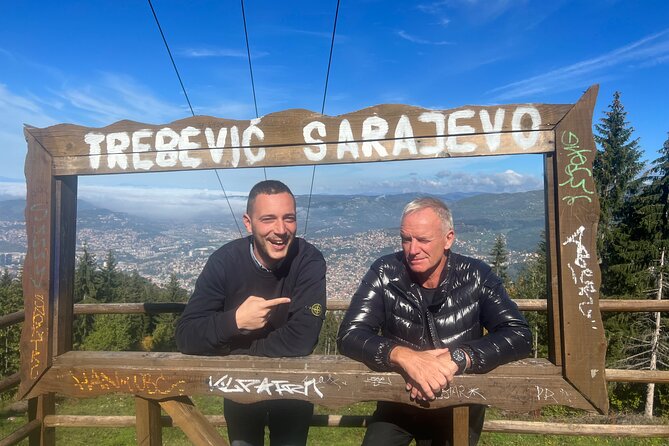
The name Roses of Sarajevo refers to shell impacts filled with red resin at places where people were killed. One of the stops explains the largest Sarajevo Rose in the city, along with the number of victims in 1994 and 1995.
The route then follows Sniper Alley, the main boulevard exposed to fire from the surrounding hills. You pass the Holiday Inn, known during the siege as a base for war journalists and also as a place used for exchanges involving soldiers. The guide explains why the hotel became such a symbol of the city’s wartime reporting.
You also pass the Historical Museum of Bosnia and Herzegovina, positioned beside one of the major sniper-alley areas. The National Museum appears during the drive through the Austro-Hungarian part of the city, along with an explanation of the Sarajevo Haggadah, the famous illuminated Jewish manuscript held in Sarajevo.
This section works best when you look beyond the road itself. The guide links ordinary buildings, hotels, museums, and bridges to the danger people faced while trying to cross the city. You begin to see that the siege was fought through daily movement, not just through military positions.
Same base, a different kind of day out:
- Sarajevo: Mostar, Konjic, Blagaj Tekke, Pocitelj & Waterfall
★ 4.9 · 1,335 reviews - Fall of Yugoslavia, Sarajevo War Tour with Tunnel of Hope Museum and Frontlines
★ 5.0 · 1,314 reviews - Sarajevo: Mostar, Konjic, Sufi House, Pocitelj & Kravice Falls
★ 5.0 · 1,179 reviews - Sarajevo: Mostar, Konjic, Počitelj, Sufi House, & Waterfalls
★ 4.9 · 572 reviews
Presidency, Yugoslavia, and a difficult political present
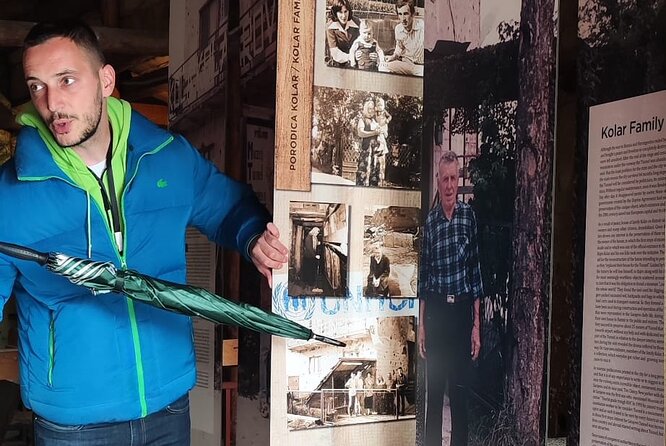
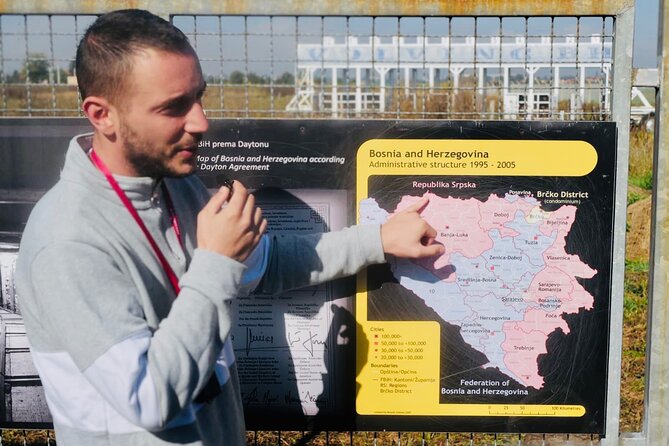
The tour explains Yugoslavia and stops by the monument to the liberation of Sarajevo from the Second World War. It also passes the Presidency of Bosnia and Herzegovina, often described as one of Europe’s most complicated political institutions.
The political explanation is valuable because the war did not end the country’s divisions. Bosnia and Herzegovina contains two main entities, the Federation of Bosnia and Herzegovina and Republika Srpska, with a separate administrative district at Brčko that is not part of this tour’s description. The route takes you into East Sarajevo, located in Republika Srpska, and explains how the two entities differ.
You do not need a political science background to benefit from this stop. The guide connects the structure of the government to ethnic identity, territory, and the war’s legacy. I especially like that the tour does not treat the conflict as a closed chapter. It shows how the past still affects the way the country is organized.
Dobrinja and the survivor’s childhood
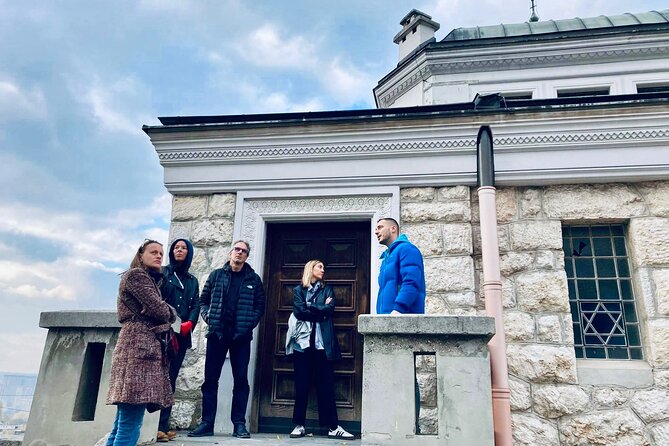
At Butmirska cesta, you visit part of the survival route that connected Sarajevo with free Bosnian territory. This stop takes about 10 minutes and has no admission fee.
The next stop is Dobrinja, also about 10 minutes. This is one of the most personal points on the route because the survivor guide was born there, on one of the main front lines. You hear about childhood before the war, life during the siege, and the period after the fighting ended.
I would give this section your full attention. It is easy to absorb a war through dates and maps, but a child’s experience explains the fear and confusion in a way a battlefield diagram cannot. The guide’s story includes his family’s escape to Switzerland and the difficulties they faced even after returning, according to the experience description shared by past participants.
Trebević, sniper positions, and Sarajevo from above
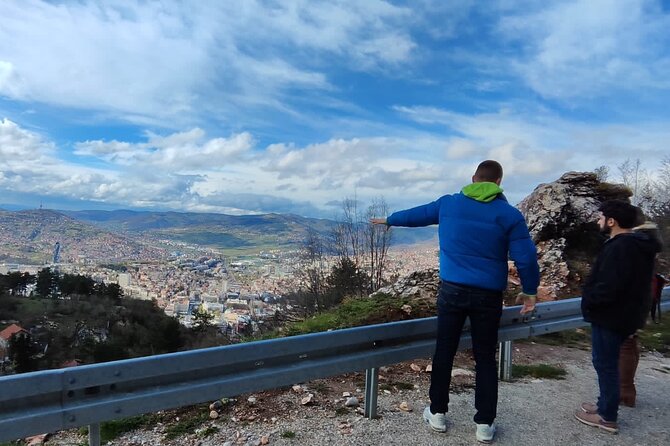
The drive continues toward Trebević Mountain, once a major source of fire over the city. At Trebević Vidikovac, you have about 20 minutes for the panorama and an explanation of the first and second sniper zones.
The guide also points out SunnyLand, a leisure facility described on the tour as a former sniper zone during the 1992 to 1995 war. The contrast is striking. A place now linked with recreation sits within a setting once used to threaten the city below.
At Urijan Dedina, you get another viewpoint over Sarajevo’s main boulevard and the areas affected by sniper fire. These stops are not just scenic breaks. From the hills, you can understand the city’s shape and why the surrounding high ground mattered so much to the siege.
The route also points out a hilly neighborhood, or mahala, and explains its social life. This adds a needed ordinary note to a difficult day. Sarajevo is not only a map of military lines. It is also a city of steep streets, close neighborhoods, homes, and strong local ties.
Olympic Sarajevo and the famous bobsled track
Sarajevo hosted the Winter Olympics in 1984, long before the city became known around the world for the siege. The tour visits the Olympic village, points out communist Yugoslav architecture, and stops at the Olympic bobsleigh and luge track.
The bobsled track visit takes about 30 minutes. You walk along the famous concrete course and reach the best photo spot. Nature and wartime damage have changed parts of the track, and the site now carries two memories at once: international optimism in 1984 and the later use of the hills during the siege.
This is one of the more visual stops, and it provides a break from indoor displays and personal testimony. Still, do not mistake it for a separate Olympic museum visit. The focus is the track itself, its setting, and its place in Sarajevo’s modern story.
Jewish Sarajevo and the European Jerusalem
The Jewish Cemetery stop lasts about 25 minutes. You see monuments dating from the 16th century, a memorial to Jewish victims of the Second World War, and the area around the synagogue.
The tour presents Sarajevo as a European Jerusalem, a city where several religious traditions lived close together. It also introduces the Ashkenazi Jewish community and shows the Ashkenazi Synagogue in the Austro-Hungarian part of the city.
This section gives the tour more balance. The Sarajevo story is not only Ottoman and wartime. Jewish life, Catholic institutions, Orthodox traditions, and Austro-Hungarian planning all form part of the city you see today.
Bridges, first victims, and the road to World War I
At the Suada and Olga Bridge, the guide explains both sides of the Vrbanja Bridge. One side is linked with the first victim of the Sarajevo siege. The other is remembered as the Sarajevo Romeo and Juliet Bridge, connected with a tragic love story during the war.
The stop is short, about five minutes, so expect a concise explanation rather than a long walk. It is followed by more city views, including the 1984 Olympic hall at Skenderija and a former frontline area.
Later, the route reaches the Latin Bridge, near the assassination of Archduke Franz Ferdinand that helped trigger World War I. You also pass Hotel Saray and hear about Sarajevo City Hall, now the National Library. The building was burned twice in its history, making it another reminder of how political violence has repeatedly damaged the city’s cultural institutions.
Yellow Fortress and the best final view
The final stop is Yellow Fortress, where you have about 20 minutes. This is one of Sarajevo’s best panorama and sunset spots, with a clear view over the city and its surrounding hills.
The guide uses the viewpoint to explain Ottoman Sarajevo. Ending here is smart. After hours of seeing where the city was attacked, divided, and defended, you look across a living city rather than at a battlefield.
If you can choose the departure time, a late afternoon start may give you a chance at sunset. The tour schedule and weather determine what you actually see, so do not treat sunset as guaranteed. The viewpoint is still worthwhile in daylight.
What the $53.21 price includes
At $53.21 per person, the tour offers solid value for a four-hour-and-15-minute route. You get an English-speaking driver-guide, transport in an air-conditioned minivan, the city’s major war sites, several historic landmarks, and mountain viewpoints that would be difficult to connect efficiently on foot.
The Tunnel of Hope museum entrance is extra at €10. Yellow Fortress admission is included. Since the tunnel is a central part of the day, add that fee when working out the real cost.
The price is strongest if you have limited time in Sarajevo. Instead of arranging separate taxis to Dobrinja, Trebević, the bobsled track, East Sarajevo, the cemetery, and the tunnel, you cover them in one organized route. If you prefer slow museum visits or long periods at each viewpoint, the packed schedule may feel fast.
The group limit also matters. One guide can handle up to eight people, while the overall activity can reach 15. Ask at booking if you want to know the expected group size or specifically hope for Mak. The experience has been particularly praised for its organization, comfortable van, clear explanations, and the guide’s personal connection to the subject.
Who should book it
I would choose this tour early in a Sarajevo stay if you want a working framework for the city. It gives you the major historical pieces, from Ottoman foundations and Austro-Hungarian buildings to Yugoslavia, the Olympics, the siege, and today’s political structure.
It suits adults and older children who can handle difficult wartime material. Children must be accompanied by an adult, and the emotional content deserves some thought before booking.
I would skip it if you want a relaxed architecture tour, a food-focused outing, or a day with no graphic or painful subjects. The route is long, the schedule is full, and the survivor’s story can be heartbreaking. You also spend time in a vehicle, with short stops rather than extended exploration.
For most people interested in understanding Sarajevo, I would book it. The strongest reason is not the number of stops. It is the link between those stops and a survivor’s life. You see the city’s beauty, but you also learn what it cost to keep that city alive.
FAQ
How long does the Roses of Sarajevo tour last?
The tour lasts approximately 4 hours and 15 minutes.
What is included in the price?
The price includes an English-speaking driver-guide and transport in an air-conditioned minivan.
Is the Tunnel of Hope entrance included?
No. Admission to the Tunnel of Hope Museum costs €10 per person and is paid separately.
Where does the tour begin and end?
It begins at Đulagina 2, Sarajevo 71000, Bosnia and Herzegovina, and ends back at the same meeting point.
How large is the group?
One guide has a maximum of eight people, while the whole activity can have up to 15 people.
Can children join the tour?
Yes. Children can participate but must be accompanied by an adult.
Just added around Sarajevo
- Downhill Sarajevo MTB Mountain Biking Adventure on Trebevic – Half Day Tour★ 5.0 · 3 reviews
- Skakavac Waterfall Mountain Biking Tour from Sarajevo MTB★ 5.0 · 11 reviews
- Sarajevo War Tour with TRAVELPLUS★ 5.0 · 11 reviews
- Canyoning Rakitnica river★ 4.5 · 11 reviews
- Sarajevo to Dubrovnik: One-Way Tour via Mostar, Kravica Falls, Blagaj & Pocitelj★ 5.0 · 12 reviews
- Transfer from Sarajevo to Kotor+Herzegovina tour★ 5.0 · 17 reviews
- Sarajevo City SIghtseeing / War Bike Tour★ 5.0 · 13 reviews
- LUKOMIR VILLAGE HIKE & TREK TOUR (nature, hike, food & panorama)★ 5.0 · 11 reviews
City Tours, compared.

Delicious Sarajevo: Eat, Walk & Discover City Tour
Read our review →
Banja Luka City Tour & A magical journey on Dayak boat
Read our review →
Browse the lists this tour appears in