
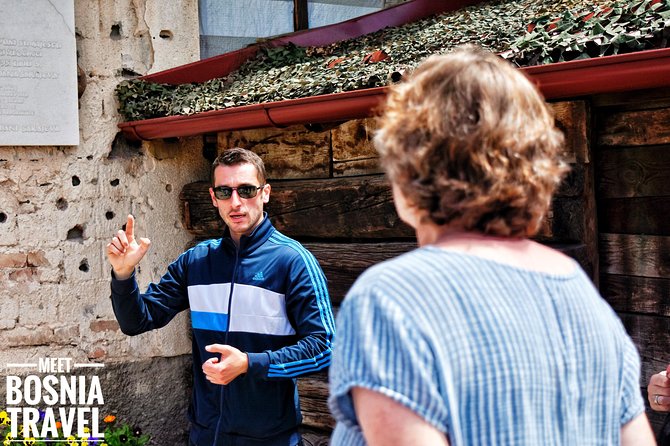
Reviewed · SARAJEVO WAR HISTORY TOURS
Fall of Yugoslavia, Sarajevo War Tour with Tunnel of Hope Museum and Frontlines
Sarajevo’s recent past is impossible to understand from the old town alone. This tour takes you from the War Tunnel, the besieged city’s only outside link, to Sniper Alley, Olympic sites, cemeteries, and mountain viewpoints that reveal how Sarajevo was surrounded. It is a serious tour, but the route gives you a clear sense of place rather than a classroom lecture.
I like two things here: the mix of personal stories and physical evidence, and the chance to cover far-flung locations in a comfortable vehicle. Guides including Ayoub, Almir, Tarik, Ago, and Emin have been praised for clear explanations, good pacing, and, in some cases, family memories of the war. The main consideration is emotional weight. You will see damaged buildings, war cemeteries, and places tied to civilian deaths, so this is not a light sightseeing outing.
Key points at a glance
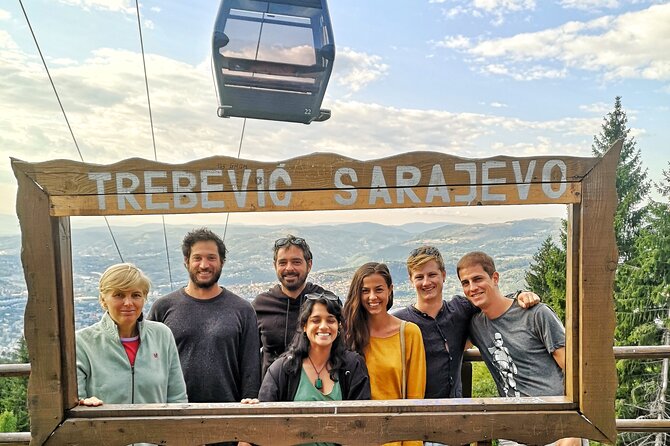
- The War Tunnel explains Sarajevo’s survival: Walk through part of the 800-meter tunnel that connected the surrounded city with the outside world.
- Sniper Alley is still part of the city: Pass the former Holiday Inn, damaged Yugoslav-era buildings, and streets once exposed to daily sniper fire.
- The 1984 Olympics add another layer: Visit the Olympic Stadium area and the striking bobsleigh and luge track on Trebević Mountain.
- Yellow Fortress gives you the opening lesson: Begin with a wide view of Sarajevo and a nearby defenders’ cemetery.
- Personal guiding matters here: The best part of the tour is often the way guides explain causes, consequences, and family memories in plain English.
- The value is strong at $36.28: Transport, hotel pickup, a local guide, fuel, air conditioning, and water are included, but the Tunnel Museum admission costs extra.
Why this four-hour route matters
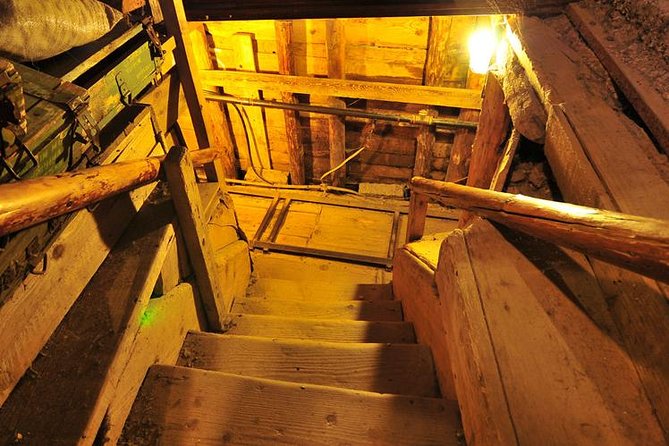
The Fall of Yugoslavia and the Siege of Sarajevo can feel confusing if you encounter them only as dates and political names. This outing gives you a physical map of the story. You see the hills around Sarajevo, the open streets that exposed civilians to gunfire, the tunnel that kept the city alive, and the Olympic facilities later damaged by war.
The route also shows that Sarajevo is not a city with one tidy historical label. The same mountain that hosted the 1984 Winter Olympics became a military position during the siege. The same streets used by journalists and peacekeepers became known worldwide as Sniper Alley. That contrast makes the tour worth doing early in your stay, because it helps you understand the city before you explore it on foot.
At $36.28 per person, I consider this a good value for a four-hour outing. You are paying for a local guide, vehicle, fuel, bottled water, and hotel pickup, not just entry to one museum. The extra Tunnel Museum fee is modest: 15 BAM for adults and 5 BAM for students with identification. Still, remember that food, drinks other than water, and hotel drop-off are not included.
More siege and war history walks in Sarajevo
- Tunnel Museum: Bosnian & Yugoslav Wars Tour with War Veteran
★ 5.0 · 551 reviews - Sarajevo War Tour: A Veteran’s Story of the Siege (fees included)
★ 5.0 · 326 reviews - Sarajevo 1425 days under the siege – War Tour
★ 5.0 · 170 reviews
Yellow Fortress begins with the view
The tour opens at Yellow Fortress, where you get one of Sarajevo’s clearest panoramic views. The guide uses the scene below to explain the shape of the city and the basic story of the siege. A defenders’ cemetery is visible from the fortress, so the introduction connects the broad view with the human cost of the conflict.
You have about 25 minutes here, including admission. That is enough time for orientation, photographs, and questions without turning the stop into a long lecture. I like this beginning because it gives you the geography first. When the guide later points out roads, hills, neighborhoods, and military positions, you have a better idea of how they fit together.
The view is also a useful pause before the heavier stops. The tour does not begin inside a dark museum or with a list of casualties. It begins outdoors, with Sarajevo spread out below you and the guide setting the context.
Olympic Sarajevo, damaged hospitals, and the Romeo and Juliet graves
From Yellow Fortress, the vehicle moves around the Olympic complex. Sarajevo hosted the Winter Olympic Games in 1984, a period often remembered as a high point for the city and for Yugoslavia. The tour then shows how several Olympic and civic sites became part of the later wartime story.
You pass the destroyed children’s hospital and the grave of Sarajevo’s Romeo and Juliet. The latter refers to a young couple whose deaths became one of the most painful symbols of the siege. This is a brief stop or drive-by rather than a long museum visit, but the guide’s explanation is important. It connects the broad political collapse of Yugoslavia to ordinary people caught in the fighting.
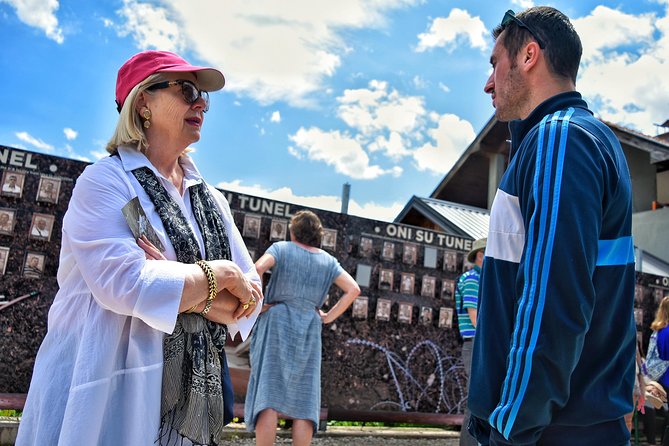
You also pass the Stadium Cemetery. Sarajevo has several cemeteries created or expanded during the war, and seeing one in the middle of the city makes the scale of the siege harder to dismiss as distant history. The stop may feel quiet, but that is part of its effect. Listen to the guide here rather than rushing for photographs.
The War Tunnel Museum shows how Sarajevo stayed connected

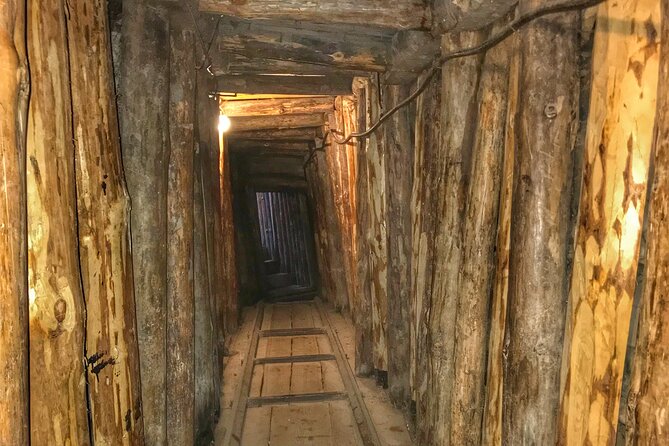
The Tunnel of Hope is the central stop. During the four-year siege, this 800-meter passage provided the only connection between Sarajevo and the outside world. Today, a section operates as a museum, and you can walk through part of the tunnel.
Admission is not included in the tour price. Adults pay 15 BAM, while students pay 5 BAM with a valid student ID. Bring cash or be prepared to pay the museum fee separately, since it is the one major cost attached to the itinerary.
Allow about an hour for this stop. The tunnel itself is narrow and plain. That is precisely why it works. You are not looking at a grand monument. You are seeing the kind of cramped route that carried supplies, medicine, equipment, and people into and out of a city under siege.
The museum gives meaning to the passage, but your guide’s explanation remains important. Ask questions about how the tunnel functioned and what it meant for people inside Sarajevo. Several guides used by the company, including Almir and Tarik, are praised for adding family memories and personal connections when discussing the war. Those stories can make the stop more affecting, but they also require a respectful attitude.
This is the point where the tour feels heaviest. If you prefer a purely scenic outing, this may not suit you. If you want a direct explanation of how civilians endured the siege, it is the most valuable part of the day.
More Yugoslav-era history tours in Sarajevo
- Sarajevo Grand Tour: Old Town, War Tunnel, Olympic Sites & More
★ 5.0 · 73 reviews - Utopia of Tito’s Yugoslavia, Tito’s Bunker & Siege of Sarajevo
★ 5.0 · 35 reviews - Sarajevo Full Day Tour: History, Culture, Nature, War & Olympics
★ 5.0 · 27 reviews - Sarajevo: Olympic Mountains and Spring of Bosna River Tour
★ 5.0 · 25 reviews
Sniper Alley brings the war into the present city
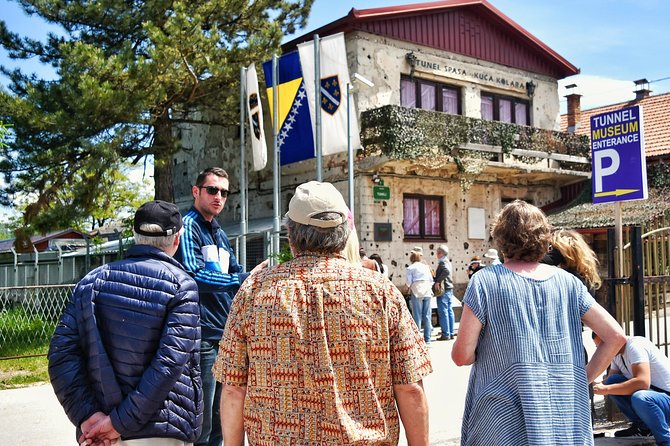
The vehicle then passes along Sniper Alley, described as the most dangerous street in Sarajevo during the siege. The route includes the former Holiday Inn, which served as a base for journalists and visiting United Nations peacekeepers. The street itself runs for about four kilometers.
You will also see buildings from the Yugoslav period that still show the effects of the war. This is not a preserved battlefield behind a fence. It is an active part of Sarajevo’s urban fabric, which can make the experience more unsettling. People live and work in a city that still carries these marks.
The vehicle is useful here. You can cover the long stretch without spending the whole afternoon walking beside busy roads. Your guide can point out buildings and explain why the street became so dangerous. The exact amount of time outside the vehicle can vary, so keep your attention on the guide rather than expecting a series of formal photo stops.
For me, this is one of the tour’s strongest features. The damage is not presented as decoration. It helps you understand how exposed Sarajevo was, and why crossing a street could become a life-threatening act.
Gavrilo Princip links the siege to an older crisis
The route passes the chapel or mausoleum associated with Gavrilo Princip, the person who assassinated Archduke Franz Ferdinand. That act in Sarajevo helped trigger the First World War, making it one of the city’s most famous historical connections.
This is a short pass-by, not a full visit with an extended stop. Still, it adds useful perspective. Sarajevo’s history did not begin in the 1990s, and the guide can place the siege within a much longer sequence of political and military upheaval.
Do not expect this part to explain every stage of Yugoslavia’s collapse in detail. The tour focuses on the fall of Yugoslavia and the Siege of Sarajevo, with the Princip connection serving as a brief historical link.
Trebević viewpoint changes the mood
Trebević Mountain provides a strong change of pace. At Trebević Vidikovac, you get a broad view back toward Sarajevo, with about 15 minutes at the free viewpoint. From above, the city’s position among the surrounding hills becomes clear, and the military importance of those heights is easier to understand.
The views are beautiful, but this is not simply a scenic finale. The mountain was tied to the conflict, and the guide can explain how the surrounding heights affected the city below. A defenders’ cemetery is also connected with the mountain portion of the route, adding another quiet reminder of the people who held Sarajevo.
Some guides finish with a short walk in this area, which gives you time to absorb the day. Wear shoes that are comfortable for uneven ground. The tour is mostly vehicle-based, but you will still get out at several stops.
The Olympic bobsleigh track is an unforgettable final stop
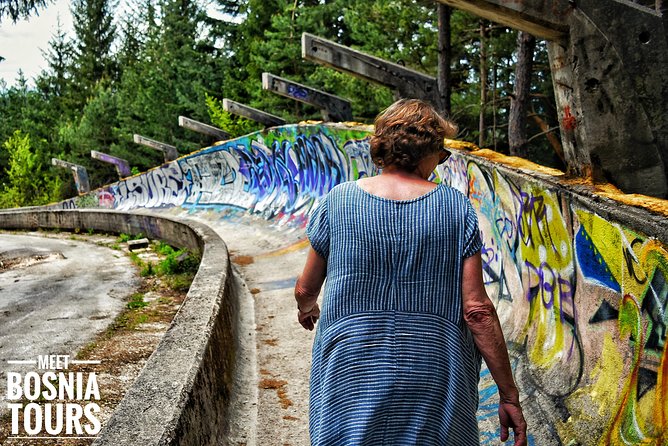
The Sarajevo Olympic Bobsleigh and Luge Track is one of Trebević’s most unusual sights. Built for the 1984 Winter Olympics, it later became damaged and overgrown during the war. Today, you can walk along a section of the track at no extra charge, with around 20 minutes set aside.
The concrete curves and graffiti create a stark contrast with the polished Olympic ideal for which the facility was built. You can see why this stop appeals even to people who are not especially interested in sports. It is a physical reminder of how quickly a place built for international celebration can be pulled into conflict.
This stop also keeps the tour from ending entirely on grief. The war story remains present, but the track, mountain air, and city view provide a quieter close. One practical note: one review describes taking the cable car down afterward, but that is not listed as an included part of this experience. Treat any cable-car ride as a separate plan and cost.
Guides and group comfort shape the experience
The tour is offered in English and has a maximum of 50 participants. That is a fairly large possible group, although the vehicle and actual group size can vary. Several accounts describe smaller groups and comfortable minibuses, but you should not assume a private tour.
Guides named in feedback include Ayoub, Almir, Emin, Ejub, Kristian, Tarik, Ago, Zahmet, and Kristen. The strongest pattern is clear delivery, patience with questions, and an ability to explain a complicated past without drowning you in names and dates. Some guides and drivers also have family or personal connections to the war, including memories passed down from a parent or experiences from their youth.
That personal element can be valuable, but it should not replace historical care. A good guide will distinguish between personal memory and wider context. The best approach is to listen, ask respectful questions, and allow room for silence at cemeteries and memorial sites.
The air-conditioned vehicle makes the long stretches easier, especially in warm weather or rain. Hotel pickup is included, but hotel drop-off is not. The official meeting point is Meet Bosnia Tours at Gazi Husrev begova 75, near the crossroads of Mula Mustafe Bašeskije, and the activity ends back at that meeting point.
Who should book this Sarajevo war tour?
I would choose this tour if you want a structured introduction to the Siege of Sarajevo, need transportation to spread-out sites, or prefer learning through a guide rather than reading plaques on your own. It is also useful early in your visit, since the drive gives you a broad sense of Sarajevo’s neighborhoods and major sights.
History-minded visitors will get the most from it, but you do not need prior knowledge of Yugoslavia. The explanations are designed to make the causes and events understandable, and the route works for both solo visitors and groups.
I would think twice if you want a relaxed sightseeing trip with little discussion of suffering. The Tunnel Museum, cemeteries, damaged buildings, and stories of civilian deaths are difficult. The tour is respectful, but it is not emotionally neutral.
Book at least a day ahead if your schedule is fixed. The experience is often reserved around three weeks before the date, so leaving it until the last morning may limit your choices. Free cancellation is available up to 24 hours before the start time. Changes or cancellations inside that window are not accepted for a refund.
FAQ
How long does the Sarajevo War Tour last?
The tour lasts approximately four hours.
What language is the tour offered in?
The tour is offered in English.
Is hotel pickup included?
Yes. Hotel pickup is included, but hotel drop-off is not.
Where does the tour begin and end?
It begins at Meet Bosnia Tours, Gazi Husrev begova 75, near the crossroads of Mula Mustafe Bašeskije in Sarajevo. The activity ends back at the meeting point.
Is the War Tunnel Museum entrance included?
No. The museum entrance costs 15 BAM for adults and 5 BAM for students with identification.
What are the main places visited?
The route includes Yellow Fortress, the Olympic complex, the Stadium Cemetery, the War Tunnel Museum, Sniper Alley, the site associated with Gavrilo Princip, Trebević Vidikovac, and the Olympic bobsleigh and luge track.
Is transportation provided during the tour?
Yes. Car transport, fuel, and an air-conditioned vehicle are included.
Is bottled water included?
Yes. Bottled water is included. Food and other drinks are not.
Can most people participate?
Yes. The tour information says most participants can take part, and the activity is near public transportation. The maximum group size is 50 people.
Should you book it?
Yes, if you want to understand Sarajevo beyond its Ottoman streets and Austro-Hungarian facades. For $36.28, you get a well-planned route, transport to difficult-to-reach sites, the Tunnel Museum visit, and a guide who can explain both the public record and the human cost.
The best reason to book is the combination of places: the tunnel, Sniper Alley, cemeteries, Olympic ruins, and Trebević viewpoints tell one connected story. Just arrive ready for a serious afternoon, bring the separate museum fee, and leave time afterward for a quieter walk through Sarajevo.
More Museums in Sarajevo
- Tunnel of Hope Museum Tour
★ 5.0 · 38 reviews - Cable Car Olympic Tour With Museum
★ 5.0 · 17 reviews
Just added around Sarajevo
- Downhill Sarajevo MTB Mountain Biking Adventure on Trebevic – Half Day Tour★ 5.0 · 3 reviews
- Sarajevo War Tour with TRAVELPLUS★ 5.0 · 11 reviews
- Skakavac Waterfall Mountain Biking Tour from Sarajevo MTB★ 5.0 · 11 reviews
- SARAJEVO STREET ART TOUR (art, history & mystery) – sARTajevo!★ 5.0 · 18 reviews
- Sarajevo – Mostar Herzegovina Adventures Day Tour★ 5.0 · 18 reviews
- Cable Car Olympic Tour With Museum★ 5.0 · 17 reviews
- Canyoning Rakitnica river★ 4.5 · 11 reviews
- Sarajevo to Dubrovnik: One-Way Tour via Mostar, Kravica Falls, Blagaj & Pocitelj★ 5.0 · 12 reviews
Sarajevo War History Tours, compared.
Tunnel Museum: Bosnian & Yugoslav Wars Tour with War Veteran
Read our review →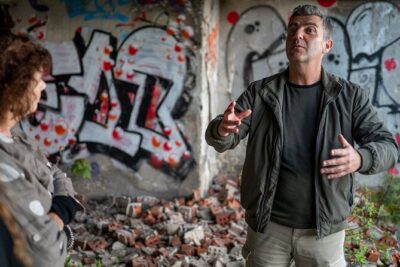
Sarajevo War Tour: A Veteran’s Story of the Siege (fees included)
Read our review →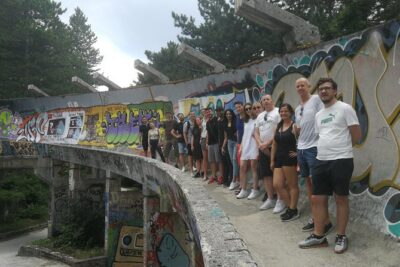
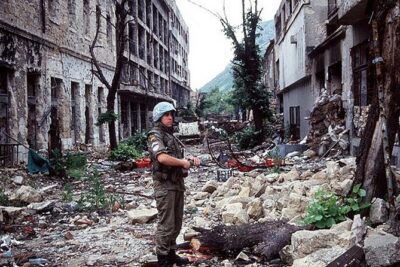
Break-up of Yugoslavia & The War in Mostar: Life Under Siege
Read our review →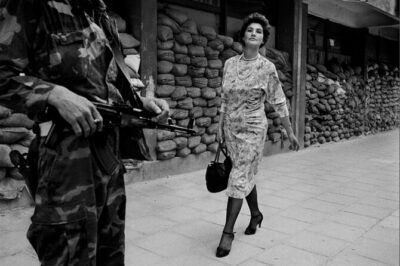
Sarajevo Grand Tour: Old Town, War Tunnel, Olympic Sites & More
Read our review →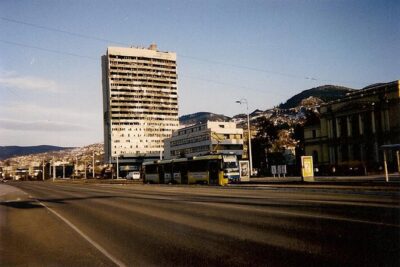
Times of Misfortune – Life Under Siege and the Tunnel of Hope
Read our review →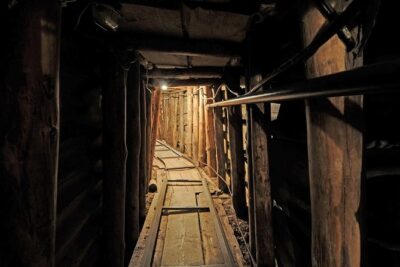
Browse the lists this tour appears in