
Reviewed · JAJCE AND TRAVNIK TOURS
Bosnian Kingdom Capitals: Travnik & Jajce Tour from Sarajevo
Travnik and Jajce give you two very different views of Bosnia in one long day. Travnik feels Ottoman, with painted mosques, old stone streets, and a hilltop fortress. Jajce adds medieval royal history, Roman remains, Yugoslav-era politics, and a waterfall right in town. I like the tour’s wide historical range and the fact that transport, entrance fees, water, snacks, and WiFi are included.
I also like the private format. Your group travels together rather than joining a large bus, and Muhmmnad has arranged local guides in Travnik and Jajce when needed. The tradeoff is the length: 10 to 12 hours means a lot of time in the vehicle, with about two and a half hours for the return to Sarajevo alone.
Key points to know before booking
- Two former centers of power: Travnik recalls Ottoman rule, while Jajce connects medieval Bosnia, Roman religion, and Yugoslavia.
- Private transport from Sarajevo: Only your group takes part, with an air-conditioned vehicle and WiFi onboard.
- A packed sightseeing day: The route includes 14 stops, so most visits are short and focused.
- Food is partly on your own: Lunch and dinner are not included, though there is a 45-minute to one-hour dinner break in Jajce.
- Good value for included entries: The $150.10 price covers entrance fees, taxes, bottled water, snacks, and transport.
- Free cancellation until 24 hours ahead: Bad weather or an unmet minimum may also lead to a new date or full refund.
Why Travnik and Jajce belong on the same day trip
Many day tours from Sarajevo focus on one famous sight. This one takes a broader approach. You see Ottoman-era Travnik in the morning, then continue to Jajce, a former Bosnian royal center with a fortress, catacombs, a Roman temple, a World War II museum, and the Pliva Waterfall.
That range is the main reason to choose this outing. In Travnik, the story is about the Ottoman Empire and the city’s role as a seat of power. In Jajce, the story moves across centuries, from Roman soldiers and medieval kings to the founding of socialist Yugoslavia.
The route is not slow. Several stops last only 10 or 20 minutes, and the full day includes substantial driving. I would choose it if you want to cover central Bosnia efficiently and do not expect long, unhurried museum visits.
The tour begins at Sarajevo City Hall on Brodac Street and ends there. Pickup is offered, but the stated meeting point is the city hall, so confirm the exact pickup arrangement when you book.
More Jajce and Travnik day trips from Sarajevo
- Jajce, Travnik and Pliva watermills – Day Tour from Sarajevo
★ 5.0 · 295 reviews - From Sarajevo: Travnik, Jajce, Pliva Lakes & Watermills Tour
★ 5.0 · 213 reviews - Jajce, Travnik, Pliva lake and Watermills Tour
★ 5.0 · 104 reviews
Travnik begins beside Plava Voda
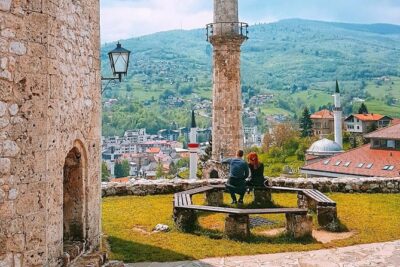
The first stop is Plava Voda, a national monument in Travnik. This spring-fed setting includes the Derventa cemetery, Lutvina Kahva café, and the tomb of mufti Mehmed Efendi and his wife Ajiša.
You have about 20 minutes here. That is enough to get your bearings, take in the old religious and civic setting, and appreciate how water shaped Travnik’s identity. It is not a long nature walk, so keep your expectations practical. This is a short introduction to the town rather than a full break beside the water.
From here, the tour turns toward Travnik’s central sights and its fortress.
Travnik Fortress gives you the big picture
Tvrdava Stari Grad, or Old Town Fortress, sits above Travnik. The 35-minute visit lets you walk along medieval walls, see its towers, and look over the town from the hill.
This is one of the more substantial stops in Travnik. The fortress helps explain why the city mattered. From above, the clustered town and surrounding countryside make the location easy to understand, and the stone defenses give the morning a strong sense of place.
Wear shoes suitable for uneven ground and inclines. The itinerary does not describe the walking conditions in detail, but an old hilltop fortress naturally requires more effort than the town streets below. If you have limited mobility, ask the provider about access before booking.
Painted Ottoman architecture in the town center
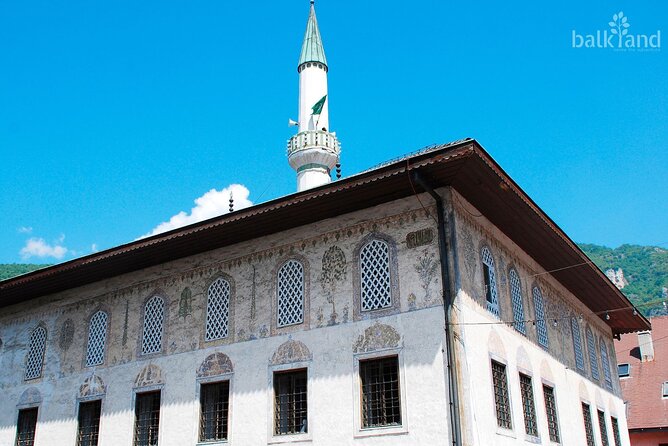
Šarena Džamija, the Painted Mosque, is one of Travnik’s most memorable buildings. Built in the 16th century during Ottoman rule, it is known for its ornamented exterior and interior details.
You have around 20 minutes here. That is enough for a focused visit, though not a leisurely study of every decorative feature. Dress and behavior should respect the fact that this remains a religious site. The tour includes admission, which keeps the visit simple.
The route also includes Hadži Ali-Beg’s Mosque and the Vizier’s grave, known as Turbe. Each stop lasts about 10 minutes. The mosque reflects Travnik’s Islamic heritage, while the Ottoman-style mausoleum recalls the city’s former officials and political role.
These short stops work best if you listen closely to the guide’s explanation. On your own, the buildings may look like a series of attractive historic sites. Together, they show how Ottoman government, faith, and daily life shaped Travnik.
A few more things to do around Sarajevo
- Sarajevo: Mostar, Konjic, Blagaj Tekke, Pocitelj & Waterfall
★ 4.9 · 1,335 reviews - Fall of Yugoslavia, Sarajevo War Tour with Tunnel of Hope Museum and Frontlines
★ 5.0 · 1,314 reviews - Sarajevo: Mostar, Konjic, Sufi House, Pocitelj & Kravice Falls
★ 5.0 · 1,179 reviews - ROSES OF SARAJEVO (Official WAR + CITY tour)- Story of a Survivor
★ 5.0 · 770 reviews
Ivo Andrić’s birthplace adds a literary thread
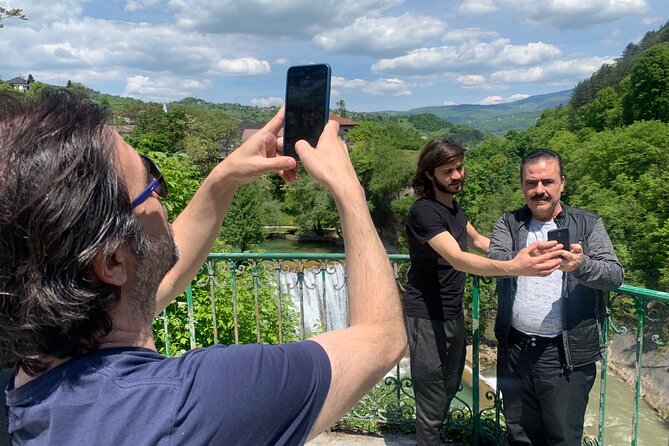
Ivo Andrić was born in Travnik in 1892 and later won the Nobel Prize in Literature. His reconstructed birthplace in the Zenjak neighborhood now contains a permanent exhibition about his life and writing.
The museum visit lasts 15 minutes. That is brief, but it adds a useful human layer to the city. You are not only looking at rulers and religious buildings. You are also seeing the place connected with one of Bosnia’s best-known writers.
The nearby Regional Museum of Travnik occupies a building constructed in 1928 with funding from the Rockefeller Foundation. Its permanent exhibition opened in 1975. The scheduled visit is only 10 minutes, so expect a quick introduction rather than a full museum tour.
The itinerary also includes the Catholic Church of St. John the Baptist, with another 10-minute stop. Its mid-19th-century construction and Catholic furnishings point to Travnik’s religious variety. In a compact morning, you see Islamic, Catholic, literary, military, and civic elements side by side.
Leaving Travnik for Jajce
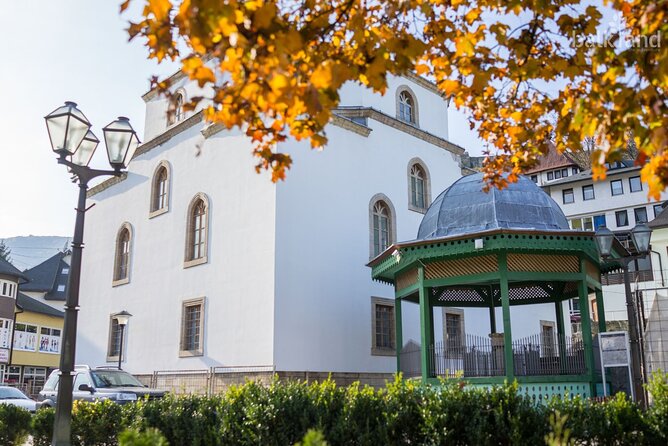
After the Travnik stops, the vehicle continues toward Jajce. The total tour lasts 10 to 12 hours, and the description makes clear that the remaining time is largely spent traveling between destinations.
That matters when you compare this tour with a private overnight trip. You get the convenience of seeing both towns without changing hotels, but you give up the slower pace that comes with staying in one place. The air-conditioned vehicle, bottled water, snacks, and WiFi help make the road time easier.
A chocolate bar or chips are included, but meals are not. Bring money for lunch and dinner, and do not count on the included snacks as a replacement for a full meal.
Jajce starts underground in the catacombs
The Catacomb of Jajce is a medieval underground tunnel system. You have 30 minutes to explore this unusual site and hear about its purpose and past.
The catacombs change the rhythm of the day. After Travnik’s open-air streets and hilltop views, you move below ground into a confined historic space. If you dislike narrow or enclosed places, ask about the conditions before committing. The supplied details do not specify accessibility or the exact size of the tunnels.
From there, the route climbs to the Fortress of Jajce. This was once the center of the Bosnian kingdom, and the final two kings lived here. Beneath the fortress is the Coronation Church of St. Mary, linked with the crowning of the last Bosnian king.
The 30-minute fortress visit is short but worthwhile. You get the main historical setting and broad views over Jajce and its surroundings. The hilltop position also helps explain the town’s defensive value. You should not expect a detailed castle tour in half an hour, but the stop gives you the essential story.
Three centuries of Jajce history in three stops
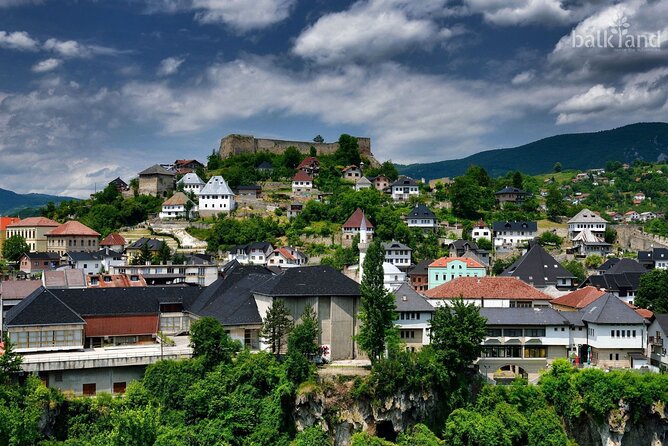
Jajce packs several eras close together. The AVNOJ Museum recalls the second session of the Anti-Fascist Council of the People’s Liberation of Yugoslavia in 1943, the meeting that helped establish postwar Yugoslavia.
The museum contains original items from that session and material about the partisan resistance during World War II. You have 20 minutes. This is enough to understand why the building matters, but anyone deeply interested in Yugoslav political history may want more time than the schedule allows.
The Temple of Mithras reaches further back. Roman soldiers built this small temple in the 3rd century AD for Mithra, an Indo-Iranian god. It is one of the best-preserved Mithraic sites in the Balkans, according to the supplied description.
The visit lasts 20 minutes. It is a good reminder that Bosnia’s story began long before the medieval kingdom or Ottoman period. The temple is not a grand Roman ruin, so its value comes from the religious meaning and the survival of the site rather than its scale.
Pliva Waterfall is the visual highlight
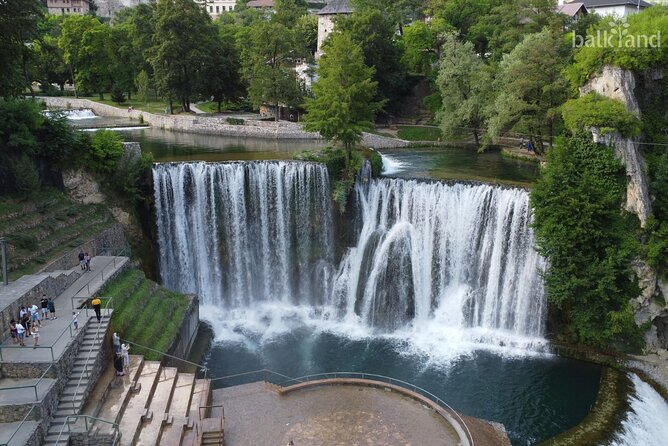
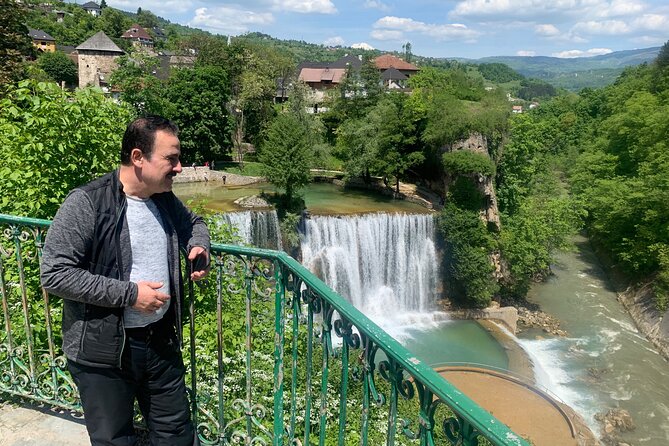
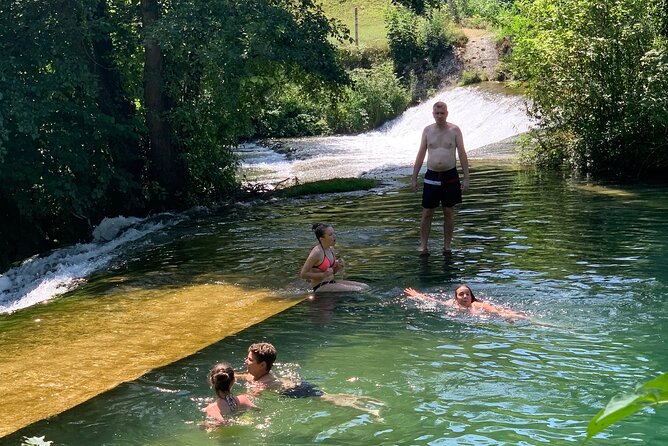
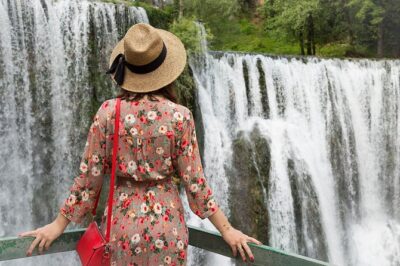
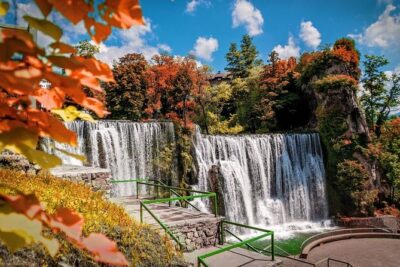
The Pliva Waterfall is likely to be the most instantly striking stop. Water drops over moss-covered rock in the center of Jajce, creating a loud, photogenic rush close to town.
You have about 30 minutes here. That gives you time for photos and a close look at the falls, but it may not leave room for a long walk or a relaxed swim. The description mentions natural pools and a possible refreshing dip, yet your available time and conditions may determine how much you can do.
This is also where the day shifts from political and religious history to the natural setting around Jajce. I like that balance. After several museums, churches, mosques, and forts, the waterfall gives you a simple sensory break.
The old watermills at Mlincici
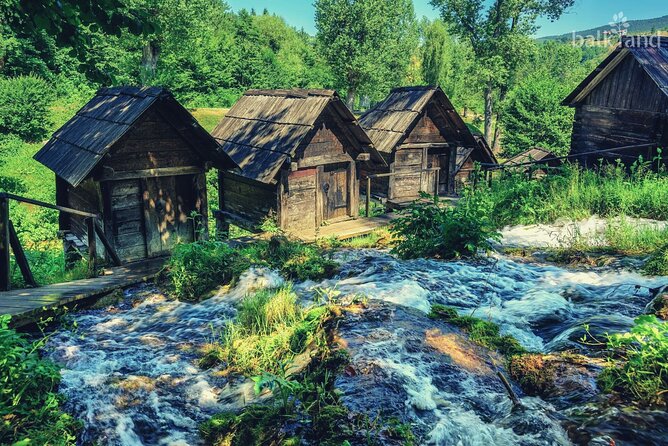
The final listed stop is Mlincici, the historic group of watermills powered by the Pliva River. For centuries, these mills ground grain into flour and supported the local economy. Their strongest period came during Ottoman rule.
The visit lasts about 20 minutes. You can see how the river’s force was put to practical use and how food production depended on local water. The mills are not just decorative objects. They connect the natural setting with ordinary work and the growth of Jajce.
Afterward, there is a dinner break in Jajce lasting 45 minutes to one hour. Dinner is not included, so this is your chance to choose and pay for a meal before the drive back.
What the $150.10 price really includes
At $150.10 per person, the cost is easiest to judge as a private full-day package rather than a simple transfer. You receive an air-conditioned vehicle, WiFi, bottled water, snacks, all listed entrance fees, and taxes.
The private setup is important. Only your group takes part, so you avoid a large coach and can discuss the stops directly with the guide. A previous booking was treated as a group tour but ended up with one person, and Muhmmnad still arranged the excursion privately with local guides in both Travnik and Jajce. That suggests the provider can keep the day running even when the group is very small.
The price is less attractive if you want a slow museum day or plan to spend most of your time eating and wandering. It becomes more reasonable if you value convenience and want to combine two destinations that are awkward to reach independently in one day.
Group discounts are offered, so the per-person cost may work better for a small party. Since lunch and dinner are extra, budget separately for both meals and personal purchases.
Who will get the most from this tour
I would recommend this tour to you if you have limited time in Sarajevo and want a strong overview of central Bosnia. It suits people who like history in layers: Ottoman architecture in Travnik, medieval power in both towns, Roman religion, World War II politics, and a major natural sight.
It also suits couples, families, and small groups that prefer a private vehicle. The included water and snacks are useful on a long road day, and WiFi can help during the extended drive.
I would hesitate if you dislike early starts, long drives, or quick visits. The schedule includes 14 listed stops, with many lasting only 10 or 20 minutes. You should also consider the weather. The activity requires good conditions, and poor weather can lead to a new date or a full refund.
Free cancellation is available up to 24 hours before the start time. Inside that period, changes and refunds are not accepted unless the provider cancels because of weather or an unmet minimum.
Should you book the Travnik and Jajce tour?
Book it if you want maximum historical variety in one day and prefer private transport over planning several buses or hiring a car. The strongest parts are the Travnik fortress and mosques, Jajce’s unusual mix of catacombs, fortress, Mithra temple, and AVNOJ Museum, plus the Pliva Waterfall and watermills.
Skip it if you want long museum visits, extended time at the waterfall, or a relaxed meal-focused day. This is an ambitious route with real road time. For the right visitor, though, $150.10 buys a convenient and unusually broad look at Bosnia beyond Sarajevo.
FAQ
Where does the tour start and end?
The tour starts at Sarajevo City Hall, Brodac 1, Sarajevo 71000. It ends back at the same meeting point.
How long does the tour last?
The full experience lasts approximately 10 to 12 hours. Some of that time is spent driving between Sarajevo, Travnik, and Jajce.
Is this a private tour?
Yes. Only your group participates in the activity.
Is pickup available?
Pickup is offered. The stated meeting point is Sarajevo City Hall, so confirm the exact pickup details when booking.
Are entrance fees included?
Yes. All fees and taxes, along with the listed admissions in Travnik and Jajce, are included.
Are meals included?
No. Lunch and dinner are not included. The itinerary provides a 45-minute to one-hour dinner break in Jajce.
What is included on the vehicle?
The air-conditioned vehicle includes WiFi onboard. Bottled water and a snack, such as a chocolate bar or chips, are also provided.
Can I cancel for a full refund?
You can cancel at least 24 hours before the start time for a full refund. Cancellations or changes within 24 hours are not refunded, except when the activity is canceled because of poor weather or an unmet minimum number of participants.
Just added around Sarajevo
- Private Full Day Safari Tour★ 5.0 · 8 reviews
- Sarajevo Under Siege: A War History Tour★ 5.0 · 10 reviews
- Travnik, Jajce, Pliva Lakes & Mills –Medieval & Ottoman Bosnia Full Day Tour★ 5.0 · 3 reviews
- Mysterious Visoko Pyramids Driving and Walking Tour★ 5.0 · 7 reviews
- Walking Tour in Sarajevo★ 5.0 · 3 reviews
- Secret Tito’s Bunker/Konjic Tour★ 5.0 · 4 reviews
- Sarajevo to/from Zagreb Transfer Day Tour (North-central Bosnia)★ 5.0 · 4 reviews
- Tour of Herzegovina – From Sarajevo★ 5.0 · 3 reviews
Jajce and Travnik Tours, compared.
Jajce, Travnik and Pliva watermills – Day Tour from Sarajevo
Read our review →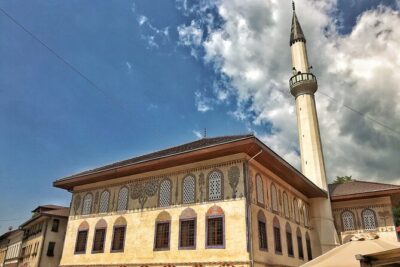
Travnik, Jajce & Pliva Lakes Day Tour From Sarajevo (fees Incl.)
Read our review →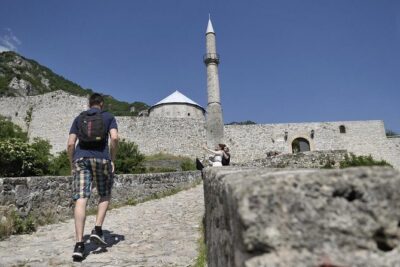
CENTRAL BOSNIA | A medieval tour (Jajce + Travnik + Pliva lakes)
Read our review →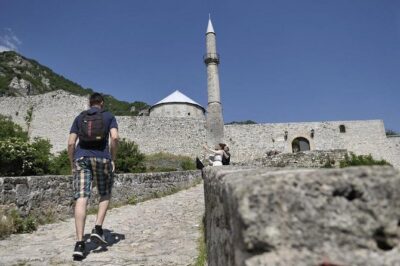
Sarajevo to Zagreb: One-Way Tour via Jajce, Travnik, Pliva Lake and Watermills
Read our review →
Travnik, Jajce, Pliva Lakes & Mills –Medieval & Ottoman Bosnia Full Day Tour
Read our review →Browse the lists this tour appears in