
Reviewed · JAJCE AND TRAVNIK TOURS
Jajce, Travnik and Pliva watermills – Day Tour from Sarajevo
Jajce’s 17-meter Pliva Waterfall is the headline, but the real pleasure of this long day is the contrast around it. You move from Travnik’s Ottoman streets and coffee by the Blue Water springs to a medieval royal town, then out to clear lakes and old wooden watermills.
I like the small maximum of eight people, which gives the guide room to answer questions and adjust the pace. I also like the mix of history and scenery: fortresses, churches, mosques, waterfalls, and countryside all appear in one outing. The catch is the distance. With roughly three hours each way mentioned by some participants, this is a full day on the road, and lunch timing can run late.
Key points to know before booking
- Jajce’s waterfall meets two rivers in the town center, an unusual sight you can view from above or below.
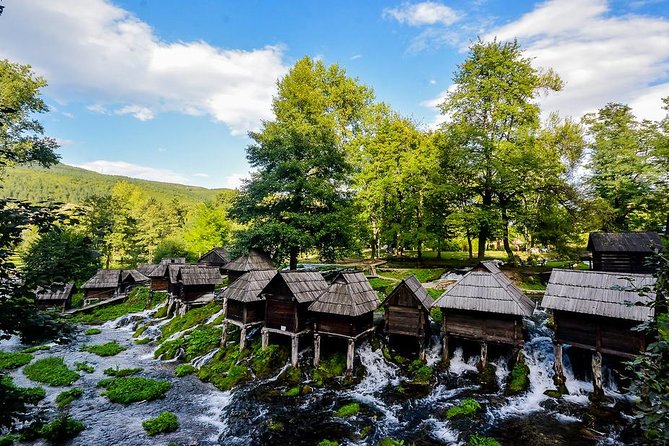
- The Pliva watermills are the most peaceful stop, with about 20 small huts beside the lakes.
- Travnik and Jajce add different chapters of Bosnian history, from medieval royal power to Ottoman rule.
- The group is limited to eight people, and solo departures may become private tours when no one else books.
- The $95.58 price covers transport, water, and WiFi, but not lunch or the two fortress admissions.
- Plan for a long day, with pickup at 8:00 a.m. from your Sarajevo hotel and return to the starting point.
Why this makes a worthwhile day from Sarajevo
Sarajevo is compelling, but Bosnia and Herzegovina rewards you for getting beyond the capital. This trip reaches central Bosnia without the work of renting a car, finding rural roads, or piecing together buses between several sights.
You get a broad sample in one day. Travnik gives you an Ottoman-era town and a fortress. Jajce adds the former Bosnian royal center, old religious buildings, and the waterfall. The Pliva Lakes finish the route with open views and the small watermills that give the area its storybook character.
I would not call this a relaxed outing. The roads take time, and the schedule packs in many stops. But if you have more than two days in Sarajevo and want to see another side of the country, the tour makes good use of a single day.
The guide can make a real difference. The company uses guides including Emir, Kenan, Mufid, Benjamin, Senad, and Aid. The strongest experiences described by participants centered on guides who drove carefully, explained local history in clear language, shared food suggestions, and adapted the day for a small group. That personal touch matters when you spend several hours in a vehicle.
More Jajce and Travnik day trips from Sarajevo
- From Sarajevo: Travnik, Jajce, Pliva Lakes & Watermills Tour
★ 5.0 · 213 reviews - Jajce, Travnik, Pliva lake and Watermills Tour
★ 5.0 · 104 reviews - Travnik, Jajce & Pliva Lakes Day Tour From Sarajevo (fees Incl.)
★ 5.0 · 50 reviews
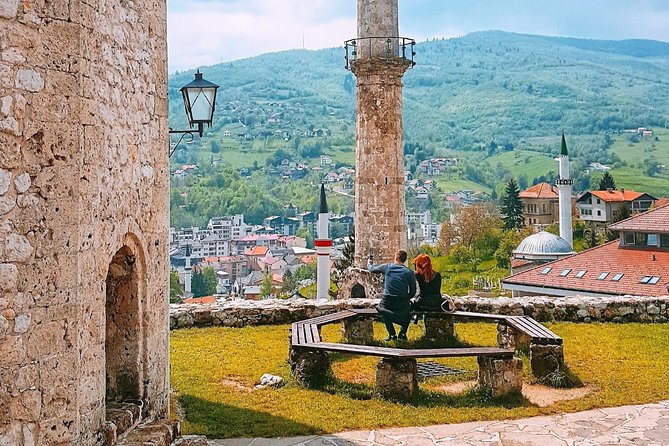
Travnik Fortress and the Blue Water springs
The day starts at 8:00 a.m., with pickup available from any hotel in Sarajevo. The first major stop is generally Travnik, where the old fortress sits above the town.
Travnik Fortress is one of Bosnia’s best-preserved medieval fortified buildings. It also shows how later periods changed the site, so you are not looking at a single frozen moment in time. The admission fee is about €2 per person, paid separately.
Allow around 40 minutes here. That is enough to see the main areas and take in the views, but not enough for a long, unhurried fortress visit. Wear shoes with a good grip, since old fortifications usually mean uneven surfaces and steps. The information provided does not promise a full museum visit or a long guided walk inside, so think of this as a focused stop rather than a half-day castle tour.
After the fortress, the group spends about 30 minutes in Travnik. The planned break is at Plava voda, or the Blue Water springs, where the river flows beside and beneath the dining area. This is a useful pause after the early start, and it gives you a chance to try Bosnian coffee.
The stop also gives you a taste of how people use these places in daily life. You are not only looking at an old building from a distance. You are sitting near running water, taking a break, and seeing a local setting that has long served as a social meeting point.
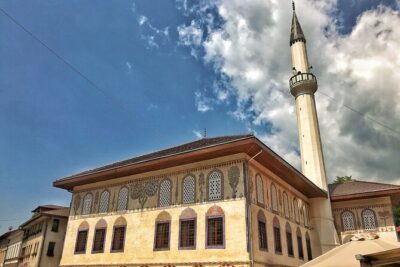
Travnik also includes the Šarena Džamija, or Multi-coloured Mosque. Built in 1757 during the Ottoman era, it is known for its decorative design. The visit is brief, about five minutes, so expect an exterior look or a short stop rather than a detailed architectural tour.
Jajce Fortress and the last Bosnian kingdom
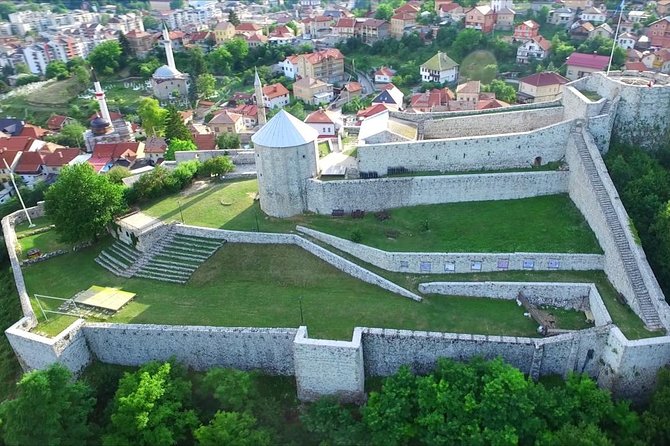
Jajce is often called the King City because it was one of the best-preserved fortified capitals of the Bosnian Kingdom. The fortress is tied to the final years of the medieval kingdom, before Ottoman military expansion changed the region.
The fortress visit lasts about 30 minutes, with an admission fee of about €2.50 per person. That low extra cost is easy to budget, but it is worth remembering that the advertised tour price is not fully all-inclusive.
From the fortifications, you begin to understand why Jajce mattered. Its position gave it defensive strength, while the town below became a meeting point for several religious and political traditions. The guide is especially useful here, since the stone walls alone cannot explain the succession of rulers, churches, mosques, and imperial changes.
The schedule is brisk. If you like taking plenty of photographs or reading every sign, you may want to ask your guide how much time is available before walking off. Some departures may also face local events or temporary congestion, which can alter the exact pace.
Catacombs and the Church of Saint Mary
The Catacombs of Jajce are not catacombs in the usual Roman sense. They are an underground Christian church carved into a single rock or cave in the late Romanesque style.
The stop lasts only about five minutes, and admission is not included. That sounds brief, but the site is small, so you can get the basic impression quickly. It is best treated as a compact historical detail within the larger Jajce visit, not as a major underground complex.
Nearby, the Church of Saint Mary adds another important layer. The older Romanesque church was adapted in Gothic style when Jajce became the capital of the Bosnian Kingdom. In 1459, Jelena Branković brought the relics of Saint Luke the Evangelist to the church, and the coronation of the last Bosnian king, Stjepan Tomašević, took place here in 1461 according to papal envoys.
The building later became a mosque under Ottoman rule. Fires damaged it several times, with the last major fire in 1832 leaving only the walls. The stop is free and lasts about five minutes, but its value comes from the compressed story: medieval church, royal ceremony, Ottoman mosque, and ruined monument in one place.
A few more things to do around Sarajevo
- Sarajevo: Mostar, Konjic, Blagaj Tekke, Pocitelj & Waterfall
★ 4.9 · 1,335 reviews - Fall of Yugoslavia, Sarajevo War Tour with Tunnel of Hope Museum and Frontlines
★ 5.0 · 1,314 reviews - Sarajevo: Mostar, Konjic, Sufi House, Pocitelj & Kravice Falls
★ 5.0 · 1,179 reviews - ROSES OF SARAJEVO (Official WAR + CITY tour)- Story of a Survivor
★ 5.0 · 770 reviews
Esma Sultana Mosque and Jajce’s Ottoman chapter
Esma Sultana Mosque, also called the Čaršija Mosque, sits on the main street connecting the Travnik and Banja Luka gates. It is the only mosque in Bosnia and Herzegovina named after a woman, and it has national monument status.
The planned stop is about 10 minutes and admission is free. You will not have time for a long architectural study, but the mosque helps show that Jajce’s story did not end with the medieval kingdom. Ottoman rule left its own mark on the town’s streets, religious buildings, and public life.
This is one reason I value the itinerary. It does not reduce Jajce to a single royal chapter. You see Christian, medieval, and Ottoman remains within a compact area, while the guide connects the changes over time.
Pliva Waterfall, the natural centerpiece
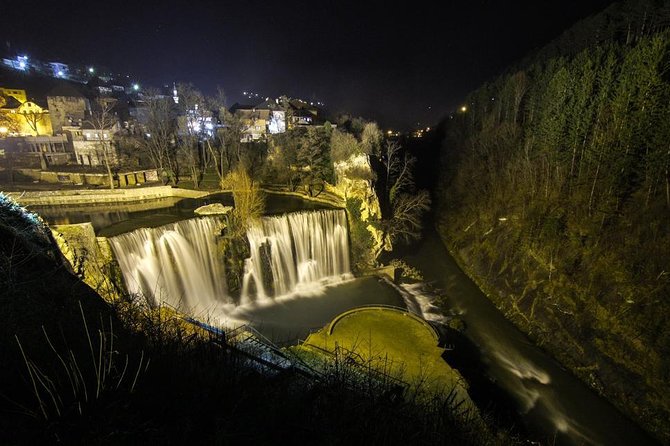
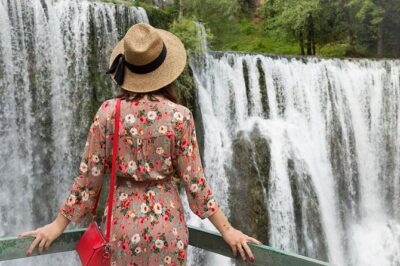
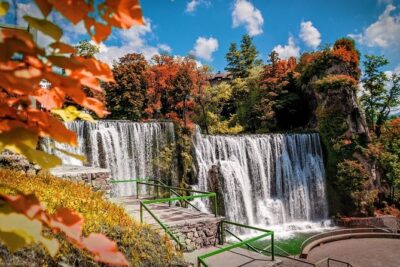
The Pliva Waterfall is the clearest visual highlight of the day. At 17 meters high, it drops in the center of Jajce where the Pliva River joins the Vrbas River.
That meeting creates an unusual scene: a waterfall forming an estuary as two rivers come together. You can view it from above or stand closer to the falling water. One viewpoint may give you an angled rather than full-on view, so do not expect every photo position to show the falls straight across.
The scheduled stop lasts about 30 minutes. That is enough to see the main viewpoints, take photographs, and enjoy the sound of the water. It may feel short if the area is busy or if you want to linger, but the tour still gives you more than a quick roadside photo.
The waterfall can be especially dramatic after rain, though the supplied details do not promise any particular water level. Conditions and seasonal weather will affect how forceful it looks. In winter, nearby tourist shops and small businesses may be quiet or closed, so the natural sight may be the main attraction.
Pliva Lakes and the old watermills
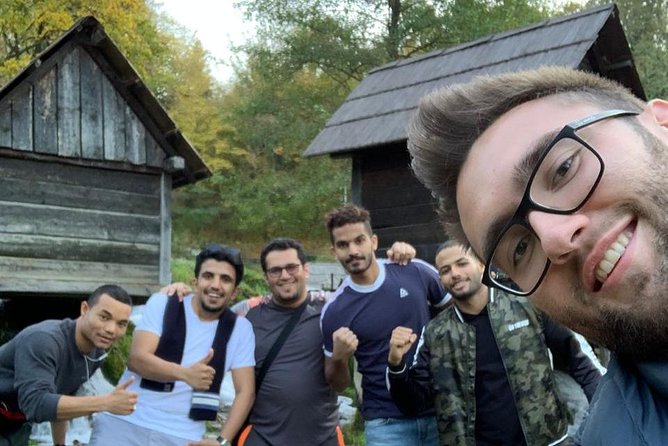
Downstream from Jajce, the Pliva Lakes provide the tour’s calmest setting. The water is described as crystal clear, and the surrounding scenery gives the area a quiet, almost fairytale quality.
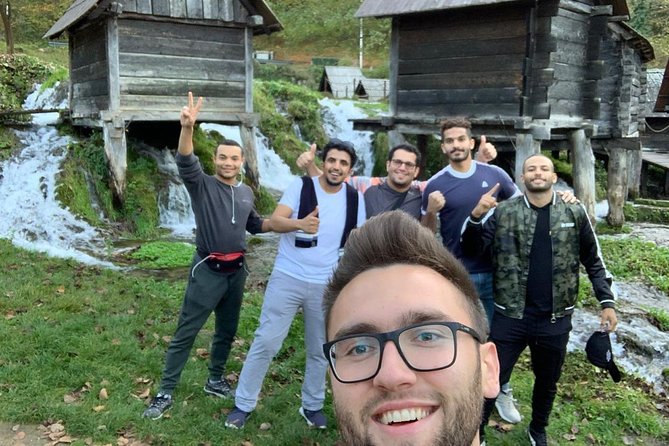
The lake stop is about 10 minutes, while the nearby Mlincici watermills receive about 30 minutes. The watermills are the unusual feature here. Around 20 small huts once served local farmers, and many date from the Austro-Hungarian period, roughly 1867 to 1918.
These are not grand industrial buildings. They are small structures gathered beside the water, which is exactly why they are so appealing. The setting helps you picture a practical rural system in which moving water powered mills for local food production.
I would give this stop your full attention. The mills are easy to photograph, but their value is more than appearance. They show how people used the area’s waterways before modern machinery replaced many such systems.
The schedule says lunch follows the watermills, with Pliva Lake offering food and views. Lunch is not included, so budget separately. The timing can be late on a long day, and one negative experience involved eating only around 5:00 p.m. I would carry a snack, even though bottled water is provided.
What the transport and group size mean
The tour uses private transport, with WiFi onboard and bottled water included. Pickup is available from any hotel in Sarajevo, and the activity ends back at the starting meeting point, Adventure in Bosnia on Kulovića 4, unless your pickup arrangement changes the practical drop-off details.
A maximum of eight people keeps the group far smaller than a large coach tour. You can ask questions without shouting across a bus, and the guide has more room to adjust a stop. Several departures became solo or nearly private experiences when few people booked.
That flexibility is a major strength, but it can also create occasional delays. One departure had to turn back to collect another person near the edge of Sarajevo. Pickup coordination is usually communicated clearly, yet a small-group tour still depends on everyone being ready on time.
The drive is the main tradeoff. The complete day lasts about eight to ten hours, and some participants described approximately three hours each way. You spend a great deal of time seeing Bosnia through the vehicle windows, so choose this trip because you want the destinations, not because you expect a short hop between them.
Is $95.58 a fair price?
At $95.58 per person, the cost is reasonable if you value convenience and a guided route. Private transport between Sarajevo, Travnik, Jajce, and the Pliva area would be difficult to arrange in one day by public bus. You would also need to coordinate several local connections and accept less control over the timing.
The price includes transport, bottled water, and onboard WiFi. It does not include lunch or admission to Travnik Fortress and Jajce Fortress, which together add about €4.50 per person. The other listed stops are free, although the Catacomb entry is described as not included, so you should confirm the current fee when booking.
A cheaper bus option may appeal if you are comfortable with fixed schedules and a slower, self-guided day. You would lose the door-to-door pickup, local explanations, and the chance to connect several sites without planning the route yourself.
Who should book this Jajce and Travnik tour?
I would choose this tour if you are staying in Sarajevo for more than two days and want to see central Bosnia without renting a car. It suits people who enjoy a full schedule and want both cultural sites and outdoor scenery.
It is also a good fit for solo visitors or couples who prefer a small group. Guides such as Kenan and Emir are often able to make the day feel personal, and a low headcount leaves more room for conversation. The guides can also share food suggestions and local music recommendations, which adds value beyond the formal stops.
You should think twice if you dislike long drives, need a fixed lunch hour, or want deep, unhurried visits inside every monument. One participant also felt the historical context could have been fuller, so your experience may depend partly on which guide leads the departure and how many questions you ask.
The route includes stairs, old fortifications, and uneven historic areas. Most people can participate, but anyone with mobility concerns should discuss the day with the operator in advance. One guide assisted a person with mobility issues, but the schedule still includes medieval sites that may not be easy for everyone.
Should you book it?
Book this day trip if you want a practical introduction to Travnik, Jajce, and the Pliva Lakes in one outing. The waterfall and watermills are the strongest visual rewards, while the fortresses and religious buildings give the day substance.
Bring a snack, budget for lunch and the two fortress fees, wear comfortable shoes, and accept that the road time is part of the deal. If that sounds fair, $95.58 buys a useful, well-packed day with a small group and the chance to see places that are awkward to connect independently.
FAQ
Where does the tour start?
The tour starts at Adventure in Bosnia on Kulovića 4 in Sarajevo at 8:00 a.m. Pickup is available from any hotel in Sarajevo.
Where does the tour end?
The activity ends back at the meeting point in Sarajevo.
How long does the tour last?
The tour lasts approximately eight to ten hours.
How many people can join?
The maximum group size is eight people.
Is lunch included?
No. Lunch is not included in the tour price. The itinerary provides a lunch break near Pliva Lake.
Are fortress admission fees included?
No. Travnik Fortress costs about €2 per person, and Jajce Fortress costs about €2.50 per person. These fees are paid separately.
What is included in the tour price?
Private transportation, bottled water, and WiFi onboard are included.
Can I cancel for a full refund?
Yes. You can cancel at least 24 hours before the local start time for a full refund. Cancellations or changes made less than 24 hours before departure are not accepted for a refund.
Just added around Sarajevo
- Downhill Sarajevo MTB Mountain Biking Adventure on Trebevic – Half Day Tour★ 5.0 · 3 reviews
- Skakavac Waterfall Mountain Biking Tour from Sarajevo MTB★ 5.0 · 11 reviews
- Sarajevo War Tour with TRAVELPLUS★ 5.0 · 11 reviews
- Sarajevo – Mostar Herzegovina Adventures Day Tour★ 5.0 · 18 reviews
- Cable Car Olympic Tour With Museum★ 5.0 · 17 reviews
- Canyoning Rakitnica river★ 4.5 · 11 reviews
- Sarajevo to Dubrovnik: One-Way Tour via Mostar, Kravica Falls, Blagaj & Pocitelj★ 5.0 · 12 reviews
- Transfer from Sarajevo to Kotor+Herzegovina tour★ 5.0 · 17 reviews
Jajce and Travnik Tours, compared.
Travnik, Jajce & Pliva Lakes Day Tour From Sarajevo (fees Incl.)
Read our review →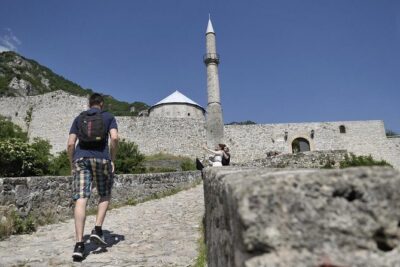
CENTRAL BOSNIA | A medieval tour (Jajce + Travnik + Pliva lakes)
Read our review →Browse the lists this tour appears in