
Reviewed · SARAJEVO TOURS
Sarajevo to Srebrenica: Genocide Study Tour with War Veteran
Srebrenica is not a sightseeing stop you simply check off. It is a place of mourning, evidence, and hard questions. This day tour gives you the setting and background needed to understand what happened, with guides such as Adis, Adnan, Ömer, and Edin sharing both historical detail and, in some cases, personal memories of the war. I like the small-group format, capped at 12 people, and the way the long drive becomes part of the lesson rather than dead time. I also like that you visit both the museum and the cemetery, then see present-day Srebrenica instead of leaving with only a memorial-site view.
The main drawback is clear: this is an emotionally heavy day, with roughly five hours on the road and a large amount of information to absorb. You should do a little reading before you go, bring patience, and leave room in your schedule for a quiet evening afterward.
Key points to know before booking
- A full-day visit to Srebrenica: Plan on about 10 hours from Sarajevo and roughly two and a half hours each way.
- Personal guide stories: Guides including Adis, Adnan, Ömer, and Edin have been praised for clear explanations and, where appropriate, personal wartime experience.
- Former UN headquarters: The tour visits the battery factory used by UN forces, now home to the Srebrenica Genocide Museum.
- Memorial cemetery and room: You see the graves, hear individual stories, and learn about both victims and those responsible.
- Simple, useful inclusions: Air-conditioned transport, hotel pickup and drop-off, bottled water, and a traditional Bosnian sausage sandwich are provided.
- A serious small-group experience: The group limit is 12, though some departures may be smaller.
Why the journey from Sarajevo matters
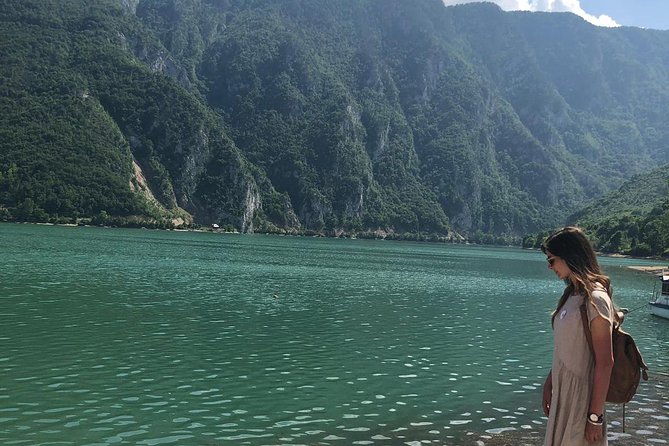
The road to Srebrenica takes you east through the mountains of Bosnia and Herzegovina. The scenery is peaceful and often striking, but the mood of the drive is not a light one. Your guide uses the time to explain the breakup of Yugoslavia, the war in Bosnia, and the political forces that led to the fall of the Srebrenica enclave.
That setup is important. If you arrive knowing only that a massacre occurred, the museum can feel like a flood of names, dates, military decisions, and personal accounts. A guide such as Ömer or Adis can put those pieces in order as you travel. Several accounts describe the explanation as starting with earlier Bosnian and Yugoslav history before moving into the 1990s war.
You can ask questions during the drive, which makes a big difference. The guides have been praised for answering difficult questions directly and for discussing not only the war but also present-day political tensions, hate speech, and the lingering effects of the conflict. The subject calls for care, and the best guides keep the tone serious without turning the day into a lecture.
The vehicle is air-conditioned, and bottled water is supplied. That sounds basic, but it matters on a long mountain road. You will be sitting for hours, so comfortable transport and a small group are worth more here than flashy extras.
More Srebrenica memorial trips from Sarajevo
- From Sarajevo: Srebrenica Genocide Memorial Study Tour
★ 5.0 · 359 reviews - Understanding Srebrenica Genocide Tour + Lunch with Local Family Included
★ 5.0 · 123 reviews - Understanding Srebrenica Genocide – Day tour from Sarajevo
★ 5.0 · 35 reviews
Starting in Sarajevo at 8:00 a.m.
The usual meeting point is in front of the Info Bosnia Tourist Information Center on Ferhadija, near the Sarajevo Meeting of Cultures marker. The listed meeting address is Velika avlija, Laure Papo Bahorete 2. Pickup can also be arranged from hotels and other locations in Sarajevo.
If you are staying outside the Old Town, request pickup in advance. For a private home, the operator asks for a Google Maps location. The early start is sensible because the drive is long and the memorial site needs time. Hotel drop-off is provided at the end, which saves you from finding your own way back after an intense day.
At the start, you receive water and a sandwich with traditional Bosnian sausage. A vegetarian option is available if requested. The food is practical rather than elaborate, but it gets you through the morning and reduces the need to hunt for a restaurant during a tightly timed day.
The tour is offered in English. Confirmation is sent when you book, and the maximum group size is 12. Smaller departures are possible, and some accounts describe groups of only a handful of people. That smaller setting is especially helpful when the guide is sharing personal memories or when you need to ask a sensitive question.
The former UN battery factory and museum
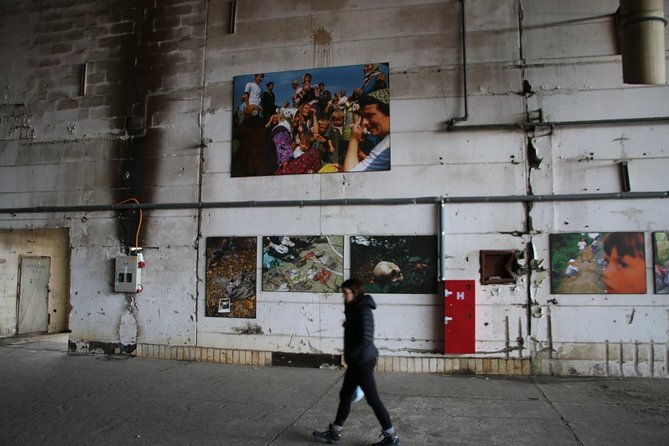
After about two and a half hours, the first major stop is at the former battery factory used by UN forces during the war. The building now contains the Museum of Srebrenica Genocide, described as one of the more modern museums of its kind in Bosnia and Herzegovina.
This is not just a quick photo stop. You meet the museum curator and see multimedia material that explains the events leading to the genocide and the experience of survival inside the Srebrenica enclave. Film and recorded material add human detail to the guide’s road briefing.
I value the order of the visit. The drive gives you the broad political and military picture. The museum then brings the story down to individual people, families, and decisions made under extreme pressure. The combination helps you understand why Srebrenica is not an isolated event but part of the wider collapse of Yugoslavia and the Bosnian war.
Give yourself time to look around. One account describes returning late to the vehicle because the museum deserved more attention, with the guide allowing that extra time. The schedule can shift, especially on a serious site where rushing would defeat the purpose, but you should still expect the day to run close to its full 10 hours.
A possible limitation is that the museum material can be hard to process in one sitting. There is a lot to take in, and the films and personal stories are painful. If you prefer to absorb museums slowly, ask your guide how much time is available and pace yourself.
The Memorial Room and the cemetery at Potočari
From the museum, the tour continues to the Memorial Room. Here you hear accounts of victims prepared by a local journalist. The room also addresses the people responsible for the massacre, giving the visit a fuller frame than a memorial focused only on mourning.
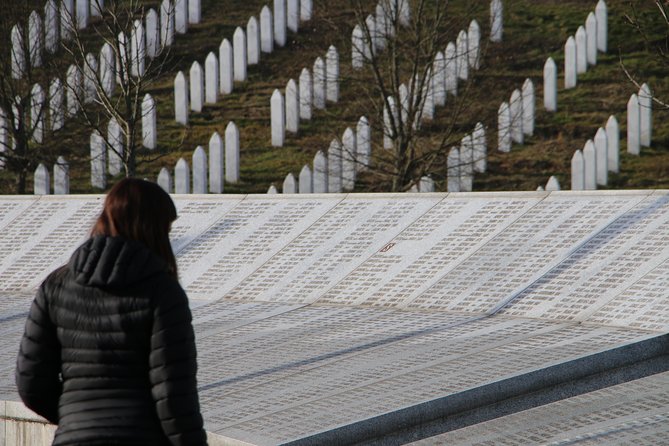
The next stop is the cemetery at the Potočari Memorial Centre. Identified victims are buried here, and the number of graves continues to rise as remains are found and identified. The supplied tour information lists 6,575 victims at the time of writing, so the figure should be understood as one that can change.
The cemetery is the quietest and most emotional part of the day. You are not there for entertainment or a dramatic presentation. You are there to look, listen, and remember. One account singles out the prayer at the cemetery as a moment that stays with you. You may find that the simple rows of white grave markers communicate more than a long explanation could.
Wear sensible shoes and dress respectfully. The tour data does not set a dress code, but this is a memorial cemetery, and a quiet, respectful approach is appropriate. You should also expect outdoor walking and standing, even though most of the day is spent in the vehicle or indoors.
A few more things to do around Sarajevo
- Sarajevo: Mostar, Konjic, Blagaj Tekke, Pocitelj & Waterfall
★ 4.9 · 1,335 reviews - Fall of Yugoslavia, Sarajevo War Tour with Tunnel of Hope Museum and Frontlines
★ 5.0 · 1,314 reviews - Sarajevo: Mostar, Konjic, Sufi House, Pocitelj & Kravice Falls
★ 5.0 · 1,179 reviews - ROSES OF SARAJEVO (Official WAR + CITY tour)- Story of a Survivor
★ 5.0 · 770 reviews
Seeing Srebrenica beyond the memorial
After Potočari, the route continues into Srebrenica itself. The town was once an industrial center and is described today as almost a ghost town. That contrast is part of the lesson. The memorial explains the crime, while the town shows something of the long aftermath.
This portion can feel less structured than the museum visit. You are not moving through a polished attraction. You are seeing a place whose population and public life were profoundly damaged by war and displacement. For me, that makes the stop worthwhile, even though it may seem subdued after the museum and cemetery.
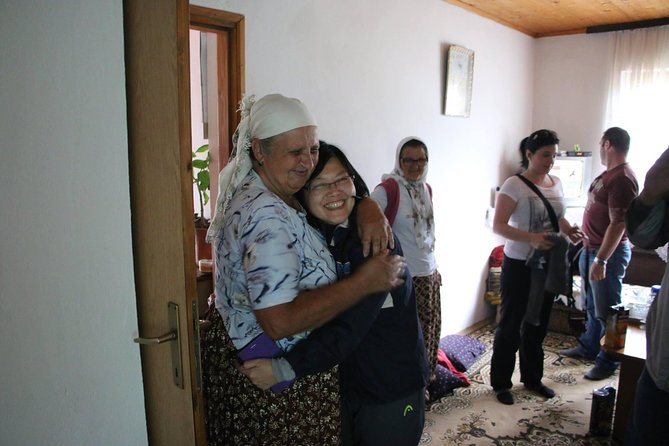
Lunch is taken in Srebrenica because there are few nearby restaurant options. The advertised food is a traditional Bosnian sausage sandwich, with a vegetarian version available on request. Some accounts also describe a homemade Bosnian meal with a local family and a woman sharing her own story, but that should not be treated as a guaranteed feature of every departure unless the operator confirms it.
If a local meal or conversation is part of your particular day, it can add a personal layer that formal exhibits cannot. If it is not included, the town visit still gives you time to see the setting and reflect on the difference between the area’s past importance and its present condition.
What the guides add to a difficult subject
The guide can make or break a tour like this. A standard driver who simply points out the museum would leave too much unexplained. The strongest accounts describe guides who connect the broad political story with personal experience.
Adis is repeatedly singled out for his personal stories, clear communication, humor, and willingness to answer questions. Adnan is described as an activist who can discuss Srebrenica, Yugoslav history, current Balkan politics, and hate speech. Ömer is praised for explaining the story in a clear sequence and for speaking from his experience as a child during the Sarajevo war.
Other named guides include Ibrahim, Danijela, Edin, and Yasımov. You cannot necessarily choose one of them when booking, so the experience may vary by departure. The important point is that the company uses guides with strong subject knowledge and, in some cases, direct experience of the conflict. A guide who can explain the history without treating your questions as foolish is a real asset here.
The humor noted in some accounts should not be misunderstood. It does not turn the tour into a casual outing. A warm, human guide can help you stay focused through a very long and difficult day.
Is the $82.84 price fair?
At $82.84 per person, the price is reasonable for a private vehicle-style day trip covering roughly 10 hours, a round trip from Sarajevo, a guide, hotel pickup and drop-off, water, and food. You are also paying for the time and fuel required to reach a remote memorial site, not just admission to a museum.
Admission tickets are listed as free, which means the value rests mainly in the transport and guiding. That is exactly where I think this experience earns its cost. Getting to Srebrenica independently would require more planning, and you would lose the historical explanation that begins before arrival.
The group limit of 12 keeps the price below a private tour while still allowing questions. If you want a completely private conversation or a custom pace, this may not be the right format. If you want an organized route with an English-speaking guide and no driving responsibilities, the price makes sense.
Food and drinks beyond the included sandwich and water are not covered. Bring some extra money if you want anything additional during the day, though the route has limited restaurant options.
Who should book this day trip?
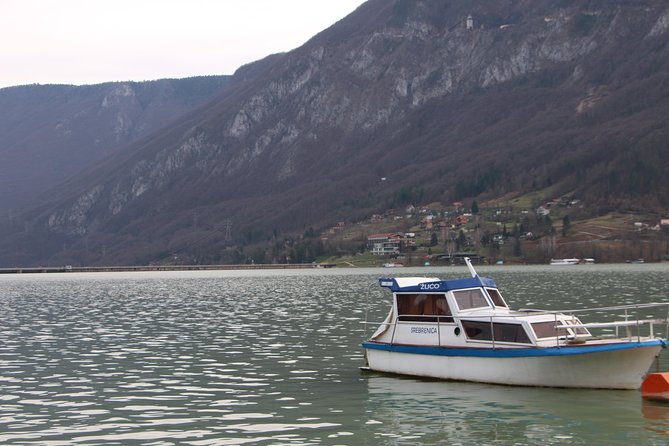
I would recommend it to anyone staying in Sarajevo who wants to understand the Bosnian war through a specific place rather than only through books or city museums. It is also a good fit for solo visitors because the group setting provides company, and pickup and return make the day easy to manage.
It suits people who are willing to listen carefully and ask respectful questions. It is not a good choice if you want a relaxed sightseeing day, a short excursion, or a schedule packed with cheerful stops.
Do some basic reading before departure. You do not need to become an expert, but knowing the broad outline of Yugoslavia’s breakup will help you follow the guide and make better use of your time in the museum.
Free cancellation is available up to 24 hours before the start time. Changes or cancellations inside that window are not accepted for a refund, and the operator may offer another date or a full refund if the minimum number of people is not reached.
Should you book the Sarajevo to Srebrenica tour?
Book it if you want a serious, well-organized day focused on memory, evidence, and context. The strongest reasons are the guide-led explanation during the drive, the visit to the former UN facility and museum, the cemetery at Potočari, and the chance to see Srebrenica itself.
Do not book it expecting a light excursion. The journey is long, the subject is painful, and the amount of information is substantial. But if you make space for that, this tour offers one of the clearest ways to understand a crucial part of modern Bosnia and Herzegovina.
FAQ
How long is the Srebrenica tour from Sarajevo?
The experience lasts about 10 hours. The drive from Sarajevo to Srebrenica takes roughly two and a half hours each way, depending on conditions and timing.
What time does the tour start?
The usual start time is 8:00 a.m. The standard meeting area is near the Info Bosnia Tourist Information Center on Ferhadija, close to the Sarajevo Meeting of Cultures marker.
Is hotel pickup available in Sarajevo?
Yes. Pickup is available from locations throughout Sarajevo. If you are staying in a private home rather than a hotel, you need to provide a Google Maps location.
What food is included?
A traditional Bosnian sausage sandwich is provided, along with bottled water. A vegetarian sandwich is available on request.
Is the tour offered in English?
Yes. The tour is offered in English and includes an English-speaking driver and tourist guide.
What places do you visit in Srebrenica?
The route includes the former UN battery factory, the Srebrenica Genocide Museum, the Memorial Room, the Potočari Memorial Cemetery, and the city of Srebrenica.
How large is the group?
The activity has a maximum of 12 participants. Some departures may be smaller.
Can I cancel for a full refund?
You can cancel at least 24 hours before the start time for a full refund. Cancellations or changes made less than 24 hours before the experience are not accepted for a refund.
Just added around Sarajevo
- Downhill Sarajevo MTB Mountain Biking Adventure on Trebevic – Half Day Tour★ 5.0 · 3 reviews
- Skakavac Waterfall Mountain Biking Tour from Sarajevo MTB★ 5.0 · 11 reviews
- Sarajevo War Tour with TRAVELPLUS★ 5.0 · 11 reviews
- Canyoning Rakitnica river★ 4.5 · 11 reviews
- Sarajevo to Dubrovnik: One-Way Tour via Mostar, Kravica Falls, Blagaj & Pocitelj★ 5.0 · 12 reviews
- Transfer from Sarajevo to Kotor+Herzegovina tour★ 5.0 · 17 reviews
- Sarajevo City SIghtseeing / War Bike Tour★ 5.0 · 13 reviews
- LUKOMIR VILLAGE HIKE & TREK TOUR (nature, hike, food & panorama)★ 5.0 · 11 reviews
Sarajevo Tours, compared.
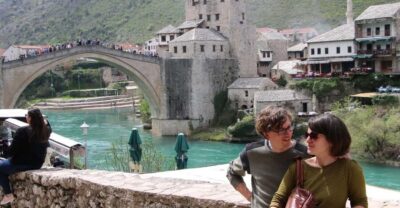
Mostar, Konjic, Blagaj Tekke, Pocitelj & Waterfall
Read our review →
Fall of Yugoslavia, Sarajevo War Tour with Tunnel of Hope Museum and Frontlines
Read our review →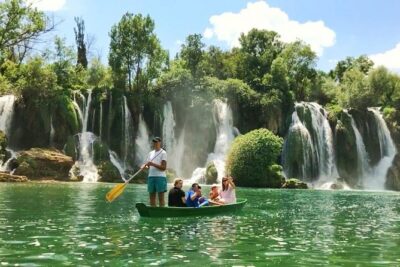
Mostar, Konjic, Sufi House, Pocitelj & Kravice Falls
Read our review →
ROSES OF SARAJEVO (Official WAR + CITY tour)- Story of a Survivor
Read our review →
Mostar, Konjic, Počitelj, Sufi House, & Waterfalls
Read our review →
Tunnel Museum: Bosnian & Yugoslav Wars Tour with War Veteran
Read our review →
Mostar, Konjic, Dervish House, Pocitelj & Kravica Falls
Read our review →Browse the lists this tour appears in