
Reviewed · SARAJEVO TOURS
7 Days Balkan Tour Bosnia Croatia Montenegro Albania N.Macedonia
Sarajevo’s Ottoman lanes, war stories, and welcoming cafés set the tone for a fast-moving week across five Balkan countries. You begin in Bosnia and Herzegovina and finish in North Macedonia, crossing borders, changing currencies, and shifting between Ottoman, Austro-Hungarian, Venetian, socialist, and modern European settings.
I like the private format, since your own group travels with an English-speaking driver and can ask questions along the way. I also like the mix of major sights and smaller stops, from the Sarajevo War Tunnel and Mostar’s bridge to Blagaj, Kravice Falls, Ohrid, and the old towns of Kotor and Budva.
The catch is the pace. Long road days, border crossings, summer traffic, and July heat can leave little time for slow meals or wandering. This is a strong introduction to the region, but it is not a relaxed beach holiday.
Key things to know before booking
- Five countries in seven days: Bosnia and Herzegovina, Croatia, Montenegro, Albania, and North Macedonia are covered in one continuous route.
- A private trip: Only your group participates, with pickup anywhere in Sarajevo and a driver or tour director throughout.
- History is central: Sarajevo’s siege, the assassination at Latin Bridge, Ottoman rule, Jewish heritage, and the region’s changing borders all receive attention.
- Six hotel nights are included: The package covers 4-star accommodation and six breakfasts, but not lunch or dinner.
- The route favors highlights over free time: Dubrovnik receives about two hours of independent exploring, while several days involve substantial driving.
- A good shoulder-season choice: The route can be hot and crowded in July, so May or September may be more comfortable, based on the practical experience shared by past participants.
Sarajevo begins with Ottoman streets and modern scars
Your first day starts with pickup anywhere in Sarajevo. That flexibility is useful if you arrive by air or have already checked into a hotel. After meeting your driver and tour director, you head into the Old Town for a compact walking tour.
Begin near Sarajevo City Hall, then follow the craft streets toward Baščaršija Square and the Sebilj fountain. The old quarter is best understood on foot. You will see copperware shops, small lanes, market stalls, and the layered architecture that makes Sarajevo feel different from many European capitals.
A short visit to a coppersmith’s shop gives the street a human scale. This is not just a photo stop. You learn how traditional metalwork shaped one of the few Ottoman-era craft streets still preserved in the city.
At Gazi Husrev-beg Mosque, the guide explains the powerful Ottoman governor who spent much of his fortune on Sarajevo. His legacy includes the mosque, school, caravanserai, covered market, and other public buildings. Admission is not included, so bring some local currency or ask your guide about the current entry arrangement.
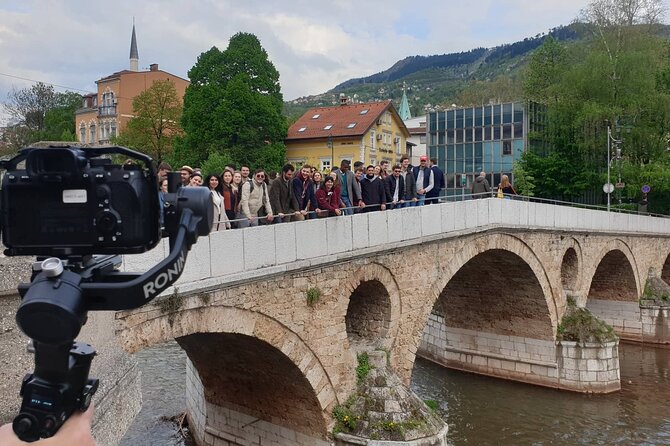
The Latin Bridge provides one of the clearest links between Sarajevo and wider European history. The assassination of Archduke Franz Ferdinand nearby in 1914 helped trigger the First World War. The stop is brief, but the location rewards a few quiet minutes to picture how a small event in one city had consequences across the continent.
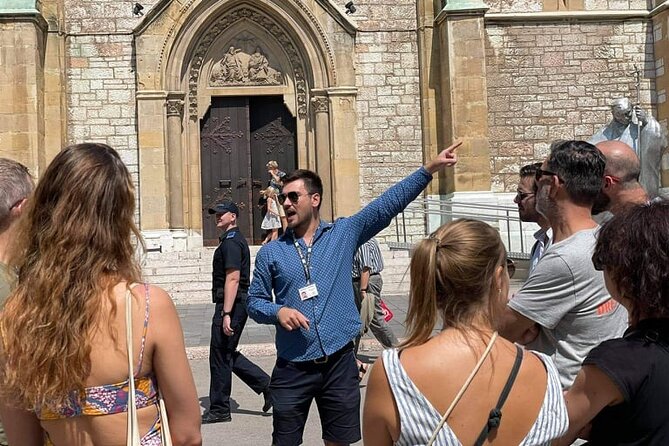
You also pause near the Jewish Museum, housed in the Old Jewish Temple, then visit the Catholic Cathedral, Markale Market, and the Serbian Orthodox Cathedral. These stops matter because they show Sarajevo as a city shaped by several faiths and communities, not as a single cultural story.
At Markale, the focus shifts to the siege of Sarajevo. The market became associated with civilian deaths during the war, and the stop helps explain how ordinary shopping streets became part of a city under bombardment. The Sarajevo War Tunnel adds a physical sense of the siege. The museum visit is included and takes about an hour, followed by a panoramic drive through the city.
The day covers a lot in a short time. I would treat it as an introduction rather than a full study of Sarajevo. The private setup helps here because you can ask for more explanation when a place catches your attention.
Other trips travellers book around Sarajevo:
- Sarajevo: Mostar, Konjic, Blagaj Tekke, Pocitelj & Waterfall
★ 4.9 · 1,335 reviews - Fall of Yugoslavia, Sarajevo War Tour with Tunnel of Hope Museum and Frontlines
★ 5.0 · 1,314 reviews - Sarajevo: Mostar, Konjic, Sufi House, Pocitelj & Kravice Falls
★ 5.0 · 1,179 reviews
Konjic and Mostar follow the Neretva south
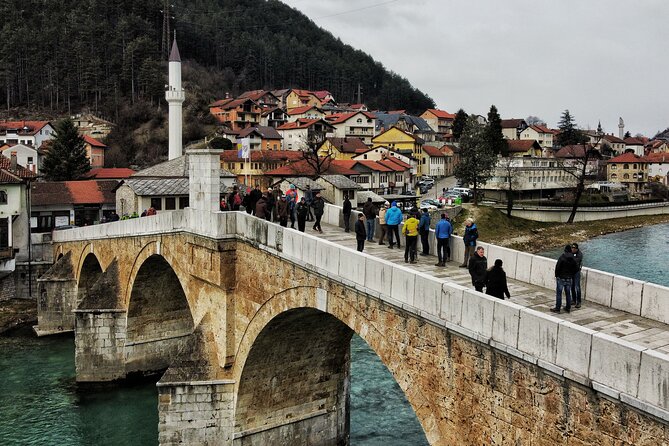
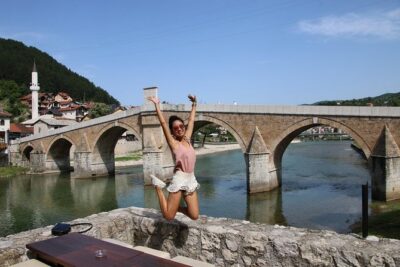
After breakfast on day two, you leave Sarajevo for Herzegovina. About an hour later, you stop in Konjic, a small town beside the Neretva River. Its Ottoman stone bridge is the main point of interest, and the visit is short, roughly 15 minutes.
The road then follows Jablanica Lake and the Neretva Canyon. This is one of the more scenic driving stretches of the trip, but remember that you are seeing it from a moving vehicle. If views matter to you, sit where you can look out comfortably and keep your camera ready during the stops.
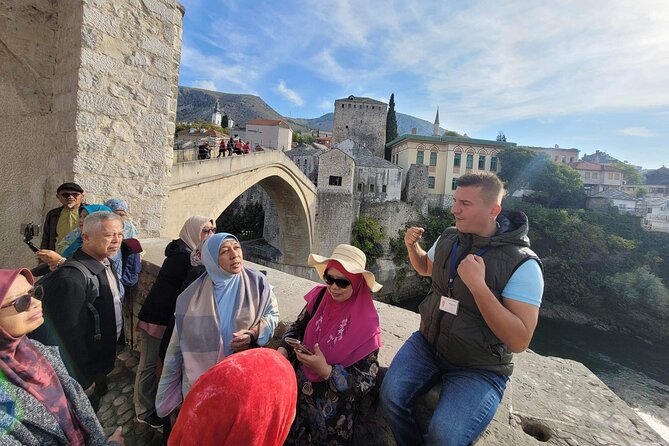
Mostar receives the longest stop of the day. A local guide leads you through the Ottoman bazaar, across both riverbanks, and toward Stari Most, the famous Old Bridge. You also see the Crooked Bridge and visit Koski Mehmet Pasha Mosque.
Mostar is photogenic, but its appeal is more than a bridge and stone lanes. The river divides the old town physically, while the city’s recent past gives the streets a more serious edge. You will have a guided introduction, then check into your hotel and have the rest of the day free.
That free time is useful. Mostar can feel crowded around the bridge during the main sightseeing hours, so an evening walk gives you a chance to see the old town at a slower pace. The tour details do not promise a specific evening activity, so plan to explore independently rather than expecting an organized dinner.
Blagaj, Počitelj, and Kravice Falls add variety
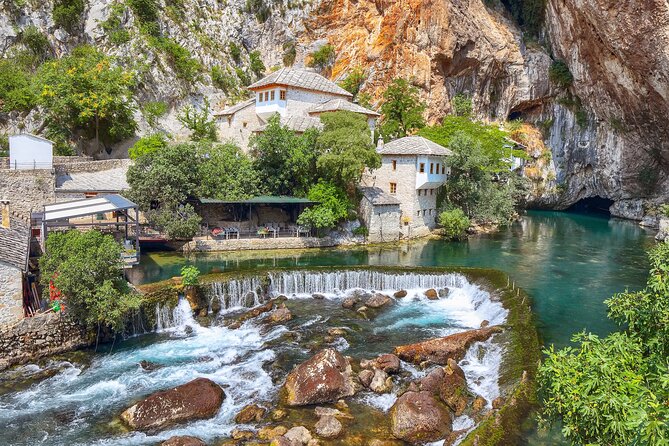
Day three stays in Herzegovina and combines religious heritage, medieval architecture, and nature. At Blagaj, the Buna River springs emerge beside a dramatic cliff and a Dervish house. The stop lasts about an hour and offers a calmer change from Mostar’s busy center.
Počitelj is a stone-built medieval town where you stop for photographs. You might climb toward the sixteenth-century fortress, but the route is not described as a formal guided climb. Wear shoes with a good grip and allow for uneven stone surfaces.
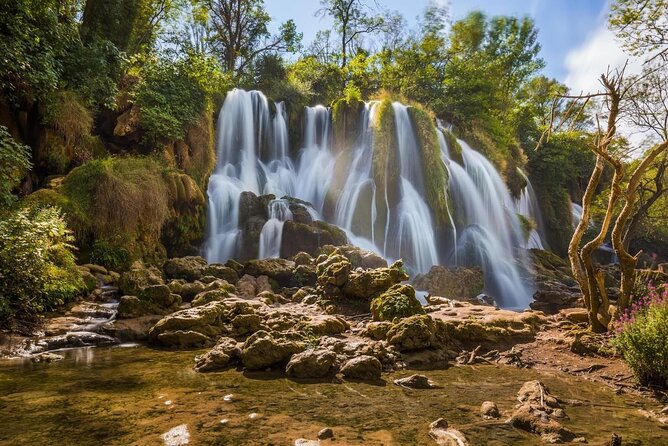
The longest nature stop is Kravice Falls, where you have about two hours. The waterfall is included in the package, giving you time to enjoy the setting instead of rushing through a ten-minute photo stop. The tour information does not promise swimming, so consider it a scenic break unless your guide confirms otherwise.
The day ends in Neum, Bosnia and Herzegovina’s only coastal town. It is a convenient overnight point before Dubrovnik, not a full coastal resort stay. You spend the night there and leave after breakfast on day four.
Dubrovnik, Kotor, and Budva make day four intense
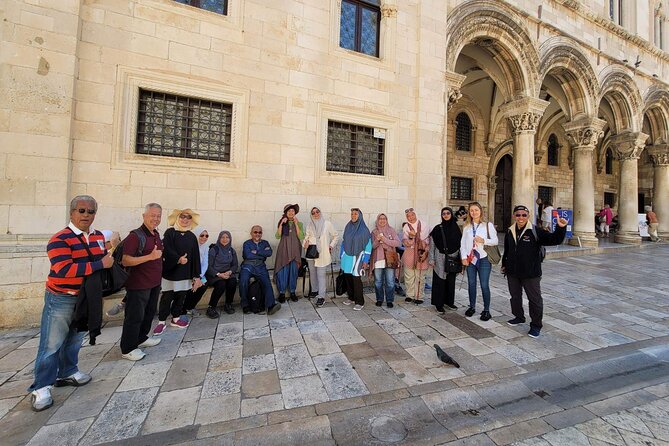
From Neum, you drive about 80 kilometers to Dubrovnik. A local guide meets you for a walking tour inside the old stone walls, followed by around two hours of free time.
Dubrovnik is one of the trip’s headline stops, but the schedule is tight. You will get an organized introduction and enough time to walk the main streets, take photographs, and pause for a drink or snack. You should not expect to see every corner of the old city, visit several museums, and walk the entire walls at a leisurely pace.
Border procedures can affect the timing. The route crosses from Bosnia and Herzegovina into Croatia and later into Montenegro, so keep your passport accessible and avoid planning anything with a fixed start time that evening.
Kotor is next, with a local guide and about two hours in the old town. The setting combines Venetian architecture, stone lanes, and a mountain-framed bay. This is another place where the guided walk gives you the basics, while your free time lets you choose between shopping, a café, or more independent wandering.
A short drive brings you to Budva. You walk through its old town before checking into the hotel. The rest of the day is free and easy, which helps after the demanding sequence of Dubrovnik and Kotor.
This is a visually rewarding day, but also one of the hardest. You cover two famous coastal towns after leaving Neum, and traffic can slow the route. The air-conditioned vehicle matters, especially in July, when temperatures have reached the 90s and even above 100 degrees Fahrenheit.
A few more things to do around Sarajevo
- ROSES OF SARAJEVO (Official WAR + CITY tour)- Story of a Survivor
★ 5.0 · 770 reviews - Sarajevo: Mostar, Konjic, Počitelj, Sufi House, & Waterfalls
★ 4.9 · 572 reviews - Tunnel Museum: Bosnian & Yugoslav Wars Tour with War Veteran
★ 5.0 · 551 reviews - Sarajevo: 2 Hours Old Town Walking Tour With Local Guide
★ 5.0 · 505 reviews
Shkoder and Tirana show a different Albania
Day five takes you into Albania. Shkoder is the first stop, with a local guide and about three hours in town. The schedule provides a useful introduction before continuing to Tirana, but it does not leave room for a wide tour of northern Albania.
In Tirana, the city tour includes Skanderbeg Square, Ethem Bey Mosque, Mother Teresa Square, communist bunkers, and the Pyramid. These places give you a quick visual outline of the capital’s Ottoman, national, communist, and modern chapters.
The bunkers are particularly useful for understanding Albania’s former isolation and security culture. The Pyramid adds another reminder of the country’s communist period, while the central squares show how the capital has been reshaped since then.
After the guided tour, you check into your hotel and have the remainder of the day free. As with Mostar and Budva, that open time is a welcome chance to eat independently or take another walk. Lunch and dinner are not included anywhere on the tour, so you should budget for both meals throughout the week.
Ohrid brings the route to North Macedonia
After breakfast on day six, you leave Tirana for Ohrid. The journey takes about two hours according to the schedule, plus the border crossing. Keep your passport ready and expect the timing to depend on border conditions.
Ohrid’s old town receives a guided introduction covering the main promenade, the gates into the old town, a pearl shop, an old paper factory, and St. Sofia monastery. The town is one of the gentler stops on the route, with time afterward to explore at your own pace.
The pearl shop and paper factory add local craft details to the usual monument tour. St. Sofia monastery provides the religious and architectural focus. The schedule gives you the rest of the day free, so Ohrid is one of the better places to slow down, sit by the water, or browse the old town without a guide setting every step.
The tour’s name refers to North Macedonia, and Ohrid is where that part of the journey becomes clear. You are no longer simply moving through coastal or western Balkan sites. The architecture, cultural references, and border crossing mark a real change in the trip.
Skopje ends the week with two city traditions
Day seven involves about three hours of driving from Ohrid to Skopje, with short stops along the way. Once in the capital, a local guide leads you through both sides of the Vardar River.
The Ottoman-influenced old town includes the bazaar, small shops, and restaurants. Across the river, the Macedonian side presents Alexander the Great themes and the capital’s newer public face. Seeing both areas in one walk gives you a useful way to compare the city’s cultural layers.
The tour ends after the walking tour, with transfer to your accommodation or the airport as arranged. Because the service finishes in Skopje rather than returning to Sarajevo, you can use this trip as a point-to-point route between two Balkan capitals.
What the $2,013.49 price really covers
At $2,013.49 per person, this is not a low-cost bus tour. The value depends heavily on how much you would otherwise spend arranging a private vehicle, drivers, hotels, border crossings, and local guides across five countries.
The price includes six nights in 4-star hotels, six breakfasts, an air-conditioned vehicle, an English-speaking driver or guide, local guides, taxes, and selected entry fees. The Sarajevo War Tunnel and Kravice Falls are specifically included. Meals beyond breakfast are not included, so add a daily food budget.
The private format is the biggest value point. You are not sharing the vehicle with a large group, and you can ask questions directly. The driver and guide team has included people such as Elvis, Edis, and Zulfo. Edis is described as a professional and polite driver with strong local knowledge, while Elvis handled planning questions and added historical and contemporary context. One departure also had a French-speaking guide.
You are paying for logistics as much as sightseeing. Five countries in a week would be difficult to arrange alone, especially with different road systems, hotel locations, guides, and border crossings. The tradeoff is that the same efficient structure leaves less room for spontaneous detours.
Who will enjoy this route most
I would recommend this tour to a first-time visitor who wants a broad Balkan introduction and prefers a private vehicle to public transport. It also suits families and small groups that value direct explanations and a flexible social setting.
The route works well for history-minded visitors. Sarajevo’s siege, Ottoman architecture, religious communities, the First World War connection, Albania’s communist past, and the changing cultural influences across the region all appear in one week.
It is less suitable if you want long beach days, late mornings, or full days in each city. You should also be comfortable with frequent hotel changes and several substantial road journeys.
The best timing may be outside the hottest part of summer. July can bring extreme heat and heavy traffic, even though the vehicle and hotels are air-conditioned. May or September may offer a more comfortable balance, although the tour’s operating period runs from November 20, 2022 through January 27, 2027.
The booking terms allow a full refund when you cancel at least six full days before the start time. A cancellation two to six days before departure receives 50 percent, while cancellations under two days are not refunded. The experience also requires a minimum number of participants, though it remains a private trip for your own group once confirmed.
Should you book the seven-day Balkan route?
Book it if you want maximum geographic range with private transport, local guides, and hotels handled for you. Sarajevo, Mostar, Dubrovnik, Kotor, Ohrid, and Skopje are strong headline stops, while Blagaj, Počitelj, Kravice Falls, Shkoder, and the Sarajevo War Tunnel keep the route from becoming a simple capital-city checklist.
Skip it if you want to linger. Seven days is enough to see the region’s major outlines, not enough to know every city well. Go in with realistic expectations, pack light, protect time for rest, and avoid the hottest weeks if you can. For a first look at the Balkans, the route offers a lot of history and scenery for one carefully packed week.
FAQ
How long is the Balkan tour?
The tour lasts approximately seven days and ends in Skopje after the guided city walk.
Which countries does the tour visit?
It visits Bosnia and Herzegovina, Croatia, Montenegro, Albania, and North Macedonia.
Where does the tour begin?
Pickup is offered from any location in Sarajevo.
Is this a private tour?
Yes. Only your group participates in the activity.
What accommodation is included?
The package includes six nights in 4-star hotels.
Are meals included?
Six breakfasts are included. Lunch and dinner are not included.
Is an English-speaking guide provided?
Yes. The tour includes an English-speaking driver or guide, along with local guides in several cities.
What is included in the tour price?
The price includes accommodation, breakfast, local guides, an air-conditioned vehicle, an English-speaking driver or guide, all fees and taxes, and selected admission fees.
Just added around Sarajevo
- Sarajevo Under Siege: A War History Tour★ 5.0 · 10 reviews
- Private Full Day Safari Tour★ 5.0 · 8 reviews
- Travnik, Jajce, Pliva Lakes & Mills –Medieval & Ottoman Bosnia Full Day Tour★ 5.0 · 3 reviews
- Mysterious Visoko Pyramids Driving and Walking Tour★ 5.0 · 7 reviews
- Walking Tour in Sarajevo★ 5.0 · 3 reviews
- Secret Tito’s Bunker/Konjic Tour★ 5.0 · 4 reviews
- Sarajevo to/from Zagreb Transfer Day Tour (North-central Bosnia)★ 5.0 · 4 reviews
- Tour of Herzegovina – From Sarajevo★ 5.0 · 3 reviews
Sarajevo Tours, compared.
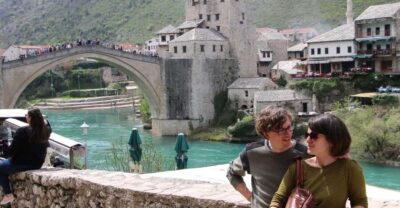
Mostar, Konjic, Blagaj Tekke, Pocitelj & Waterfall
Read our review →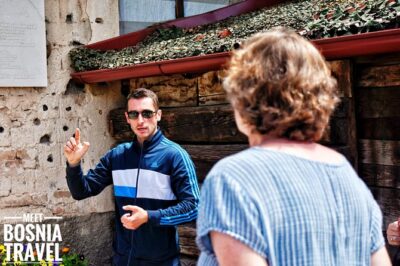
Fall of Yugoslavia, Sarajevo War Tour with Tunnel of Hope Museum and Frontlines
Read our review →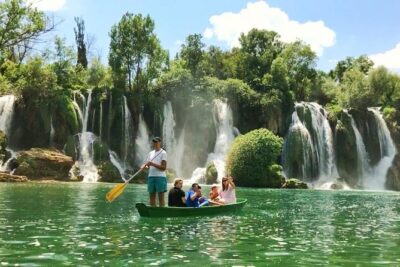
Mostar, Konjic, Sufi House, Pocitelj & Kravice Falls
Read our review →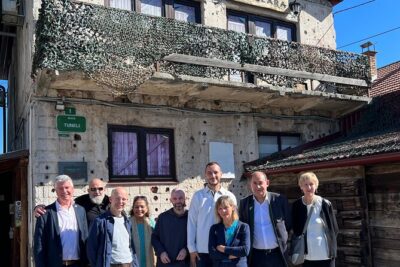
ROSES OF SARAJEVO (Official WAR + CITY tour)- Story of a Survivor
Read our review →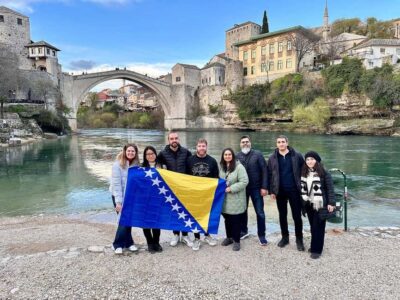
Mostar, Konjic, Počitelj, Sufi House, & Waterfalls
Read our review →
Tunnel Museum: Bosnian & Yugoslav Wars Tour with War Veteran
Read our review →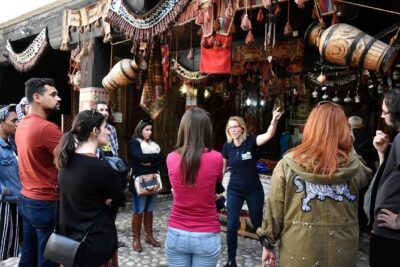
Mostar, Konjic, Dervish House, Pocitelj & Kravica Falls
Read our review →Browse the lists this tour appears in