
Reviewed · SARAJEVO TOURS
Balkan trip
The most appealing thing about this Balkan trip is its range. In two weeks, you move from Sarajevo’s Ottoman lanes to Alpine Lake Bled, Adriatic towns, Montenegro’s Bay of Kotor, and Bosnia’s high mountain villages. The route gives you a real regional picture, not just one capital and a beach stop.
I especially like the combination of included meals and private transport, which removes much of the daily planning. I also like the active choices: a 23-kilometer rafting trip, a visit to Tito’s nuclear bunker, and a mountain walk to Lukomir. The tradeoff is pace. You cover a lot of ground, and several days combine long drives with sightseeing.
Key points
- Four countries in 14 days: Bosnia and Herzegovina, Croatia, Slovenia, and Montenegro are tied together in one route.
- Meals are included: Breakfast, lunch, and dinner are provided for 13 days, a major help on a busy trip.
- The active days are genuine: Rafting lasts about five hours, and the Kotor fortress hike takes about two hours.
- Private attention: Only your group participates, with transport arranged for the planned activities.
- Big-name sights with local texture: Sarajevo, Dubrovnik, Plitvice, Bled, Mostar, Lukomir, and the Una waterfalls all appear.
- The price covers the framework: At $2,245.70 per person, you pay about $160 per day for hotels, meals, guides, and planned transport, before flights, tips, and souvenirs.
Sarajevo begins with Ottoman lanes and wartime memory
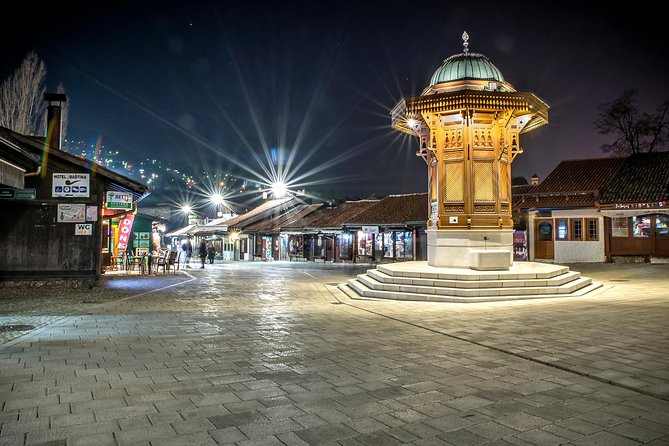
Your arrival is handled at Sarajevo Airport, followed by hotel check-in and a short walk to Baščaršija for dinner. That first evening is useful rather than overprogrammed. You can get your bearings in the old center, where narrow streets, small shops, cafés, and historic buildings make Sarajevo feel distinct from the coastal cities that follow.
The full Sarajevo day brings together the city’s main sights. You visit Baščaršija, Gazi Husrev-bey’s Mosque, the old bezistan market, Sebilj fountain, City Hall, the Cathedral of the Sacred Heart, and the Latin Bridge, also known as Princip’s Bridge. The route then adds the Avaz Tower, giving you a different view of the city.
This is a strong opening because Sarajevo is not treated as a quick stop. You have time for both religious landmarks and political history. The city’s Ottoman, Austro-Hungarian, and Yugoslav layers are close together, so a guide can help connect what you are seeing.
Later, you head to Trebević and the spring of the Bosna River. These outings add fresh air and open space after the close streets of the old town. The schedule calls the nature time suitable for trekking and relaxation, so you should expect a lighter outdoor visit rather than a highly technical hike.
A few more things to do around Sarajevo
- Sarajevo: Mostar, Konjic, Blagaj Tekke, Pocitelj & Waterfall
★ 4.9 · 1,335 reviews - Fall of Yugoslavia, Sarajevo War Tour with Tunnel of Hope Museum and Frontlines
★ 5.0 · 1,314 reviews - Sarajevo: Mostar, Konjic, Sufi House, Pocitelj & Kravice Falls
★ 5.0 · 1,179 reviews
Travnik, Jajce, and Bihać show Bosnia beyond the capital
Day three is one of the most varied stretches in Bosnia. Travnik brings Ottoman-style buildings, the Plava Voda spring, and an old fortress. Jajce follows, with its former royal connections and unusual waterfall in the city center. You finish with a walking tour in Bihać and spend the night there.
The appeal is the contrast. Travnik feels tied to Ottoman Bosnia, Jajce offers a dramatic town sight, and Bihać serves as a gateway to the country’s northwestern nature. Lunch is organized in Jajce, which keeps the day moving without asking you to search for a restaurant during a transfer-heavy schedule.
You should also understand the cost of this variety. This is not a slow village-to-village holiday. You will see several places in one day, and the time in each city is limited. If you prefer long café stops or detailed museum visits, you may wish to ask the operator if the private format allows adjustments.
Una National Park adds waterfalls before Zagreb
The morning takes you to Una National Park and Štrbački buk, a waterfall known for its force and spray. This is one of the trip’s strongest nature stops because it arrives before Zagreb and breaks up the urban sightseeing.
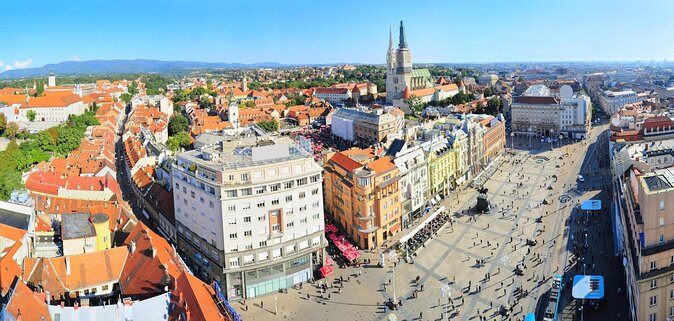
After the park, you cross into Croatia and continue to Zagreb. The city tour includes Ban Jelačić Square, the Cathedral of St. Mark, the Upper Town, parks, and central streets. You then check into the hotel and have free time to explore independently.
That free time matters. Guided city tours can give you the basic map, but your own walk lets you choose between more architecture, a café, shopping, or a quiet evening. The schedule still places dinner and the overnight stay in Zagreb, so you are not left to arrange your own base.
Ljubljana and Lake Bled bring an Alpine change
The next morning crosses into Slovenia. Ljubljana is presented through a walking tour of Prešeren Square, the Ljubljanica River, the Triple Bridge, and Dragon Bridge. The city’s green spaces and compact center make it an easy change after the longer Bosnian drives.
Then comes Lake Bled, one of the trip’s most recognizable views. The glacier lake sits below the Julian Alps and has a natural island at its center. Lunch is arranged there, and swimming is possible if weather conditions allow.
The timing is practical but tight. You get the classic Bled setting in the same day as Ljubljana, but this is not a dedicated lakeside stay. If Bled is a personal priority, ask how much free time you will have beside the water and what the boat ride to the island involves, since the published plan specifies the lake and lunch but not every optional activity.
You spend the night back in Zagreb. That means the day includes a border crossing and a return to your previous base. It is efficient for a broad regional circuit, though not the most direct arrangement for someone who wants to linger in Slovenia.
Same base, a different kind of day out:
- ROSES OF SARAJEVO (Official WAR + CITY tour)- Story of a Survivor
★ 5.0 · 770 reviews - Sarajevo: Mostar, Konjic, Počitelj, Sufi House, & Waterfalls
★ 4.9 · 572 reviews - Tunnel Museum: Bosnian & Yugoslav Wars Tour with War Veteran
★ 5.0 · 551 reviews - Sarajevo: 2 Hours Old Town Walking Tour With Local Guide
★ 5.0 · 505 reviews
Plitvice is the trip’s major waterfall walk
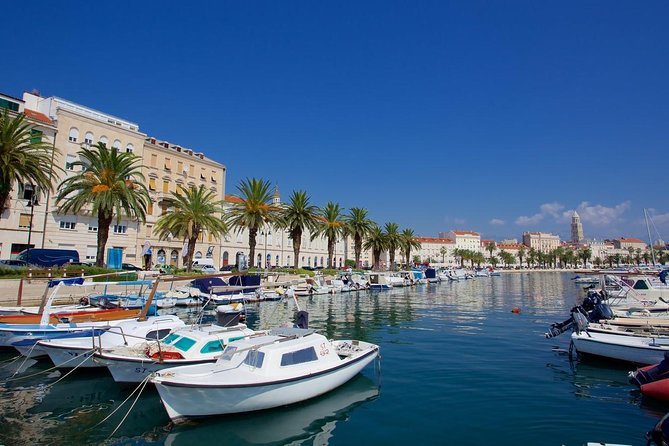
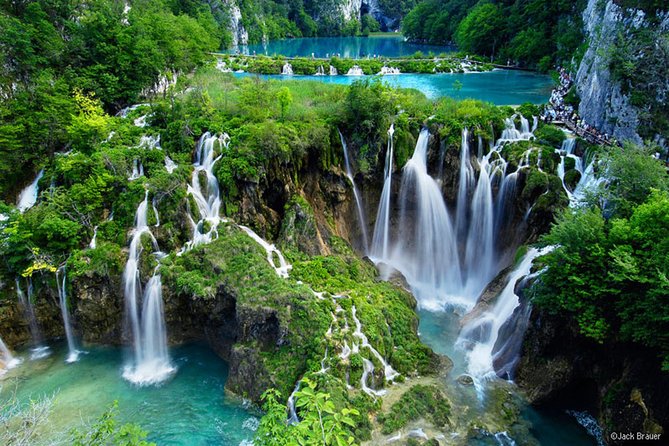
On day six, you head toward Split with a stop at Plitvice Lakes National Park. The park is a UNESCO-protected site with sixteen lakes and many waterfalls. The planned visit is a comfortable hike along the water, making this one of the clearest highlights for anyone who values scenery.
Bring shoes suitable for walking and expect the park visit to be active even if the route is described as comfortable. After lunch at Plitvice, you continue to Split and take an evening stroll along the Riva, the city’s famous waterfront promenade.
The day joins one of Croatia’s biggest natural attractions with one of its best-known city centers. The drawback is simple: Plitvice and Split are far apart within a single day. You gain breadth, but the transfer may leave you ready for a quiet evening rather than a late night in Split.
Split, Ston, and Dubrovnik shift the trip to the Adriatic
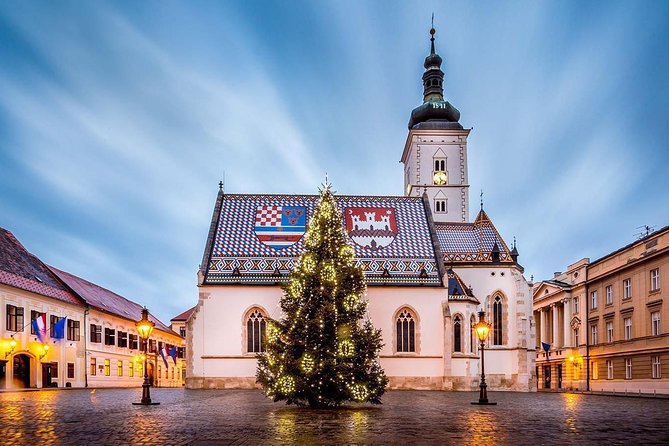
You have free time in Split before continuing toward Ston. This is a welcome pause after the previous day. Split’s central area is built around the old palace complex and the Riva, though the supplied schedule leaves the exact use of your free time to you.
Ston is known for its long defensive walls, built to protect the former city-state of Dubrovnik. Lunch is organized there, and you continue to Dubrovnik for the night. Ston gives the coast a different feel from the larger resort cities: the focus is on stone fortifications, a small historic settlement, and the route toward Dubrovnik.
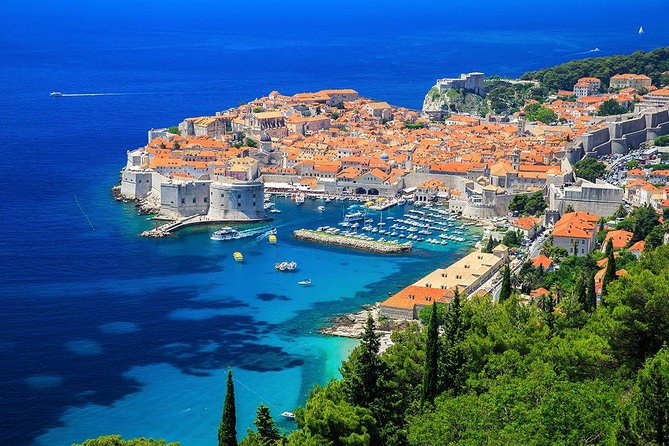
The following morning starts with a trip up Srđ hill. The view takes in Dubrovnik and the islands of the Adriatic. The afternoon is reserved for Dubrovnik’s Old Town and its walls, fortresses, and bastions.
This is a good use of time because the cable car viewpoint and the walled city offer two very different perspectives. From above, you understand the setting. On foot, you notice the narrow lanes and defensive design. The schedule does not specify that the cable car fare is included, so confirm whether that cost is covered before you go.
Perast and Kotor make Montenegro a major section, not a detour
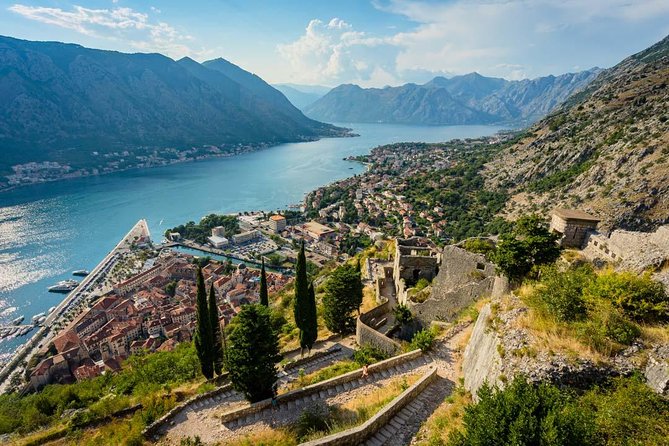
Montenegro begins with Perast, a Baroque town in the Bay of Kotor. From there, a boat ride takes you to Gospa od Škrpjela, Our Lady of the Rocks, a basilica on a small island. The bay drive toward Kotor is one of the most scenic transfers in the entire trip.
After lunch and hotel check-in, you have time to relax and swim. That matters after several sightseeing days. The Montenegro section is not only monuments and photographs; it includes a real pause beside the water.
Kotor receives a full morning the next day. A roughly two-hour easy hike leads to the fortress above the town, with broad views over the bay. The plan schedules the climb before the heat of the day, a smart choice in summer. You then return to the Old Town for free time.
Call the hike easy only if you are comfortable with uphill walking. The description gives no distance or detailed surface information, so ask your provider if anyone in your group has mobility concerns. The private format may allow a slower pace, but that should be agreed before departure.
Trebinje and Mostar bring the story back to Bosnia
The return route passes through Trebinje, Bosnia’s southernmost city, for a short break before Mostar. The limited time in Trebinje makes it a stop rather than a full city visit, but it breaks up the drive and gives you a glimpse of another part of the country.
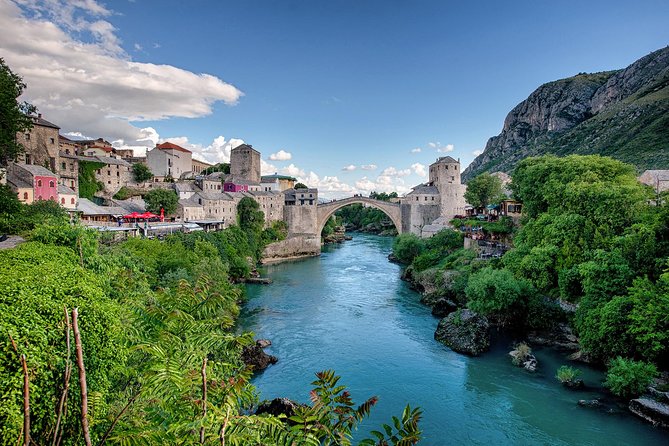
Mostar gets a proper afternoon tour after hotel check-in. You see the UNESCO-listed Old Bridge, the Kujundžiluk old town, Karađoz-bey’s Mosque, and Kriva ćuprija. Free time follows, allowing you to walk the lanes at your own speed.
Mostar can feel crowded around its famous bridge, particularly at busy times, so the free period is valuable. I would use it to move beyond the central bridge approach and look at the smaller streets and river views. The tour’s strength here is the balance between a guided introduction and room to wander.
Tito’s bunker and rafting turn history into action
Day twelve is the most unusual combination on the route. In Konjic, you visit Tito’s nuclear bunker, built from 1953 to 1979 to protect 350 senior military and state officials in the event of a nuclear attack. The bunker reaches 280 meters underground, and its reported construction cost was 4.6 billion US dollars.
This is more than another historic building. It shows the secrecy and scale of former Yugoslavia’s Cold War planning. If you enjoy political history, military sites, or places that are rarely part of a standard city tour, this should be one of your strongest days.
Afterward, you go to the rafting base. The rafting route covers 23 kilometers and lasts about five hours. Neoprene suits, life jackets, shoes, and helmets are provided.
The active schedule deserves attention. A five-hour rafting trip after a morning bunker visit is a full day, not a token outdoor add-on. You need to be comfortable with an extended activity and changing into the provided equipment. The plan states that most people can participate, but anyone with concerns should ask the operator about the river conditions and physical demands before booking.
Lukomir closes with mountain roads and traditional food
The final full day returns to the mountains in jeeps, with breaks on Bjelašnica. You visit Lukomir, described as Bosnia and Herzegovina’s highest populated settlement and its last traditional Bosnian village. A village walk comes before lunch and time to rest.
Lunch features traditional Bosnian dishes made from organic ingredients. After the meal, a roughly two-hour trek takes you to Umoljani. This is a fitting final day because it shifts attention away from famous monuments and toward rural life, food, and mountain walking.
The jeep transport is important. It makes a remote village visit possible without asking you to arrange a separate vehicle. Still, expect a rougher, more rural outing than the city days. The trekking portion also means you should pack practical footwear and clothing, even though the trip includes many urban stops.
The last morning provides organized transport to Sarajevo International Airport. Since the trip ends where it began, you avoid arranging a one-way transfer from another country.
What the $2,245.70 price really covers
At $2,245.70 per person, the cost works out to about $160 per day. That is a useful value if you would otherwise have to arrange thirteen nights of accommodation, daily meals, multiple border crossings, private transfers, several local tours, airport transport, rafting equipment, and mountain excursions.
The included package covers professional guides, overnight stays, transport for the planned activities, and breakfast, lunch, and dinner for 13 days. Flights, souvenirs, and gratuities are extra. The attraction entries are not clearly itemized, so ask specifically about the Sarajevo cable car, the boat at Perast, national park admission, and any other paid activity before paying in full.
The meal plan is both a benefit and a limitation. You will spend less time hunting for restaurants, and the included lunches help on days in parks or during transfers. But a fully arranged meal schedule leaves less room for spontaneous dining. Ask how much flexibility you have if you want to skip a meal or choose your own restaurant.
Who will get the most from this private Balkan trip
This tour suits you if you want one organized route through several Balkan countries and prefer not to manage border crossings, hotel changes, or rural transport yourself. It is also a strong choice for a family group, a circle of friends, or a private party that wants guides focused only on them.
The schedule fits active sightseers. You should be ready for walking in old towns, a national park hike, the Kotor climb, rafting, and a two-hour mountain trek. It is less suitable if you want a slow beach holiday or long stays in each city.
The provider’s earlier Bosnia programs have been associated with team members named Sanjin, Aldin, Amella, Jelle, and Martina. If personal rapport matters to you, ask who will guide your departure. The strongest praise attached to this operator focuses on warm treatment, careful organization, tailor-made planning, good food, and guides who help with problems. Those qualities matter more on a 14-day private trip than a polished first-day introduction.
Cancellation is free up to 24 hours before the local start time. Weather or minimum-group issues can lead to a new date, an alternative experience, or a full refund. The tour begins with a 10:00 a.m. pickup at Sarajevo Airport, and confirmation is provided when you book.
Should you book this Balkan trip?
Book it if you want maximum variety with minimum daily administration. You will see four countries, major cities, UNESCO sites, waterfalls, mountains, a Cold War bunker, and the Adriatic, while hotels, meals, and planned transport are handled for you.
Think twice if you want deep time in Ljubljana, Split, or Dubrovnik, or if long driving days wear you down. Before booking, confirm the exact hotels, guide assignment, paid entry fees, meal flexibility, and the physical demands of rafting and hiking. For an active group that values local food, private attention, and a broad first look at the Balkans, the package offers unusually full coverage for its price.
FAQ
How long is the Balkan trip?
The experience lasts approximately 14 days, beginning and ending in Sarajevo.
Where does the tour begin?
Pickup begins at Sarajevo International Airport, also listed as Butmir Airport, with a stated start time of 10:00 a.m.
Which countries does the tour visit?
The route includes Bosnia and Herzegovina, Croatia, Slovenia, and Montenegro.
Is this a private tour?
Yes. Only your group participates in the private tour or activity.
Are meals included?
Yes. Breakfast, lunch, and dinner are included for 13 days.
Are hotels included?
Yes. Overnight stays are included throughout the planned route.
Are flights included in the price?
No. Flight tickets are not included.
Is rafting equipment provided?
Yes. The rafting portion includes a neoprene suit, life jacket, shoes, and helmet.
Can I cancel for a full refund?
You can cancel at least 24 hours before the local start time for a full refund. Changes or cancellations made less than 24 hours before the start are not accepted for a refund.
Just added around Sarajevo
- Downhill Sarajevo MTB Mountain Biking Adventure on Trebevic – Half Day Tour★ 5.0 · 3 reviews
- Skakavac Waterfall Mountain Biking Tour from Sarajevo MTB★ 5.0 · 11 reviews
- Sarajevo War Tour with TRAVELPLUS★ 5.0 · 11 reviews
- Sarajevo to Dubrovnik: One-Way Tour via Mostar, Kravica Falls, Blagaj & Pocitelj★ 5.0 · 12 reviews
- Sarajevo City SIghtseeing / War Bike Tour★ 5.0 · 13 reviews
- Transfer from Sarajevo to Kotor+Herzegovina tour★ 5.0 · 17 reviews
- LUKOMIR VILLAGE HIKE & TREK TOUR (nature, hike, food & panorama)★ 5.0 · 11 reviews
- Umoljani Village to Lukomir Village via Obalj Hike from Sarajevo★ 5.0 · 16 reviews
Sarajevo Tours, compared.
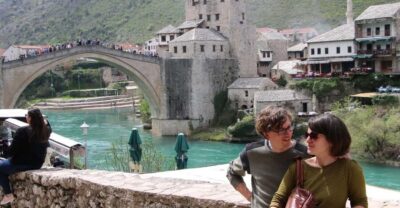
Mostar, Konjic, Blagaj Tekke, Pocitelj & Waterfall
Read our review →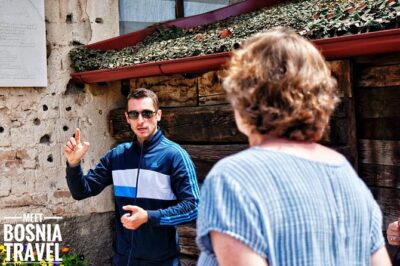
Fall of Yugoslavia, Sarajevo War Tour with Tunnel of Hope Museum and Frontlines
Read our review →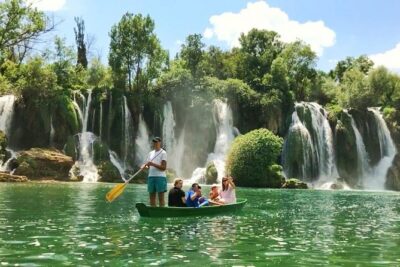
Mostar, Konjic, Sufi House, Pocitelj & Kravice Falls
Read our review →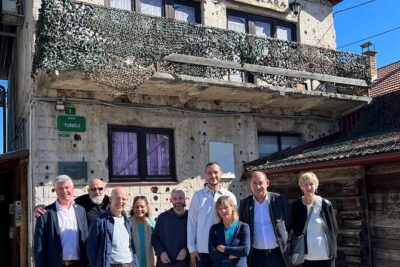
ROSES OF SARAJEVO (Official WAR + CITY tour)- Story of a Survivor
Read our review →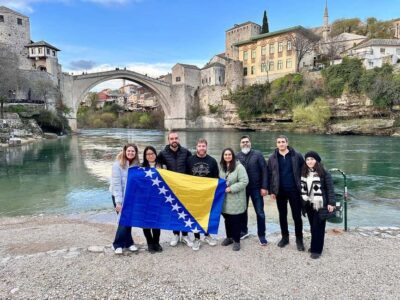
Mostar, Konjic, Počitelj, Sufi House, & Waterfalls
Read our review →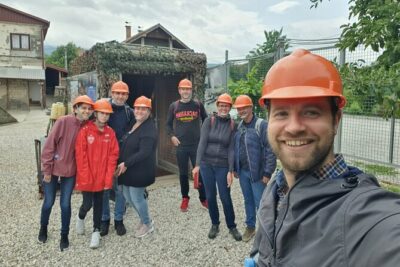
Tunnel Museum: Bosnian & Yugoslav Wars Tour with War Veteran
Read our review →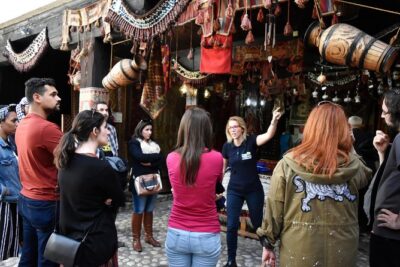
Mostar, Konjic, Dervish House, Pocitelj & Kravica Falls
Read our review →Browse the lists this tour appears in