
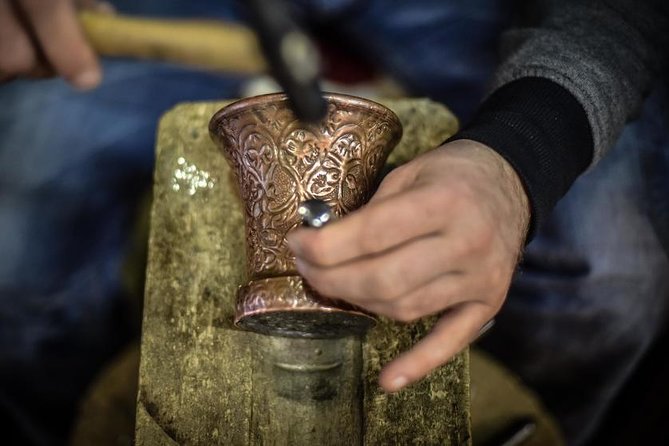
Reviewed · SARAJEVO TOURS
COPPER HANDICRAFT WORKSHOP (Make your own souvenir from Sarajevo)
Sarajevo’s old copper quarter is more than a row of souvenir shops. On this small-group outing, you walk through the coppersmith and blacksmith bazaar, hear how everyday metalwork shaped Ottoman Sarajevo, then sit down with an artisan and make something yourself. The hands-on workshop is the real prize: you leave with a copper keepsake that carries your own fingerprints, not just a shop receipt.
I like the tiny group of five or fewer, which gives you time to ask questions and get help at the workbench. I also like the mix of old-town sights, local architecture, and craft. The main thing to consider is timing: the tour begins at 6:15 pm, so you have less daylight for the walking portion, and the experience depends on good weather.
Key points to know before booking
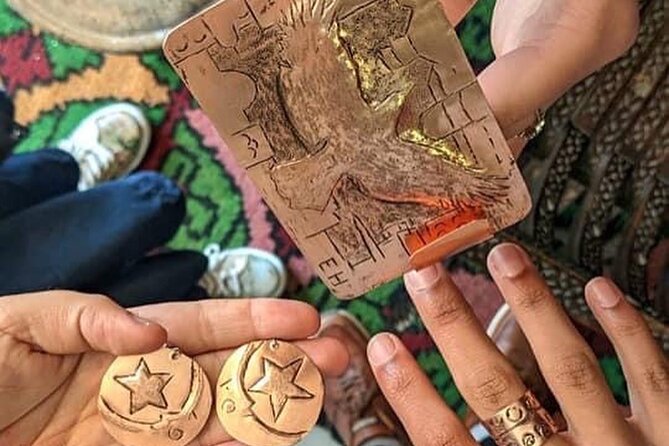
- Make your own copper souvenir: You work with an artisan and create a personal piece, such as a ring, bracelet, or ornament.
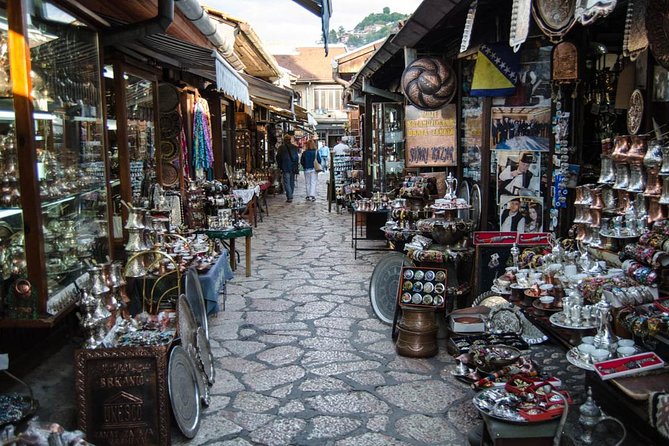
- See Sarajevo’s working craft quarter: Kazandžiluk preserves the city’s long coppersmith tradition, from army kettles to coffee pots and trays.
- Small group, personal guidance: A maximum of five people makes it easier to follow the demonstrations and ask for design help.
- Local guides add city context: Guides including Mak and Sulej connect the workshop to Sarajevo’s art, architecture, and daily life.
- A short evening experience: The full outing takes about one to two hours and starts at 6:15 pm.
- Good value for hands-on time: At $66.23 per person, the price is higher than a simple walking tour, but includes instruction, a local workshop, and a handmade souvenir.
Why the workshop is the heart of the experience
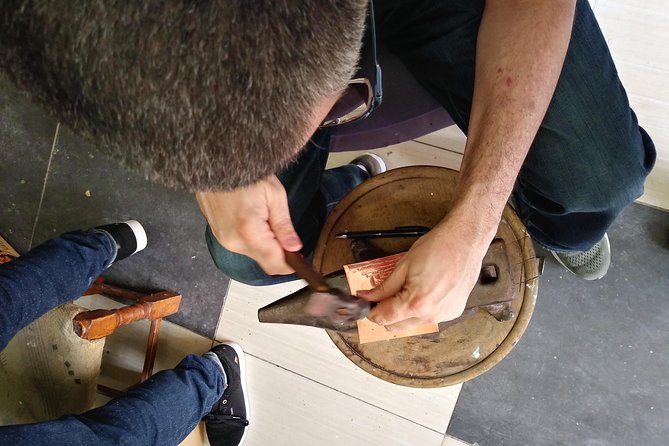
I would choose this activity for the hour spent in the coppersmith’s shop, not simply for the walking route. Seeing a craft is pleasant. Trying it yourself is what makes the visit stick.
The artisan introduces you to traditional techniques and helps you choose a design that can be finished in the available time. The exact object depends on the design you select, but past participants have made personal rings and bracelets. One participant described the teacher, Sulej, as patient and friendly, with a knack for explaining different methods without making the process feel intimidating.
That matters if you have no experience with metalwork. You are not expected to arrive with a plan or a set of skills. The artisan offers designs and ideas that suit the short session, then guides you through the work.
The shop also brings the craft into the present. The family business has old roots, but the designs are not limited to museum-style pieces. You might choose something simple and traditional, or work toward a more modern shape. The result is meant to be used and worn, not left behind as a decorative object.
Expect a practical lesson rather than a polished studio show. You will be handling the material and making decisions. That means the final piece may have small marks or irregularities. For me, that is part of the point. A perfect factory-made ornament can be bought anywhere. A slightly uneven bracelet made during an evening in Sarajevo has a story attached to it.
A few more things to do around Sarajevo
- Bosnian Cooking Lessons
★ 5.0 · 269 reviews - Bosnian Traditional Handicraft, half-day – do it yourself – Coppersmith Workshop
★ 5.0 · 13 reviews - Traditional Bosnian Cooking Class in Mostar with Lunch and Drinks
★ 5.0 · 16 reviews
Starting at Sebilj Fountain in Baščaršija
The outing begins at Đulagina 2 at 6:15 pm. The route includes Sebilj Fountain, one of Sarajevo’s best-known meeting points and a useful place to get your bearings in the old town.
Sebilj was built in 1753 and is tied to a local legend: anyone who drinks from one of Sarajevo’s fountains will return to the city. You do not need to treat the story as a promise, but it gives the fountain a friendly role in Sarajevo’s public life.
The stop is brief, about ten minutes, and admission is free. You will not be spending the evening studying the fountain from every angle. Instead, it sets the scene for the old town and introduces one of the city’s symbols before you move toward the craft quarter.
The end point is listed at Sebilj, Baščaršija 1, at the main square or about a minute from the company office. Because the start and finish details use nearby old-town addresses, check the exact meeting instructions when you book. The area is close to public transportation, but this is mainly a walking activity.
Kazandžiluk and Sarajevo’s metalworking past
From Sebilj, you head into Kazandžiluk, the street and quarter named for the kazandžijas, the city’s master metalworkers and coppersmiths.
Their first major work involved making kettles for the army. Over time, their shops produced household items such as ewers, pitchers, coffee pots, trays, and metal table tops. During Ottoman Sarajevo’s Golden Age, coppersmiths made around a hundred different types of objects.
That detail helps you see the quarter as more than a line of souvenir stalls. Copper work was part of daily life. A coffee pot was not just a pretty object for a shelf, and a tray was not merely a decoration for visitors to buy. These were useful things made by skilled local tradespeople.
You spend about twenty minutes here, with free admission. The guide explains what you are looking at and gives the workshop some historical context. This is one of the places where a guide adds real value. Alone, you might see rows of shining copper and move on. With someone explaining the tools, products, and family trade, the street becomes easier to read.
The trade-off is that the stop is short. If you want a long, detailed museum-style lesson about Ottoman metalwork, this is not that. It is a compact introduction designed to lead into your own practical work.
The Meeting of Cultures and Sarajevo’s divided character
The next stop is the Sarajevo Meeting of Culture, a point where Eastern and Western architectural traditions meet.
Sarajevo is often called the Jerusalem of Europe because different religious and cultural influences sit close together. This stop gives you a visual way to understand that nickname. You are not only hearing about the city’s past. You are looking at the contrast in the built environment and seeing how Sarajevo occupies a meeting point between cultural worlds.
The visit lasts about ten minutes and is free. It is a useful pause before the workshop because it broadens the experience beyond metalwork. The tour is not only about how copper is shaped. It also shows how the city’s architecture and crafts reflect its position between East and West.
Again, keep your expectations in check. This is a brief orientation, not a full architecture tour. If you want to spend an afternoon examining every building, you will need extra time in Sarajevo. Here, the stop works best as a sharp introduction before the focus returns to the craft quarter.
Same base, a different kind of day out:
- Sarajevo: Mostar, Konjic, Blagaj Tekke, Pocitelj & Waterfall
★ 4.9 · 1,335 reviews - Fall of Yugoslavia, Sarajevo War Tour with Tunnel of Hope Museum and Frontlines
★ 5.0 · 1,314 reviews - Sarajevo: Mostar, Konjic, Sufi House, Pocitelj & Kravice Falls
★ 5.0 · 1,179 reviews - ROSES OF SARAJEVO (Official WAR + CITY tour)- Story of a Survivor
★ 5.0 · 770 reviews
Inside the family coppersmith workshop
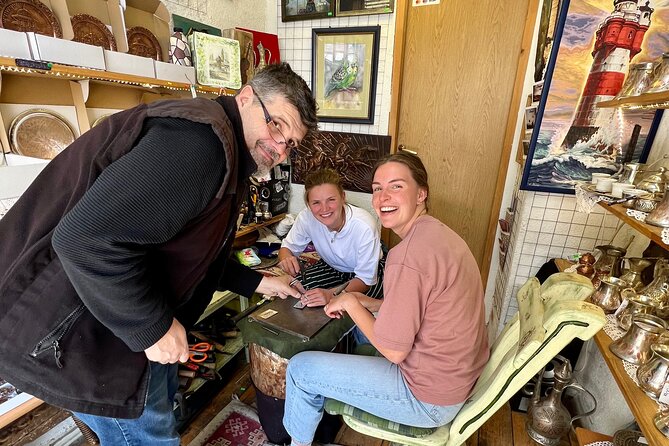
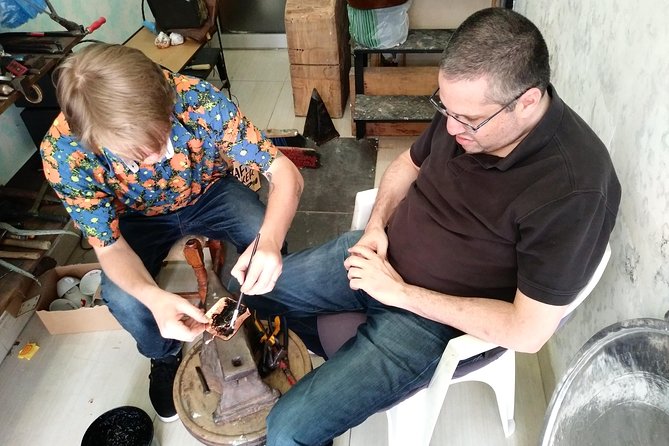
The final stop takes about an hour and brings you to an artisan’s colorful shop in Baščaršija. You meet the coppersmith artist, learn about the family business, and make a copper souvenir with guidance from the craftsperson.
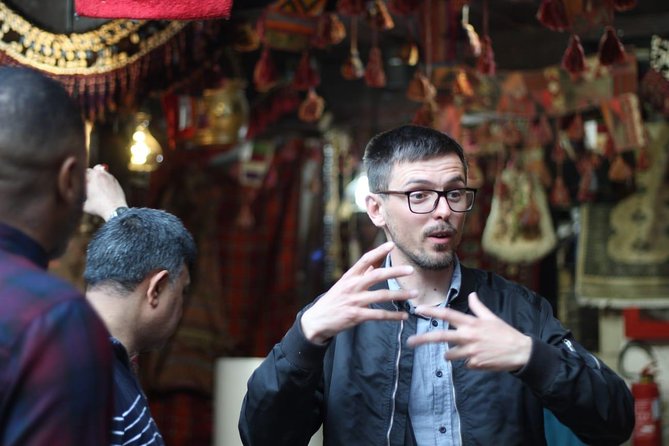
The workshop format is informal and social. Guides such as Mak have been praised for being easy to talk with and generous with their time. Mak also brings wider knowledge of Sarajevo, Bosnia and Herzegovina, local art, and the city’s architecture into the conversation. Sulej is another teacher associated with the workshop and is particularly good at showing different coppersmith techniques.
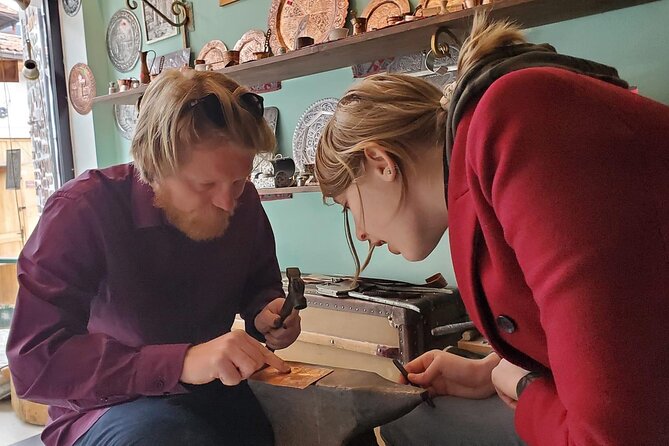
You should feel free to ask questions as you work. The small group helps here. With no more than five people, the artisan can spend time checking your technique and helping you adjust your design. A larger class might give you the same basic demonstration, but less room for personal attention.
The project is also flexible enough for different tastes. You may prefer a bracelet, a ring, or another small ornament. The available designs are selected with the time limit in mind, so you are not attempting a major metalwork project in one evening.
The activity is suitable for most people, according to the supplied participation details. Still, it is worth remembering that the workshop involves working with your hands. If you have limited hand mobility, ask the provider about the specific steps before booking. No special experience is required, but patience helps.
What you take home from Sarajevo
The souvenir is the obvious takeaway, but the better memory is the process. You see the material, learn a technique, make choices, and leave with an object that connects to the place.
A shop-bought copper item can be attractive, especially in a quarter known for metalwork. Your own piece has a different value. It may remind you of the old town at evening, the sound of tools, the conversation with the artisan, and the small decisions that shaped the final design.
One useful detail is that the artisan does not push you toward a single fixed result. You receive several design ideas and can choose something that fits your taste. That makes the workshop work well for people who want a wearable souvenir rather than a standard tourist trinket.
The activity can also spark a new hobby. The workshop is short, but the basic techniques may encourage you to learn more when you return home. You should not expect to become a trained coppersmith in an hour. You can expect to gain a clearer sense of the patience and skill behind the craft.
Is $66.23 a fair price?
At $66.23 per person, this is not the cheapest way to see Baščaršija. You can walk through the old town and view the copper shops without paying for a tour. You can also visit Sebilj Fountain and the Meeting of Cultures independently, both without an admission charge.
The value comes from the combination. You receive a guided introduction to the craft quarter, explanations of Sarajevo’s cultural setting, direct instruction from a local artisan, and a handmade object that you create during the session.
For comparison, a basic walking tour would mainly charge you for the guide’s time. Here, you are paying for a smaller group and a structured workshop as well. If you care about making something and want more than a quick explanation outside a shop, the price is easier to justify.
The value is weaker if you dislike hands-on activities or mainly want a long historical tour. Much of the walking section is brief, and the workshop is the central feature. Book it for the craft experience, not as your only introduction to Sarajevo.
Evening timing, group size, and practical details
The tour begins at 6:15 pm and lasts about one to two hours. The route includes roughly forty minutes of short sightseeing stops, followed by about an hour in the workshop.
An evening start can work well after a day of sightseeing. It gives you a focused activity without taking up a full morning or afternoon. The drawback is the light. Depending on the season, you may have limited daylight during the walking portion, so do not book this expecting bright daytime views of every building.
The activity is offered in English and uses a mobile ticket. It is near public transportation, and most people can participate. The group is capped at five, a useful limit for a craft lesson.
Weather matters because part of the experience takes place outdoors. If poor weather causes cancellation, you are offered another date or a full refund. You can cancel for a full refund up to 24 hours before the start time. Changes or cancellations inside that window are not accepted, and the cut-off uses local time.
Who will enjoy this most?
I would recommend this for you if you like local crafts, small groups, and souvenirs with a personal story. It is especially well suited to couples, families with older children, and solo visitors who want a relaxed activity with conversation built in.
It also suits repeat visitors to Sarajevo. If you have already seen the main sights, making a piece of copper gives you a new way to spend an evening in the old town.
You may want to skip it if you prefer a long museum visit, a large sightseeing route, or a highly structured demonstration where you only watch. The walking stops are short, and the workshop asks you to take part.
Should you book the copper workshop?
Book it if you want to do something rather than simply look. The strongest parts are the tiny group, the patient instruction, the family coppersmith setting, and the chance to make a ring, bracelet, or ornament that belongs to your Sarajevo story.
I would not book it as a replacement for a full city tour. I would book it as a compact evening addition, especially if Kazandžiluk’s working craft tradition interests you. At $66.23, the cost makes sense when you value the personal guidance and the handmade result.
If you can spare one to two hours, enjoy practical activities, and do not mind the 6:15 pm start, this is a thoughtful way to leave Baščaršija with more than photographs.
FAQ
Where does the copper workshop begin?
The listed starting point is Đulagina 2 in Sarajevo, Bosnia and Herzegovina. The activity starts at 6:15 pm.
Where does the activity end?
The listed end point is Sebilj, Baščaršija 1, at Sarajevo’s main old-town square or about one minute from the provider’s office.
How long does the activity take?
The experience lasts approximately one to two hours. The workshop itself takes about one hour.
How many people can join?
The group has a maximum of five participants.
Is the activity offered in English?
Yes. The experience is offered in English.
What will I make during the workshop?
You will make a copper souvenir or ornament with help from the artisan. Designs may include a personal ring or bracelet, depending on the option you choose.
Is the activity suitable for most people?
The activity information states that most participants can take part. It is a hands-on workshop, so contact the provider if you have concerns about participating in the metalworking steps.
What happens if the weather is poor?
The experience requires good weather. If it is canceled because of poor weather, you can receive a different date or a full refund. You can also cancel up to 24 hours before the start time for a full refund.
Just added around Sarajevo
- Private Full Day Safari Tour★ 5.0 · 8 reviews
- Sarajevo Under Siege: A War History Tour★ 5.0 · 10 reviews
- Mysterious Visoko Pyramids Driving and Walking Tour★ 5.0 · 7 reviews
- Walking Tour in Sarajevo★ 5.0 · 3 reviews
- Travnik, Jajce, Pliva Lakes & Mills –Medieval & Ottoman Bosnia Full Day Tour★ 5.0 · 3 reviews
- Secret Tito’s Bunker/Konjic Tour★ 5.0 · 4 reviews
- Sarajevo to/from Zagreb Transfer Day Tour (North-central Bosnia)★ 5.0 · 4 reviews
- Tour of Herzegovina – From Sarajevo★ 5.0 · 3 reviews
Sarajevo Tours, compared.
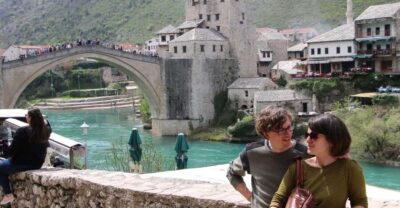
Mostar, Konjic, Blagaj Tekke, Pocitelj & Waterfall
Read our review →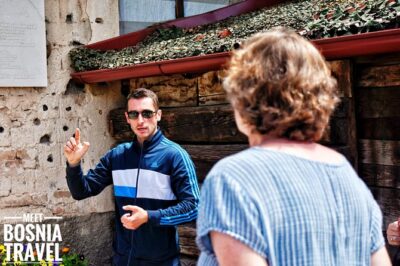
Fall of Yugoslavia, Sarajevo War Tour with Tunnel of Hope Museum and Frontlines
Read our review →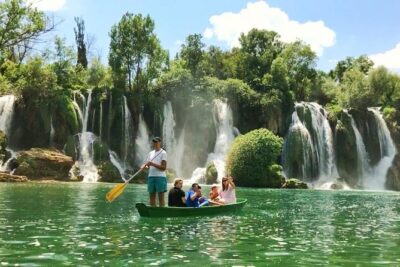
Mostar, Konjic, Sufi House, Pocitelj & Kravice Falls
Read our review →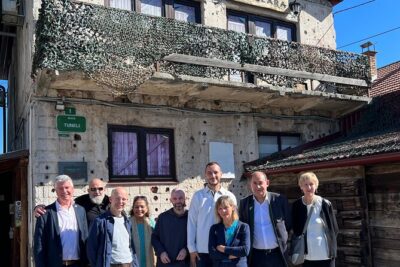
ROSES OF SARAJEVO (Official WAR + CITY tour)- Story of a Survivor
Read our review →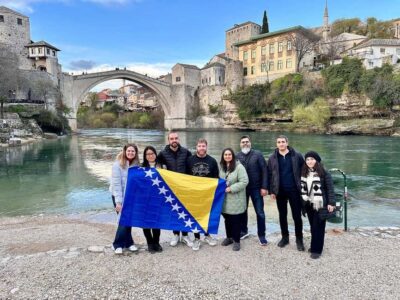
Mostar, Konjic, Počitelj, Sufi House, & Waterfalls
Read our review →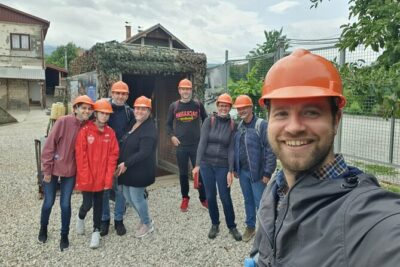
Tunnel Museum: Bosnian & Yugoslav Wars Tour with War Veteran
Read our review →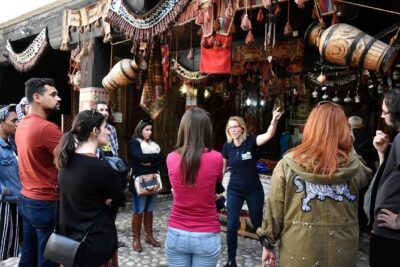
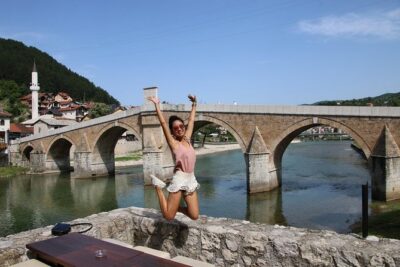
Mostar, Konjic, Dervish House, Pocitelj & Kravica Falls
Read our review →Browse the lists this tour appears in