
Reviewed · SARAJEVO WAR HISTORY TOURS
Sarajevo Grand Tour: Old Town, War Tunnel, Olympic Sites & More
Sarajevo’s story is packed into one half-day here: Ottoman lanes, Austro-Hungarian monuments, the 1990s siege, and the abandoned Olympic bobsleigh track. The mix of walking and driving lets you see far more than a basic Old Town tour, including places that are awkward to reach on foot.
I like the personal touch, especially when guides such as Elvis, Enes, Edis, and Zulfo share local stories rather than simply reciting dates. I also like the private vehicle and hotel pickup, which save you from figuring out Sarajevo’s hills and outlying sights yourself. The main caution is timing: the advertised duration is about five hours, but one booking finished in three hours, so confirm the schedule when you reserve.
Key points before you book
- Old Town in one well-planned walk: See City Hall, Baščaršija, Gazi Husrev-beg Mosque, Latin Bridge, the covered market, churches, synagogue, cathedral, and Markale Market.
- The War Tunnel adds hard context: You pass Sniper Alley and Sarajevo Airport before viewing a short film and walking through part of the wartime tunnel.
- Trebević supplies the big photo stop: The Olympic bobsleigh and luge track offers striking views and a close look at Sarajevo’s wartime scars.
- Local food and coffee are part of the day: The route passes burek, ćevapi, sweets, and coffee shops, with Bosnian coffee included.
- Private-car pickup makes the route practical: You avoid arranging taxis for the tunnel, mountain, cemetery, and Yellow Fortress.
- Budget for one extra fee: Entry to the Tunnel Museum costs €10.50 per booking, while tips are not included.
Why this tour gives you Sarajevo in one sweep
At $47.06 per person, this is priced as a useful orientation tour rather than a single-site visit. You get a local guide, private transport, bottled water, Bosnian coffee, and hotel pickup. The price is especially fair if you have only one full day in Sarajevo and want to combine the Old Town with the War Tunnel and Trebević.
The trade-off is pace. Fifteen stops in roughly five hours means some places are quick exterior visits, not long museum sessions. You will see the Sacred Heart Cathedral, Serbian Orthodox Cathedral, Jewish Museum frontage, City Hall, and Gazi Husrev-beg Mosque from outside. If you want to tour interiors at leisure, this should be your introduction, followed by independent visits later.
The group can reach a maximum of 15 people, though some departures may be much smaller. A few bookings have effectively been private tours when no one else reserved, while other departures include a small group. That can change the feel of the day, so ask about the expected group size if personal attention matters to you.
Pickup begins around 9:00 a.m. from your hotel lobby or another location in Sarajevo. The tour is offered in English. Children must be with an adult, and most people can take part, but you should expect a fair amount of walking on uneven Old Town streets and short walks at the mountain and cemetery.
More siege and war history walks in Sarajevo
- Fall of Yugoslavia, Sarajevo War Tour with Tunnel of Hope Museum and Frontlines
★ 5.0 · 1,314 reviews - Tunnel Museum: Bosnian & Yugoslav Wars Tour with War Veteran
★ 5.0 · 551 reviews - Sarajevo War Tour: A Veteran’s Story of the Siege (fees included)
★ 5.0 · 326 reviews
Starting beside City Hall and the Miljacka
The day begins with an introduction to Sarajevo’s setting, population, climate, and layered past. That overview helps because the city’s monuments can otherwise feel like unrelated pieces. Here, Ottoman, Austro-Hungarian, Jewish, Orthodox, Catholic, Olympic, and wartime stories appear within a compact area.
City Hall, or Vijećnica, is the first major sight. You see the ornate exterior from the outside, then look across the Miljacka River toward Inat Kuća, the Spite House. The story behind the house gives the first hint of Sarajevo’s character: civic projects, old neighborhoods, and stubborn local pride often collide here.
You cross the river near the Šeher-Ćehaja Bridge and enter the pedestrian heart of the city. This opening walk is short, but it sets up the contrast that defines Sarajevo. One minute you are looking at grand imperial architecture, and the next you are heading into Ottoman lanes filled with small shops and cafés.
Baščaršija, copperwork, and the smell of burek
Kazandžiluk is the coppersmith street, where metalwork remains part of the Old Town’s visual identity. You enter one of the shops for a short presentation of the craft. It is not a full workshop class, but it gives you a better reason to look closely at the trays, coffee sets, and decorative pieces sold along the lane.
The tour also passes Locksmith Street, now known for ćevapi, burek, sweets, and coffee. Food is not listed as a full meal, so plan to pay for any tasting you want. The route makes it easy to spot places for a later lunch, and one guide has even made an unscheduled burek stop when the group needed food.
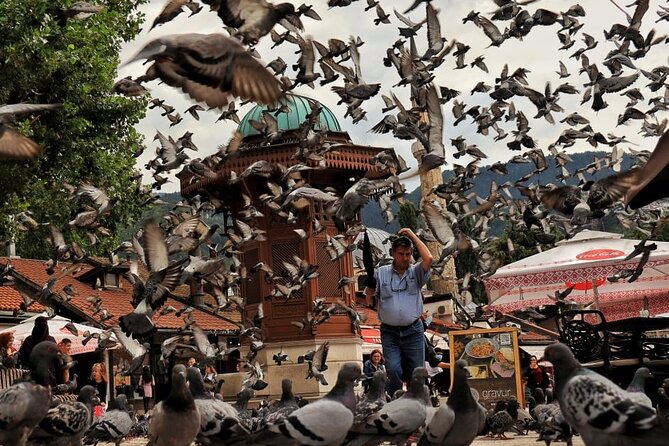
Baščaršija’s Sebilj fountain is the natural center of the Old Town. The fountain has supplied water to people passing through for centuries, and the square around it is a good place to pause and get your bearings. The stop is only about five minutes, so you will not have much free time here during the formal tour.
Bosnian coffee inside Morića Han
Morića Han is one of the most pleasant pauses of the day. This sixteenth-century Ottoman caravanserai once served merchants and their animals. Today, its courtyard offers a quieter corner just off the main promenade of souvenir shops, restaurants, and cafés.
You taste traditional Bosnian coffee here. The guide explains the custom and shows you how to drink it, which matters because Bosnian coffee is not simply a fast caffeine stop. The small ritual is part of the cultural lesson, and it gives the walking portion a welcome pause.
The coffee experience appears to be an important part of what you pay for, so make sure it is included on your departure. Most descriptions place it in the itinerary, but one shortened booking did not receive it. If the schedule starts slipping, politely check with your guide before the stop disappears.
More Yugoslav-era history tours in Sarajevo
- Utopia of Tito’s Yugoslavia, Tito’s Bunker & Siege of Sarajevo
★ 5.0 · 35 reviews - Sarajevo Full Day Tour: History, Culture, Nature, War & Olympics
★ 5.0 · 27 reviews - Sarajevo: Olympic Mountains and Spring of Bosna River Tour
★ 5.0 · 25 reviews - Cable Car Olympic Tour With Museum
★ 5.0 · 17 reviews
Gazi Husrev-beg Mosque and the Ottoman center
The garden of Gazi Husrev-beg Mosque is another key stop. You see the mosque, minaret, fountain, Islamic school, and lunar clock tower while hearing about Gazi Husrev-beg and his role in shaping Sarajevo’s Ottoman center.
The mosque itself is listed as an outside visit, and admission is not included. If everyone in your group wants to pay to enter, the guide may be able to arrange it, but you should not assume an interior visit is part of the standard route. This is one of the tour’s clear limitations for anyone focused on religious architecture.
The surrounding courtyard is still valuable even from outside. It helps you understand how worship, education, commerce, and public life were organized around one Ottoman complex. Keep your clothing and behavior respectful, even if you are only viewing the exterior.
Latin Bridge and the turning point of 1914
At Latin Bridge, the guide explains the assassination that helped trigger the First World War. The bridge itself is modest, which makes the event feel all the more striking. Sarajevo’s importance is often hidden in ordinary streets, and this is one of the places where a local explanation adds much more than a quick photograph.
You also pass a sixteenth-century public toilet that is still in use. It is a small detail, but it shows how much of the Old Town remains tied to older urban systems. The stop lasts about fifteen minutes, enough for the story and a look around rather than a long historical lecture.
Markets, ruins, and the point where East meets West
The Gazi Husrev-beg Bezistan is a covered sixteenth-century market. Nearby, you see the remains of Tašlihan, once the largest caravanserai in the area, and the Hotel Europe. Together, these places show Sarajevo as a trading city connected to wider Ottoman routes and later European networks.
At the Sarajevo Meeting of Culture, the guide points out the line where the city’s eastern and western architectural styles meet. It is a quick stop, but it helps you read the streets with more care. Rather than treating Sarajevo as one uniform Old Town, you begin to notice the change in façades, street plans, and religious buildings.
The route continues past the Jewish Museum and a sixteenth-century synagogue, viewed from outside. You hear about the Sarajevo Haggadah and the city’s tradition of communities living close together. The guide also explains how the city’s Jewish, Muslim, Catholic, and Orthodox residents shaped its identity.
Cathedral, Sarajevo Roses, and Markale Market
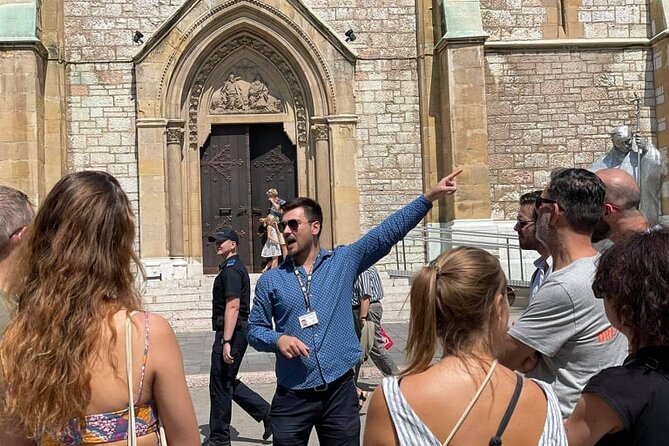
You walk along Ferhadija promenade to the Sacred Heart Cathedral. The exterior is the focus, along with the statue of Pope John Paul II and Sarajevo Roses, markings made in memory of people killed during the siege. These reminders can be easy to pass without context, so listen closely to the guide’s explanation.
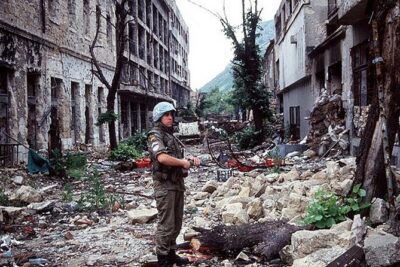
At Markale Market, you see one of the places linked to a massacre during the 1992 to 1995 war. The stop is brief, about five minutes, but it is emotionally serious. This part of the tour is not packaged as a distant history lesson. The physical places are still part of the city’s daily life.
You also pass the hamam and the Serbian Orthodox Cathedral. As with the cathedral and synagogue, the church is an outside visit. The value here is the sequence: within a fairly short walk, you see several faith communities and then the scars left by the war.
The War Tunnel, Sniper Alley, and Sarajevo Airport
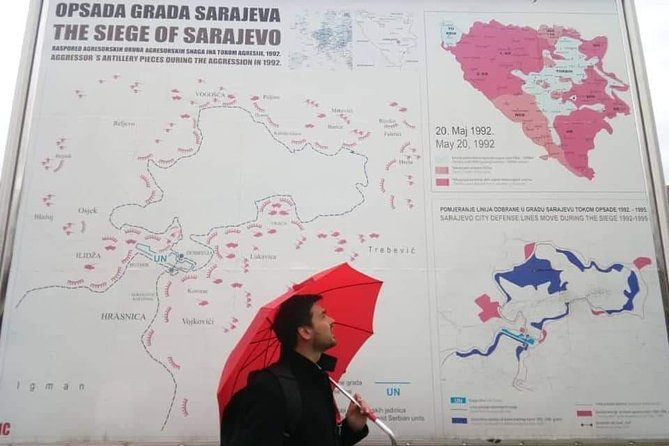
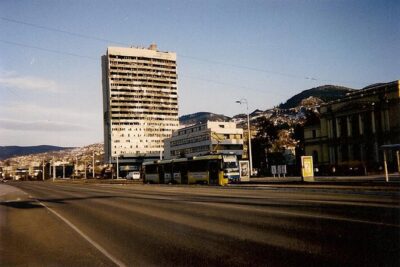
The private vehicle becomes essential once you leave the center. You pass Sniper Alley and cross into the country’s second entity, Republika Srpska, before reaching Sarajevo Airport and the War Tunnel Museum.
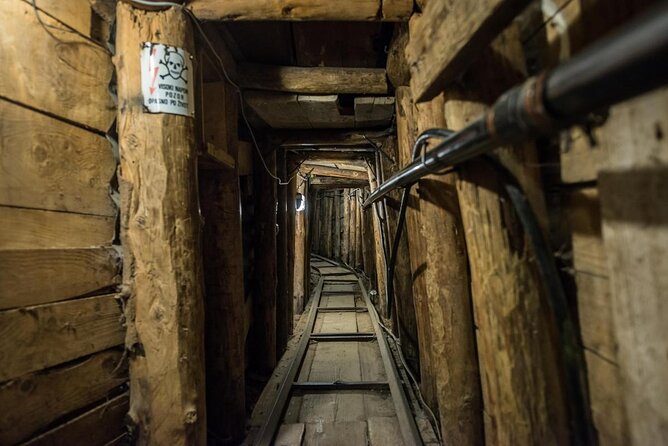
The tunnel was built during the siege to connect the city with territory outside the blockade. Inside the museum, you watch a short film, hear a presentation, and walk through part of the tunnel. The surviving section is not a grand attraction, and that is precisely why it works. The narrow passage gives a physical sense of the pressure faced by people trying to bring food, medicine, and supplies into Sarajevo.
Museum admission is extra, listed as €10.50 per booking. Bring that amount separately, and remember that the tour price also excludes tips. The tunnel is among the most important parts of the day, so I would not skip it to save a small fee.
The subject matter can be difficult. You will get more from the visit if you are ready to listen rather than rush through it for photographs. The guide’s role matters a great deal here. Enes, Elvis, Adnan, and the other local guides are praised for explaining the war in a personal, direct way, often linking the city’s sites to family stories and lived experience.
Trebević and the abandoned Olympic bobsleigh track
From the tunnel, the vehicle climbs toward Trebević Mountain. The drive takes about 15 to 20 minutes. You pass former front lines and then walk a short distance to the Olympic bobsleigh and luge track.
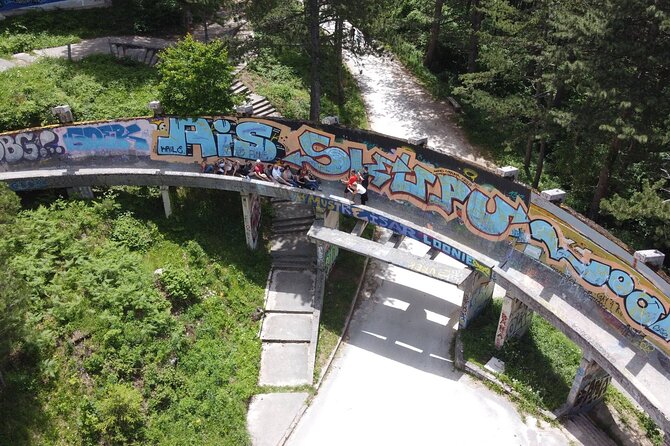
The track is one of Sarajevo’s most unusual sights. Built for the 1984 Winter Olympics, it later became part of the wartime front. Today, the worn concrete curves make a dramatic setting for photographs, but the guide also explains the change from Olympic pride to military position and then to a visitor attraction.
The visit lasts about 30 minutes. Wear shoes you can walk in, since the route includes a short walk and uneven surfaces. One guide has taken photos for visitors at the track, a useful touch if you are traveling as a couple or family and want everyone in the picture.
The listing suggests a walk through the forest in some conditions, while rain may lead the vehicle to drive farther up. That can affect the timing and the amount of walking. If you want the longer mountain approach, ask about the plan at the start of the day.
Jewish Cemetery and the city from above
The vehicle descends through Sarajevo’s mahalas, or hillside neighborhoods, toward the Jewish Cemetery. From the cemetery, you look down toward the city center and Sniper Alley. The guide identifies a former sniper position and a war hotel, linking the hillside view to the siege sites you have already seen.
This stop is useful because it changes your view of Sarajevo. In the center, the war appears through shell marks, memorials, and markets. From the hillside, you understand the city’s shape and why the surrounding mountains mattered so much during the conflict.
The cemetery is not just a viewpoint. Treat it as a memorial space and follow your guide’s instructions. The stop lasts about fifteen minutes, enough for the explanation and photographs without turning a solemn place into a rushed photo break.
Yellow Fortress and the final city panorama
The final stop is the Yellow Fortress, reached after passing Skenderija Olympic Hall and the Ashkenazi Synagogue. The fortress gives one of the best broad views over Sarajevo, with the dense center below and the surrounding hills rising beyond it.
This is a smart ending because you can connect the places you have just visited. The Old Town, river, hills, cemetery, and routes tied to the siege become easier to understand from above. You finish in the Old Town, which is convenient for lunch, further sightseeing, or a return to a place you only saw briefly.
The climb can be tiring if done on foot, but the vehicle removes much of that effort. That is one of the tour’s practical strengths, especially in hot weather or for anyone who does not want a steep walk after five hours of sightseeing.
Guides, pace, and what the experience feels like
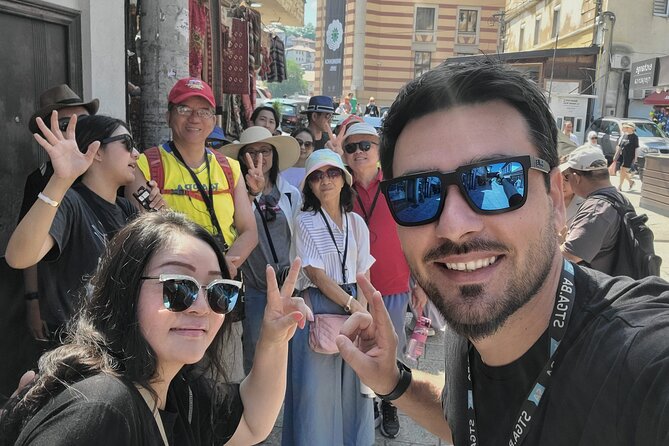
Guide quality is central to this tour. Elvis is repeatedly praised for his energy, clear explanations, humor, and care with guests. Enes is noted for contacting people before pickup, using photos on an iPad to explain events, and adding personal stories at the War Tunnel. Edis is described as friendly and attentive, while Zulfo is especially good at keeping families and older people comfortable.
Those details matter because Sarajevo’s history has many layers and painful chapters. A guide who can move from Ottoman coffee to the siege without flattening either subject makes the day much more meaningful. You should still ask questions and tell the guide if you need a short pause, food stop, or slower pace.
The biggest practical concern is the advertised length. The tour is designed for about five hours, and some departures last roughly five to five and a half hours. One booking lasted only three hours and missed the coffee experience, so I would confirm the planned route and timing at pickup. The provider offered a full refund in that case, but it is better to spot a problem early.
Who should book this Sarajevo tour?
I would choose this tour if you are visiting Sarajevo for the first time, have limited time, or want the War Tunnel and Olympic sites without arranging separate taxis. It suits people who prefer explanation and context over long independent museum visits.
It is also a good fit for families and mixed-age groups because the vehicle cuts down on steep climbs. Children must be accompanied by an adult, and most people can participate, but expect plenty of walking in the Old Town and short walks at outdoor sites.
I would choose something else if you want a slow food tour, a full mosque interior visit, or extended time inside museums. The route covers a lot, but its strength is range, not unhurried study.
FAQ
How long does the Sarajevo Grand Tour last?
The planned duration is approximately five hours, starting at 9:00 a.m. Actual timing can vary, so confirm the schedule with your guide at pickup.
What is included in the tour price?
The price includes bottled water, Bosnian coffee, a local English-speaking guide, transport by private vehicle, and pickup from your hotel or another location in Sarajevo.
Is the War Tunnel Museum entrance included?
No. The Tunnel Museum entry fee is listed as €10.50 per booking.
Does the tour include hotel pickup?
Yes. Pickup is offered from your hotel lobby or another agreed location in Sarajevo.
Is the tour suitable for children?
Children must be accompanied by an adult. Most people can participate, but the day includes walking through the Old Town and short walks at outdoor sights.
Can I cancel for a full refund?
Yes, if you cancel at least 24 hours before the experience begins. Cancellations or changes made less than 24 hours before the start time are not refunded, and the tour may be rescheduled or refunded if the minimum number of participants is not reached.
Should you book it?
Yes, if you want one strong introduction to Sarajevo’s Ottoman center, wartime past, and Olympic story. The combination of local guiding, private transport, Bosnian coffee, the War Tunnel, Trebević, Jewish Cemetery, and Yellow Fortress gives you far more range than a standard Old Town walk for $47.06.
Book it early if your schedule is tight, since it is often reserved well ahead. Then confirm the duration, coffee stop, tunnel fee, and expected walking before departure. If your guide is Elvis, Enes, Edis, or Zulfo, you are likely to get the warm, personal style this route needs.
Just added around Sarajevo
- Downhill Sarajevo MTB Mountain Biking Adventure on Trebevic – Half Day Tour★ 5.0 · 3 reviews
- Skakavac Waterfall Mountain Biking Tour from Sarajevo MTB★ 5.0 · 11 reviews
- Sarajevo War Tour with TRAVELPLUS★ 5.0 · 11 reviews
- Canyoning Rakitnica river★ 4.5 · 11 reviews
- Sarajevo to Dubrovnik: One-Way Tour via Mostar, Kravica Falls, Blagaj & Pocitelj★ 5.0 · 12 reviews
- Transfer from Sarajevo to Kotor+Herzegovina tour★ 5.0 · 17 reviews
- Sarajevo City SIghtseeing / War Bike Tour★ 5.0 · 13 reviews
- LUKOMIR VILLAGE HIKE & TREK TOUR (nature, hike, food & panorama)★ 5.0 · 11 reviews
Sarajevo War History Tours, compared.
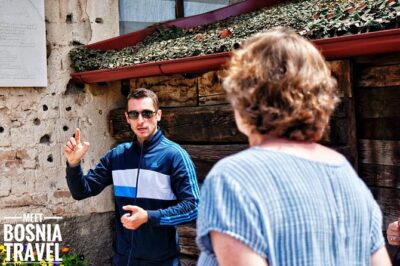
Fall of Yugoslavia, Sarajevo War Tour with Tunnel of Hope Museum and Frontlines
Read our review →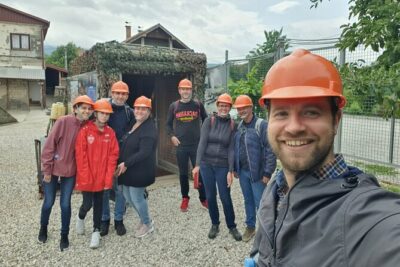
Tunnel Museum: Bosnian & Yugoslav Wars Tour with War Veteran
Read our review →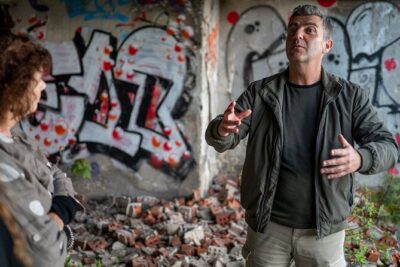
Sarajevo War Tour: A Veteran’s Story of the Siege (fees included)
Read our review →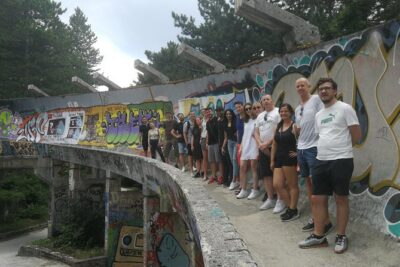
Break-up of Yugoslavia & The War in Mostar: Life Under Siege
Read our review →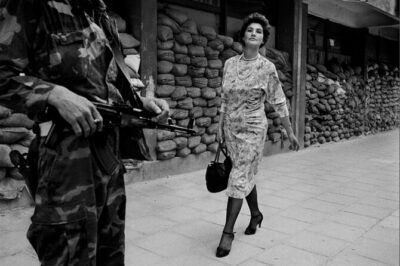
Times of Misfortune – Life Under Siege and the Tunnel of Hope
Read our review →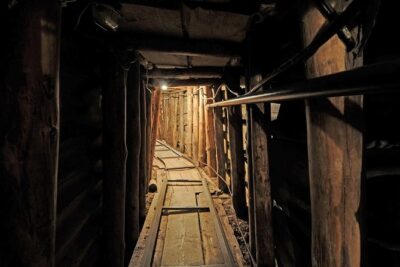
Browse the lists this tour appears in