
Reviewed · SARAJEVO TOURS
Tour of Herzegovina – From Sarajevo
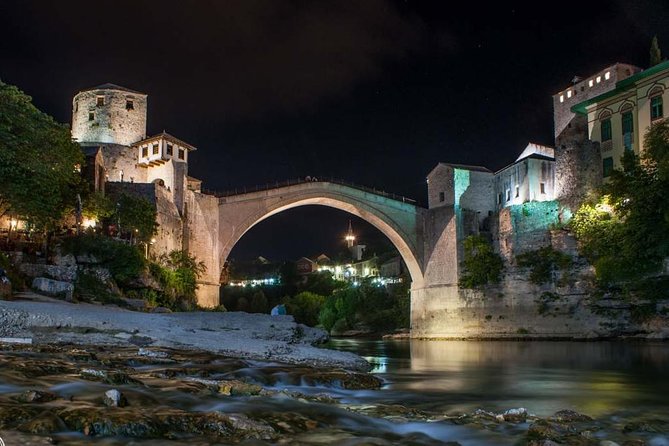
Mostar is only part of the story on this full-day run south from Sarajevo. You’ll cross Konjic’s 17th-century bridge, see the Buna River spring beneath a high cliff, walk the old fortifications of Pocitelj, and finish among the stone lanes of Mostar’s Old Bridge area.
I like the private transport, which keeps a long sightseeing day moving, and I like the small-group format because you can ask questions without shouting across a crowded coach. The tradeoff is the length: with 10 to 12 hours on the road, this is a serious day out, not a gentle half-day excursion.
Key points at a glance
- Konjic opens the day with a 17th-century Ottoman-era bridge over the Neretva River.
- Pocitelj gives you a short walk through a medieval hill town and its fortifications.
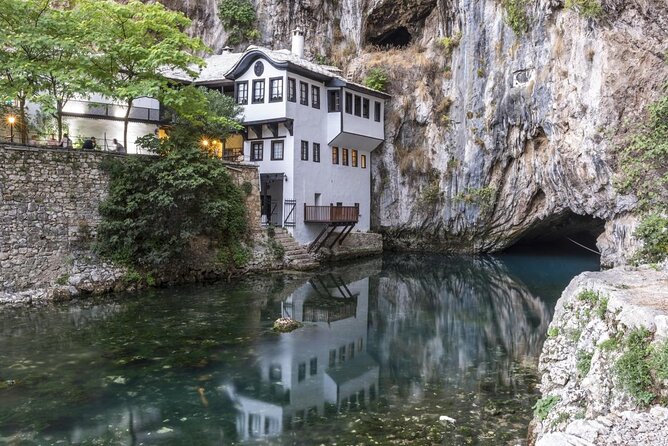
- Blagaj combines a dramatic Buna River spring with an old Dervish house beneath a 200-meter cliff.
- Fortica offers a high view over Mostar before you explore the city on foot.
- Private transport and an exclusive group make the route more flexible than a large coach tour.
- The $103.56 price includes a full day of stops and transport, with the main listed visits carrying no admission charge.
Why this route is more than a Mostar day trip
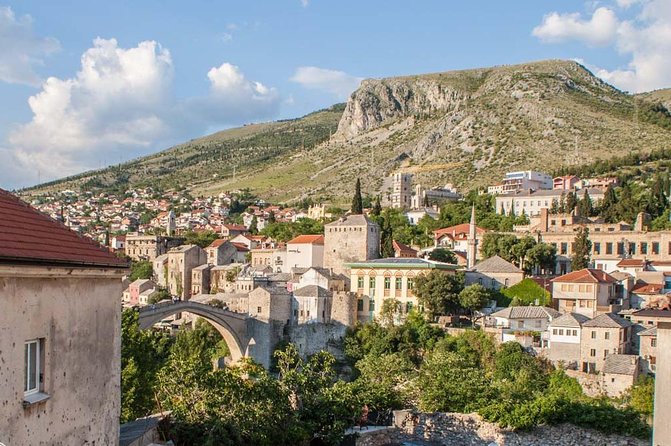
If your only goal is to see Mostar’s famous bridge, you can find shorter ways to do it. This tour earns its long day by adding several places that explain how Herzegovina fits together: Ottoman bridges, medieval fortifications, Muslim religious heritage, Second World War memory, dramatic river scenery, and the urban story of Mostar.
That variety is the main reason I would choose this route over a simple Sarajevo to Mostar transfer. You get the famous destination, but you also see the towns and waterways along the way. The stops are brief, so the day works best if you prefer a broad introduction rather than a slow study of one place.
The tour begins at Sarajevo City Hall, Brodac 1, at 8:00 am, and returns there at the end. Pickup is offered, but the stated meeting point is City Hall, so confirm the exact arrangement before setting out. The activity is private, meaning only your group takes part. That matters on a route with several short visits because you are not waiting for a large bus to reload at every stop.
A few more things to do around Sarajevo
- Sarajevo: Mostar, Konjic, Blagaj Tekke, Pocitelj & Waterfall
★ 4.9 · 1,335 reviews - Fall of Yugoslavia, Sarajevo War Tour with Tunnel of Hope Museum and Frontlines
★ 5.0 · 1,314 reviews - Sarajevo: Mostar, Konjic, Sufi House, Pocitelj & Kravice Falls
★ 5.0 · 1,179 reviews
Konjic Bridge and the first look at the Neretva
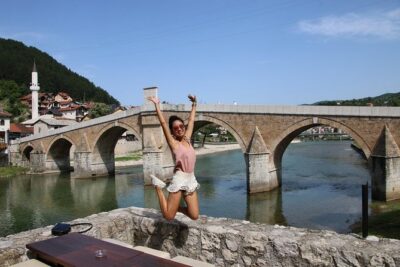
The first stop is Konjic, where you spend about 10 minutes seeing a beautiful 17th-century bridge over the Neretva River. It is a quick introduction to the region’s Ottoman-era building tradition and to the river that shapes much of the route.
Ten minutes is enough for photographs and a short explanation, but not enough for a long walk around town. I would treat Konjic as a scene-setting stop, not as a full town visit. Keep your expectations in check, especially if you prefer time for cafés, museums, or independent wandering.
The bridge also gives the day an immediate sense of place. Herzegovina is not presented only through headline sights. You begin with a piece of transport and civic history, a useful reminder that bridges here are tied to trade, movement, and local identity.
Jablanica and the Battle for the Wounded
The route continues to Jablanica for about 15 minutes at the Museum Battle for the Wounded on the Neretva River. This stop focuses on a famous Second World War battle site involving the wounded.
The visit is short, but it adds a wartime layer to a day otherwise filled with old stone towns, rivers, and religious buildings. You are not simply moving from one scenic stop to another. The route also asks you to consider the more recent conflicts that shaped Bosnia and Herzegovina.
Because the stop lasts only 15 minutes, do not expect a long museum visit or a detailed independent reading session. Its value comes from the guide’s explanation and from placing Jablanica within the wider story of the journey. If modern military history matters to you, you may wish to ask how much time will be available for the site before booking.
Pocitelj’s stone lanes and hillside fortifications
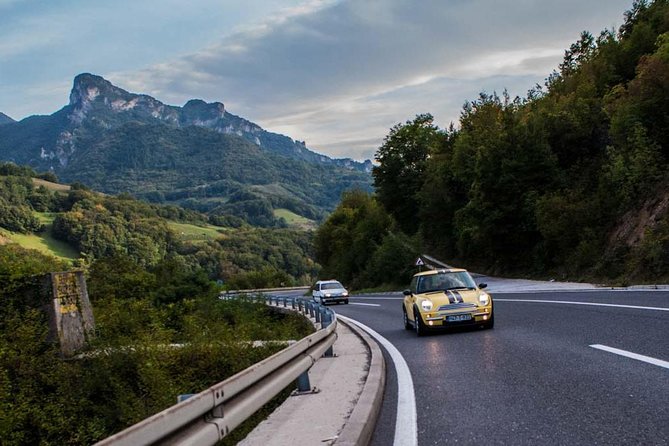
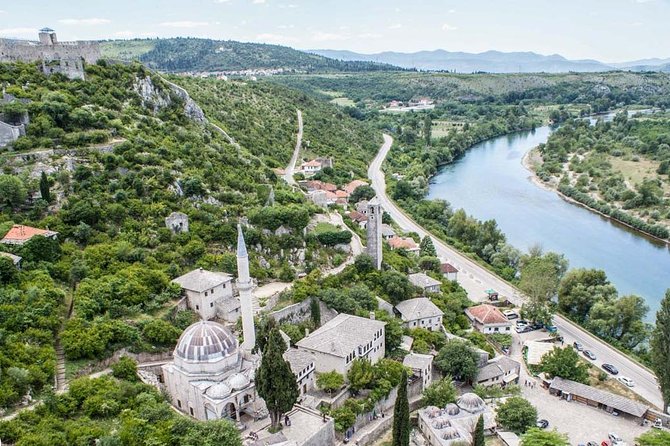
Pocitelj receives about 30 minutes, enough for a walk through the medieval town and up onto its fortification. This is one of the route’s most distinctive stops because it gives you a compact old settlement rather than a single monument.
The town’s position on a hillside makes the visit more physical than the quick bridge stop. You will walk on uneven ground and climb toward the fortification, so practical shoes are sensible. The short visit should allow for the main approach and views, but probably not a leisurely exploration of every lane.
I like Pocitelj because it connects architecture with geography. The fortification was not placed on a hill by accident. From above, you can understand why the town mattered as a place of control and passage. The stop also breaks up the drive with a walk, which is welcome on a day that includes considerable time in private transport.
Same base, a different kind of day out:
- ROSES OF SARAJEVO (Official WAR + CITY tour)- Story of a Survivor
★ 5.0 · 770 reviews - Sarajevo: Mostar, Konjic, Počitelj, Sufi House, & Waterfalls
★ 4.9 · 572 reviews - Tunnel Museum: Bosnian & Yugoslav Wars Tour with War Veteran
★ 5.0 · 551 reviews - Sarajevo: 2 Hours Old Town Walking Tour With Local Guide
★ 5.0 · 505 reviews
Blagaj, the Buna spring, and the Dervish house
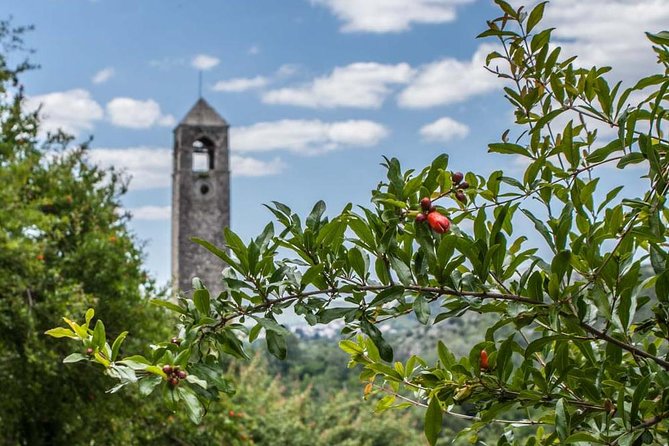
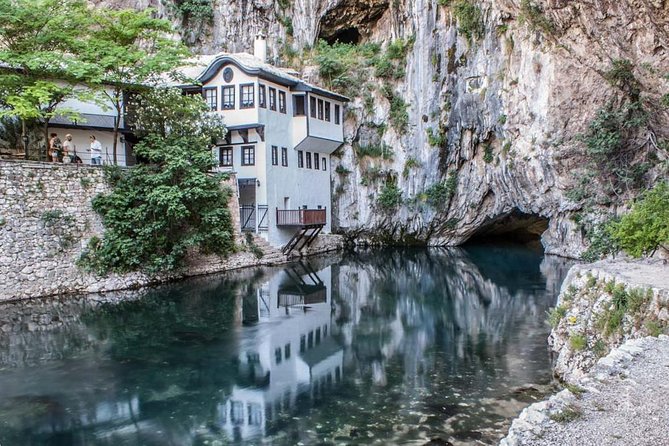
Blagaj is one of the most memorable stops because the Buna River rises beneath a cliff about 200 meters high. Next to the spring is an old Dervish house, known as a tekija, giving the site both natural drama and religious importance.
You have about 20 minutes here. That is enough to see the spring, take in the setting, and learn about the Dervish house, but it is a tight window for lingering. If you enjoy quiet river scenes or religious architecture, this is a place where you may wish for more time.
The appeal is the close fit between nature and culture. The spring is not an isolated viewpoint, and the tekija is not presented as a stand-alone building. Together they show how a powerful water source and a striking cliffside setting helped shape a place of spiritual importance.
The supplied details do not state whether the tour enters the Dervish house, so ask your guide what is included on your date. The stop is listed with no admission charge, but that does not necessarily answer whether any optional interior visit has a separate cost. A quick question at the start of the day can prevent confusion.
Bunski Kanal where the Buna meets the Neretva
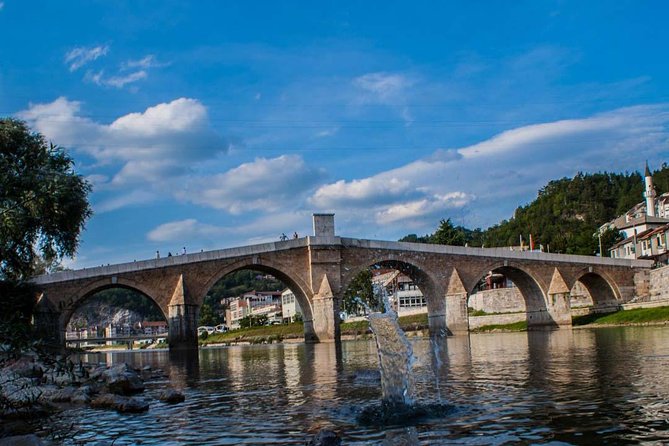
After Blagaj, the tour visits Bunski Kanal for about 10 minutes. This is where the Buna joins the Neretva, and the stop gives you another look at the waterways that define the region.
It may sound like a small addition, but it helps connect the route. You have already seen the Buna at its spring, and now you see it meeting the larger Neretva system. I appreciate that the tour includes this kind of geographical link rather than treating each place as an unrelated photo stop.
Again, ten minutes is brief. You will get a view and a short explanation, not a long riverside walk. The value lies in seeing the connection between two rivers and in giving your eyes a break from the vehicle before the final approach to Mostar.
Fortica viewpoint above Mostar
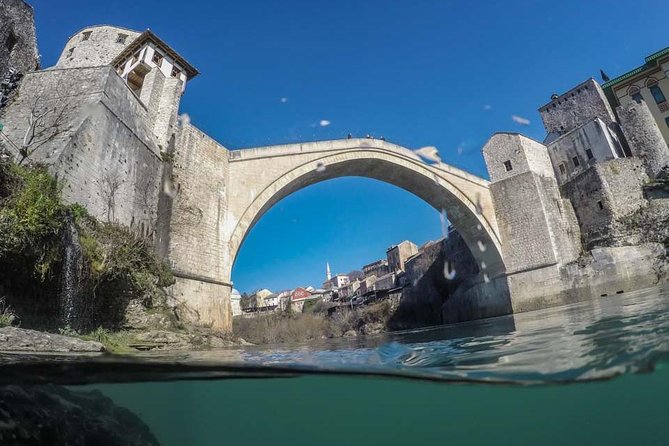
Before entering Mostar, the vehicle climbs to Fortica, a hill above the city, for about 20 minutes. The purpose is clear: you get the broad view before walking into the dense Old Bridge area.
This is smart planning. Mostar’s historic center is best understood from above first, where the city’s position and layout make sense. From the viewpoint, you can orient yourself before the closer look at the bridge, lanes, and buildings.
The tour description calls Fortica the best view of Mostar, but views depend on weather and visibility. The experience also requires a drive up a hill, and the stop is short. Still, I would not skip it. A high viewpoint gives context that you cannot get while standing beside the bridge in the old city.
One hour and 20 minutes in Mostar’s Old Bridge area
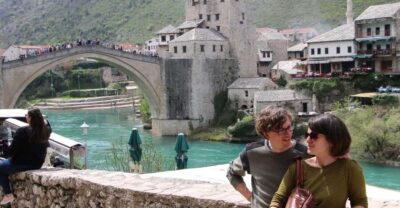
The longest stop is the Old Bridge area of Mostar, with about 1 hour and 20 minutes to explore and learn about the city’s history and culture. This is the main event, but the earlier stops make it more meaningful.
Mostar’s Old Bridge is one of Bosnia and Herzegovina’s key historic monuments. The surrounding area is not just a place to photograph the bridge. It is a compact old city where stone lanes, river views, and layers of cultural influence come together.
An hour and 20 minutes gives you a useful first visit. You should have time to see the bridge area, walk through part of the old center, and listen to the guide’s explanation. It is not enough for a slow museum schedule, a long meal, extensive shopping, and thorough independent exploration all at once.
I suggest deciding your priority before arriving. If the bridge and history come first, stay with the guide and use the walking time well. If you want a meal or shopping, you may need to keep that short. The tour does not list a separate lunch stop, so do not assume a full sit-down meal is built into the schedule.
The private format helps here. Your group can focus on the parts of Mostar that interest you, within the time available. The route is still structured, but it should feel less rigid than a large group excursion.
What the private format means in practice
A private tour is not automatically better, but it is especially useful on this route. You have seven listed stops, several of them lasting only 10 to 20 minutes, plus the long drive between Sarajevo and southern Herzegovina. With only your own group, the day should be easier to manage.
You can ask for more explanation at a place that catches your attention, or keep moving if a short stop has given you enough. The listing does not promise a fully customized itinerary, so I would not expect major route changes. Think of the private format as a more personal version of a set route.
Guide Loren is specifically named in the available feedback, with praise for being easy to get along with and well informed about the sites. That is useful information, though you should confirm who will guide your departure because the named guide may not be assigned to every date.
Is $103.56 a fair price?
At $103.56 per person, the price deserves a practical look. You are paying for a 10 to 12-hour day, private transport between a large number of stops, and a private group rather than a crowded shared coach. The listed visits themselves have no admission charge, so the main value lies in the transport, guiding, route planning, and time saved.
For a solo visitor or couple, the cost may feel high compared with public transport. But recreating this route independently would mean coordinating several towns, finding transport to viewpoints and river sites, and fitting everything into one day. The price becomes easier to justify when split among several people in a private group.
Group discounts are offered, though the exact reduction is not stated. Ask about the discount before paying if you are booking for several people. Also budget separately for any food, drinks, souvenirs, or optional admissions, since those are not specified as included.
Who should book this Herzegovina tour?
I would recommend it to you if you have limited time in Sarajevo and want a broad first look at southern Bosnia and Herzegovina. It suits people who enjoy history, religious architecture, rivers, old towns, and scenic viewpoints in one busy day.
It is also a strong fit if you value a private guide and private vehicle more than a slow pace. The route covers a lot of ground, so you need to be comfortable with short stops and substantial driving.
I would hesitate if you want extended time in Mostar, a relaxed lunch, or long visits at each monument. The schedule is designed for coverage. It shows you the major pieces of Herzegovina, but it does not let you linger everywhere.
Most travelers can participate, service animals are allowed, and the tour is near public transportation. The experience requires good weather. If poor weather forces a cancellation, you are offered another date or a full refund.
Booking, cancellation, and timing advice
Confirmation is sent within 48 hours of booking, subject to availability. Since the tour begins at 8:00 am and ends back at Sarajevo City Hall after roughly 10 to 12 hours, keep the evening free rather than scheduling a tight dinner reservation or onward connection.
You can cancel for a full refund up to 24 hours before the start time. Cancellations or changes made less than 24 hours before departure are not refunded or accepted. The cutoff uses local time, so check the clock carefully if you are booking from abroad.
Should you book it?
Book this tour if you want Mostar plus the places that give Herzegovina its shape. Konjic, Jablanica, Pocitelj, Blagaj, Bunski Kanal, and Fortica make the journey more worthwhile than a simple point-to-point transfer.
Skip it if your priority is a slow day in Mostar or if you dislike long drives. For everyone else, the private format, strong range of sights, and guide-led context make the $103.56 price reasonable, especially when shared by a group. Confirm the pickup details, guide assignment, and any food or optional entry costs, then plan for a full but rewarding day.
FAQ
Where does the tour start?
The stated meeting point is Sarajevo City Hall, Brodac 1, Sarajevo 71000, Bosnia and Herzegovina.
What time does the tour begin?
The tour starts at 8:00 am.
Where does the tour end?
The activity ends back at the Sarajevo City Hall meeting point.
How long does the tour last?
The tour lasts approximately 10 to 12 hours.
Is this a private tour?
Yes. Only your group participates in the activity.
Which places are visited?
The route includes Konjic Bridge, the Museum Battle for the Wounded on the Neretva River in Jablanica, Pocitelj, Blagaj tekija and the Buna spring, Bunski Kanal, Fortica above Mostar, and the Old Bridge area of Mostar.
Is admission included at the stops?
The listed stops show no admission ticket charge. The supplied details do not specify any optional interior admissions or extra costs.
Is pickup available?
Pickup is offered, while the stated meeting point is Sarajevo City Hall. Confirm the pickup arrangement when booking.
What happens if the weather is poor?
The experience requires good weather. If it is canceled because of poor weather, you are offered a different date or a full refund.
Just added around Sarajevo
- Private Full Day Safari Tour★ 5.0 · 8 reviews
- Sarajevo Under Siege: A War History Tour★ 5.0 · 10 reviews
- Travnik, Jajce, Pliva Lakes & Mills –Medieval & Ottoman Bosnia Full Day Tour★ 5.0 · 3 reviews
- Mysterious Visoko Pyramids Driving and Walking Tour★ 5.0 · 7 reviews
- Walking Tour in Sarajevo★ 5.0 · 3 reviews
- Secret Tito’s Bunker/Konjic Tour★ 5.0 · 4 reviews
- Sarajevo to/from Zagreb Transfer Day Tour (North-central Bosnia)★ 5.0 · 4 reviews
- Sutjeska National Park Hike from Sarajevo★ 5.0 · 8 reviews
Sarajevo Tours, compared.
Mostar, Konjic, Blagaj Tekke, Pocitelj & Waterfall
Read our review →
Fall of Yugoslavia, Sarajevo War Tour with Tunnel of Hope Museum and Frontlines
Read our review →
Mostar, Konjic, Sufi House, Pocitelj & Kravice Falls
Read our review →
ROSES OF SARAJEVO (Official WAR + CITY tour)- Story of a Survivor
Read our review →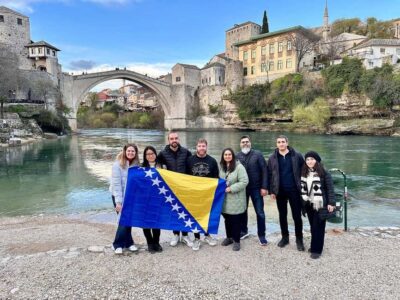
Mostar, Konjic, Počitelj, Sufi House, & Waterfalls
Read our review →
Tunnel Museum: Bosnian & Yugoslav Wars Tour with War Veteran
Read our review →
Mostar, Konjic, Dervish House, Pocitelj & Kravica Falls
Read our review →Browse the lists this tour appears in