
Reviewed · SARAJEVO WAR HISTORY TOURS
Utopia of Tito’s Yugoslavia, Tito’s Bunker & Siege of Sarajevo
Tito’s bunker is the star here: a vast Cold War command center hidden beneath a mountain near Konjic, built to protect 350 Yugoslav leaders from nuclear war. In the same day, you visit Sarajevo’s War Tunnel and the battered Olympic sites that reveal how the city lived through the 1992 to 1995 siege.
I like the small eight-person limit, which gives you room to ask hard questions and hear personal stories from guides such as Hamza, Emir, Ahmed, Salem, Amir, Agnar, and Mustafa. I also like the way the tour joins Yugoslav Cold War history with Sarajevo’s wartime and Olympic past, rather than treating each site as a separate stop.
The tradeoff is the long day, roughly 10 hours, with plenty of driving and walking. Lunch is not included, and some mountain sites are damaged or unfinished, so this is best for you if serious history and unusual places matter more than a relaxed sightseeing pace.
Key points to know before booking
- Tito’s bunker is the main event: Walk through a 6,500-square-meter atomic command facility built over 26 years for Yugoslavia’s top leaders.
- You see both sides of Sarajevo’s recent past: The tour covers Olympic pride, wartime destruction, the War Tunnel, and former sniper positions.
- The group is capped at eight: That is a useful size for discussion, photos, and flexible pacing.
- Important entry fees are included: The bunker and Sarajevo War Tunnel admissions are covered in the price.
- Hotel pickup makes the early start easier: Pickup is available from Sarajevo hotels, or you can meet at the Funky Tours office in the Old Town.
- Expect a full day outdoors and underground: Bring practical shoes, a layer for the bunker, and patience for a packed schedule.
Why this day tells Sarajevo’s story so well
This is not a standard city tour with a few historical labels attached. It gives you a broad view of Bosnia and Herzegovina through three powerful eras: Tito’s Yugoslavia, the glory of the 1984 Winter Olympics, and the siege of Sarajevo.
The connection between the stops matters. Tito’s bunker shows the fear and secrecy of the Cold War. The Olympic venues show a country presenting itself as modern, united, and optimistic. Trebević and the War Tunnel then show how quickly that confidence gave way to war.
I find that combination more useful than visiting the bunker alone. You see the political system Tito built, the public image Yugoslavia wanted to project, and the painful collapse that followed.
The English-speaking guide and driver handle the route in an air-conditioned vehicle. Since the tour lasts about 10 hours and moves between Sarajevo, Konjic, and the surrounding mountains, that transport is not a minor convenience. It is what makes the full itinerary possible in one day.
More siege and war history walks in Sarajevo
- Fall of Yugoslavia, Sarajevo War Tour with Tunnel of Hope Museum and Frontlines
★ 5.0 · 1,314 reviews - Tunnel Museum: Bosnian & Yugoslav Wars Tour with War Veteran
★ 5.0 · 551 reviews - Sarajevo War Tour: A Veteran’s Story of the Siege (fees included)
★ 5.0 · 326 reviews
Konjic Bridge and the road to Tito’s secret facility
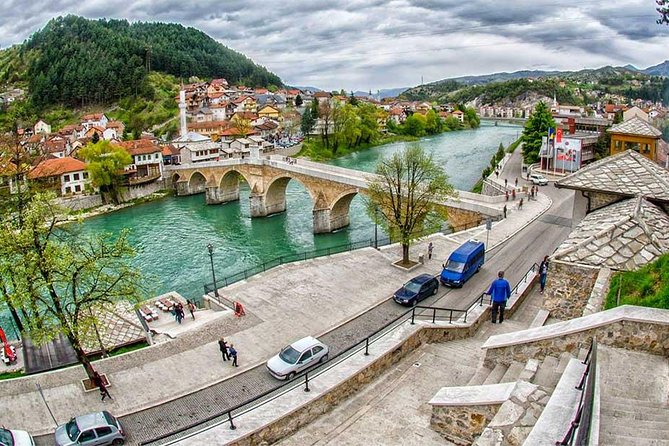
The first stop is Konjic, an old town on the turquoise Neretva River. You get about 30 minutes around the historic center and its famous six-arch bridge, rebuilt in the traditional Ottoman style and associated with the town’s long past.
This short stop helps you understand the setting before entering the bunker. Konjic is not only a gateway to a military installation. It is a historic town in a sunny river valley, with a calmer feel than Sarajevo.
Do not expect a full walking tour of Konjic. Thirty minutes is enough for photos and a quick look at the bridge, but not enough for a slow exploration of the town. The stop works as a break in the drive and a visual contrast to the secretive facility ahead.
Inside ARK D-0, Tito’s 6,500-square-meter bunker
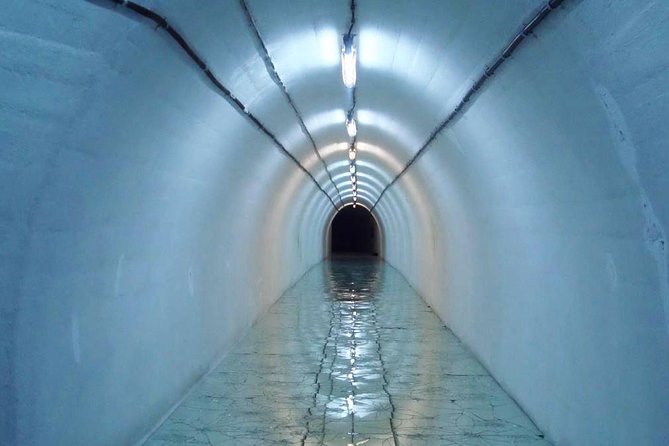
ARK D-0, also called Tito’s Nuclear Bunker or the Atomic War Command, is the reason many people choose this tour. Built over 26 years, the facility cost about 4.6 billion US dollars in today’s stated figure and was designed to shelter and support 350 Yugoslav leaders and army generals during a nuclear attack.
You enter a world of corridors, offices, technical rooms, and protected spaces cut into the mountain. The bunker was meant to keep the country’s leadership alive and functioning while the world outside faced nuclear destruction.
The most striking point is the scale. This was not a small emergency shelter. It was a working command center with enough space to house senior officials and direct the armed forces. The design reflects both Cold War fear and the rigid hierarchy of Yugoslav power.
Your visit lasts about 90 minutes, including the bunker tour and its historical explanation. A local guide leads the indoor portion, while your main guide helps place it in the wider story of Yugoslavia, communism, and the country’s eventual breakup.
ARK D-0 also serves as a venue for a biennial contemporary art exhibition. That can create an unusual contrast between the bunker’s sealed military purpose and its present use as a place for art and public history.
The bunker is cool, enclosed, and atmospheric. You may find the rooms plain rather than dramatic, but that is part of the point. Its mystery comes from the secrecy, cost, and purpose, not from polished museum displays.
Admission to the bunker is included. That matters because the adult entry fee is listed as 10 euros, and you do not need to budget for it separately.
Igman’s Olympic ruins and the cost of war
After Konjic, the route heads back toward Sarajevo and up to Igman Mountain. In 1984, Sarajevo hosted the Winter Olympics, an event that represented unity and international confidence in Yugoslavia.
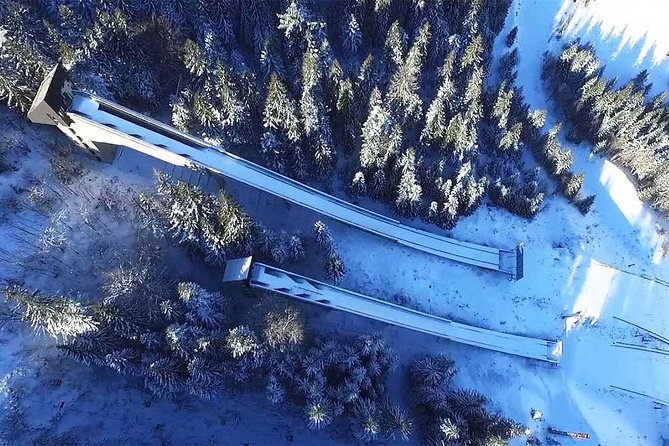
At Igman, you see the Olympic ski jumps and have time for photos. You can stand near the Olympic podium or climb the ski jumps, depending on the group’s timing and conditions. The stop lasts about an hour.
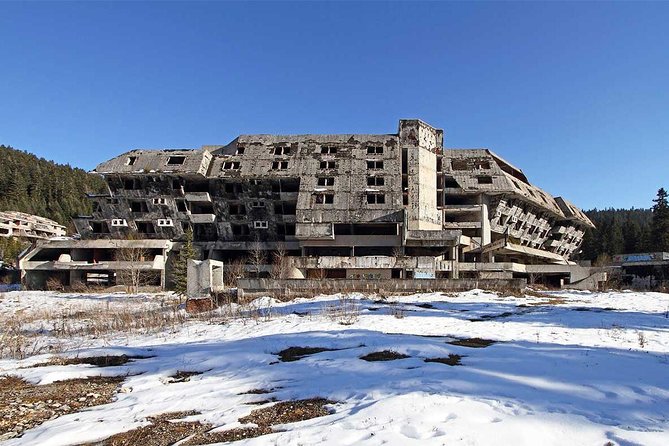
The Igman Hotel adds a darker layer. Built as a 162-room mountain hotel for the Olympics, it was later badly damaged during the Balkan War and siege of Sarajevo. Its condition makes the change from Olympic optimism to wartime ruin easy to grasp.
This is one of the tour’s most moving contrasts. The same mountains that once welcomed athletes and visitors became part of the wartime struggle around Sarajevo. You are not just looking at abandoned buildings. You are seeing how a public symbol of cooperation was pulled into a violent conflict.
The site may appeal most to you if you like places where the physical remains carry the story. It is not a polished attraction, and you should not expect a restored Olympic complex. That roughness is central to the experience.
More Yugoslav-era history tours in Sarajevo
- Sarajevo Grand Tour: Old Town, War Tunnel, Olympic Sites & More
★ 5.0 · 73 reviews - Sarajevo Full Day Tour: History, Culture, Nature, War & Olympics
★ 5.0 · 27 reviews - Sarajevo: Olympic Mountains and Spring of Bosna River Tour
★ 5.0 · 25 reviews - Cable Car Olympic Tour With Museum
★ 5.0 · 17 reviews
The Sarajevo War Tunnel and a city cut off
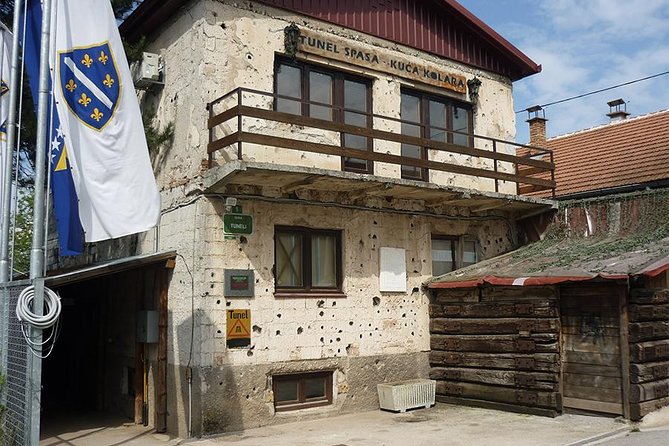
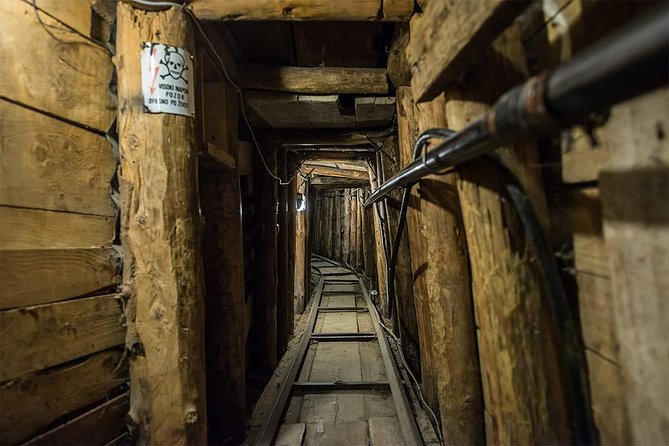
The Sarajevo War Tunnel, often called the Tunnel of Hope, gives you the clearest picture of daily life during the siege. The museum includes exhibits linked directly to the conflict, a short film about why the tunnel had to be built, and a section of the tunnel itself.
The tunnel was an essential underpass for a city surrounded by hostile forces. It provided a route for supplies, movement, and communication when ordinary roads were exposed or blocked.
The preserved section is not a long underground walk. Its value lies in helping you picture the conditions of the siege. You are looking at a narrow, practical passage created under extreme pressure, not a grand engineering attraction.
The museum visit takes about 90 minutes. Your guide’s explanation makes a real difference here, especially because the subject includes military positions, civilian survival, and the city’s geography.
Admission is included, with the adult fee listed as 5 euros. The tour also includes the short film and museum access, so you receive more than a quick look at the tunnel entrance.
For many people, this is the emotional center of the day. Tito’s bunker explains how leaders prepared for a possible nuclear war. The Sarajevo Tunnel shows how ordinary people tried to survive an actual one.
Trebević, Dobrinja, and the view from former front lines
The route continues through Dobrinja, an Olympic village that also became a besieged neighborhood during the war. This is a useful stop because it links the 1984 Games to the civilian experience of the siege.
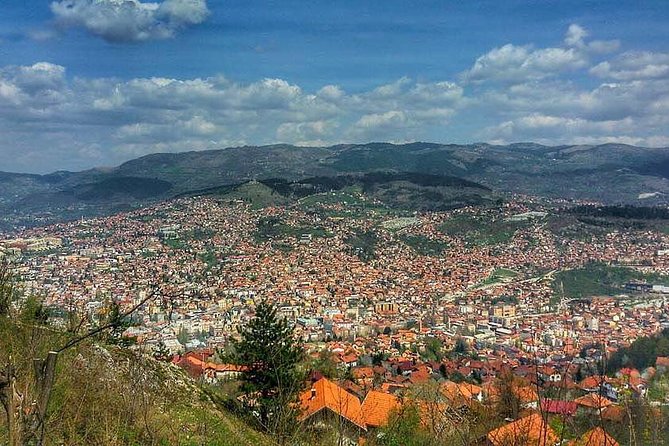
Trebević Mountain was part of the front line for much of the conflict. From its viewpoints, you can see Sarajevo below and understand why the mountain held such military importance. The city’s position in the valley made the surrounding heights strategically powerful.
The views are one of the tour’s strongest features, but the guide’s explanation is what gives them meaning. You are shown areas connected with trenches, bunkers, minefields, tank tracks, bullet damage, and grenade fragments.
Some structures remain unrestored. That can be unsettling, but it also means the evidence has not been hidden behind a fresh coat of paint. You may see the remains of war beside popular mountain and Olympic sites.
The stop also includes places such as Zlatište and Osmice, along with Trebević Vidikovac. The exact amount of time at each point can depend on the day’s schedule, so do not expect a long walk at every location.
Walking the Olympic bobsleigh track
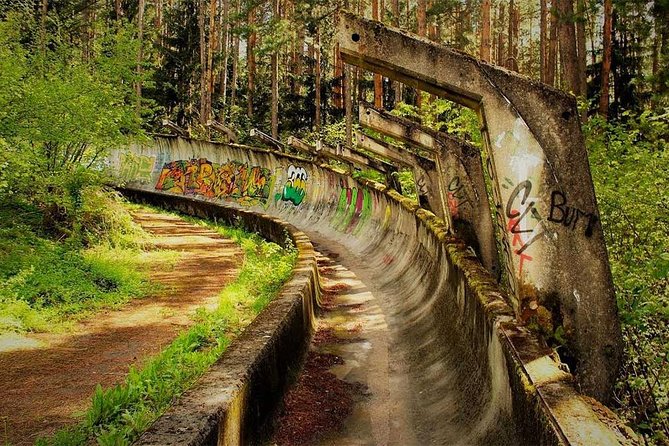
The Sarajevo Olympic Bobsleigh and Luge Track is one of the most distinctive stops. You walk down part of the famous 1984 track, now known for its graffiti and abandoned concrete structure.
The track works on two levels. It recalls the excitement of the Olympic Games, yet its damaged condition also reflects the years of war and neglect. Today, the street art gives it a different kind of life.
Allow about 45 minutes here. Wear shoes suitable for walking on uneven surfaces and take care with your footing. The tour description specifically includes a walk down the track, not simply a roadside photo stop.
This is a good place for photographs, but do not let the pictures distract you from the setting. The graffiti is colorful. The history beneath it is much heavier.
The Jewish Cemetery and Sarajevo’s sniper positions
The final historical stop is Sarajevo’s Jewish Cemetery, one of the largest Jewish cemeteries in Europe. During the siege, its position above the city made it a major front line and sniper location for the Army of Republika Srpska.
You spend about 20 minutes here. That is enough for an overview, views toward the city, and an explanation of the cemetery’s wartime role.
The stop adds another layer to Sarajevo’s story. This is both a centuries-old religious site and a place used in a modern military campaign. The cemetery’s historical importance did not protect it from becoming part of the front.
Because the visit is brief, you should think of it as a viewpoint and history stop rather than a full cemetery tour. Its power comes from the location and the story attached to it.
What the $101.85 price includes
At $101.85 per person, this is not the cheapest way to see Sarajevo. It is a full-day private-style experience in a small group, though the group can include up to eight people.
The value improves when you count what is included:
- Hotel pickup in Sarajevo or meeting at the Old Town office
- English-speaking guide and driver
- Air-conditioned vehicle
- Tito’s bunker admission
- Sarajevo War Tunnel admission
- All listed fees and taxes
The bunker and tunnel admissions together cover 15 euros for an adult, before transport and guiding. You also reach Konjic, Igman, Trebević, Dobrinja, the bobsleigh track, and the Jewish Cemetery without arranging separate transport.
Lunch is not included. Plan to handle your own meal during the day, but the supplied details do not specify the restaurant or exact lunch timing. Ask your guide at the start of the morning so you know how much flexibility the schedule allows.
The strongest value is time. Seeing the bunker and the siege sites independently would require careful transport planning, especially with mountain roads and distant stops. The weak point is that you are paying for a packed day, so it may not suit you if you prefer to linger at each place.
How the small group and guides affect the day
A maximum of eight people is a real advantage. History-heavy tours work better when you can ask questions, hear explanations clearly, and pause for a photo without managing a large crowd.
Guide assignments can vary. Names associated with this experience include Hamza, Emir, Ahmed, Salem, Amir, Agnar, and Mustafa. The strongest guide style for this subject is personal and direct, especially at the War Tunnel and Trebević, where dates alone do not explain what life was like.
The guide is also important at the bunker. Without context, you might see a series of plain rooms and corridors. With explanation, the facility becomes a portrait of Cold War paranoia, secrecy, military planning, and political control.
Pickup is available from any hotel in Sarajevo. If you prefer to meet in the center, the starting point is the Funky Tours office at Besarina čikma 5 in the Old Town. The listed start time is 8:00 a.m., and the day ends back at the meeting point.
Who should book this Sarajevo day tour?
Book it if you want the major wartime and Cold War sites in one organized day. It suits you especially well if you are interested in modern European history, military sites, abandoned Olympic buildings, or the breakup of Yugoslavia.
It is also a strong choice if you are traveling alone. A small group gives you company without the feel of a large coach tour, and the guide can often answer questions more directly.
You should think twice if you want a gentle sightseeing day, a long lunch, or a deep visit inside Sarajevo itself. The tour covers a lot of ground, and its focus is serious. The mountain stops also involve walking, uneven surfaces, and exposed outdoor areas.
Most people can participate, and service animals are allowed. Confirmation is sent within 48 hours, subject to availability. You can cancel for a full refund up to 24 hours before the start time, but changes or cancellations inside that window are not accepted.
Should you book it?
Yes, if Tito’s bunker and the Sarajevo siege are high on your list. This tour gives you both, then adds the Olympic ruins, mountain viewpoints, Konjic, and the Jewish Cemetery to explain how Yugoslavia’s public ideals changed over time.
I would choose it for the range of places covered, the included admission fees, and the small group. I would skip it only if the 10-hour schedule feels too demanding or if you want to explore Sarajevo at a slower city pace.
For a first visit focused on the region’s recent past, this is one of the more useful ways to spend a full day from Sarajevo.
FAQ
How long does the tour last?
The tour lasts approximately 10 hours and starts at 8:00 a.m.
Where does the tour start?
You can meet at the Funky Tours office at Besarina čikma 5 in Sarajevo’s Old Town, or arrange pickup from a hotel in Sarajevo.
Where does the tour end?
The tour ends back at the meeting point.
Is hotel pickup included?
Yes. Pickup can be arranged from any hotel in Sarajevo.
Is the tour offered in English?
Yes. The tour includes a professional English-speaking guide and driver.
How many people can join the tour?
The maximum group size is eight people.
Are the bunker and War Tunnel admission fees included?
Yes. Tito’s Bunker admission and Sarajevo War Tunnel admission are included in the tour price.
Is lunch included?
No. Lunch is not included.
What is the cancellation policy?
You can cancel up to 24 hours before the experience begins for a full refund. Cancellations or changes made less than 24 hours before the start time are not accepted.
Just added around Sarajevo
- Downhill Sarajevo MTB Mountain Biking Adventure on Trebevic – Half Day Tour★ 5.0 · 3 reviews
- Sarajevo War Tour with TRAVELPLUS★ 5.0 · 11 reviews
- Skakavac Waterfall Mountain Biking Tour from Sarajevo MTB★ 5.0 · 11 reviews
- From Sarajevo: Bijambare Cave and Spring of River Bosna Tour★ 5.0 · 18 reviews
- Sarajevo Uncovered: Old Town Tour with Coffee and Food Tasting★ 5.0 · 12 reviews
- PRIVATE SUNNY HERZEGOVINA TOUR (Mostar + Kravice Falls + 3cities)★ 5.0 · 18 reviews
- From Sarajevo: Visoko And Bosnian Pyramid Mistery★ 5.0 · 18 reviews
- Bosnian Traditional Handicraft, half-day – do it yourself – Coppersmith Workshop★ 5.0 · 13 reviews
Sarajevo War History Tours, compared.
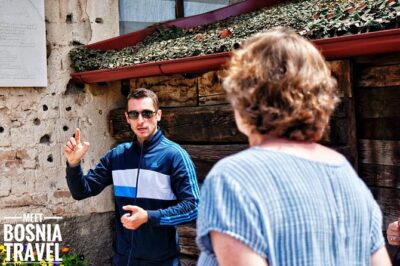
Fall of Yugoslavia, Sarajevo War Tour with Tunnel of Hope Museum and Frontlines
Read our review →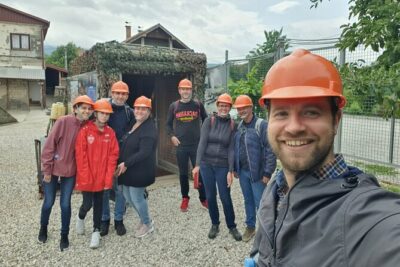
Tunnel Museum: Bosnian & Yugoslav Wars Tour with War Veteran
Read our review →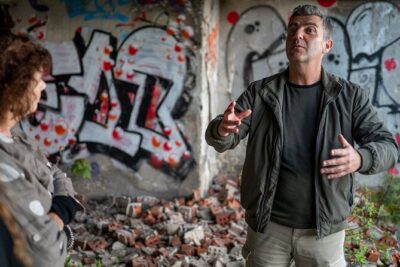
Sarajevo War Tour: A Veteran’s Story of the Siege (fees included)
Read our review →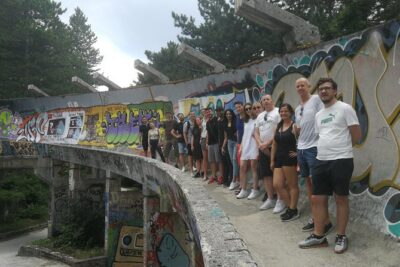
Break-up of Yugoslavia & The War in Mostar: Life Under Siege
Read our review →
Sarajevo Grand Tour: Old Town, War Tunnel, Olympic Sites & More
Read our review →
Times of Misfortune – Life Under Siege and the Tunnel of Hope
Read our review →Browse the lists this tour appears in