
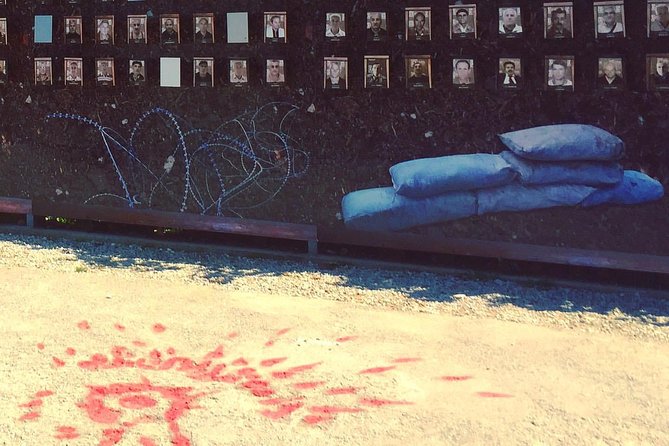
Reviewed · SARAJEVO WAR HISTORY TOURS
Sarajevo Under Siege: A War History Tour
Sarajevo’s Tunnel of Salvation is the heart of this experience: a cramped wartime passage beneath the airport runway that carried food, medicine, and hope into a city under siege. The tour also connects the tunnel to Sniper Alley, the Olympic area, front-line neighborhoods, and the burned National Library.
I like the personal scale, especially when guides such as Suvad or Evan explain what daily life meant for children and families during the war. I also like the private vehicle, which lets you cover scattered sites in about three hours without spending half the afternoon finding buses.
The main consideration is emotional weight. This is not a light city tour, and the adult entrance fee of €10.25 is extra on top of the listed $30.10 price. Give yourself time afterward to process what you have seen.
Key points to know before booking
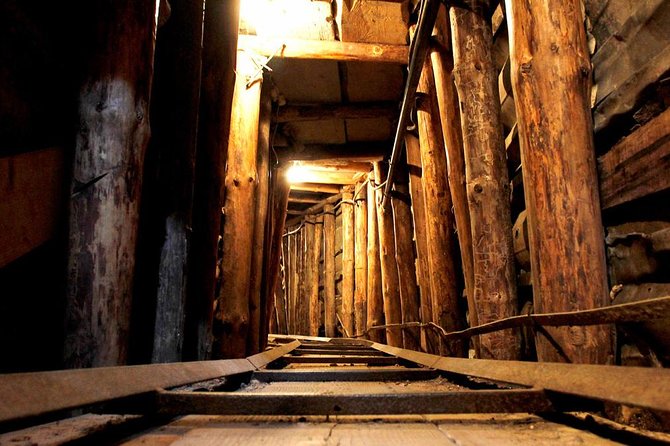
- The Tunnel of Salvation takes about 1 hour and 20 minutes, including part of the original passage, wartime objects, and a short film.
- Personal testimony shapes the tour, with stories about childhood, shelling, burial, and survival in Sarajevo.
- The White Fortress gives you the city’s best opening lesson, linking Sarajevo’s position to both Ottoman history and the siege.
- Private transport saves time, with pickup available from hotels and locations in central Sarajevo.
- Lukavica adds difficult post-war context, including the division between the Federation of Bosnia and Herzegovina and Republika Srpska.
- The price is good for a private three-hour tour, but entrance costs are not included.
Starting above Sarajevo at the White Fortress
The tour begins at Vijećnica, Sarajevo’s City Hall, at 1:30 pm, unless you arrange a central hotel pickup. From there, you head uphill to Bijela Tabija, the White Fortress.
This old defensive site is more than a photo stop. From the walls, you can look across Sarajevo’s long valley and see why the city has mattered to armies, rulers, and traders for centuries. The guide uses the view to explain Sarajevo’s Ottoman roots and its strategic position during the 1990s siege.
I like beginning here because it gives you a map in your head before the serious details begin. The city’s streets, hills, and surrounding ridges help explain how the siege worked. What looks peaceful from above was once a place where movement through the valley could be watched and attacked.
You get about 30 minutes at the fortress, with no admission fee listed. Wear shoes suitable for uneven ground, and remember that the panoramic view is also exposed to the weather. On a clear afternoon, this may be the most visually rewarding stop. On a gray day, the guide’s explanation matters even more.
More siege and war history walks in Sarajevo
- Fall of Yugoslavia, Sarajevo War Tour with Tunnel of Hope Museum and Frontlines
★ 5.0 · 1,314 reviews - Tunnel Museum: Bosnian & Yugoslav Wars Tour with War Veteran
★ 5.0 · 551 reviews - Sarajevo War Tour: A Veteran’s Story of the Siege (fees included)
★ 5.0 · 326 reviews
Hearing about wartime childhood near Zetra
The next part brings the story down to the level of one neighborhood. Near Zetra Olympic Hall, the guide explains where he lived during the war, near the former maternity hospital that suffered heavy bombing.
This is where the tour becomes personal. You hear about childhood under shelling, ordinary games interrupted by danger, and the practical problem of living without safe access to food, water, or shelter. The guide also points out the street where he grew up and played, along with the place where his father was buried.
The stop lasts about 15 minutes, but its value is not measured by time. Sarajevo’s war is often reduced to dates, armies, and political agreements. A local account brings those events back to streets and families. Suvad is praised for sharing personal experience with care, while Evan is described as using gripping stories and personal details to make the period understandable.
You should expect a serious tone here. The stop is short, and it cannot explain every part of the conflict. Its strength is its direct connection to one family and one neighborhood.
Crossing Sarajevo through Sniper Alley
The vehicle then follows the avenue known during the war as Sniper Alley. It was a major route through Sarajevo, but during the siege it was also exposed to gunfire from surrounding positions.
Your guide explains how residents risked crossing the road to collect water, find food, reach work, or get to safer areas. The striking part is the contrast between the present-day city and the memory of the road as a place where a few exposed seconds could decide whether someone lived or died.
This is primarily a driving stop rather than a long walk. That matters because you see how the road fits into Sarajevo’s wider layout, but you may not have much time to linger at individual points. If you want a detailed walking study of every wartime building, this tour will feel too fast. If you want the city’s main wartime sites connected by a clear story, the vehicle works well.
I like this section because it avoids treating the war as something that happened in a distant museum. You are moving through working city streets. Cafes, apartment blocks, traffic, and modern buildings now occupy the same spaces once linked with fear.
Walking through the Tunnel of Salvation
The largest part of the tour is the Tunnel of Salvation, also called the Tunnel of Hope. Dug in 1993 beneath Sarajevo Airport’s runway, the passage linked the besieged city with territory outside the encirclement.
You walk through a section of the original tunnel. It is narrow, plain, and physically demanding in a way that photographs cannot show. The tunnel carried food and medicine, and it gave people a route for supplies and communication when the city’s normal connections had been cut.
The visit lasts about 1 hour and 20 minutes. You see authentic wartime objects and watch a short documentary about the siege. The film and artifacts add structure to the guide’s spoken account, especially if you do not already know the basic sequence of events.
This is the tour’s strongest historical stop. The White Fortress explains the city’s position, and Sniper Alley shows the danger of moving through it. The tunnel explains how Sarajevo kept going. It is a practical story of survival, not only a symbol.
The tunnel is not presented as a polished attraction. Its narrow shape and wartime purpose are the point. If you dislike confined spaces, ask your guide for details before entering. The supplied information does not specify accessibility arrangements, so anyone with mobility concerns should check ahead.
The extra admission cost is important here. Adult entry for the war tour is listed as €10.25 per person, with a student fee of €5.25. These fees are separate from the $30.10 tour price, so include them in your budget.
A few more things to do around Sarajevo
- Sarajevo Full Day Tour: History, Culture, Nature, War & Olympics
★ 5.0 · 27 reviews - Sarajevo genuine walking tour: Steps through history
★ 5.0 · 22 reviews - SARAJEVO STREET ART TOUR (art, history & mystery) – sARTajevo!
★ 5.0 · 18 reviews - BOSNIAN PYRAMIDS TOUR (nature, history & archeology)
★ 5.0 · 17 reviews
Seeing the former front line in Lukavica
After the tunnel, the route continues through Lukavica. During the siege, this area formed part of the front line. Today it belongs to Republika Srpska, one of the two entities created within post-war Bosnia and Herzegovina.
This section gives the tour a wider political frame. Your guide explains how the Dayton Peace Agreement shaped the country and how Sarajevo remains affected by the division between the Federation of Bosnia and Herzegovina and Republika Srpska.
You may also see graffiti and murals praising wartime figures such as Ratko Mladić. That detail can be uncomfortable, but it helps explain why Bosnia’s war memory remains divided. Peace ended the fighting, yet it did not erase competing versions of the past.
I value this part because it moves beyond battlefield history. A visit focused only on weapons and tunnels could leave you with the impression that the war ended in 1995 and disappeared. Lukavica shows that identity, memory, and politics still shape what you see on the streets.
At the same time, the stop is brief. You will receive an introduction, not a full political course on Bosnia. If you want to explore post-war governance in depth, you will need more reading or a separate museum visit.
Ending at Sarajevo City Hall
The final landmark is Vijećnica, Sarajevo City Hall. Built in 1896 during Austro-Hungarian rule, the building later housed the National Library.
In August 1992, shelling destroyed the building and burned almost two million books and manuscripts. The restored interior now carries a painful double meaning: it recalls the loss of Sarajevo’s cultural record while also showing the city’s effort to rebuild.
Ending here is a smart choice. The Tunnel of Salvation tells you how people protected physical survival. Vijećnica asks what happens when a city’s memory and culture are attacked. The building links Sarajevo’s Austro-Hungarian past, its wartime destruction, and its present identity in one place.
The tour ends back at the meeting point. The supplied details do not clearly state whether the interior of City Hall is included as a separate paid visit, so ask your guide if seeing the inside is important to you. The listed tour entrance charge appears to cover the war tour, not necessarily every attraction along the route.
How the private format affects the experience
This is a private activity, so only your group participates. That changes the rhythm in useful ways. You can ask direct questions, clarify a point, or spend a little more time on a subject that matters to you, although the three-hour schedule still requires movement.
The vehicle is air-conditioned and includes WiFi. Private transport is especially useful in Sarajevo because the stops are spread across the city and its outskirts. Pickup is offered from hotels or other locations in central Sarajevo, beginning about 15 minutes before the 1:30 pm start.
If you are staying outside the center, contact the provider in advance. The meeting point is listed at Vijećnica, on Hafiza Ibrahima Trebinjca, and the activity returns there.
The tour is offered in English. The supplied feedback also refers to excellent Italian guiding, including an Italian-language review praising the guide’s ability to explain a period that is often overlooked. If you need Italian, confirm availability before booking rather than assuming it is part of every departure.
What the price buys you
At $30.10 per person, this is a strong value if you want a private, vehicle-based introduction to Sarajevo’s war history. You are not paying only for transport. The price covers a local guide, a planned route through several important sites, a private vehicle, and the time needed to connect the places into one story.
The additional entrance fee changes the final calculation. Add €10.25 for an adult or €5.25 for a student. The tour is still reasonably priced for a private experience, but it is not a single all-inclusive ticket.
The value is highest for first-time visitors with limited time. You can see the White Fortress, Zetra area, Sniper Alley, the tunnel, Lukavica, and City Hall in one afternoon. If you already know Sarajevo well and prefer long museum visits, a self-guided plan may offer more time at each place.
Who should book this tour
I would choose this tour if you want a clear introduction to the siege and prefer personal explanation over reading plaques alone. It suits adults, older children who can handle difficult subjects, students, and anyone interested in modern European history.
It is also useful early in a Sarajevo stay. The route gives you context for the city’s cemeteries, hills, streets, and memorials, even if you later explore them independently.
You should think twice if you want a cheerful sightseeing afternoon, dislike war museums, or find personal accounts of death and shelling too difficult. The tone is respectful, but the subject cannot be softened without losing its meaning.
The tour is suitable for most participants according to the supplied details, but no full accessibility information is provided. Ask about the tunnel and walking conditions before booking if stairs, uneven ground, or confined spaces could be a problem.
Booking, cancellation, and timing tips
You receive confirmation when booking. Free cancellation is available up to 24 hours before the start time. Changes or cancellations inside that window are not refunded, and the cut-off uses local time.
The experience requires good weather. If poor weather causes cancellation, you are offered another date or a full refund. A minimum number of participants is also required, and if that condition is not met, you are offered another option or a refund.
Because the tour is often reserved well ahead of time, planning roughly four weeks early is sensible if your Sarajevo dates are fixed. Still, leave room in your schedule afterward. This is a three-hour tour, but the subject may make the rest of your afternoon feel different.
Should you book Sarajevo Under Siege?
Book it if you want Sarajevo’s wartime story told through real places, personal memory, and the physical route of survival. The Tunnel of Salvation is the main reason to go, but the White Fortress, Sniper Alley, Lukavica, and Vijećnica give that visit meaning.
The tour is not a complete history of the Bosnian War, and the schedule does not allow long stops everywhere. But for $30.10 plus the entrance fee, private transport, and a local guide such as Suvad or Evan, it offers a focused and humane introduction.
Go with an open mind, expect difficult material, and plan some quiet time afterward. If that sounds right for you, this is one of the more useful ways to begin understanding Sarajevo.
FAQ
How long does Sarajevo Under Siege last?
The tour lasts approximately three hours.
What time does the tour start?
The listed start time is 1:30 pm. Pickup begins about 15 minutes earlier.
Where does the tour start and end?
It starts at Vijećnica in Sarajevo and ends back at the meeting point.
Is hotel pickup available?
Yes. Pickup is available from hotels or other locations within Sarajevo city center. Arrangements for locations outside the center can be discussed in advance.
Is this a private tour?
Yes. Only your group participates in the activity.
What is included in the price?
The tour includes an air-conditioned vehicle, private transportation, and WiFi on board.
Are entrance fees included?
No. The adult entrance fee for the war tour is listed as €10.25 per person. The student fee is €5.25 per person.
Is the tour offered in English?
Yes. English is listed as the tour language. Italian guiding is referred to in the supplied information, but you should confirm availability before booking.
Can I cancel for a full refund?
Yes, if you cancel at least 24 hours before the experience starts. Cancellations made less than 24 hours before the start are not refunded.
Just added around Sarajevo
- Private Full Day Safari Tour★ 5.0 · 8 reviews
- Mysterious Visoko Pyramids Driving and Walking Tour★ 5.0 · 7 reviews
- Walking Tour in Sarajevo★ 5.0 · 3 reviews
- Travnik, Jajce, Pliva Lakes & Mills –Medieval & Ottoman Bosnia Full Day Tour★ 5.0 · 3 reviews
- Secret Tito’s Bunker/Konjic Tour★ 5.0 · 4 reviews
- Sarajevo to/from Zagreb Transfer Day Tour (North-central Bosnia)★ 5.0 · 4 reviews
- Tour of Herzegovina – From Sarajevo★ 5.0 · 3 reviews
- Sutjeska National Park Hike from Sarajevo★ 5.0 · 8 reviews
Sarajevo War History Tours, compared.
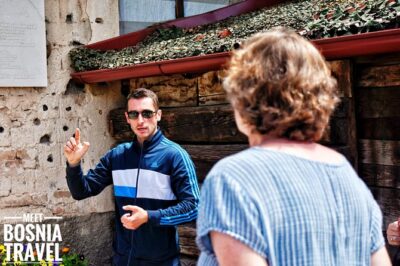
Fall of Yugoslavia, Sarajevo War Tour with Tunnel of Hope Museum and Frontlines
Read our review →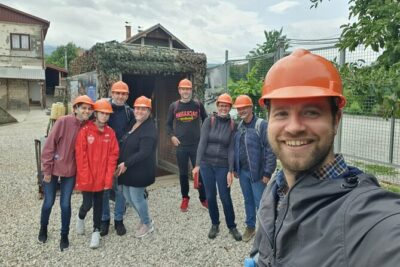
Tunnel Museum: Bosnian & Yugoslav Wars Tour with War Veteran
Read our review →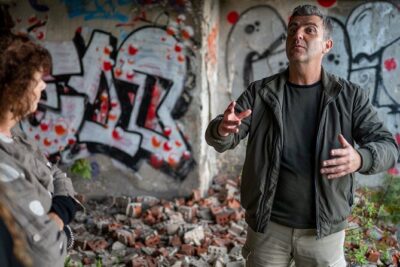
Sarajevo War Tour: A Veteran’s Story of the Siege (fees included)
Read our review →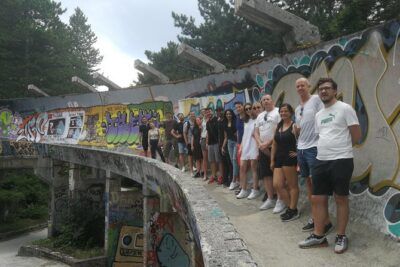
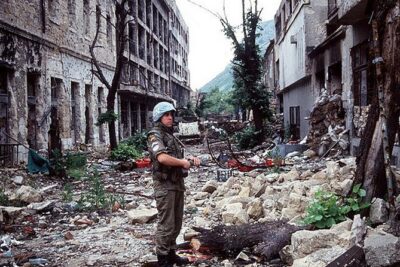
Break-up of Yugoslavia & The War in Mostar: Life Under Siege
Read our review →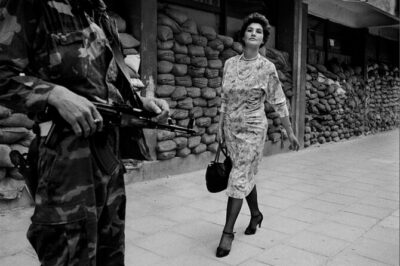
Sarajevo Grand Tour: Old Town, War Tunnel, Olympic Sites & More
Read our review →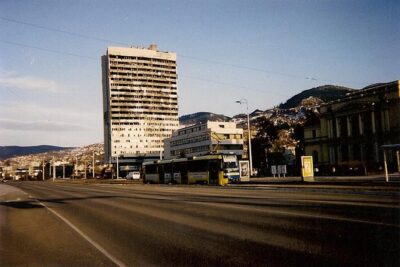
Times of Misfortune – Life Under Siege and the Tunnel of Hope
Read our review →Browse the lists this tour appears in