
Reviewed · FOOD
Eat, Pray, Love Tour
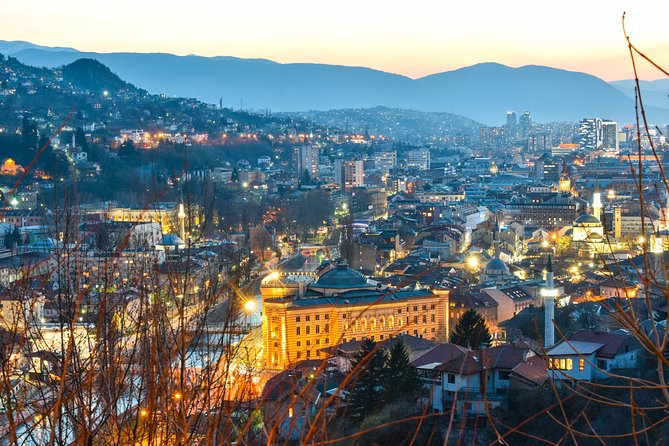
Sarajevo’s story is easiest to understand on foot, where an Ottoman mosque, Catholic church, Jewish synagogue, Orthodox church, brewery, market street, and Austro-Hungarian building can appear within a few minutes of one another. This tour turns that compact old center into a readable walk, with local food and coffee along the way.
I like the crossroads theme. You are not shown only one side of Sarajevo. You move from Latin Bridge and the Emperor’s Mosque to the Old Orthodox Church, Jewish Museum, and Sarajevo City Hall. I also like the practical food stops: Bosnian coffee with baklava and a serving of burek give you a taste of daily life, not just a history lesson.
The main consideration is that this is a city and culture walk with two tastings, not a full food tour. The pace includes many short stops, and the 13 BAM, about 7 euro, entry package for the mosque, synagogue, and Orthodox church is not included.
Key points at a glance
- Four hours in Sarajevo’s historic center: The route links Ottoman, religious, Jewish, Austro-Hungarian, and modern cultural sites.
- Two included tastings: You receive Bosnian coffee with baklava in Baščaršija and a traditional burek tasting on Bravadžiluk Street.
- Strong guide-led storytelling: Guides including Elsa, Irfan, Rijad, and Suad have been praised for clear explanations and personal stories.
- Extra admission costs 13 BAM: The package covers Gazi Husrev-beg Mosque, the Jewish Museum, and the Old Orthodox Church.
- A small-group format: The maximum is 20 people, though a quiet date may result in a private walk.
- Good first-day orientation: You finish back at the starting point with a better sense of how the Old Town fits together.
Why this walk is a smart introduction to Sarajevo
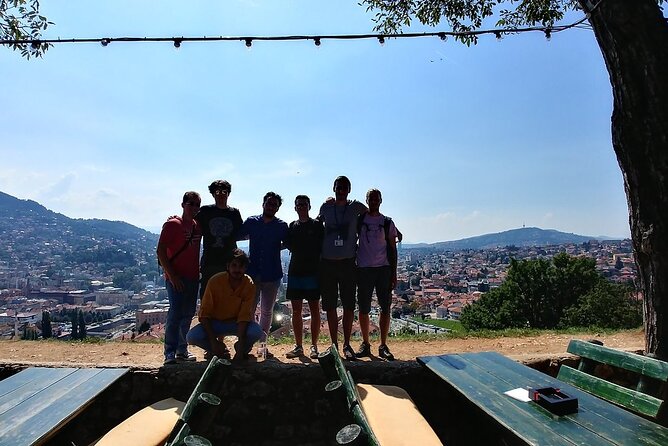
The Eat, Pray, Love Tour begins at Zelenih beretki 30 at 10:00 am and returns there after about four hours. The meeting point is near public transportation, and the route stays focused on central Sarajevo rather than using a bus or van.
That matters because Sarajevo rewards slow looking. A short block can shift from Ottoman-era streets to European architecture, then to a place of worship from another faith. Your guide supplies the links, helping you see the city as a place where several traditions have lived side by side, sometimes peacefully and sometimes under great strain.
The tour is also useful at the start of a Sarajevo visit. One guide, Rijad, was especially patient with photographs and helped a visitor get oriented well enough to return to the Old Town alone the following day. That is the real value of a good walking tour: not just facts, but a working map in your head.
The group limit is 20 people. That is small enough for questions in most cases, and the experience can become nearly private if few people book. One December booking had only one participant, with guide Suad leading the full four-hour walk.
A few more things to do around Sarajevo
- Private Walking Tour, Food Tasting and Bosnian Coffee in Sarajevo
★ 5.0 · 255 reviews - Sarajevo: 4-Hour Food And Craft Tour
★ 5.0 · 70 reviews - Delicious Sarajevo: Eat, Walk & Discover City Tour
★ 4.5 · 37 reviews
From Latin Bridge to Sarajevo’s layered faiths
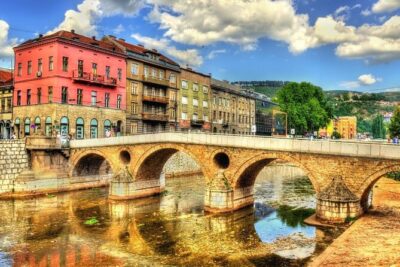
Your first major stop is Latin Bridge, one of Sarajevo’s most famous landmarks. The visit is short, about three minutes, so expect a focused explanation rather than a long bridge study. Its importance comes from the events connected with Sarajevo in the early 20th century and from the way its name fits the city’s long Catholic and Ottoman story.
The Tomb of the Seven Brothers, known as Jedileri, follows as a brief memorial stop. This is a quiet place tied to local legends and historical meaning. It gives the walk a pause before the larger religious buildings.
Saint Anthony Catholic Church shows another part of Sarajevo’s religious life. The stop lasts about five minutes, enough to understand why a Catholic church belongs in a tour centered on a city often introduced through its Ottoman past.
You then pass Sarajevska Pivara, the city brewery associated with the first brewery in the Ottoman Empire. The stop is only about two minutes, so do not expect a brewery visit or tasting here. Instead, it is a useful reminder that Sarajevo’s story includes food, drink, trade, and changing urban life as well as places of worship.
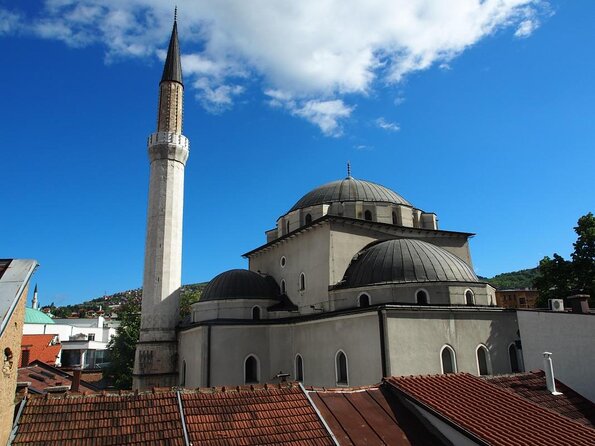
The Emperor’s Mosque is another quick exterior or orientation stop, lasting about three minutes. It is described as Sarajevo’s oldest mosque and reflects the city’s Ottoman foundations. The short timing keeps the overall walk moving, but the limited minutes mean you may want to ask your guide questions while the group is nearby.
Gazi Husrev-beg Mosque and the cost of going inside
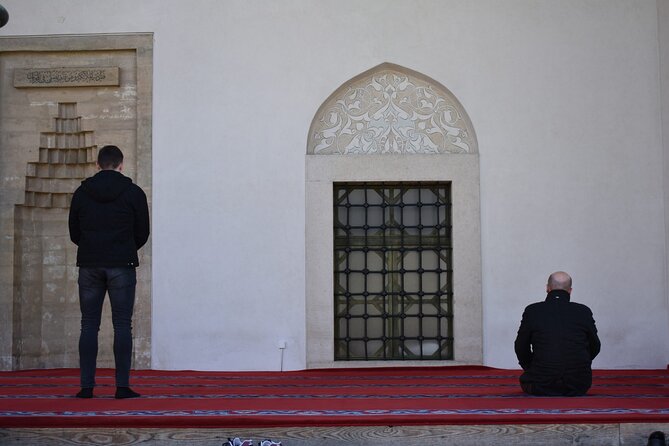
The longest religious stop is Gazi Husrev-beg Mosque, with about 30 minutes allowed. This is one of the tour’s central sights, not a passing photo stop. Its Ottoman design and role in Sarajevo’s Islamic life make it a key place for understanding the old city.
The nearby Gazi Husrev Begova Medresa adds the education side of that story. The medresa has served as a place of Islamic learning for centuries, and the five-minute stop gives you a compact look at scholarship and religious education in the city.
Admission is not included at these sites. The tour lists a single 13 BAM, about 7 euro, entry package for Bey’s Mosque, the synagogue, and the Old Orthodox Church. You should budget for it rather than treating all stops as free street views.
That extra fee is reasonable if you want to enter the buildings, but it is important to know the distinction. The tour price is $36.97 per person, and the entry package comes on top of that. Ask your guide what the current ticket arrangement covers if you are uncertain on the day.
Where East meets West in a few city blocks
At the Sarajevo Meeting of Culture, the walk reaches one of the city’s clearest visual ideas: East and West meet within the same urban center. The stop lasts only two minutes, but it works well as a transition between the Ottoman quarter and the more European-looking streets.
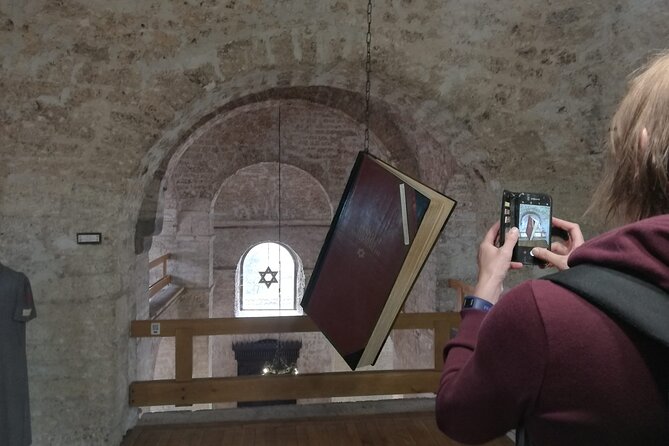
The Jewish Museum of Bosnia and Herzegovina receives about 20 minutes. It occupies one of the oldest synagogues in the Balkans and brings Sarajevo’s Jewish past into the route. This is another site where the admission package applies.
I appreciate that the itinerary does not treat Sarajevo as a single-faith destination. You see Islamic, Catholic, Orthodox, and Jewish sites in one morning. The point is not to flatten their differences. It is to show how close together these communities and traditions have been, and why the city’s identity cannot be explained by one building or one period.
If you prefer long museum visits, the Jewish Museum stop may feel short. The same is true of several religious sites. This tour gives you a broad first look, while a separate return visit would allow more time for reading and quiet observation.
Same base, a different kind of day out:
- Sarajevo: Mostar, Konjic, Blagaj Tekke, Pocitelj & Waterfall
★ 4.9 · 1,335 reviews - Fall of Yugoslavia, Sarajevo War Tour with Tunnel of Hope Museum and Frontlines
★ 5.0 · 1,314 reviews - Sarajevo: Mostar, Konjic, Sufi House, Pocitelj & Kravice Falls
★ 5.0 · 1,179 reviews - ROSES OF SARAJEVO (Official WAR + CITY tour)- Story of a Survivor
★ 5.0 · 770 reviews
Baščaršija, Bosnian coffee, and baklava
Baščaršija is the natural center of the food and craft portion of the walk. Here you get a Bosnian coffee tasting with baklava, and about 30 minutes is set aside for the break. This is included in the tour price.
Bosnian coffee is not simply a fast caffeine stop. The preparation and serving style are part of the local custom, and the pause lets you slow down after the history-heavy first half. The baklava adds a sweet contrast and gives you a familiar point of reference while you learn how coffee fits into Bosnian social life.
The tasting is not a full meal, so plan your appetite accordingly. One guide-led account described the coffee and food stops as enjoyable but noted that people expecting a dedicated food walk may want more tastings. That is fair. You get two food moments, not a long list of restaurants or a market crawl.
At Sebilj Brunnen, you have a quick photo stop at Baščaršija’s well-known wooden fountain. It takes about two minutes. The fountain is a busy meeting point, so your guide’s directions help keep the group together before the route continues.
Morica Han is a five-minute stop at an Ottoman-era caravanserai. Its importance lies in the old trade routes and the people who once passed through Sarajevo with goods and news. The brief visit works best when your guide explains what a caravanserai meant in everyday terms.
Kazandžiluk and the taste of burek
Kazandžiluk is one of the more distinctive stops because it connects the old city to a craft that is still practiced. The name refers to the coppersmiths’ street, where traditional metalwork remains part of Sarajevo’s commercial character.
You have about 20 minutes here. That is enough time to look at the workmanship and understand why these crafts matter, though the tour does not promise a hands-on workshop or a purchase. If you like practical souvenirs, this is a good place to pay attention to how the objects are made rather than rushing to the next monument.
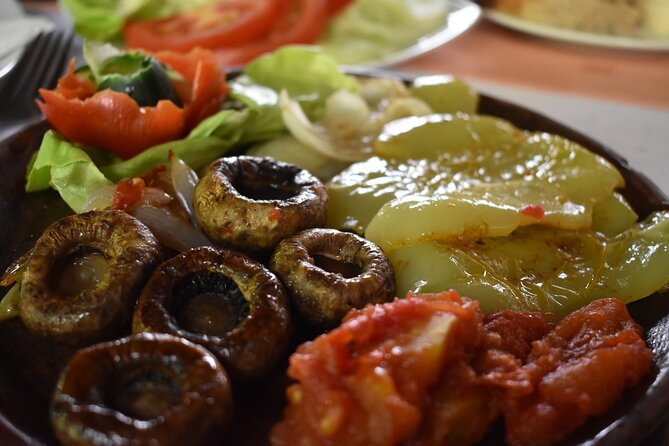
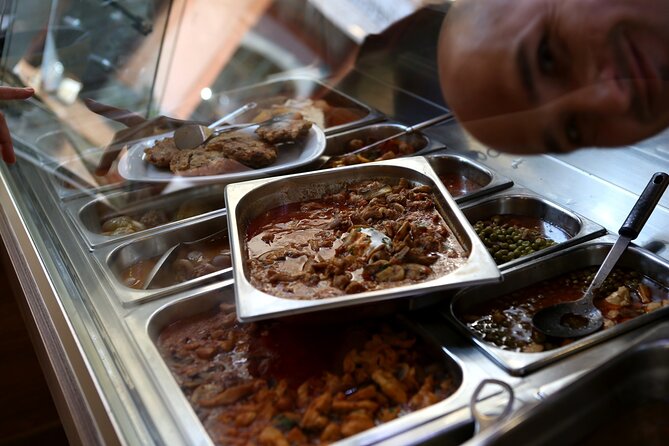
The final food stop is on Bravadžiluk Street, with a 30-minute burek tasting included. Burek is a traditional filled pastry and one of Bosnia’s best-known everyday foods. Here, the food is not decoration around a sightseeing route. It is a direct way to connect the city’s history with what people eat.
One useful tip is to treat this as a snack or light meal rather than assuming it replaces lunch for everyone. Portions and preferences can vary, and one particularly positive account singled out the burek as a highlight. Another account found the food quality disappointing, so I would keep expectations sensible: this is a scheduled tasting, not a carefully designed restaurant meal.
City Hall and Sarajevo’s Spite House
Sarajevo City Hall is one of the route’s most striking buildings. The 15-minute stop introduces its neo-Moorish architecture and its place in the city’s cultural story. After the tighter streets of Baščaršija, the building gives you a different view of Sarajevo’s architectural mix.
Across the river, Inat kuća, or the Spite House, supplies one of the tour’s most memorable stories. The house was moved to the opposite side of the river after its owner refused to let authorities remove it. The tale is about stubbornness, pride, and resilience, and it gives the final part of the walk a human scale.
The tour ends back at the starting point. That is useful if you want to continue exploring on your own, return to a hotel, or visit another central sight without arranging transport from a distant neighborhood.
What the guides add to the experience
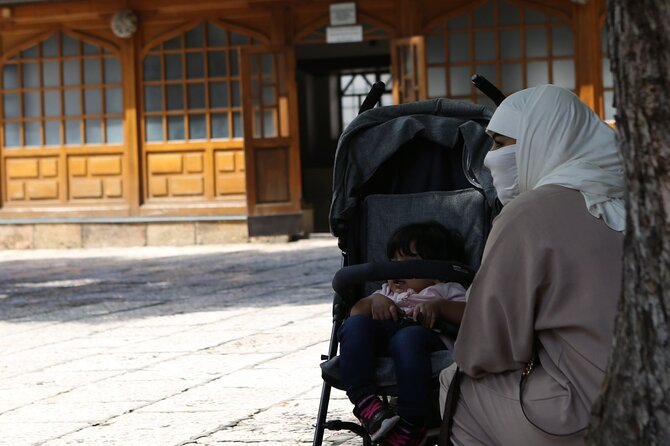
The guide is the main variable in any history walk, and the strongest reports here point to a warm, personal style. Elsa is praised for combining detailed knowledge of the city and country with personal stories about the region’s recent past. Another description calls her honest, personable, and fun, with practical advice beyond the formal route.
Irfan is praised for clear answers, polished presentation, and an ability to explain complicated points without losing the group. Rijad is remembered for never rushing photographs, while Suad led a private-feeling tour on a quiet December morning.
You should not assume you will receive one of these guides on your date, but their names show the kind of guide the company uses for this experience. The strongest part of the tour is not the number of stops. It is having someone explain why the buildings are close together, what their symbols mean, and how Sarajevo’s recent past still shapes the city.
The overall rating is 4.6 from 32 reviews, with 91 percent recommending the experience. That is a solid result, but the one low score is worth noting. The criticism focused on weak people skills and poor food quality, not on a lack of historical information. If you care most about a carefully planned food experience, this may not be your best choice.
Price, walking comfort, and who should book
At $36.97 per person, this is a fair price for a four-hour guided walk with two included tastings, a city map, and a small group capped at 20. The price becomes better value if you are new to Sarajevo and want several parts of the Old Town explained in one morning.
The extra 13 BAM entry package is the main cost to remember. Comfortable shoes are important because the route involves walking through historic streets and stopping repeatedly. Sunglasses and a camera are recommended, and comfortable clothing will make the morning easier.
Most people can participate, and the meeting point is near public transportation. The tour is offered in English and uses a mobile ticket. Free cancellation is available up to 24 hours before the start time, but changes or cancellations inside that window are not refunded.
I would choose this tour for a first visit, solo travelers who want an easy introduction, couples, and anyone interested in architecture, religion, food, and Sarajevo’s complicated past. It is also a good fit if you prefer stories and orientation over a long museum visit.
I would choose something else if your main goal is a serious food crawl, extended time inside every religious building, or a slow photography walk. The schedule is full, and several stops last only a few minutes.
Should you book the Eat, Pray, Love Tour?
Book it if you want Sarajevo explained as a meeting point of cultures, with a Bosnian coffee, baklava, and burek tasting to break up the walking. The best value comes from the guide’s ability to connect sites that you might otherwise see as unrelated.
Bring about 13 BAM extra for the entry package, wear good walking shoes, and think of the food as a taste of Sarajevo rather than a full food tour. If you want a clear first-day introduction and a route you can repeat on your own later, this tour earns its place on your schedule.
FAQ
How long is the Eat, Pray, Love Tour?
The tour lasts approximately four hours, from 10:00 am until about 2:00 pm.
Where does the tour start?
It starts at Zelenih beretki 30, Sarajevo 71000, Bosnia and Herzegovina.
Where does the tour finish?
The activity ends back at the meeting point.
Is the tour offered in English?
Yes. The tour is offered in English.
What food and drinks are included?
The tour includes a Bosnian coffee tasting with baklava in Baščaršija and a traditional burek tasting on Bravadžiluk Street.
Are admission fees included?
Most stop visits are free, but the entry package for Bey’s Mosque, the synagogue, and the Old Orthodox Church costs 13 BAM, about 7 euro, per person and is not included.
How many people can join the tour?
The maximum group size is 20 people.
What should I bring?
Comfortable clothes and shoes, sunglasses, and a camera are recommended. You should also bring money for the entry package.
Can I cancel for a full refund?
Yes. You can cancel at least 24 hours before the local start time for a full refund. Cancellations or changes made less than 24 hours before the start time are not refunded or accepted.
Just added around Sarajevo
- Downhill Sarajevo MTB Mountain Biking Adventure on Trebevic – Half Day Tour★ 5.0 · 3 reviews
- Sarajevo War Tour with TRAVELPLUS★ 5.0 · 11 reviews
- Skakavac Waterfall Mountain Biking Tour from Sarajevo MTB★ 5.0 · 11 reviews
- Private Day Tour to Mostar, Blagaj, Pocitelj, Konjic and Jablanica★ 5.0 · 11 reviews
- SARAJEVO STREET ART TOUR (art, history & mystery) – sARTajevo!★ 5.0 · 18 reviews
- Sarajevo – Mostar Herzegovina Adventures Day Tour★ 5.0 · 18 reviews
- Cable Car Olympic Tour With Museum★ 5.0 · 17 reviews
- Canyoning Rakitnica river★ 4.5 · 11 reviews
Food, compared.
Private Walking Tour, Food Tasting and Bosnian Coffee in Sarajevo
Read our review →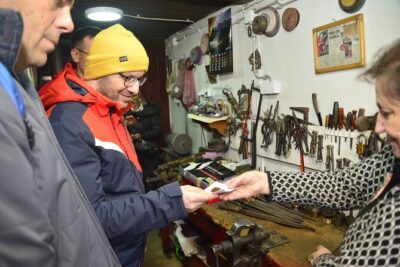
Delicious Sarajevo: Eat, Walk & Discover City Tour
Read our review →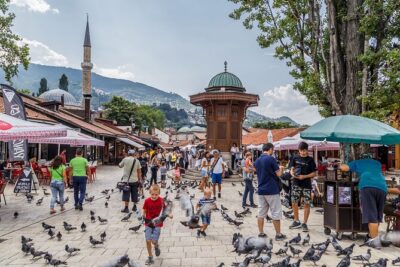
Sarajevo Uncovered: Old Town Tour with Coffee and Food Tasting
Read our review →
LUKOMIR VILLAGE HIKE & TREK TOUR (nature, hike, food & panorama)
Read our review →Browse the lists this tour appears in