
Reviewed · SARAJEVO WAR HISTORY TOURS
Inside the Siege: Sarajevo’s Story of Survival
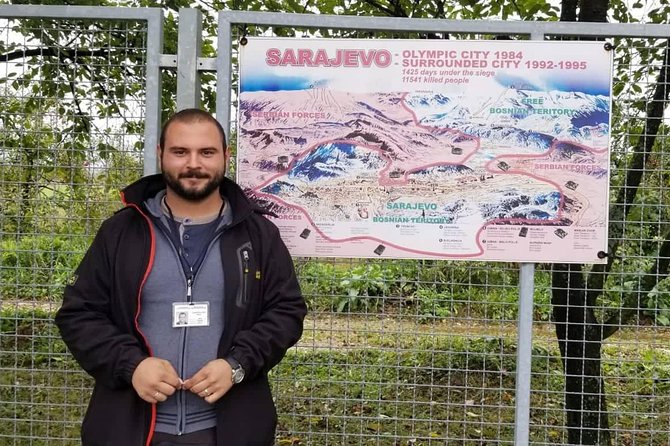
Sarajevo’s wartime story is easiest to grasp when you see the city from the hills, follow the old front lines, and walk through the narrow Tunnel of Hope. This tour links those places with the human stories behind the siege, rather than leaving you with a list of dates and military terms.
I like the small maximum group of 16, which gives you room to ask questions, and I like the local perspective offered by Adis Hamzic and his guiding team. The roughly three-hour route also covers more ground than a walking tour, from the Yellow Fortress to the Olympic stadium and the tunnel museum.
The main drawback is that some time is spent in a vehicle, and a small car can feel tight when the group is only a few people. You’ll also pay €10 separately for the Tunnel of Hope Museum, in local currency.
What makes this Sarajevo siege tour worth your time
- The Yellow Fortress puts the city and wartime front lines into one view, making Sarajevo’s geography easier to understand.
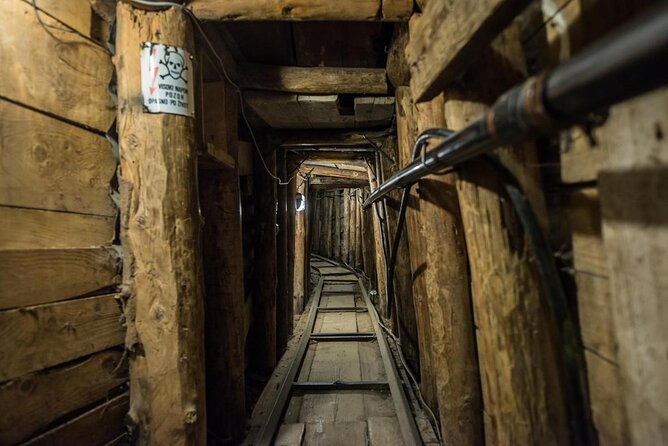
- The Tunnel of Hope is the tour’s central stop, with about 50 minutes at the museum and an extra entrance fee.
- Sniper Alley and the Presidency Building connect daily danger with wartime politics, not just battlefield history.
- The children’s memorial honors 1,601 young victims, giving the siege a deeply personal focus.
- Adis Hamzic and his team explain events in clear English, with room for questions and personal observations.
- The 1 p.m. start and return to the meeting point make this a simple afternoon plan in Sarajevo.
Starting at the Yellow Fortress above Sarajevo
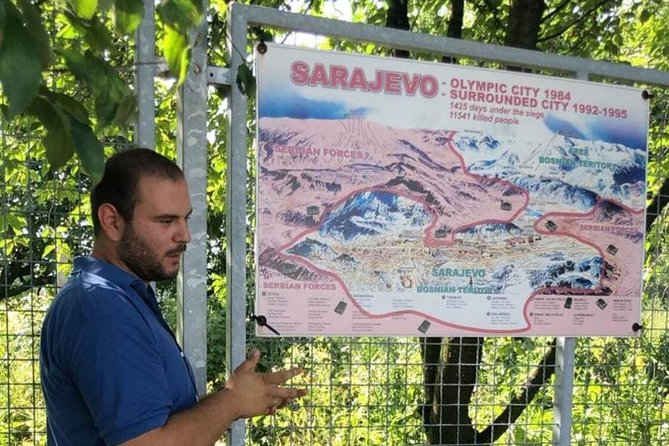
The tour begins at 1 p.m. at Mula Mustafe Bašeskije 65, in central Sarajevo. From there, an air-conditioned vehicle takes you toward the Yellow Fortress, where you get a broad view over the city and the hills that once formed the siege front lines.
This is a smart first stop. Sarajevo’s shape matters. The city sits in a long valley, with steep slopes rising around it. From the fortress, you can see why the surrounding hills were so important during the war and why movement through the city became so dangerous.
You get about 15 minutes here, so this is a viewpoint and orientation stop rather than a long historical visit. Bring your attention, not a picnic. Your guide can point out the general relationship between the old city, residential areas, and the surrounding heights, helping the later stops make sense.
The Yellow Fortress also gives you one of the best chances to pause and take in Sarajevo as a living city, not only as a place marked by war. That contrast matters. The tour deals with painful subjects, but the view reminds you that Sarajevo continued, rebuilt, and remains a working capital.
More siege and war history walks in Sarajevo
- Fall of Yugoslavia, Sarajevo War Tour with Tunnel of Hope Museum and Frontlines
★ 5.0 · 1,314 reviews - Tunnel Museum: Bosnian & Yugoslav Wars Tour with War Veteran
★ 5.0 · 551 reviews - Sarajevo War Tour: A Veteran’s Story of the Siege (fees included)
★ 5.0 · 326 reviews
Cemeteries, massacres, and the cost of the siege
The route continues to places connected with people who fought to protect Sarajevo and with civilians killed during the siege. The exact stop names and time allocations are not specified, so you should think of these as short, guided visits rather than formal museum stops.
These locations help shift the focus from military movements to ordinary people. A cemetery or memorial can be quiet and visually simple, but the guide’s explanation gives it meaning. You’ll hear about those who defended the city, as well as civilians caught in attacks while trying to live normal lives.
One stop recalls tragic civilian massacres during the siege. This part may feel heavy, and it should. The value here is not entertainment or spectacle. It is the chance to understand that the siege was felt in streets, markets, homes, and public places, not only at distant front lines.
I appreciate that the tour is built around human stories as well as facts. Sarajevo’s siege lasted long enough to affect every part of city life. A guide who can connect the wider political story to individual experience gives you a clearer sense of what survival required.
The Olympic stadium and a city turned into a cemetery
At Asim Ferhatovic Hase Stadium, you see a place first known for sport and the 1984 Winter Olympics. During the war, parts of the site were later used as a cemetery.
That change in purpose is one of the clearest examples of how conflict can alter familiar spaces. An Olympic venue suggests celebration, international attention, and normal life. A cemetery reflects loss and urgent necessity. Seeing both parts of that story in one place gives the stop unusual weight.
The visit lasts about 10 minutes. It is not a long stadium tour, and you should not expect access to every part of the site. Instead, the guide uses the location to explain how Sarajevo’s public spaces changed during the siege.
This is also a good point to ask questions. The guiding style associated with Adis Hamzic is conversational, and the tour is designed for discussion. Past comments about his tours describe clear English, a friendly manner, and answers that connect Sarajevo’s wartime years with the end of the Tito era and the period after it.
Remembering 1,601 children
The route includes a memorial honoring the 1,601 children killed during the siege. This is one of the most important moments on the tour because it gives a single figure a human scale.
Numbers can be hard to absorb. A memorial helps you stop and consider who those children were and what their deaths meant for families and the city. Your guide provides the historical setting, while the site itself gives you time to reflect.
This portion may not suit someone seeking a light afternoon outing. The subject is direct and painful. Still, if you want to understand Sarajevo beyond architecture and scenic views, this memorial is essential.
The tour’s balance is useful here. You are not simply driven from one grim place to another. The route also includes panoramic views, the Olympic stadium, political sites, and the tunnel. That variety gives the story a wider frame while keeping the civilian cost at its center.
A few more things to do around Sarajevo
- Sarajevo: Mostar, Konjic, Blagaj Tekke, Pocitelj & Waterfall
★ 4.9 · 1,335 reviews - Sarajevo: Mostar, Konjic, Sufi House, Pocitelj & Kravice Falls
★ 5.0 · 1,179 reviews - ROSES OF SARAJEVO (Official WAR + CITY tour)- Story of a Survivor
★ 5.0 · 770 reviews - Sarajevo: Mostar, Konjic, Počitelj, Sufi House, & Waterfalls
★ 4.9 · 572 reviews
Sniper Alley and the Presidency Building
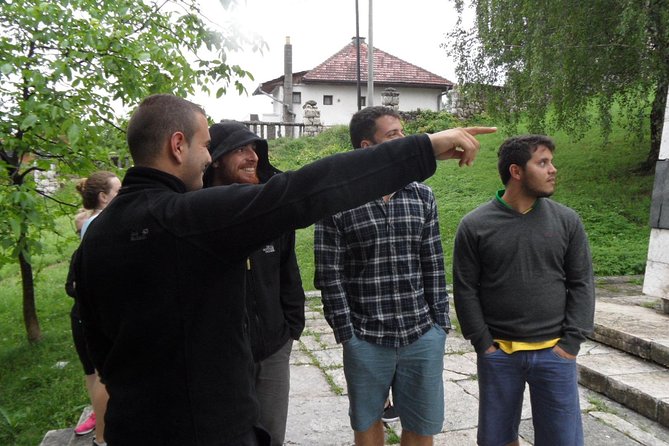
Sniper Alley was one of the most dangerous streets in wartime Sarajevo, exposed to sniper fire. Passing through this part of the city helps you connect the phrase with an actual urban setting rather than treating it as a dramatic label from a history book.
The stop is brief, but the guide’s explanation matters. A street can look ordinary today. Without context, you might pass through it without realizing why it became so feared. This is where local storytelling adds real value.
The route also includes the Presidency Building, a key political center during the war. Here the tour moves from street-level danger to the decisions and institutions at the heart of the conflict.
Together, these two locations show the siege from different angles. Sniper Alley represents the daily risk faced by people moving around the city. The Presidency Building points toward political leadership, international attention, and the larger conflict surrounding Sarajevo.
You may find this section especially helpful if your knowledge of the Bosnian War is limited. The guide explains the sequence of events and the local perspective without assuming you already know the region’s complicated political background.
The Tunnel of Hope, Sarajevo’s secret lifeline
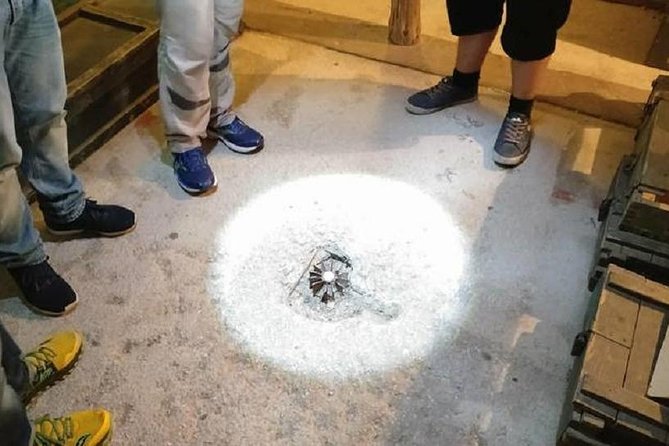
The Tunnel of Hope Museum is the tour’s main stop and lasts about 50 minutes. The entrance fee is not included, so budget €10 per person and pay separately in local currency on site.
During the siege, this tunnel served as a vital route for supplies and survival. Its purpose was practical and urgent: it helped people move essential goods and maintain a link for the city when ordinary routes were cut or dangerous.
The museum gives the tunnel a physical presence that books and photographs cannot match. You’ll learn how this hidden route supported Sarajevo and why it became known as a lifeline. The visit is not simply about engineering. It is about the effort required to keep a city alive under pressure.
The tunnel portion is a strong reason to choose this experience over a general city tour. The Yellow Fortress gives you the broad view, while the tunnel shows the cramped, practical side of survival. One explains the city’s exposed position. The other shows how people responded.
Because the tunnel museum fee is separate, carry suitable local currency. The supplied information does not state whether cards are accepted, so do not rely on paying by card. The entrance cost is modest compared with the value of the stop, but it is still an extra expense to remember when comparing tour prices.
A panoramic drive back through Sarajevo
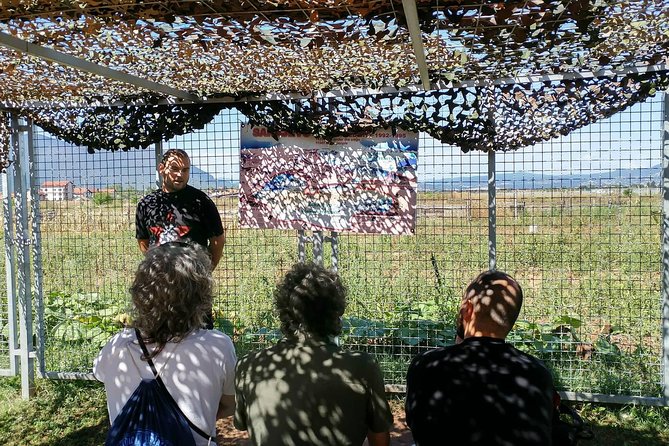
After the tunnel museum, the vehicle returns by a scenic route with another broad view of Sarajevo. This final drive gives you time to process what you have seen.
I like the return route because the tour does not end abruptly at the most difficult site. The city comes back into view, and the guide can help place the day’s locations into one picture: the hills, the valley, the streets, the political center, the memorials, and the tunnel.
The experience ends back at the original meeting point. At roughly two to three hours, it fits well into an afternoon without taking over the entire day. The 1 p.m. departure also leaves your morning open for Sarajevo’s old town or other activities.
How the guides shape the experience
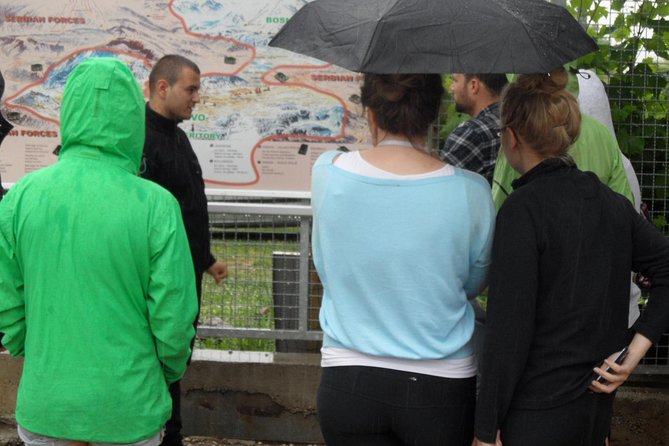
Adis Hamzic is the named provider, and the guiding team includes Adis and an assistant. You may be led by Adis himself or by another member of his team. The guiding is offered in English.
The most useful feature is the combination of clear historical explanation and personal perspective. Adis is described as having a witty, friendly style, while the assistant has offered a younger person’s view of Sarajevo’s wartime past. That can help you hear the story across generations rather than through one official version only.
You should feel free to ask questions. The tour is built for conversation, and the guides are praised for handling questions about Sarajevo, the Bosnian War, the Balkans, and the city’s later development.
The use of personal experience needs a little care. A local perspective can make history more immediate, but it is still one perspective. If you want a purely academic lecture or a full political history of the conflict, this may feel less formal. If you want context you can connect to streets and buildings, the approach is a better fit.
Group size, comfort, and value at $54.22
The price is $54.22 per person. That includes the vehicle, a professional local guide, historical explanation, and the guided route through Sarajevo’s major siege sites. It does not include the €10 Tunnel of Hope entrance fee or an optional tip.
For a two to three-hour tour, the price is not bargain-basement. The value comes from the range of places covered and the transport between them. You would see far less on foot in the same time, especially since the tunnel lies outside the central area and the route includes hilltop views.
The maximum group size is 16, which is small enough for questions compared with a large coach tour. In practice, the group may be much smaller. A small group of four has been noted, though the car felt a bit tight even with that number. This is worth considering if you care more about personal discussion than spacious seating.
The air-conditioned vehicle is useful, especially for a route that moves between central Sarajevo, hilltop viewpoints, and the tunnel area. Still, this is not a luxury driving tour. Treat the vehicle as practical transport, and expect some time seated while moving between locations.
You can cancel free of charge up to 24 hours before the 1 p.m. start for a full refund. Changes made less than 24 hours before departure are not accepted, and the tour requires a minimum number of participants. If that minimum is not reached, you are offered another date or experience, or a full refund.
Who should book this experience
I would choose this tour if you want a focused introduction to Sarajevo’s siege and prefer a local guide to a self-guided visit. It suits first-time visitors who want to understand the city’s geography and recent past in one afternoon.
It is also a good fit if you have already taken a walking tour with Adis and want to go beyond the old town. The vehicle opens up parts of Sarajevo that are too far apart for an easy walk.
You should be comfortable with difficult subjects. The route includes civilian massacres, wartime cemeteries, sniper fire, and children killed during the siege. It is not designed as a cheerful sightseeing loop, even though the guides may use gentle humor and keep the conversation approachable.
The tour is available in English, service animals are allowed, and it is near public transportation. Most people can take part, but the supplied information does not give detailed accessibility specifications for the vehicle, tunnel, or museum. If you need specific mobility arrangements, ask before booking.
Should you book the Inside the Siege tour?
Book it if you want context, local voices, and the Tunnel of Hope in a compact afternoon. The strongest parts are the guide’s ability to connect facts with personal stories, the small-group format, and the way the route moves from panoramic views to memorials, political sites, and the tunnel itself.
Skip it if you want a long walking tour, a spacious vehicle, or a light introduction to Sarajevo. Also allow for the extra museum fee and the possibility of a snug ride.
For most visitors who want to understand why Sarajevo looks and feels the way it does today, this is a worthwhile use of three hours. It gives you the places, the questions, and enough local explanation to keep learning after the tour ends.
FAQ
How long does the Inside the Siege tour last?
The tour lasts approximately two to three hours.
What time does the tour begin?
The tour begins at 1 p.m.
Where is the meeting point?
You meet at Mula Mustafe Bašeskije 65, Sarajevo 71000, Bosnia and Herzegovina.
Does the tour return to the meeting point?
Yes. The activity ends back at the original meeting point.
Is the Tunnel of Hope entrance fee included?
No. The Tunnel of Hope Museum entrance costs €10 per person and is paid separately on site in local currency.
What language is the tour offered in?
The tour is offered in English.
How many people can join the tour?
The maximum group size is 16 travelers.
Can I cancel for a full refund?
Yes. You can cancel at least 24 hours before the experience start time for a full refund. Cancellations or changes made less than 24 hours before the start time are not refunded or accepted.
Just added around Sarajevo
- Downhill Sarajevo MTB Mountain Biking Adventure on Trebevic – Half Day Tour★ 5.0 · 3 reviews
- Skakavac Waterfall Mountain Biking Tour from Sarajevo MTB★ 5.0 · 11 reviews
- Sarajevo War Tour with TRAVELPLUS★ 5.0 · 11 reviews
- Sarajevo City SIghtseeing / War Bike Tour★ 5.0 · 13 reviews
- LUKOMIR VILLAGE HIKE & TREK TOUR (nature, hike, food & panorama)★ 5.0 · 11 reviews
- Umoljani Village to Lukomir Village via Obalj Hike from Sarajevo★ 5.0 · 16 reviews
- Trebevic Mountain Biking Tour from Sarajevo – Bobsleigh Track★ 5.0 · 16 reviews
- Sarajevo: One-Way Tour to Dubrovnik via Mostar★ 4.6 · 19 reviews
Sarajevo War History Tours, compared.
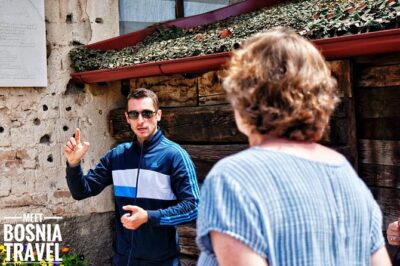
Fall of Yugoslavia, Sarajevo War Tour with Tunnel of Hope Museum and Frontlines
Read our review →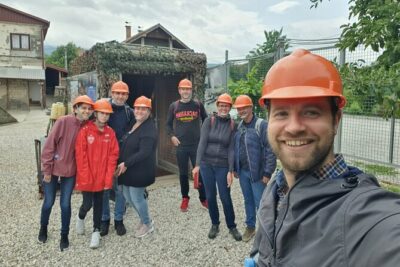
Tunnel Museum: Bosnian & Yugoslav Wars Tour with War Veteran
Read our review →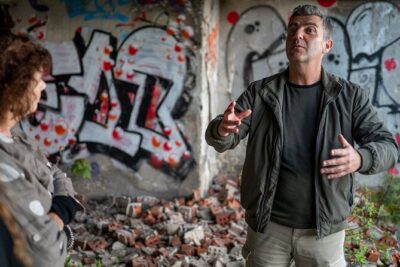
Sarajevo War Tour: A Veteran’s Story of the Siege (fees included)
Read our review →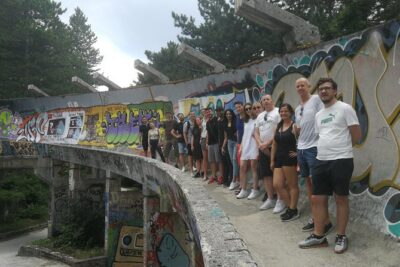
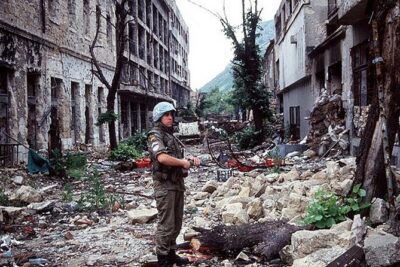
Break-up of Yugoslavia & The War in Mostar: Life Under Siege
Read our review →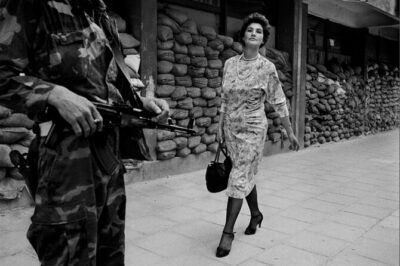
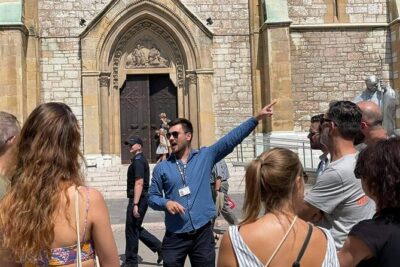
Sarajevo Grand Tour: Old Town, War Tunnel, Olympic Sites & More
Read our review →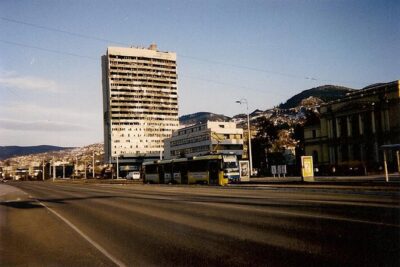
Times of Misfortune – Life Under Siege and the Tunnel of Hope
Read our review →Browse the lists this tour appears in