
Reviewed · WALKING TOURS
PROFESSIONAL SARAJEVO WALKING TOUR – With guide who guided STING!
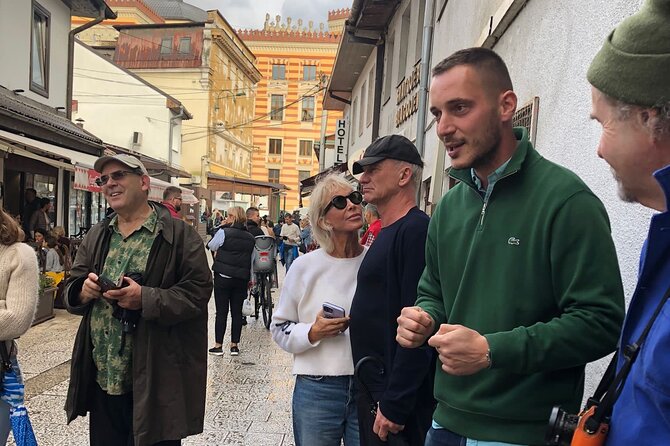
Sarajevo’s story unfolds quickly on this evening walk, from the spot where Franz Ferdinand was assassinated to the Ottoman lanes around Sebilj. I like the way the route brings together several sides of the city, and I like that guide Mak takes time to check that families and teenagers are following along. The advertised connection to Sting adds an unusual bit of character.
The main drawback is the pace. You cover many sights in roughly two to three hours, so this is best for getting your bearings and learning the essentials, not for long visits inside monuments. The start time is 6:15 pm, and the walk operates in all weather, so wear shoes and clothing that can handle a brisk evening outing.
Key points to know before you book
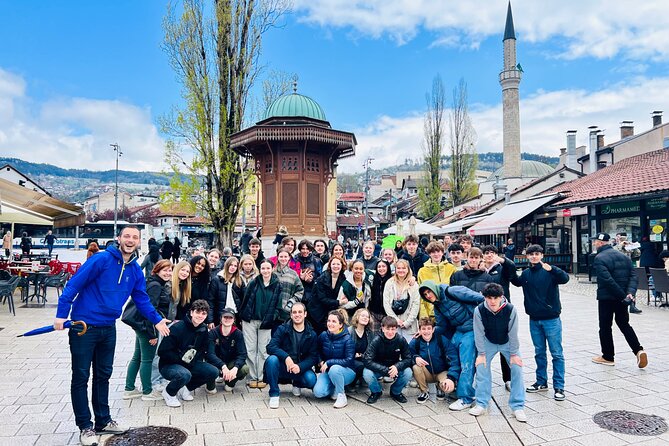
- Mak guides the walk in English: He is described as the guide who guided Sting and has led both group and private walks around Sarajevo.
- The route covers 12 major stops: Expect the Latin Bridge, Sarajevo City Hall, the Yellow Fortress, Sebilj, Markale Market, the Jewish Museum area, and the Eternal Flame.
- It is a history-heavy city walk: You’ll hear about Ottoman Sarajevo, World War I, World War II, the 1984 Olympics, and the Sarajevo siege period through sites known as the Roses of Sarajevo.
- The advertised price is $31.24 per person: For a two to three hour orientation with a local guide, that is a sensible way to keep costs down.
- The group is intended to be small: The tour information gives both a maximum of 15 and a maximum of 10, so confirm the final group size when booking.
- Dogs and service animals are allowed: One family completed the walk with an energetic Hungarian pointer, with Mak showing patience throughout.
Why this Sarajevo walk works as an introduction
Sarajevo is compact in the center, but its story is not simple. A few steps can take you from a Catholic cathedral to an Orthodox church, then into an Ottoman bazaar, past a Jewish synagogue, and on to sites tied to the First and Second World Wars.
That mixture is the real strength of this tour. You are not confined to one period or one type of monument. Instead, you move through the city in layers, with the guide explaining how different communities, empires, religions, and conflicts shaped Sarajevo.
The tour begins at Đulagina 2 at 6:15 pm and returns to the same meeting point. Evening timing can work well if you have spent the day sightseeing elsewhere or want a first look before exploring independently the next morning.
I would treat the walk as a city orientation rather than a series of formal museum visits. The stops are short, usually around 15 minutes, and admission is listed as free. You will see the outside of important buildings and hear their stories, but you should not expect long interior visits.
A few more things to do around Sarajevo
- Sarajevo: 2 Hours Old Town Walking Tour With Local Guide
★ 5.0 · 505 reviews - Private Walking Tour, Food Tasting and Bosnian Coffee in Sarajevo
★ 5.0 · 255 reviews - Sarajevo Grand Walking Tour
★ 5.0 · 232 reviews
From the Sacred Heart Cathedral to Sarajevo’s Roses
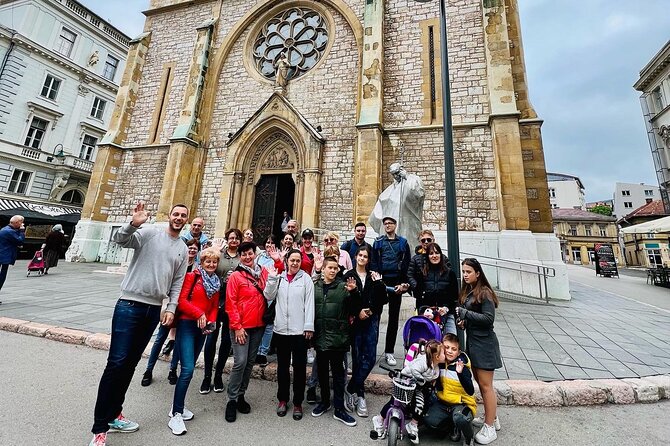
The first stop is the Sacred Heart of Jesus Cathedral, known locally as Katedrala Srca Isusova. Its presence gives you an immediate sense of Sarajevo’s religious variety. The tour pairs the cathedral with the Roses of Sarajevo, the red markings in the pavement that recall mortar explosions and the people killed during the siege.
This is a useful opening because it puts the city’s recent past beside one of its major religious buildings. You begin with both the visible architecture and the human cost of the conflict.
The first stop is planned for about 15 minutes. That is enough for an explanation and a look around, but not enough for a detailed study of the cathedral. If you want photographs, keep your camera ready and listen closely while the group is gathered.
Orthodox Sarajevo and a short city-park pause
The route continues to the Serbian Orthodox Church of the Nativity of the Theotokos. The church is paired with the Mondo sculpture and a city park, giving this section a slightly slower feel after the heavier subject of the wartime markings.
This stop helps you see Sarajevo as a shared city rather than a collection of isolated quarters. The Orthodox church is one part of the city’s religious picture, alongside the Catholic cathedral, the mosque later in the walk, and the Jewish sites.
The listed stop lasts about 15 minutes and does not include an admission charge. You will want to stay close to the guide here, since a short pause can pass quickly when the explanation covers both the building and nearby public art.
Ferhadija, the Eternal Flame, and Tito Street
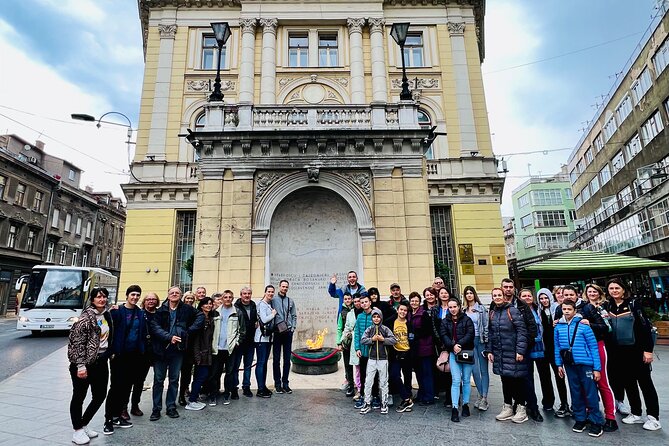
Next comes Ferhadija Pedestrian Street, with the Eternal Flame, Tito Street, and the First Rose of Sarajevo. This is one of the route’s most useful sections for connecting Sarajevo’s twentieth-century story.
The Eternal Flame marks the liberation of Sarajevo from fascist forces in World War II. Tito Street recalls the period when Sarajevo was part of socialist Yugoslavia, while the First Rose of Sarajevo points you back to the later war.
I like this sequence because it prevents the city’s wartime story from being reduced to one event. You hear about World War II, the Yugoslav period, and the 1990s conflict while walking through an active central street.
The Eternal Flame receives a separate five-minute stop later in the tour, so the earlier visit to this area is likely part of the broader route. If you prefer long pauses at memorials, this walk may feel quick. If you want a clear framework before exploring alone, the compact timing works well.
Same base, a different kind of day out:
- Sarajevo: Mostar, Konjic, Blagaj Tekke, Pocitelj & Waterfall
★ 4.9 · 1,335 reviews - Fall of Yugoslavia, Sarajevo War Tour with Tunnel of Hope Museum and Frontlines
★ 5.0 · 1,314 reviews - Sarajevo: Mostar, Konjic, Sufi House, Pocitelj & Kravice Falls
★ 5.0 · 1,179 reviews - ROSES OF SARAJEVO (Official WAR + CITY tour)- Story of a Survivor
★ 5.0 · 770 reviews
Ottoman Sarajevo around Gazi Husrev-Beg Mosque
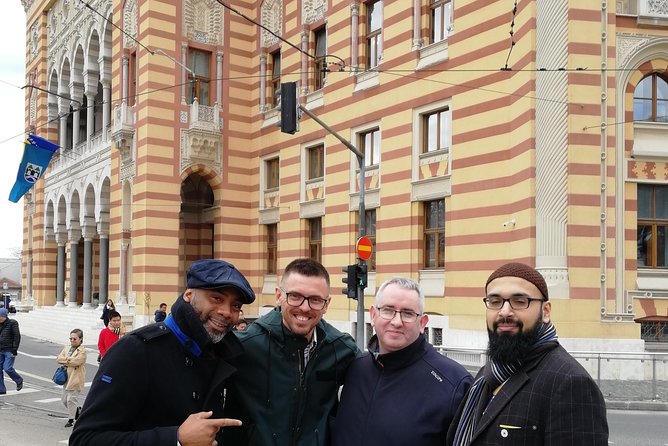
The walk then shifts into the Ottoman heart of Sarajevo. The Gazi Husrev-Beg Mosque, Bezistan Bazaar, Clock Tower, and Jewel Street are grouped together in a 20-minute stop.
This is the route’s strongest section for traditional urban texture. You move from open pedestrian streets into a part of the center shaped by Ottoman commerce and Muslim religious life. The Bezistan Bazaar and Jewel Street also give you a feel for the old trade district.
The tour information lists the mosque as Gazi Husrev Begova Medresa in the stop heading and identifies the Gazi Husrev-Beg Mosque among the sights. You should expect the guide to point out the religious complex and surrounding landmarks, but no interior admission or extended mosque visit is included.
Dress is listed as smart casual. Since the route includes a mosque, modest clothing is the sensible choice, particularly if the guide offers more detail about entering religious spaces. The data does not promise interior access, so plan on exterior viewing unless your guide explains otherwise.
Latin Bridge and the assassination that changed Europe
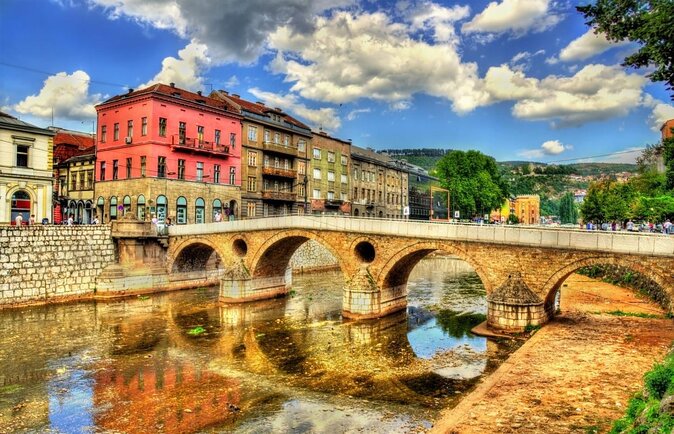
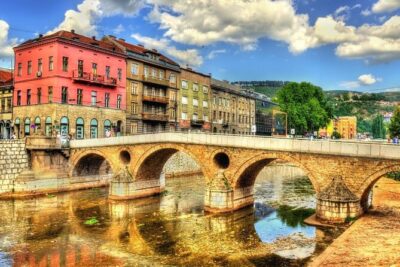
The Latin Bridge receives attention twice in the route. First, it appears with the Mausoleum of Princip Gavrilo and the assassination spot. Later, it is listed as its own stop with the full connection to Franz Ferdinand, his wife Sophie, and World War I.
This repetition is not necessarily a flaw. The bridge and assassination site are central to Sarajevo’s place in European history, and the guide may use the two mentions to connect nearby sights from different angles. Still, you should not expect two entirely separate visits.
The basic story is direct: Franz Ferdinand and Sophie were assassinated near the Latin Bridge in 1914, an event that helped set World War I in motion. Standing at the location makes the scale of that event easier to grasp than reading about it in a timeline.
The stop is listed at about 15 minutes, with no admission charge. Listen for the guide’s explanation of the setting rather than rushing toward a photograph. This is one of the places where a local guide adds real value, since the physical site alone does not explain why the event mattered so much.
Sarajevo City Hall and views toward the hills
The Sarajevo City Hall section includes City Hall, Inat Kuca, the White Fortress, the Yellow Fortress, the Jajce Army House, and the 1984 Olympic mountain. At 20 minutes, it is one of the longer planned portions of the walk.
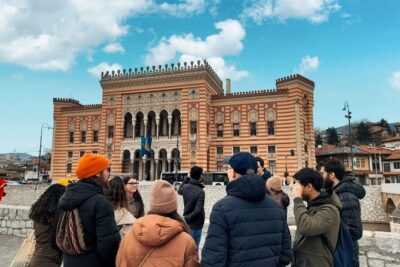
City Hall, or Vijećnica, is one of Sarajevo’s best-known buildings. Across the river, Inat Kuca adds a local story and a different architectural note. The two are commonly viewed together, and their position helps you understand the city’s Austro-Hungarian-era center.
The White Fortress and Yellow Fortress bring the surrounding hills into the picture. The route later spends more time at the Yellow Fortress, so this first mention may provide orientation rather than a full climb to every point listed.
The reference to the 1984 Olympic mountain widens the story again. Sarajevo was not only an imperial city or a wartime headline. It also hosted the Winter Olympics, and the nearby mountains remain an important part of how the city is understood.
This section may feel ambitious. Several sights are packed into 20 minutes, and the tour information does not state that every location is entered or visited at length. Think of it as a guided overview of the area and its landmarks.
Climbing toward the Yellow Fortress
The walk continues along Kovaci Street and a food street before reaching the Yellow Fortress. The listed stop takes about 15 minutes.
Kovaci is tied closely to Sarajevo’s wartime memory, while the food street brings you back to everyday city life. That contrast is helpful. Sarajevo is not presented only as a memorial or history lesson. You also see the streets where people eat, meet, and move through the center.
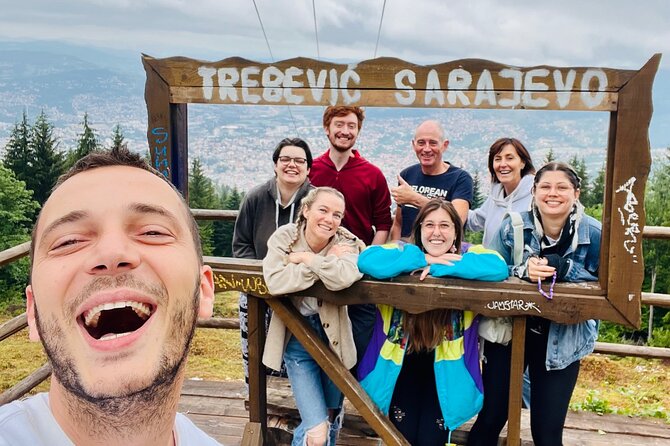
The Yellow Fortress is especially useful for orientation because of its position above the old town. The tour details do not promise a long viewpoint session, so keep your expectations realistic. You may get a short look over the city rather than a leisurely sunset stop.
Since the tour begins in the evening, light conditions could change during the walk. Bring a phone or camera, but do not let photography pull you away from the guide’s explanation. The hill sections also make comfortable shoes important.
Sebilj, Kazandziluk Street, and pigeon square
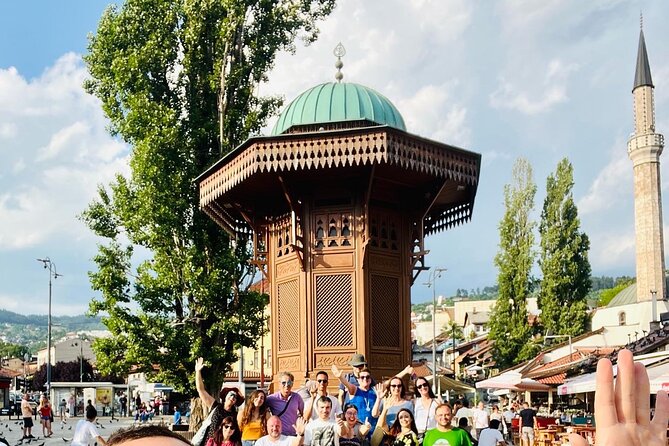
Sebilj Brunnen, or the Sebilj fountain, is one of Sarajevo’s most recognizable public symbols. It is paired with Kazandziluk Street and Pigeon Square in another 15-minute stop.
This is where the old bazaar atmosphere becomes most apparent. Kazandziluk Street is associated with coppersmiths, and the route gives you a look at traditional craft streets rather than only grand buildings. Sebilj serves as a natural meeting point in the old town.
The stop should suit you if you enjoy seeing how a city works at street level. You can look at the fountain, notice the movement around the square, and hear how the old commercial district fits into Sarajevo’s wider story.
It can also be one of the busiest-feeling parts of the route, particularly around the fountain. Stay within sight of Mak and the group, since short stops in public squares can make it easy to lose the guide.
Markale Market and the largest Sarajevo Rose
The tour next reaches Pijaca Markale, also called the Yellow Market. Here you see the largest Rose of Sarajevo and a massacre site.
This stop deals with one of the most painful chapters of the city’s recent past. Markale Market became associated with civilian deaths during the siege, and the memorial marking helps you connect the event to an ordinary public place rather than an abstract date.
The planned visit lasts about 15 minutes. That is enough for context, but the subject deserves a respectful pace. You may find this section emotionally heavier than the earlier sightseeing stops, particularly after hearing about several wartime locations in succession.
The value of having a guide here is clear. Memorial markings can be easy to pass without understanding what they represent. Mak’s role is to provide the background while keeping the explanation suited to the group.
Jewish Park and the Sefardi synagogue
The Jewish Museum of Bosnia and Herzegovina section includes Jewish Park and the Sefardi synagogue. The route does not list an admission charge or promise entry into the museum or synagogue, so plan for an exterior explanation and nearby landmarks rather than a museum visit.
This is an important addition to the walk. Sarajevo’s identity is often presented through its Muslim, Catholic, and Orthodox buildings, but the Sefardi Jewish presence is also part of the city’s story. The stop gives you a broader view of the communities that shaped Sarajevo.
Again, the planned time is about 15 minutes. If Jewish history is a major interest for you, you may want to return separately for a longer visit if opening information allows. This tour gives you the location and basic context, not a full museum experience.
The final Eternal Flame stop
The final listed stop is the Eternal Flame, with about five minutes set aside for the fascist liberation of Sarajevo during World War II.
Ending here gives the walk a clear historical marker. Earlier, the route has moved through Ottoman, Austro-Hungarian, Yugoslav, wartime, and contemporary Sarajevo. The Eternal Flame brings the focus back to the city’s liberation and remembrance.
Five minutes is short, but the location is easy to understand after the wider discussion of Sarajevo’s twentieth century. Since the activity returns to the original meeting point, you should confirm with Mak where the group finishes before setting off for dinner or another evening plan.
Price, group size, and the pace of the evening
At $31.24 per person, this is a reasonable buy if you want a guided introduction without paying for a private tour. You are paying for a local English-language explanation, route planning, and the ability to connect scattered landmarks in one outing.
The small-group promise is useful. The main description says up to 15 people, while the additional information says a maximum of 10. That is a minor inconsistency, but both figures suggest a group far smaller than a large coach tour. Ask for the expected group size if this matters to you.
The walk lasts about two to three hours. The scheduled stop times add up quickly, so the route depends on steady movement between locations. You should be comfortable walking for most of the activity and standing while listening.
Families can take part, provided children are accompanied by an adult. One family of four completed the walk with teenagers, and Mak checked from time to time that the English was clear for both adults and younger participants. Service animals are allowed, and the same family brought an energetic Hungarian pointer.
Free cancellation is available if you cancel at least 24 hours before the 6:15 pm start. Changes or cancellations inside that window are not accepted for a refund. The tour requires a minimum number of participants, so a cancellation by the operator for that reason leads to another date, another experience, or a full refund.
Who should book this Sarajevo walking tour?
I would book it if you have limited time in Sarajevo, want the main central sights explained in English, or prefer a clear first walk before exploring independently. It is also a good fit if you enjoy connecting architecture with politics, religion, and modern history.
Mak appears particularly suited to families and mixed-age groups. His habit of checking that everyone understands is useful when the subject matter is complex or emotionally difficult. The Sting connection is an unusual detail, but the practical reason to choose the tour is the broad route and personal guiding style.
I would look elsewhere if you want long museum visits, extensive time inside religious buildings, or a slow photography walk. You may also prefer a private tour if you want to control the pace or focus only on Ottoman architecture, the siege, or World War I.
FAQ
How much does the Sarajevo walking tour cost?
The listed price is $31.24 per person.
How long does the tour last?
The activity lasts approximately two to three hours.
What time does the tour begin?
The tour starts at 6:15 pm.
Where does the tour start and finish?
It starts at Đulagina 2, Sarajevo 71000, Bosnia and Herzegovina, and ends back at the meeting point.
What language is the tour offered in?
The tour is offered in English.
How many people can join the group?
The information gives two group limits: a maximum of 15 in the highlights and a maximum of 10 in the additional details. Confirm the final group size when booking.
Are children and service animals allowed?
Children must be accompanied by an adult, and service animals are allowed. A family also completed the walk with an energetic Hungarian pointer.
Can I cancel for a full refund?
Yes. You can cancel at least 24 hours before the local start time for a full refund. Cancellations or changes made less than 24 hours before the start are not refunded or accepted.
Just added around Sarajevo
- Downhill Sarajevo MTB Mountain Biking Adventure on Trebevic – Half Day Tour★ 5.0 · 3 reviews
- Sarajevo War Tour with TRAVELPLUS★ 5.0 · 11 reviews
- Skakavac Waterfall Mountain Biking Tour from Sarajevo MTB★ 5.0 · 11 reviews
- Private Day Tour to Mostar, Blagaj, Pocitelj, Konjic and Jablanica★ 5.0 · 11 reviews
- SARAJEVO STREET ART TOUR (art, history & mystery) – sARTajevo!★ 5.0 · 18 reviews
- Sarajevo – Mostar Herzegovina Adventures Day Tour★ 5.0 · 18 reviews
- Cable Car Olympic Tour With Museum★ 5.0 · 17 reviews
- Canyoning Rakitnica river★ 4.5 · 11 reviews
Walking Tours, compared.
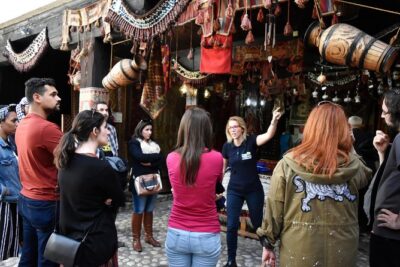
Private Walking Tour, Food Tasting and Bosnian Coffee in Sarajevo
Read our review →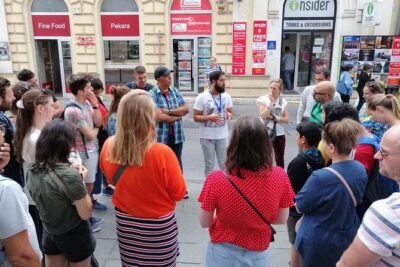

Delicious Sarajevo: Eat, Walk & Discover City Tour
Read our review →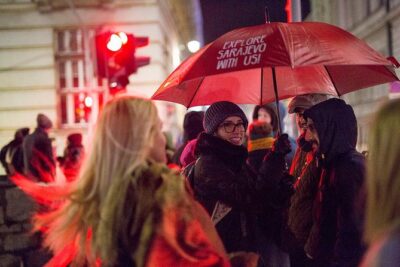
Sarajevo genuine walking tour: Steps through history
Read our review →Browse the lists this tour appears in