
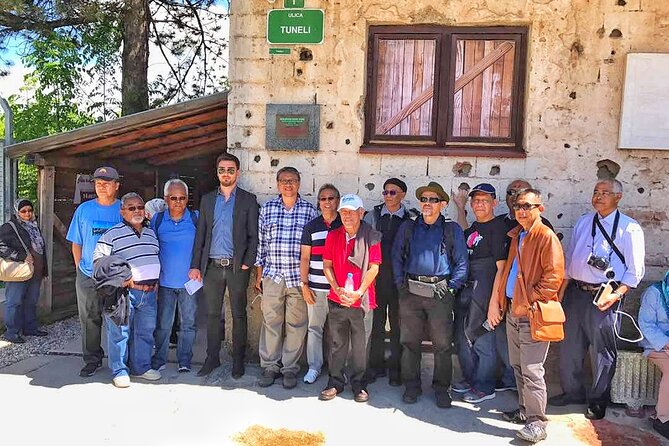
Reviewed · SARAJEVO WAR HISTORY TOURS
Sarajevo: A City Under Siege – War Tour With Tunnel Museum
Sarajevo’s Tunnel of Hope is the heart of this tour, a narrow wartime passage that kept the besieged city alive. From there, you’ll visit Sniper Alley, the Jewish Cemetery, the ruined Olympic bobsleigh track, and the Yellow Fortress, linking Sarajevo’s war years with its Olympic past and present-day views.
I like the small maximum of 15 people, which gives the guide room to explain difficult subjects without turning the visit into a moving lecture hall. I also like the mix of sites: the tunnel gives you a close, physical sense of the siege, while the mountain track and fortress show Sarajevo from different angles.
The main consideration is the extra €10.50 entrance fee for the Tunnel Museum. The price is otherwise strong at $40.81 per person, but this is an emotionally heavy tour, and the exposed war sites may not suit anyone looking for a light sightseeing outing.
Key points at a glance
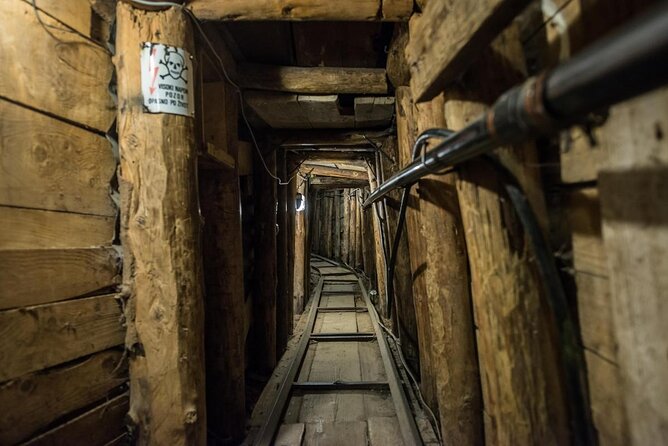
- The Tunnel of Hope anchors the tour: You see the passage that helped Sarajevo resist the siege and maintain a link with the outside world.
- Sniper Alley puts the city map into human terms: A short stop explains why crossing this area was so dangerous.
- The Jewish Cemetery has two stories: It is both one of southeastern Europe’s oldest Jewish cemeteries and a wartime sniper position.
- The Olympic bobsleigh track has a striking afterlife: Built for the 1984 Winter Olympics, it later sat on the frontline and is now marked by graffiti.
- The Yellow Fortress closes the route with a view: You get a broad panorama above City Hall after several hours of difficult history.
- An English-speaking guide is central to the experience: Edis and Elvis are specifically praised for clear explanations, warmth, and strong communication.
Why this Sarajevo war tour matters
Sarajevo can look peaceful at first glance. Its old streets, river, mosques, churches, and cafés give little warning of the years when the city was surrounded and cut off. This tour helps you read the city differently.
You move from a tunnel built for survival to roads remembered as deadly crossings, then up the slopes above the old center. The route is not just a list of war locations. It shows how the siege affected transport, housing, public space, and daily movement.
I find that especially useful if you have only a short stay in Sarajevo. You can see several important places in one half-day, but the guide’s explanation is what connects them. Without that context, a cemetery may look like a cemetery, a graffiti-covered track like an abandoned sports site, and a busy road like any other road.
The experience runs for about three to four hours and begins at noon. It starts and ends at House of Spite, Veliki Alifakovac 1, near Sarajevo’s old center. An air-conditioned vehicle takes you between the stops, and bottled water is included.
More siege and war history walks in Sarajevo
- Fall of Yugoslavia, Sarajevo War Tour with Tunnel of Hope Museum and Frontlines
★ 5.0 · 1,314 reviews - Tunnel Museum: Bosnian & Yugoslav Wars Tour with War Veteran
★ 5.0 · 551 reviews - Sarajevo War Tour: A Veteran’s Story of the Siege (fees included)
★ 5.0 · 326 reviews
The Tunnel of Hope, Sarajevo’s most important stop
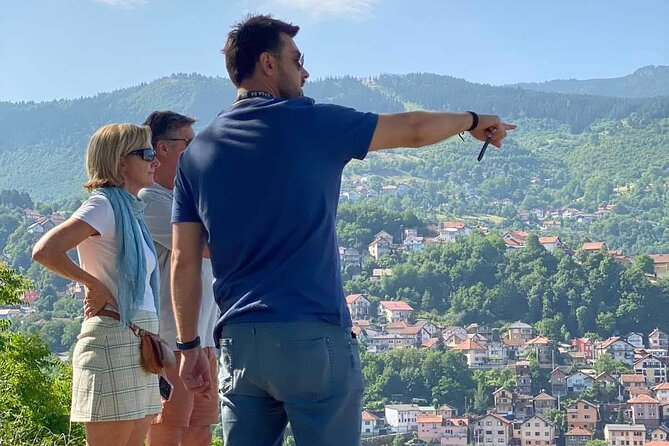
The Sarajevo War Tunnel, also called the Tunnel of Hope, receives about an hour of the tour. Admission is not included in the advertised price, so you should budget an extra €10.50 per person for the museum entrance.
This is the stop that gives the tour its physical focus. You are not simply looking at a photograph or a memorial plaque. You are learning about a passage created during the siege to help people, supplies, and vital connections move in and out of Sarajevo.
The name Tunnel of Hope says a lot. The passage represents resistance, but also practical survival. It shows the kind of work people undertook when ordinary routes were blocked and the city’s residents faced a long siege.
I would give this stop your full attention. The museum fee is a separate cost, but it is also the part of the tour most closely tied to the experience’s central subject. If you are deciding where your money goes, this is the admission that matters most.
The tunnel visit may feel brief compared with the weight of the story. That is normal. The power comes from the contrast between its modest physical scale and the huge role it played during the siege.
Sniper Alley and the danger of crossing Sarajevo
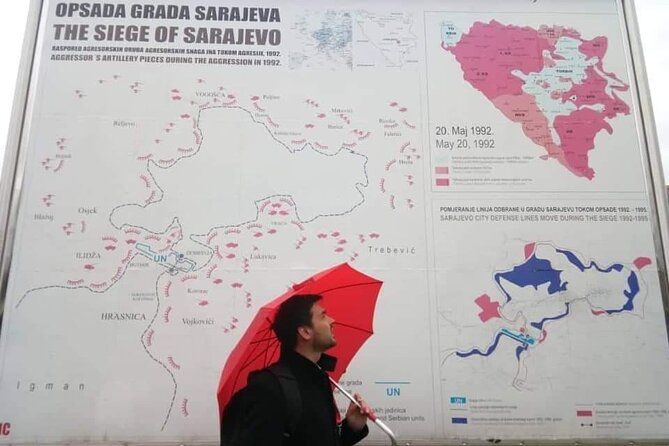
The next stop lasts about 30 minutes and is free. Sniper Alley was regarded as one of the most dangerous areas to cross during the siege of Sarajevo.
This stop works best when your guide explains how the city’s roads and buildings shaped everyday risk. A street that now functions as part of modern Sarajevo once represented exposure and fear. The name itself has entered public memory because it captures how ordinary movement became dangerous.
You should not expect a museum-style display here. The value comes from standing in the area and hearing the guide place it within the city’s wartime story. Edis and Elvis are praised for explaining not only the past but also what it is like to live in modern Sarajevo, which helps prevent the stop from becoming a frozen history lesson.
Because the visit lasts only half an hour, listen closely and ask questions if the guide allows time. This is one of the places where a clear local explanation matters more than a long stop.
The Jewish Cemetery, a place with two histories
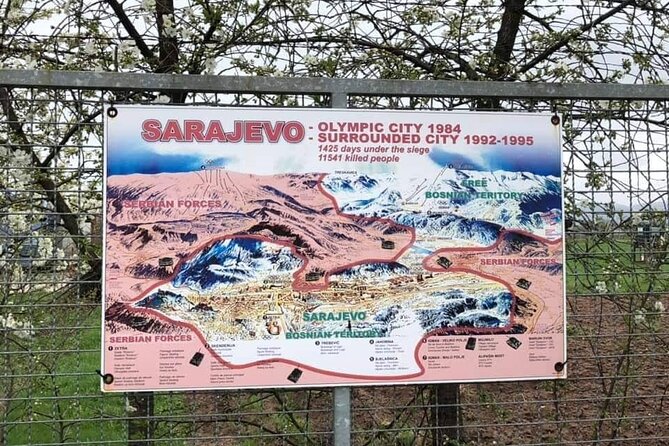
The Jewish Cemetery receives another 30-minute visit, with no entrance fee listed. It is described as one of the oldest Jewish cemeteries in southeastern Europe and also served as a sniper position during the Bosnian War.
That combination makes the stop particularly important. You are looking at a site with a long religious and cultural past, while also confronting the damage and military use connected with the war.
I like this part of the route because it broadens the story. Sarajevo’s wartime history is not limited to tunnels, soldiers, and roads. It also touches sacred places and the many communities that shaped the city.
Give yourself time to take in the setting rather than treating the cemetery as a quick photo stop. The tour’s strength is in these contrasts: old and new, peaceful and dangerous, beautiful and painful.
A few more things to do around Sarajevo
- Tunnel of Hope Museum Tour
★ 5.0 · 38 reviews - Cable Car Olympic Tour With Museum
★ 5.0 · 17 reviews - SARAJEVO CONCEPTUAL ART TOUR (galleries, art and arhitecture)
★ 5.0 · 7 reviews
The Olympic bobsleigh track above the Old Town
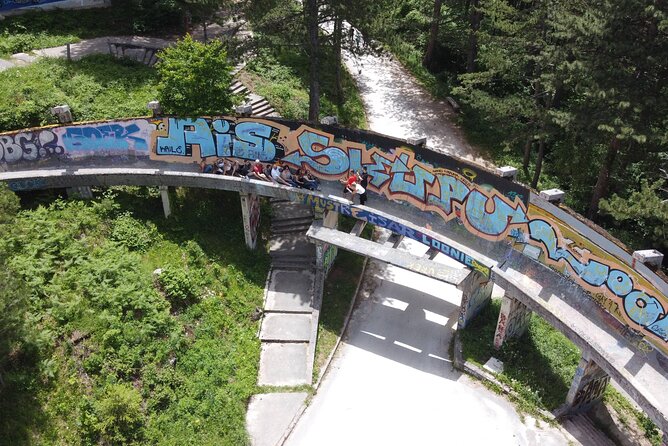
The Sarajevo Olympic bobsleigh and luge track receives about an hour. It sits on Mount Trebević above the Old Town and was built for the 1984 Winter Olympics.
The track is now an abandoned site covered with graffiti, but its wartime story gives it another layer. During the Bosnian War, it was located on the frontline. The same place that once represented international sport and Sarajevo’s moment in the world spotlight later became tied to conflict.
This is likely to be one of the most visually memorable stops. The graffiti and abandoned structure create a stark setting, but the guide’s explanation keeps the visit from becoming merely an urban-exploration excursion.
You should also expect the mood to shift here. After the enclosed tunnel and the direct danger associated with Sniper Alley, the mountain setting offers more space and a different kind of reflection. The stop connects Sarajevo’s Olympic identity with the scars left by war.
The track is free to visit according to the tour details. The one-hour allocation gives you enough time to see the site without rushing through it.
The Yellow Fortress and Sarajevo from above
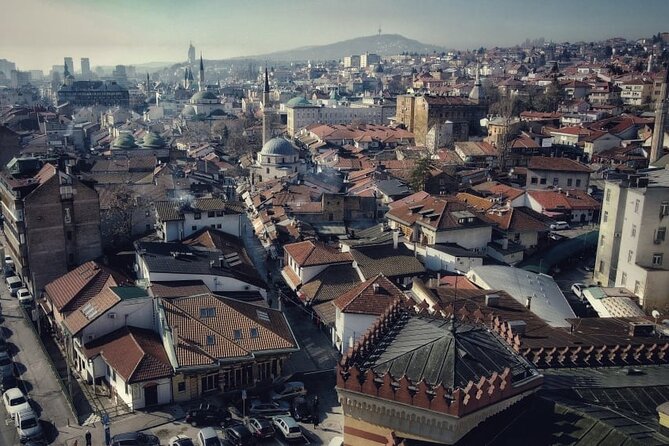
The final stop is the Yellow Fortress, with about 15 minutes for the visit. It sits above City Hall and is described as one of the city’s best panoramic points.
After several stops focused on siege routes, sniper positions, and wartime survival, this view gives you a chance to understand Sarajevo’s setting. You can look across the city and see how the surrounding hills relate to the built-up center.
The visit is short, so this is a quick viewpoint rather than a long sightseeing break. Still, it is a smart way to finish. The panorama helps you place the earlier stops within the city rather than remembering them as separate locations.
Bring your attention back to the whole route here. From above, Sarajevo’s geography helps explain why the surrounding hills mattered so much during the siege and why movement through the city was so difficult.
The guide can make or break the experience
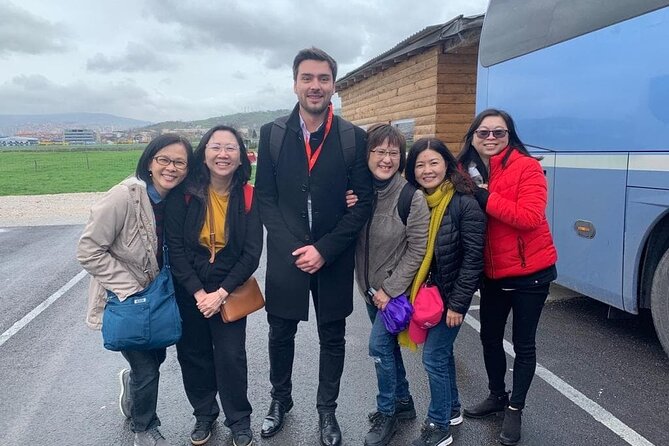
This tour depends heavily on the English-speaking guide. The vehicle gets you around efficiently, but the subject is too complex for a simple drive-by visit.
The guide names Edis and Elvis are associated with particularly strong feedback. Edis is praised for making the tour informative while handling the sadness of what Sarajevo endured. Elvis is praised for his knowledge, warmth, and communication, including in Portuguese-language feedback.
The useful point for you is not just the praise itself. It is the kind of guiding this route needs. You want clear explanations, a respectful tone, and an ability to connect the siege with modern Sarajevo.
The guide also helps explain what you are seeing now. That is important at Sniper Alley and the Olympic track, where the present-day scene may not immediately reveal the past. A good explanation turns ordinary streets and abandoned structures into meaningful places.
The tour has a maximum of 15 people. That is large enough to keep the price reasonable, but small enough to feel more personal than a full coach excursion. You may still be sharing the guide’s attention, so stay near the group and listen during the shorter stops.
Is $40.81 a fair price?
At $40.81 per person, the tour offers solid value if you want several distant sites covered in one outing. Transport, an air-conditioned vehicle, bottled water, and an English-speaking guide are included.
The extra tunnel admission brings the actual cost higher. The listed entrance fee is €10.50 per person, and tips are not included. You should add both points when comparing this tour with other Sarajevo activities.
Even with the museum charge, the price makes sense for anyone who values explanation and transport. The route includes the Tunnel of Hope, Sniper Alley, the Jewish Cemetery, Mount Trebević’s Olympic track, and the Yellow Fortress. Visiting all of these independently would take more planning and may be less clear without a guide.
The value is less certain if you prefer slow, self-guided sightseeing or do not want to spend several hours on wartime history. The tour is not designed as a general city highlights trip. Its focus is specific and serious.
Timing, meeting point, and practical details
The tour begins at 12:00 p.m. at House of Spite, Veliki Alifakovac 1, Sarajevo 71000. It returns to the same meeting point at the end.
A mobile ticket is offered, and confirmation is provided at booking. The activity is near public transportation, and the details state that most people can participate.
The vehicle and bottled water are helpful because the stops are spread across the city and the mountain above it. You will spend time moving between places, but the route is still compact enough to fit into a half-day.
The information does not give a detailed breakdown of walking surfaces, weather arrangements, or the precise amount of walking at each stop. If those details matter to you, ask the provider before booking rather than assuming every location will be equally easy to access.
Free cancellation is available if you cancel at least 24 hours before the start time. A cancellation made less than 24 hours in advance is not refundable, and changes inside that period are not accepted.
Who should book this experience?
I would choose this tour if you want Sarajevo’s wartime story explained by a local English-speaking guide rather than pieced together on your own. It suits first-time visitors, people with limited time, and anyone interested in how the siege affected ordinary movement through the city.
It also fits people who want more than one type of site. You get a museum and tunnel, urban roads, a historic cemetery, an abandoned Olympic facility, and a city viewpoint.
I would be more cautious if you want a cheerful sightseeing day. The subject is sad, and the tour deals directly with danger, loss, and survival. The Yellow Fortress adds a calmer finish, but it does not change the central purpose of the experience.
Should you book the Sarajevo War Tour?
Yes, if you want a focused and well-organized introduction to Sarajevo’s recent past. The combination of the Tunnel of Hope, Sniper Alley, Jewish Cemetery, Olympic bobsleigh track, and Yellow Fortress gives you a strong sense of how war, sport, faith, geography, and daily life overlap in this city.
Book it with the tunnel fee in mind, and choose it for the guide-led context rather than for sightseeing alone. If Edis or Elvis leads your departure, you can expect the kind of clear, personal explanation this difficult subject requires. For $40.81 plus the museum admission, it is a worthwhile half-day choice for a serious look at Sarajevo.
FAQ
How long does the Sarajevo War Tour last?
The tour lasts approximately three to four hours.
What time does the tour begin?
It begins at 12:00 p.m.
Where does the tour start and end?
It starts at House of Spite, Veliki Alifakovac 1, Sarajevo, and ends back at the same meeting point.
Is the Tunnel Museum entrance included?
No. The Tunnel Museum entrance fee is listed as €10.50 per person and is paid separately.
What is included in the tour price?
The price includes an air-conditioned vehicle, bottled water, and an English-speaking guide.
How many people can join the tour?
The activity has a maximum group size of 15 people.
Can I cancel for a full refund?
Yes, if you cancel at least 24 hours before the experience start time. Cancellations made less than 24 hours in advance are not refunded, and changes during that period are not accepted.
Just added around Sarajevo
- Private Full Day Safari Tour★ 5.0 · 8 reviews
- Sarajevo Under Siege: A War History Tour★ 5.0 · 10 reviews
- Travnik, Jajce, Pliva Lakes & Mills –Medieval & Ottoman Bosnia Full Day Tour★ 5.0 · 3 reviews
- Mysterious Visoko Pyramids Driving and Walking Tour★ 5.0 · 7 reviews
- Walking Tour in Sarajevo★ 5.0 · 3 reviews
- Secret Tito’s Bunker/Konjic Tour★ 5.0 · 4 reviews
- Sarajevo to/from Zagreb Transfer Day Tour (North-central Bosnia)★ 5.0 · 4 reviews
- Tour of Herzegovina – From Sarajevo★ 5.0 · 3 reviews
Sarajevo War History Tours, compared.
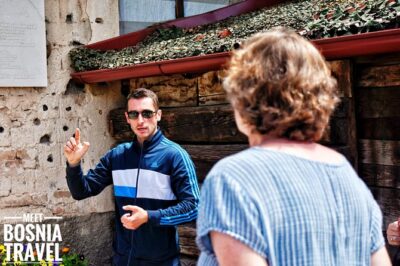
Fall of Yugoslavia, Sarajevo War Tour with Tunnel of Hope Museum and Frontlines
Read our review →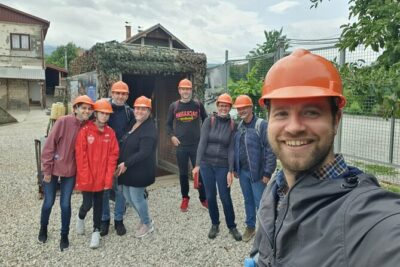
Tunnel Museum: Bosnian & Yugoslav Wars Tour with War Veteran
Read our review →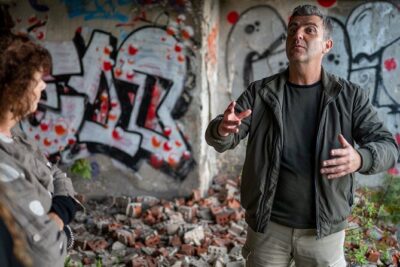
Sarajevo War Tour: A Veteran’s Story of the Siege (fees included)
Read our review →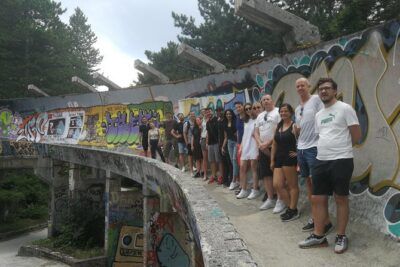
Break-up of Yugoslavia & The War in Mostar: Life Under Siege
Read our review →
Sarajevo Grand Tour: Old Town, War Tunnel, Olympic Sites & More
Read our review →
Times of Misfortune – Life Under Siege and the Tunnel of Hope
Read our review →Browse the lists this tour appears in