
Reviewed · MUSEUMS
SARAJEVO CONCEPTUAL ART TOUR (galleries, art and arhitecture)
Sarajevo’s art scene is not tucked away from the city’s painful past. It grows out of it. This small-group walk links former wartime scars, contemporary galleries, public sculpture, and city architecture in a way that gives Sarajevo more texture than a standard old-town stroll. I like the personal scale of the tour and the chance to enter places you could easily miss alone. I also like that guide Mak shares his own wartime experiences, not just dates and labels.
The main consideration is pace. With several stops packed into two to three hours, gallery visits may feel brief if you want long, quiet time with every artwork. The tour also focuses on contemporary and conceptual art, so it suits curious visitors more than anyone looking only for Bosnia’s Ottoman monuments.
Key points at a glance
- Brodac Gallery occupies a former prison: See contemporary Bosnian art in an old Austro-Hungarian building with a distinctly unusual past.
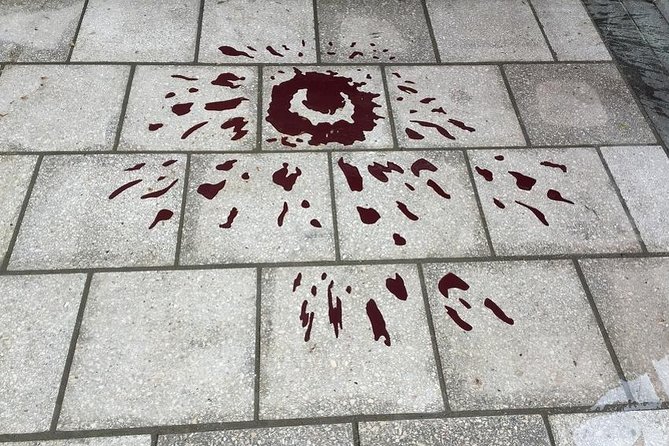
- Sarajevo Roses connect art and memory: Red resin fills mortar scars in the pavement along Ferhadija Street.
- Mak adds first-hand context: The guide shares his own experiences from the war and can help explain the city beyond its usual sightseeing route.
- The route includes three gallery settings: Brodac, Galerija Java, and Gallery Boris Smojo each offer a different feel.
- Public art carries serious weight: Veliki Park is home to the Srebrenica memorial sculpture Nermine, dođi.
- The $33.64 price covers more than directions: You are paying for access, interpretation, and an organized route through places that can be hard to connect on your own.
Why this art walk changes the way you see Sarajevo
Most first visits to Sarajevo focus on the old bazaar, mosques, Austro-Hungarian buildings, and the meeting point of East and West. Those sights matter, but this tour asks you to look at the city through another lens: how artists respond to war, memory, public space, and present-day life.
That makes the experience useful early in your stay. You begin at Đulagina 2 at 1:00 pm, then move through central Sarajevo on foot. The route finishes around Skenderija, so you are not simply returned to the starting point. You finish in a different part of town, close to the final gallery stop and the Festina Lente bridge.
I like that the route is not built around one large museum. Instead, it uses small galleries and outdoor works. You get a sense of how art operates in Sarajevo’s everyday setting, where a former prison, a pedestrian street, a park, and a bridge all become part of the story.
The group can include up to 15 people. That is small enough for questions and conversation, though it is not a private tour. Since the walk visits working gallery spaces, the exact exhibition on view at Brodac or Galerija Java may vary.
A few more things to do around Sarajevo
- Fall of Yugoslavia, Sarajevo War Tour with Tunnel of Hope Museum and Frontlines
★ 5.0 · 1,314 reviews - Tunnel Museum: Bosnian & Yugoslav Wars Tour with War Veteran
★ 5.0 · 551 reviews - Tunnel of Hope Museum Tour
★ 5.0 · 38 reviews
Brodac Gallery: art inside an old prison
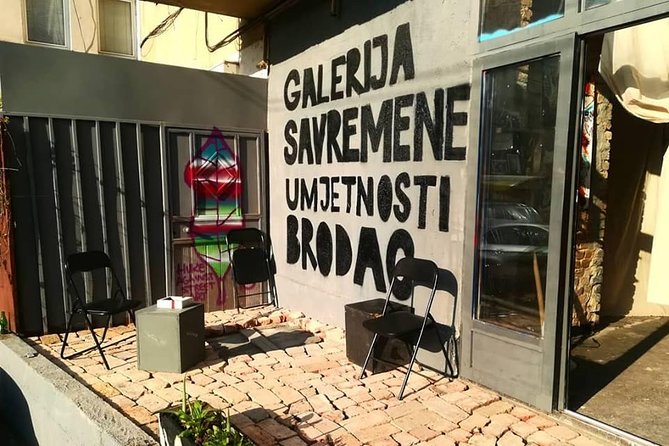
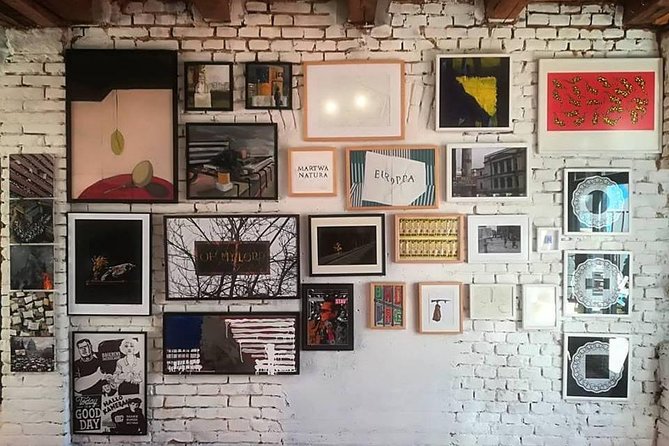
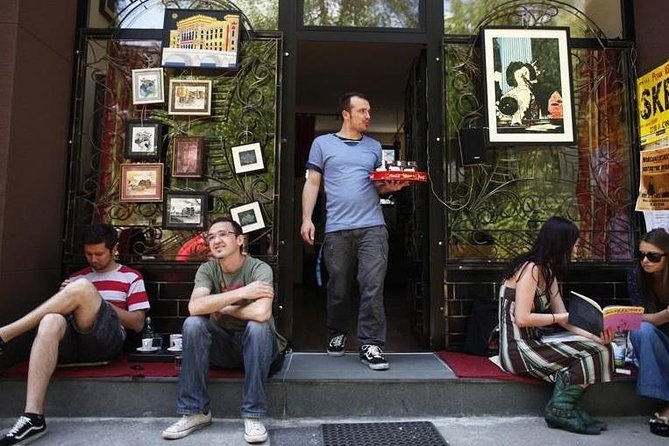
The first stop is Brodac Gallery, housed in an old building with a difficult past. During the Austro-Hungarian period, the building served as a prison. Today, its rooms have been turned into a cozy contemporary art space.
That contrast is one of the strongest ideas in the tour. You are not viewing Bosnian art in a neutral white box. The building itself carries memory, and its former use gives the gallery a mood that a newly built exhibition hall could not provide.
Brodac presents contemporary Bosnian exhibitions from time to time, so the specific works depend on the show. You might find painting, installation, sculpture, or other modern forms, but the tour is designed to help you think about the setting as much as the objects on the walls.
There is also local craft beer from Gelender. The listed visit lasts about 45 minutes, and admission is included. That gives you enough time to see the exhibition and absorb the space without turning the first stop into a rushed photo stop.
I would pay attention to Mak’s explanations here. A gallery like Brodac can be hard to read if you are used to traditional art museums. The value comes from asking what the work is doing, why it belongs in this building, and how it fits into Sarajevo’s current art scene.
Ferhadija Street and the Sarajevo Roses
From Brodac, the route moves onto Ferhadija, one of central Sarajevo’s main pedestrian streets. It runs between the area around Vječna Vatra and the old-town streets leading toward Gazi Husrev-Beg’s mosque and Sarači Street.
The street is easy to enjoy as an ordinary city walk, with shops and foot traffic around you. But the tour directs your attention to the pavement. Here you see Sarajevo Roses, concrete scars left by mortar explosions and later filled with red resin.
The marks resemble flowers. Their appearance is striking, but the meaning is not decorative. Each one records a shell explosion in a city that suffered thousands during the Siege of Sarajevo. The red filling turns a damaged patch of pavement into a public memorial.
This is a good example of why the tour works better with a guide. You could walk past the marks without understanding what they are. Even if you know about Sarajevo’s siege, seeing the scars in a normal pedestrian street brings the history close to daily life.
The stop lasts about 30 minutes and costs nothing beyond the tour itself. Wear shoes that are comfortable for walking on paved streets, and keep your attention on the ground as well as the buildings. The route is central and near public transportation, but the experience is primarily a walking tour.
Galerija Java and Sarajevo’s current art scene
Galerija Java is in the center of town at Titova 21. It has helped give Bosnian and international artists a place to show contemporary work in an attractive exhibition setting.
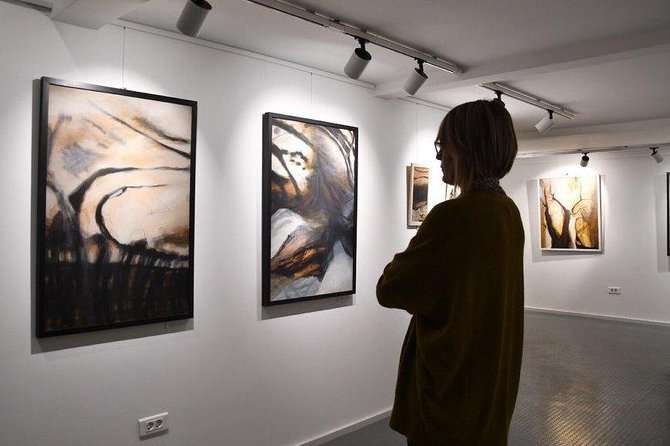
This stop shifts the mood from a gallery inside a former prison to a more established presentation space. Java works with artists in different media, so the display may feel broader than a single-style exhibition. The point is not to rush through a list of famous names. It is to see how Sarajevo’s art scene presents itself now.
The scheduled visit lasts about an hour, making it the longest indoor stop. That matters because modern art often needs time. A sculpture, installation, or conceptual piece can seem puzzling at first glance. With Mak there to explain the context and answer questions, you have a better chance of understanding what you are seeing without pretending that every work needs an obvious answer.
This is also where the tour’s access value becomes clear. A gallery visit on your own may be easy enough in theory, but you would need to know which spaces are open, find the address, and understand what you are looking at. The tour handles the route and provides a conversation around the art.
Still, keep your expectations realistic. This is not a large museum with a permanent collection and hours of independent browsing. The experience depends on the exhibition on view and on your interest in contemporary work.
Same base, a different kind of day out:
- Sarajevo: Mostar, Konjic, Blagaj Tekke, Pocitelj & Waterfall
★ 4.9 · 1,335 reviews - Sarajevo: Mostar, Konjic, Sufi House, Pocitelj & Kravice Falls
★ 5.0 · 1,179 reviews - ROSES OF SARAJEVO (Official WAR + CITY tour)- Story of a Survivor
★ 5.0 · 770 reviews - Sarajevo: Mostar, Konjic, Počitelj, Sufi House, & Waterfalls
★ 4.9 · 572 reviews
Veliki Park and the Srebrenica memorial
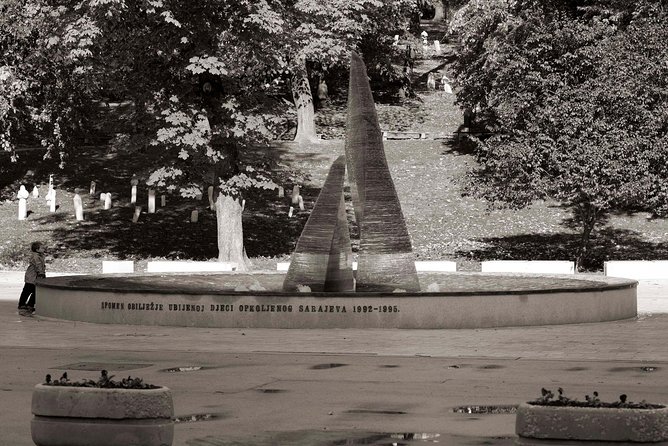
Veliki Park is one of Sarajevo’s best-known parks. Here the tour stops at Nermine, dođi, a sculpture by Bosnian artist and sculptor Mensud Kečo.
The work is dedicated to the genocide in Srebrenica. It uses concrete, reinforcement bars, plastic, and silicon to represent a distressing documented photograph from Srebrenica. The materials are rough and direct, not polished into something easy to admire from a distance.
This is the tour’s most emotionally difficult stop. It is public art, but it is not casual decoration. The sculpture asks you to confront the human cost of the war and the way artists preserve painful memory in public places.
Give yourself room to listen here. A guide can provide context, but no explanation will make the subject comfortable. That is part of the value. Sarajevo is not presented as a city that has neatly moved past its past. The city’s parks and sidewalks still hold reminders of what happened.
If you prefer light sightseeing, this part may feel heavy. If you want to understand how art and remembrance function in Bosnia and Herzegovina, it is essential.
Coffee, Gallery Boris Smojo, and Festina Lente
The final section takes you toward Skenderija and includes a coffee break at Gallery Boris Smojo. The stop is listed at about 30 minutes, with admission included.
This is a useful change of rhythm after the serious memorial in Veliki Park. A café break gives you time to ask Mak questions, compare the different galleries, and let the earlier subjects settle. The information provided does not specify the exact coffee arrangement or menu, so think of it as a pause within the route rather than a full meal stop.
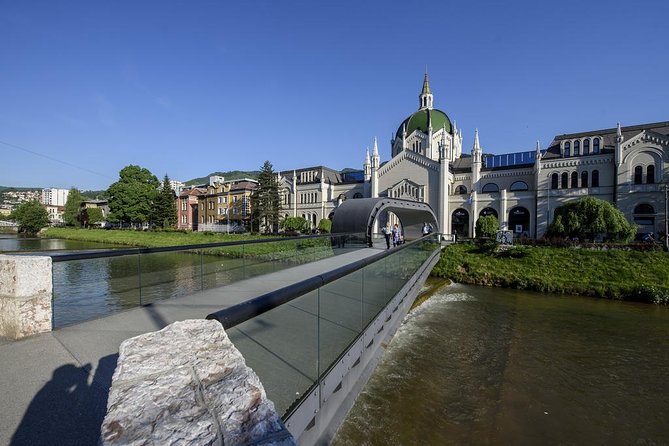
Afterward, you go to see the Festina Lente bridge. The name means make haste slowly, and the bridge is an unusual piece of Sarajevo architecture. Its looping form gives the route a final public-art and design element rather than ending inside a gallery.
The finish at Skenderija is practical. You can continue exploring that area, use public transportation, or make your way back toward the center. Since the endpoint differs from the meeting point, you should plan your next stop from Skenderija rather than assuming you will finish at Đulagina 2.
What Mak adds to the walk
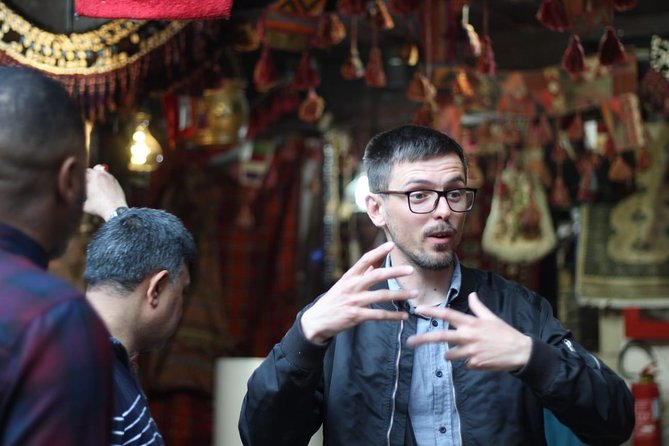
The guide can make or break a tour about conceptual art. Mak is specifically praised for being friendly, helpful, and willing to share his own experiences during the war. He also wrote a book, which he gave as a gift to one participant.
That detail suggests a guide who sees Sarajevo’s art and history as connected, not as separate subjects. You can ask about the works, but you can also ask how the city has changed, how public memorials are received, and what it is like to live around these reminders.
I would come prepared with questions. Ask about a work that puzzles you. Ask why one scar is marked as a Sarajevo Rose and another is not. Ask how artists work in Bosnia and Herzegovina today. A small group makes that kind of conversation possible.
The tour is offered in English. The guide’s personal perspective is a major reason to choose it, but remember that personal accounts are one part of understanding Sarajevo. The route works best when you combine Mak’s stories with your own observation of the buildings, pavement, and artworks.
Is $33.64 a fair price?
At $33.64 per person, this is not the cheapest way to spend a few hours in Sarajevo. You can walk Ferhadija, see public art, and visit central streets without paying for a guide.
The value comes from the connections. The fee includes a planned route, visits to three gallery settings, guidance in English, and the time saved finding the places yourself. Admission is included at Brodac Gallery, Galerija Java, and Gallery Boris Smojo. The Sarajevo Roses, Veliki Park sculpture, and Festina Lente bridge are free public sights, but the guide gives them meaning and context.
I consider the price reasonable if you are genuinely interested in modern art, architecture, or Sarajevo’s wartime memory. It is less useful if you want a broad city orientation or a tour centered on Ottoman and Austro-Hungarian landmarks.
The free cancellation policy also reduces the booking risk. You can cancel for a full refund at least 24 hours before the 1:00 pm start time. Changes or cancellations made within 24 hours are not refunded, and the tour requires a minimum number of participants. If the provider cancels because that minimum is not met, you are offered another option or a full refund.
Who should book this experience?
I would recommend this walk to visitors who have already seen Sarajevo’s main old-town sights or want to pair them with something less conventional. It suits anyone who enjoys small galleries, public sculpture, urban design, and serious historical subjects.
It is also a good choice for solo visitors. The group setting gives you company, while the limited size makes it easier to ask questions. Art students, photographers, architecture fans, and people seeking a more personal view of the city should find plenty to think about.
Families with older children may also enjoy it, especially if they are comfortable discussing war and genocide. Younger children may find the memorial sculpture and subject matter difficult, and the contemporary art stops may not hold their attention.
You should think twice if you dislike conceptual art or prefer a fast list of famous sights. The tour is not built around grand interiors or long panoramic views. Its rewards are smaller and more thoughtful: a resin-filled shell scar, an old prison turned gallery, a difficult sculpture, and a bridge that changes the way you read the city.
Should you book the Sarajevo Conceptual Art Tour?
Book it if you want Sarajevo to feel like a living city rather than a collection of historic monuments. The combination of Brodac Gallery, Galerija Java, Sarajevo Roses, Nermine, dođi, Gallery Boris Smojo, and Festina Lente creates a route with real variety.
The strongest reason to choose it is Mak’s personal approach. His wartime experiences and attention to questions add something you are unlikely to get from walking between the sites alone.
Skip it if your main goal is traditional art, major museums, or a relaxed sightseeing walk with little emotional weight. For the right audience, though, this is a thoughtful use of two to three hours and a practical way to meet Sarajevo’s contemporary side.
FAQ
Where does the Sarajevo Conceptual Art Tour start?
The tour starts at Đulagina 2, Sarajevo 71000, Bosnia and Herzegovina.
What time does the tour begin?
The scheduled start time is 1:00 pm.
Where does the tour finish?
The tour ends in Skenderija, Sarajevo 71000.
How long does the experience last?
The experience lasts approximately two to three hours.
Is the tour offered in English?
Yes. The tour is offered in English.
How large is the group?
The tour has a maximum of 15 participants.
What galleries are included?
The route includes Brodac Gallery, Galerija Java, and Gallery Boris Smojo. Admission is included at these gallery stops.
Can I cancel for a full refund?
Yes. You can cancel for a full refund at least 24 hours before the experience start time. Cancellations or changes made less than 24 hours before the start are not refunded.
Just added around Sarajevo
- Private Full Day Safari Tour★ 5.0 · 8 reviews
- Sarajevo Under Siege: A War History Tour★ 5.0 · 10 reviews
- Mysterious Visoko Pyramids Driving and Walking Tour★ 5.0 · 7 reviews
- Walking Tour in Sarajevo★ 5.0 · 3 reviews
- Travnik, Jajce, Pliva Lakes & Mills –Medieval & Ottoman Bosnia Full Day Tour★ 5.0 · 3 reviews
- Secret Tito’s Bunker/Konjic Tour★ 5.0 · 4 reviews
- Sarajevo to/from Zagreb Transfer Day Tour (North-central Bosnia)★ 5.0 · 4 reviews
- Tour of Herzegovina – From Sarajevo★ 5.0 · 3 reviews
Museums, compared.
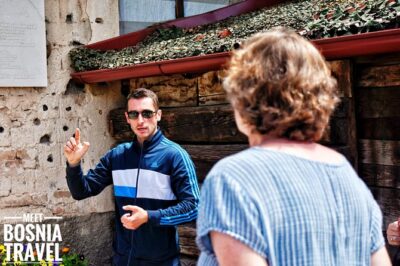
Fall of Yugoslavia, Sarajevo War Tour with Tunnel of Hope Museum and Frontlines
Read our review →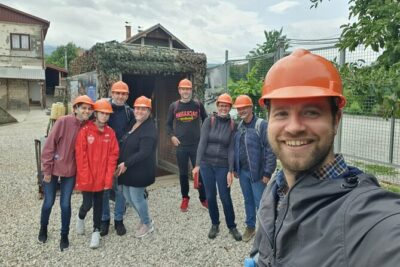
Tunnel Museum: Bosnian & Yugoslav Wars Tour with War Veteran
Read our review →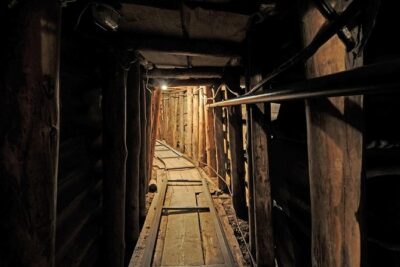
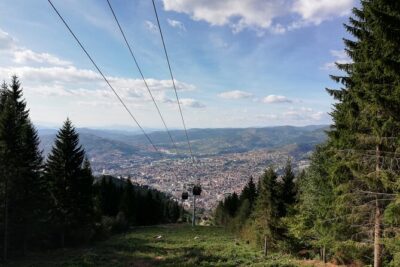
Browse the lists this tour appears in