
Reviewed · YUGOSLAV HISTORY TOURS
The Death of Yugoslavia Tour in Mostar
The most striking thing about the Death of Yugoslavia Tour in Mostar is that it takes you away from the postcard center and into forgotten places that still carry the marks of a vanished country. You’ll hear how Tito’s socialist experiment worked, why Yugoslavia broke with Stalin, and how economic trouble and nationalism led to war.
I like two things right away: the guide does the driving, so you can focus on the story, and the tour uses music and personal memories to make political history easier to follow. Guides including Marko, Miran, Dario, Marin, and Sebi are praised for clear storytelling, humor, and useful advice about Bosnia beyond the tour.
The main consideration is simple: the sites are abandoned, worn, and sometimes bleak. If you want polished monuments and pretty views, this may feel disappointing. The tour’s value lies in the explanation and atmosphere, not in grand attractions.
Key points to know before booking
- Four secret locations: The stops are not fully revealed in advance, adding a sense of discovery but giving you less chance to judge the sights beforehand.
- A history lesson with local voices: Guides explain Tito’s Yugoslavia, the Cold War, the 1990s war, and Bosnia today, often adding family or childhood memories.
- Small-group transport: The maximum group size is 16, with round-trip transport from the iHouse Travel meeting point in Mostar.
- A serious subject made approachable: Music, humor, stories about brands and daily life, and clear explanations help put complicated events in order.
- About 150 minutes at 5 p.m.: The afternoon start gives you a useful history option after sightseeing in Mostar’s old town.
- Best for curious history-minded visitors: You should be comfortable with abandoned sites, war history, and discussion of political problems that remain current.
Why this Mostar tour is different
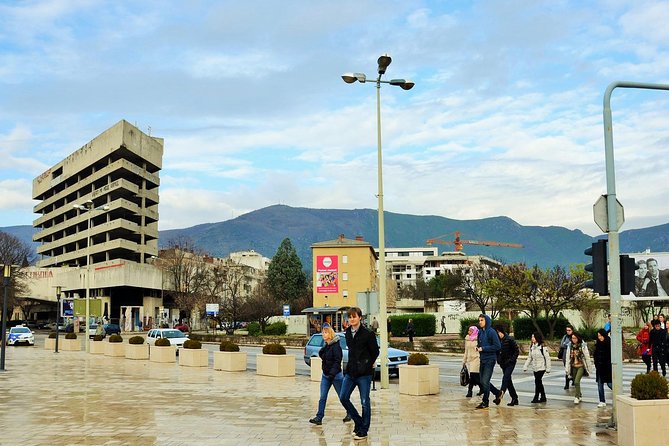
Mostar is often presented through its famous bridge, stone lanes, river, and nearby waterfalls. Those places deserve your time, but they show only one part of the city. This tour asks you to look at Mostar as a former Yugoslav city shaped by socialism, industrial growth, military planning, political division, and war.
The format helps. Instead of spending two and a half hours in one museum or listening to a long talk in a room, you travel between four locations. The drive becomes part of the lesson. On the road, the guide moves from one period to the next, then uses each stop to give the subject a physical setting.
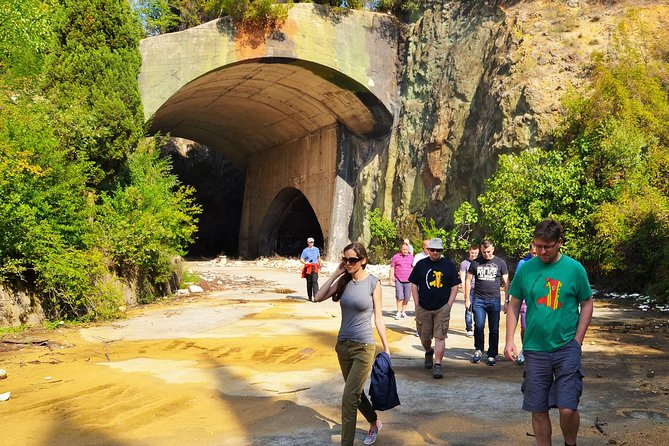
The locations are kept secret. That can make the outing feel more like an investigation, but it also means you should not book it expecting a standard sightseeing route. The company deliberately chooses decaying and overlooked places. Their condition is part of the message: Yugoslavia’s ideals, industries, military concerns, and public spaces did not simply vanish from a textbook. Some remain as damaged structures and neglected memorials.
The tour is conducted in English and is limited to 16 people. That is small enough for a more personal explanation than you would get on a large coach outing. The guide is both driver and storyteller, so the quality of the experience depends heavily on the person leading your group. Marko, Miran, Dario, Marin, and Sebi are among the guides associated with especially warm praise for their humor, clarity, passion, and personal stories.
More Yugoslav-era history tours in Mostar
- Break-up of Yugoslavia & The War in Mostar: Life Under Siege
★ 5.0 · 136 reviews - Fall of Yugoslavia, Sarajevo War Tour with Tunnel of Hope Museum and Frontlines
★ 5.0 · 1,314 reviews - Tunnel Museum: Bosnian & Yugoslav Wars Tour with War Veteran
★ 5.0 · 551 reviews
Stop one: Gornje Gnojnice and Yugoslavia’s Cold War fear
From the iHouse Travel office at Onešćukova 25, you set out toward the first secret location in Gornje Gnojnice. The opening drive covers the Second World War and the creation of Socialist Yugoslavia, then moves into one of the country’s most revealing political breaks.
After the Second World War, Yugoslavia under Josip Broz Tito followed its own socialist path. In 1948, Tito broke with Stalin and the Soviet Union. That split left Yugoslavia politically isolated and deeply suspicious of internal enemies. The tour connects this period to the Informbiro era, when fear of Soviet influence and accusations of disloyalty helped create a tense atmosphere.
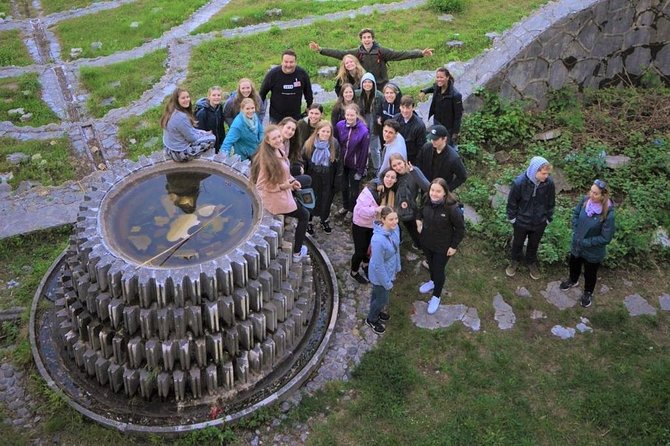
The stop also deals with militarization during the 1950s. You will not be shown a glossy Cold War museum. Instead, you visit a secret or little-known place chosen for its connection to that period. The worn setting may not look impressive, but it gives the subject an unsettling quality. You can better understand why a government that promoted unity and self-management also built systems shaped by secrecy and fear.
This part works best if you arrive with an open mind. The guide’s explanation is more important than the physical site. If you judge the stop only by its appearance, you may come away thinking it is underwhelming. If you treat it as evidence of a troubled period, the rough surroundings make more sense.
Stop two: Rodoč and ordinary life under Tito
The second location is in Rodoč, where the focus shifts from state anxiety to the everyday hopes and routines of Yugoslav citizens. This is one of the tour’s most useful changes in tone. Political history can become a parade of leaders and dates. Here, you hear about what people wanted from life.
The guide discusses Tito’s personal life, political achievements, and effort to build a form of socialism suited to Yugoslavia rather than copied directly from Moscow. You then move into Youth Work Actions, a major feature of Yugoslav civic life, and the heavy industrial growth of the 1950s and 1960s.
The subject is not treated as simply good or bad. Industrialization created jobs and helped modernize the country, but it also shaped cities and communities around factories and state priorities. The story gives you a way to think about the hopes attached to Yugoslavia, especially the belief that a common country could offer security, work, education, and a shared future.
The final part of this stop is lighter and more familiar. You hear about popular culture in the 1970s and 1980s: local brands, music, cars, and lifestyle. This is where the tour becomes especially accessible. You may not know the political structure of Yugoslavia, but you can understand why people remember particular products, songs, and forms of entertainment.
Music is used during the tour to reflect changing moods and attitudes. That is a smart choice. A song can communicate pride, nostalgia, tension, or loss more quickly than another list of political facts. Guides also add stories from their own upbringing or from their families, giving you a sense of how large events affected regular households.
Stop three: Španski trg and the collapse of a country
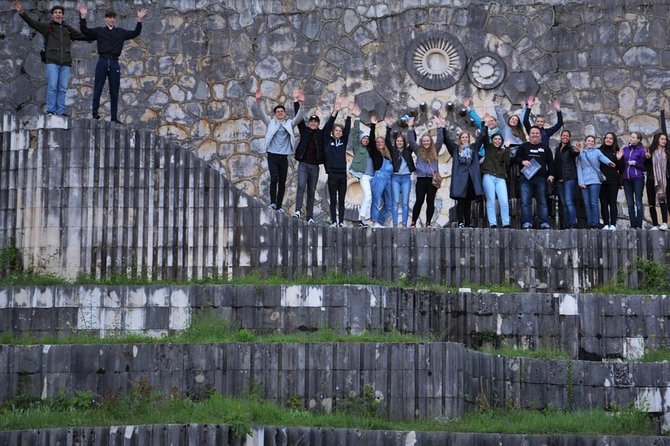
The third section takes place around Španski trg and deals directly with Yugoslavia’s final decades. The guide first covers the 1984 Sarajevo Winter Olympics, a moment often remembered as a high point of confidence and international attention.
The Olympics help explain why the 1980s are sometimes described as the golden era of Yugoslav socialism. But the tour does not leave the story in that comfortable place. It then turns to economic depression, rising nationalisms, and the political pressures that pulled the country apart.
You hear how the wars began in Slovenia and Croatia before reaching Bosnia and Herzegovina a year later. Bosnia became the most complex and destructive part of the conflict, with communities divided and the war causing enormous loss of life and destruction.
This section has real value for anyone who knows the broad outline of the Yugoslav Wars but struggles to connect the events. The guide’s job is to place the war inside the longer story of the country’s creation, its successes, its fears, and its unresolved tensions. The aim is not to reduce the conflict to one cause or one villain. Economic decline and nationalism are discussed together, along with the failure of the Yugoslav idea.
You should expect this portion to be serious. The tour discusses death, destruction, and the consequences still felt in Bosnia and Herzegovina. A guide may use a personal or family story to explain what the period meant at ground level. That can make the history more direct, but it also means the experience is not a detached academic lecture.
A few more things to do around Mostar
- From Dubrovnik: Mostar and Kravica Waterfall Day Trip
★ 4.7 · 4,709 reviews - Dubrovnik: Kravica Waterfalls, Mostar and Pocitelj Day Trip
★ 4.5 · 3,045 reviews - Dubrovnik: Mostar & Kravica Waterfalls Day Trip
★ 4.8 · 1,970 reviews - Dubrovnik: Mostar and Kravice Waterfalls Small-Group Tour
★ 4.8 · 1,194 reviews
Stop four: the Partisan Cemetery and Bosnia today
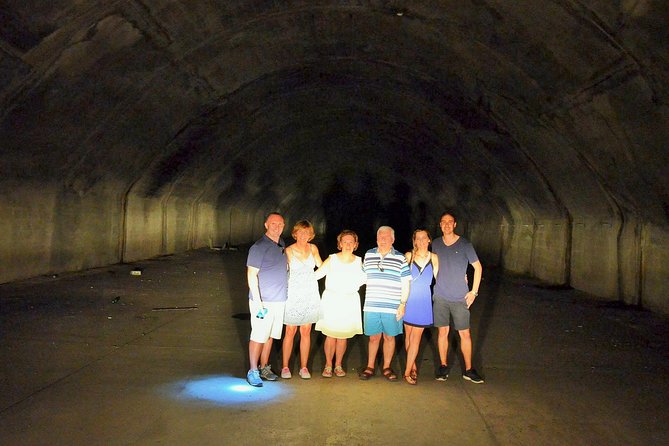
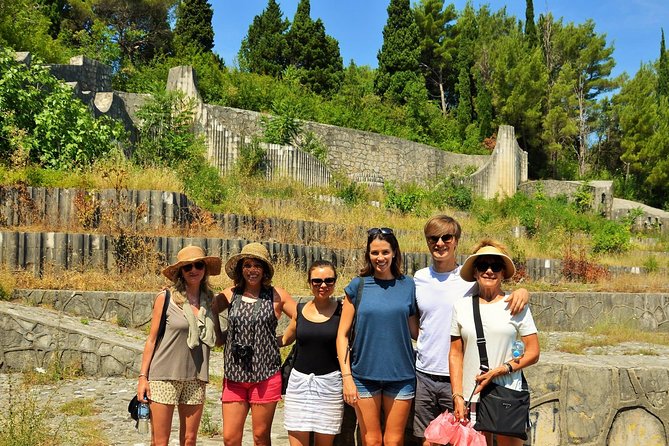
The final stop is the Partisan Cemetery, a fitting place to consider memory, politics, and the present. The site connects to the legacy of the anti-fascist Partisan movement and to the broader Yugoslav idea of a shared state. Its condition also raises questions about what happens to public memory after a country breaks apart.
On the way there, the discussion turns to present-day Bosnia and Herzegovina. You are introduced to the country’s political structure and the problems created by its postwar arrangements. The guide then places Bosnia within the question of possible European Union membership and the need for economic, cultural, and political recovery.
This is not an easy subject to explain in a short tour. The country’s institutions are complicated, and a 30-minute stop cannot answer every question. Still, it gives you a framework for understanding why Bosnia can feel both hopeful and stuck. You leave with a clearer sense that the war is not merely a closed chapter. Its political and social effects remain part of daily life.
The Partisan Cemetery also brings the tour back to its central idea. You see the remains of an earlier vision of unity while hearing about a modern country trying to find a workable future. That contrast gives the final stop more weight than a simple sightseeing visit would have.
What the guides do best
The strongest part of this experience is the guide’s storytelling. Marko is praised for explaining Yugoslavia, the war, and its breakup in a clear way, while also adding humor and personal stories. Miran is noted for connecting the places to the history and using music to set the mood. Dario is especially effective at making complicated Balkan history easier to understand, and Marin is described as passionate and relatable.
Sebi brings another useful quality: along with explaining the tour’s subject, he offers practical advice about Bosnia and talks about growing up in the region. That kind of local perspective can help you see the country as more than a collection of war sites and historic buildings.
You should still remember that guides differ. The tour’s structure is strong, but the delivery will depend on who leads your group. A lively storyteller can make a damaged site fascinating. A less engaging presentation would leave the physical locations looking bare.
Is $47.17 good value?
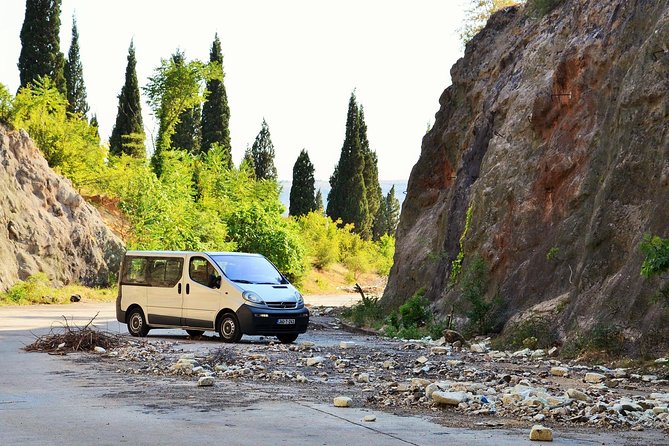
At $47.17 per person, this is not the cheapest way to spend two and a half hours in Mostar. The price becomes easier to justify when you consider what is included: transport between several out-of-the-way places, a driver-guide, local taxes, and a carefully connected history lesson.
You are not paying for costly admission tickets. The sites themselves are free. You are paying for access, transport, interpretation, and the guide’s ability to connect the locations. That distinction matters. If you want famous monuments or carefully maintained exhibits, the price may feel high. One dissatisfied participant considered the physical sites poor value, even while praising the guide.
There is also a practical point for solo bookers. The experience requires at least two people to operate, and a single supplement may apply if you book alone. Ask about that cost before confirming if you are traveling by yourself. The maximum group size is 16, so the actual value will also depend on how full the departure is.
Timing, meeting point, and what to expect
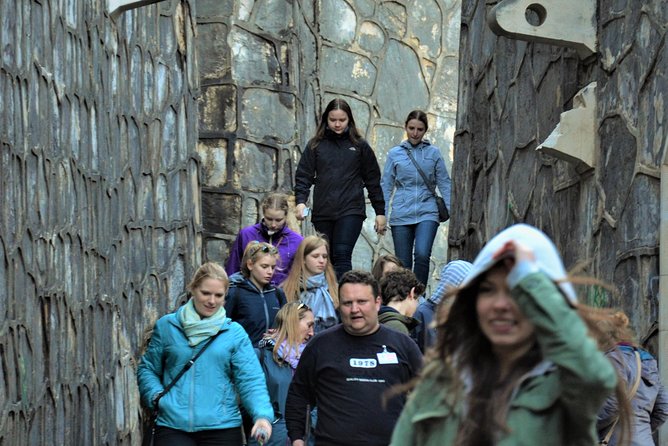
The tour starts at 5 p.m. at iHouse Travel, Onešćukova 25, Mostar 88000. It ends back at the same meeting point. The listed duration is about two hours and 30 minutes, although the actual outing can run slightly longer.
You should arrive ready for a drive rather than a long walk through the old town. Round-trip transport is included from the meeting point, but hotel pickup and drop-off are not included unless you select that option. Food and drinks are also not provided, so plan around the late-afternoon start.
The tour is offered in English. Children must be accompanied by an adult, and most people can take part. Confirmation is provided at booking, and free cancellation is available if you cancel at least 24 hours before the start time. Changes or cancellations inside that window are not accepted for a refund.
Who should book this experience?
I would choose this tour if you want to understand Mostar beyond its architecture and river views. It suits you especially well if you have a passing interest in Tito, the Cold War, socialism, the Yugoslav Wars, or the political problems Bosnia faces today.
It is also a good choice if you have already visited the old town and want something less polished and more serious. The tour adds context to the city without pretending that history is tidy. You may find yourself thinking about it long after the final stop.
I would skip it if you want a relaxed afternoon of scenic stops, attractive buildings, or easy entertainment. The abandoned locations can look rough, and the war section may feel heavy. You also need to accept that four stops in 150 minutes means the explanations will be broad rather than exhaustive.
Should you book the Death of Yugoslavia Tour?
Book it if the guide’s story matters more to you than the attraction itself. This is a history tour built around places that many people would pass without noticing. Marko, Miran, Dario, Marin, and Sebi have each brought strong communication and personal insight to the experience, and the use of music gives the presentation an unusual human touch.
For the best value, book with at least one other person, confirm the pickup arrangement, and expect the sites to be decayed rather than restored. If you do that, the tour offers a thoughtful way to understand how Yugoslavia was built, why many people believed in it, how it fell apart, and why Bosnia and Herzegovina still lives with the results.
FAQ
Where does the Death of Yugoslavia Tour start?
The tour starts at iHouse Travel, Onešćukova 25, Mostar 88000, Bosnia and Herzegovina.
What time does the tour begin?
The scheduled start time is 5 p.m.
How long does the tour last?
The experience lasts approximately two hours and 30 minutes, or about 150 minutes.
Does the tour return to the starting point?
Yes. The activity ends back at the iHouse Travel meeting point.
How many sites does the tour visit?
The tour visits four locations connected with Yugoslavia, the Cold War, the Yugoslav Wars, and Bosnia and Herzegovina today. The exact sites are kept secret until the tour.
Is hotel pickup included?
Hotel pickup and drop-off are not included unless you select that option. The standard meeting point is iHouse Travel.
What is the cancellation policy?
You can cancel up to 24 hours before the experience starts for a full refund. Cancellations or changes made less than 24 hours before the start time are not accepted for a refund.
Just added around Mostar
- Dubrovnik: Private Day-Trip to Mostar – Bosnia & Herzegovina★ 5.0 · 7 reviews
- Mostar & Beyond: Kravica Falls, Skywalk, Blagaj Tekke, Pocitelj★ 5.0 · 15 reviews
- Dubrovnik: Private Tour to Mostar and Kravice Waterfalls★ 4.4 · 11 reviews
- From Dubrovnik: Mostar and Kravice Waterfalls Private Tour★ 5.0 · 19 reviews
- Mostar Ancient Town★ 5.0 · 13 reviews
- Blagaj Tekija & Buna River Half-Day Tour from Mostar★ 5.0 · 17 reviews
- From Dubrovnik: Mostar and Kravica falls Small Group Tour★ 4.8 · 19 reviews
- Mostar & Međugorje Full-Day Private Tour from Dubrovnik★ 4.8 · 16 reviews
Yugoslav History Tours, compared.
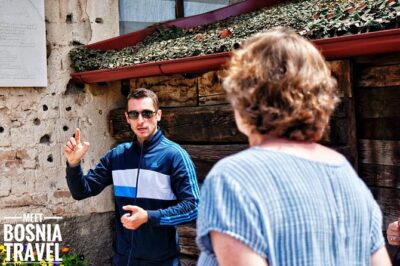
Fall of Yugoslavia, Sarajevo War Tour with Tunnel of Hope Museum and Frontlines
Read our review →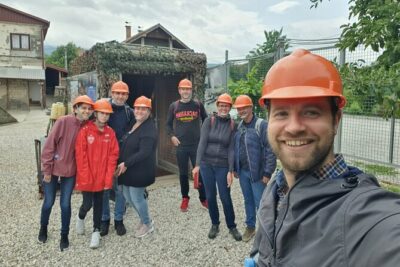
Tunnel Museum: Bosnian & Yugoslav Wars Tour with War Veteran
Read our review →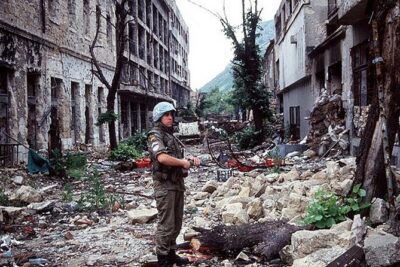
Break-up of Yugoslavia & The War in Mostar: Life Under Siege
Read our review →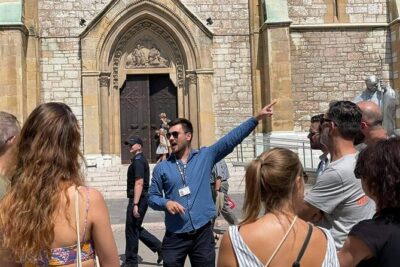
Sarajevo Grand Tour: Old Town, War Tunnel, Olympic Sites & More
Read our review →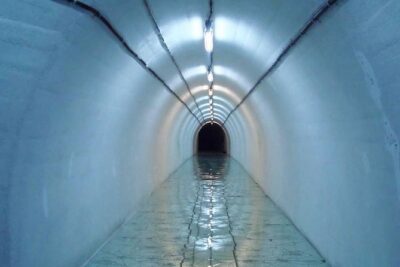
Utopia of Tito’s Yugoslavia, Tito’s Bunker & Siege of Sarajevo
Read our review →
Sarajevo Full Day Tour: History, Culture, Nature, War & Olympics
Read our review →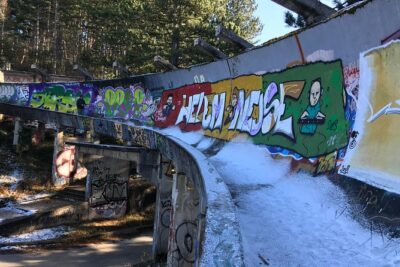
Olympic Mountains and Spring of Bosna River Tour
Read our review →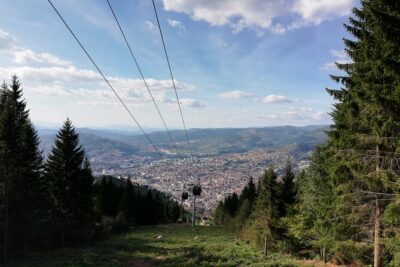
Browse the lists this tour appears in