
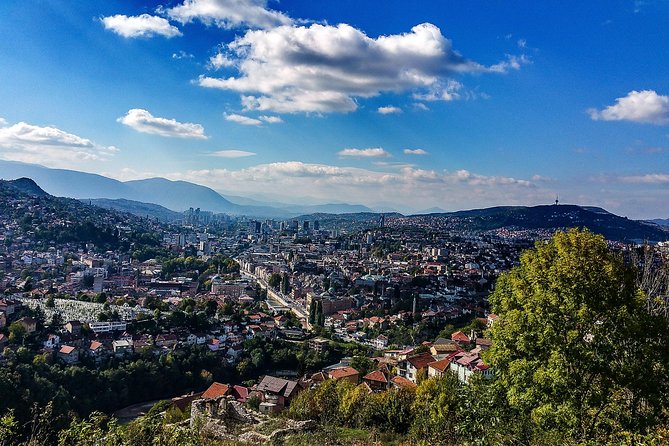
Reviewed · SARAJEVO WAR HISTORY TOURS
SARAJEVO SIEGE TIMES ’92-’95 / Sarajevo Roses & Tunnel of Hope /
Sarajevo’s wartime story comes into sharp focus when you see the city from the hills that once surrounded it, then walk through the Tunnel of Hope, the narrow passage that kept the besieged city connected with the outside world. This private tour links viewpoints, war sites, and personal testimony in one morning.
I like the way it explains the geography first, then shows you the places where that geography became deadly. I also like the personal angle: Faruk lived through the war as a teenager, so his account gives the tour a human voice rather than treating the siege as a set of dates. The main consideration is emotional weight. This is a serious outing, and the tunnel entrance costs an extra €10 per person.
Key points to know before booking
- Personal war testimony: Faruk shares memories of growing up in Sarajevo during the siege.
- Five sharply different stops: You see the valley from the Yellow Fortress, enter the Tunnel of Hope, visit a war-line viewpoint, walk the Olympic bobsled track, and see sniper positions near the Jewish Cemetery.
- A geography lesson with purpose: Hills, roads, and sightlines help explain how Sarajevo was surrounded and attacked.
- Private transport and pickup: Pickup is offered from your hotel or private accommodation before the 8:30 am start.
- Budget for the tunnel: The tour price is $47.66 per person, but Tunnel of Hope admission is listed separately at €10.
- Allow three to four hours: The schedule is active but compact, with the longest visit at the tunnel and a substantial walk at the bobsled track.
Sarajevo’s siege begins at the Yellow Fortress
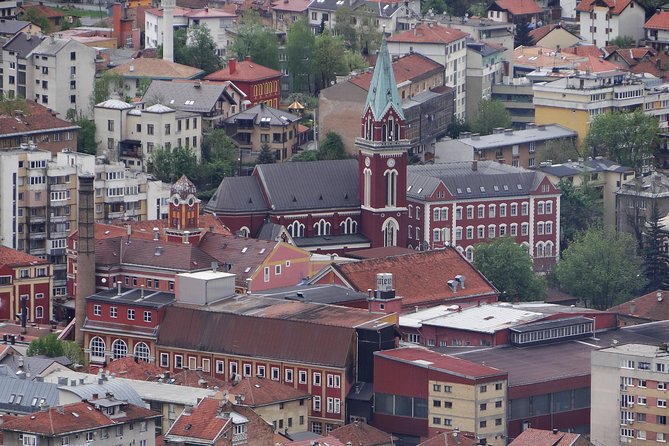
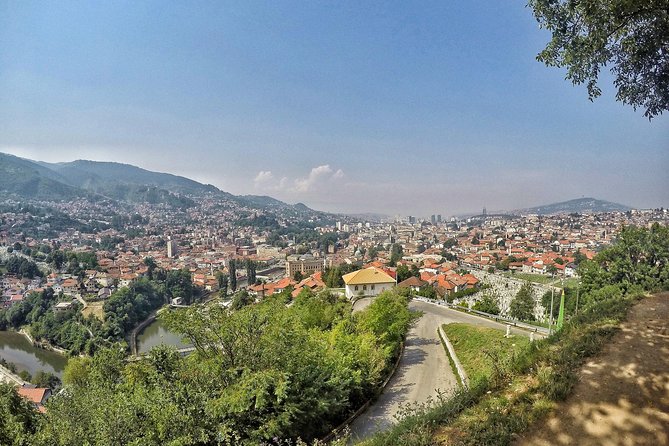
The Yellow Fortress is a smart starting point because it gives you the city all at once. From this high position, you can look across the Sarajevo valley and begin to understand why the surrounding hills mattered so much during the war.
Your guide introduces Sarajevo, Bosnia and Herzegovina, and the breakup of Yugoslavia before moving into the siege years. That order matters. If you arrive knowing only that Sarajevo was under attack, the view helps you connect the city below with the hills around it and the roads leading in and out.
The opening visit lasts about 20 minutes, so expect a focused introduction rather than a long stop. You will hear about the first days of the attacks, the way streets were crossed under sniper fire, and the difficulty of daily life when ordinary movement became dangerous.
The tour also addresses the public resistance to the war, including the roughly 4,500 days of civilian protest against the conflict in Bosnia and Yugoslavia. That gives the story a wider frame. Sarajevo was not only a place of military positions and bombardment. It was also a city of people trying to keep daily life, public protest, and basic dignity alive.
I find this opening especially useful for first-time visitors to Sarajevo. You do not simply hear that the city was surrounded. You get a visual sense of the bowl-shaped setting and begin to see how roads, slopes, and open crossings affected civilian life.
More siege and war history walks in Sarajevo
- Fall of Yugoslavia, Sarajevo War Tour with Tunnel of Hope Museum and Frontlines
★ 5.0 · 1,314 reviews - Tunnel Museum: Bosnian & Yugoslav Wars Tour with War Veteran
★ 5.0 · 551 reviews - Sarajevo War Tour: A Veteran’s Story of the Siege (fees included)
★ 5.0 · 326 reviews
The Tunnel of Hope, Sarajevo’s narrow lifeline
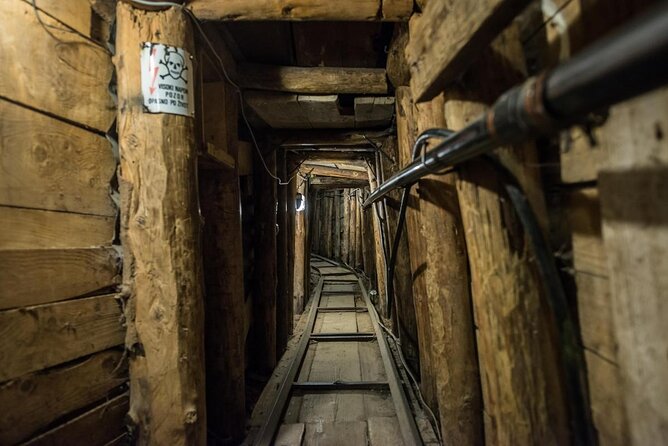
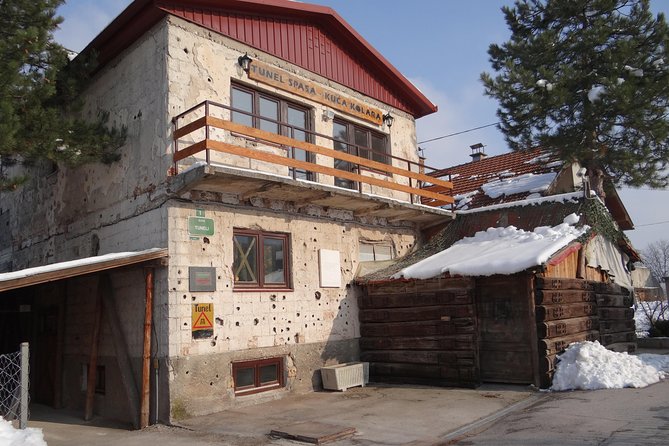
The Sarajevo War Tunnel is the emotional center of the morning. Built during the siege, it provided the only route out of the city and the only connection with the rest of Bosnia and the wider world. Calling it a tunnel does not prepare you for the importance it carried. This was a lifeline for food, supplies, communication, and movement when normal roads were closed or unsafe.
You have about an hour here, making it the longest stop. That gives your guide time to explain how the tunnel functioned and why it mattered, rather than rushing you through a small section and sending you back to the vehicle.
The tunnel visit can be physically and emotionally plain. It is not a polished attraction built for easy entertainment. Its value comes from what it represents: a practical response to isolation during a prolonged siege. The scale also matters. A narrow passage used as a city’s link to the outside world makes the war feel less abstract.
Admission is listed at €10 per person and is not included in the $47.66 tour price. Check this cost when you book, since the tour details also describe admission fees in general terms. The safest approach is to treat the tunnel fee as an extra charge and budget for it.
If you have limited time in Sarajevo, this stop alone may justify choosing a guided visit. The site carries technical, military, and civilian meaning, and a guide can connect those pieces without leaving you to read a few signs and guess at the wider story.
Trebević gives you the war line from above
The Trebević Vidikovac stop lasts about 15 minutes and offers a panoramic view across the Sarajevo valley. This is a short stop, but it plays an important role in the route.
From here, you can see the city from the position of the hills that formed part of the war line. The view helps explain how Sarajevo could be watched and targeted from above, while also showing the scale of the area that civilians had to cross and defend.
Do not expect a long walk or a major sightseeing session here. It is a brief viewpoint stop, best understood as a visual pause between the tunnel and the other war sites. Bring your attention to the geography. The point is not simply to take a photo. It is to look at the distance between the hills and the city and consider what that meant for anyone moving through the valley.
This is also where the route’s structure makes sense. You are not visiting unrelated places. The tour keeps shifting your viewpoint so you can see Sarajevo from inside the city, beneath the hills, and along the old lines of conflict.
Walking the Olympic bobsled track
The Sarajevo Olympic bobsleigh and luge track provides the tour’s most unusual setting. Built for the 1984 Winter Olympics, it later became part of the war line during the siege. You spend about 50 minutes walking here, so wear practical shoes and expect this stop to involve more movement than the viewpoints.
The contrast is striking even without adding details that are not part of the tour. A place designed for international sport and speed was pulled into a war that brought danger to the surrounding city. That change in purpose gives the site a particular force. It shows how quickly familiar public spaces can be absorbed into conflict.
The walk also breaks up the heavier indoor and roadside explanations. You are moving through a long, recognizable structure rather than standing in one room listening to a lecture. That makes it easier to picture how the track fit into the hills above Sarajevo.
The description calls this an adventure walk, but keep your expectations sensible. This is a historical walk at a former Olympic track, not a ride or a sports activity. Your guide explains its wartime role, while the track itself provides the setting.
For many people, this will be the most memorable stop after the tunnel because it combines Sarajevo’s Olympic identity with its wartime reality. It also gives you time to ask questions and absorb the surroundings at a slower pace.
A few more things to do around Sarajevo
- Sarajevo: Mostar, Konjic, Blagaj Tekke, Pocitelj & Waterfall
★ 4.9 · 1,335 reviews - Sarajevo: Mostar, Konjic, Sufi House, Pocitelj & Kravice Falls
★ 5.0 · 1,179 reviews - ROSES OF SARAJEVO (Official WAR + CITY tour)- Story of a Survivor
★ 5.0 · 770 reviews - Sarajevo: Mostar, Konjic, Počitelj, Sufi House, & Waterfalls
★ 4.9 · 572 reviews
The Jewish Cemetery and the danger of crossing Sarajevo
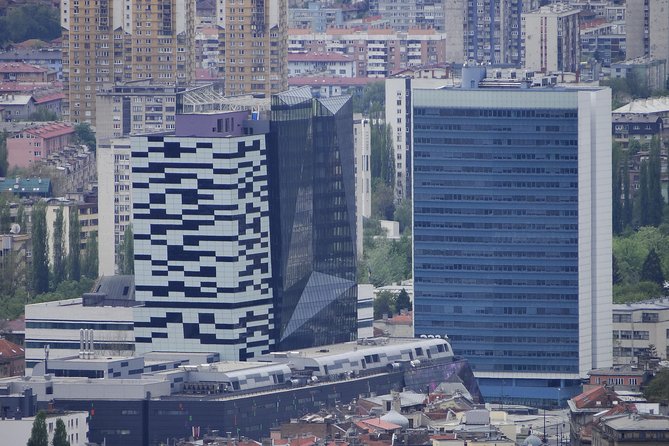
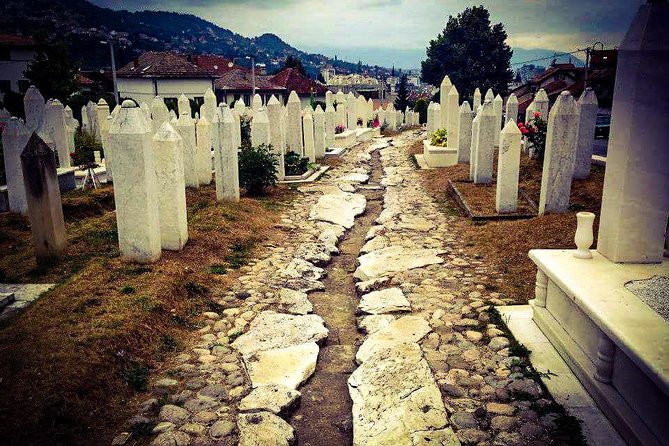
The Jewish Cemetery stop lasts around 20 minutes and focuses on sniper positions and the first sniper fire directed at civilians. It adds another layer to the story because it connects the city’s built environment with the routes people had to use in ordinary life.
The stop is not presented as a broad cemetery visit. Its purpose is to explain the positions used during the siege and the danger faced by civilians moving through exposed areas. That focus keeps the visit tied to the central subject of the tour.
The cemetery also helps you understand why a short street crossing could become a major risk. Sarajevo’s siege was not only about dramatic attacks. It affected errands, travel between neighborhoods, and any attempt to move through open space.
You may find this stop more sobering than scenic. That is appropriate. The route does not soften the reality of sniper fire, but it also avoids turning the subject into a spectacle. The value lies in the explanation and in seeing the physical setting where those dangers existed.
Faruk’s personal account changes the tone
A major strength of this private tour is the guide’s personal connection to the subject. Faruk lived through the war as a young teenager, and he shares his own experiences while explaining the wider events.
That does not replace historical context. It adds a human scale to it. You can hear about the siege, then connect the facts to what it meant for a child growing up in Sarajevo at the time. His account is described as deeply affecting, but the tone is not unrelentingly grim. Faruk is also friendly, intelligent, and able to use humor when it fits.
That balance matters. A guide who treats every moment as a solemn speech can make a difficult subject feel distant or rehearsed. A guide who jokes too much can seem careless. Here, the useful quality is the combination of personal memory, clear explanation, and a lighter touch when appropriate.
Because the tour is private, your group can ask questions and spend more time on points that matter to you, within the overall schedule. If you want a highly scripted sightseeing circuit, this may feel less formal. If you want conversation and personal context, the format works well.
What the $47.66 price really covers
At $47.66 per person, this is not the cheapest way to see Sarajevo’s war sites, but it offers a practical package. You get hotel or private-accommodation pickup, private transportation for your group, a guide, and a route covering five important locations over roughly three to four hours.
The value improves if you are short on time. Reaching the Yellow Fortress, Tunnel of Hope, Trebević, the bobsled track, and the Jewish Cemetery independently would require planning and transport between sites. The tour handles that movement and gives you a connected explanation rather than five separate visits.
The extra €10 tunnel fee is the main budget detail to keep in mind. Since the tunnel is the longest and most important stop, include that amount when comparing the total cost with other options.
Pickup begins at 8:30 am. Tell the operator the name of your hotel or the address of your private accommodation so the morning collection can be arranged. The early start leaves room for the tour to finish in the early afternoon, depending on traffic and the pace of your group.
The experience is offered in English. Confirmation is normally sent at booking, though bookings made within 10 hours of departure are subject to availability and may be confirmed as soon as possible.
Who will get the most from this tour
I would choose this tour if you want Sarajevo’s siege explained through places, not just museum panels. The route suits anyone interested in modern European history, military geography, civilian life during war, or the way major public spaces can change meaning.
It is also a good choice for first-time visitors who want an efficient introduction to the city’s wartime story. The Yellow Fortress and Trebević help you understand the setting, while the tunnel, bobsled track, and cemetery give you physical places to connect with the explanation.
The tour may not suit you if you want a cheerful sightseeing morning with only a brief historical note. The subject is civilian suffering, sniper fire, bombardment, and the long pressure of a siege. You should be ready for difficult material.
Most people can participate, according to the tour information, but the bobsled track includes a 50-minute walk. Wear comfortable footwear and allow some flexibility for outdoor conditions. The experience requires good weather, and poor weather can lead to a new date or a full refund.
Free cancellation is available if you cancel at least 24 hours before the start time. Changes or cancellations inside that window are not accepted for a refund.
Should you book the Sarajevo Siege Times tour?
Book it if you want a focused, personal explanation of Sarajevo’s war years and you value seeing the actual geography behind the story. The combination of Faruk’s memories, the Tunnel of Hope, the panoramic war-line views, and the Olympic bobsled track gives the morning real substance.
Before booking, confirm the pickup address and budget the €10 tunnel entrance. Also be honest about your mood and interests. This is not light sightseeing, but if you are ready for a serious and human account of Sarajevo’s recent past, the private format and carefully linked stops make the $47.66 price reasonable.
FAQ
Where does the tour take place?
The tour takes place in Sarajevo, Bosnia and Herzegovina, with stops at the Yellow Fortress, Sarajevo War Tunnel, Trebević Vidikovac, the Sarajevo Olympic bobsleigh and luge track, and the Jewish Cemetery.
What time does the tour start?
The tour starts at 8:30 am.
Is hotel pickup available?
Yes. Pickup is offered from hotels and private accommodations. You need to provide the hotel name or accommodation address so pickup can be arranged.
How long does the experience last?
The tour lasts approximately three to four hours.
Is the Tunnel of Hope entrance included?
The tunnel entrance is listed separately at €10 per person, so you should budget for that additional cost.
Is the tour private?
Yes. Only your group participates in this private tour.
What happens if bad weather cancels the tour?
If poor weather causes cancellation, you will be offered a different date or a full refund.
Just added around Sarajevo
- Private Full Day Safari Tour★ 5.0 · 8 reviews
- Sarajevo Under Siege: A War History Tour★ 5.0 · 10 reviews
- Travnik, Jajce, Pliva Lakes & Mills –Medieval & Ottoman Bosnia Full Day Tour★ 5.0 · 3 reviews
- Mysterious Visoko Pyramids Driving and Walking Tour★ 5.0 · 7 reviews
- Walking Tour in Sarajevo★ 5.0 · 3 reviews
- Secret Tito’s Bunker/Konjic Tour★ 5.0 · 4 reviews
- Sarajevo to/from Zagreb Transfer Day Tour (North-central Bosnia)★ 5.0 · 4 reviews
- Tour of Herzegovina – From Sarajevo★ 5.0 · 3 reviews
Sarajevo War History Tours, compared.
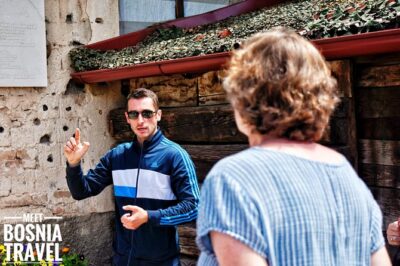
Fall of Yugoslavia, Sarajevo War Tour with Tunnel of Hope Museum and Frontlines
Read our review →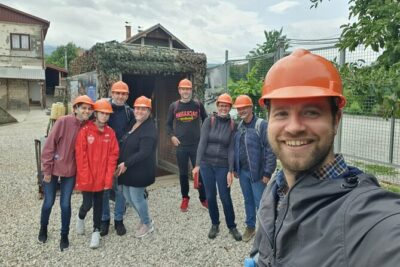
Tunnel Museum: Bosnian & Yugoslav Wars Tour with War Veteran
Read our review →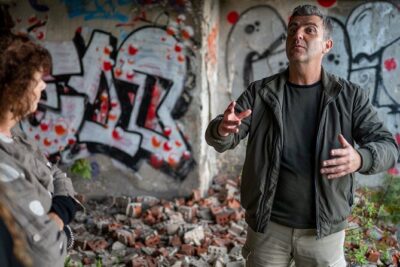
Sarajevo War Tour: A Veteran’s Story of the Siege (fees included)
Read our review →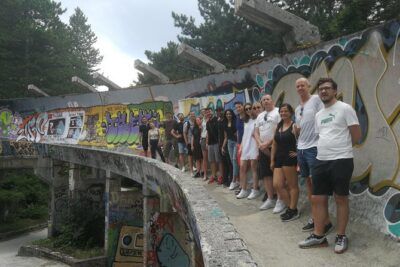
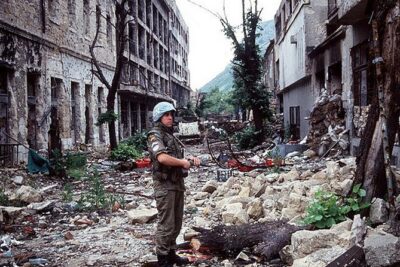
Break-up of Yugoslavia & The War in Mostar: Life Under Siege
Read our review →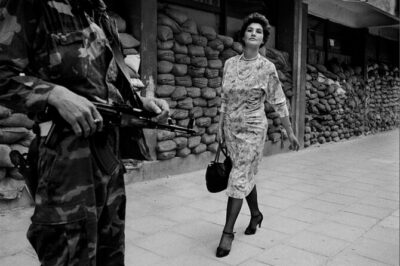
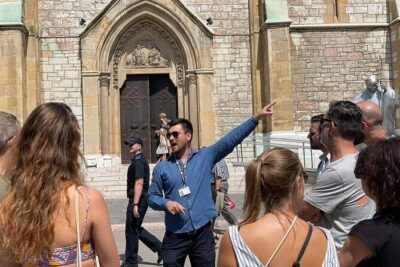
Sarajevo Grand Tour: Old Town, War Tunnel, Olympic Sites & More
Read our review →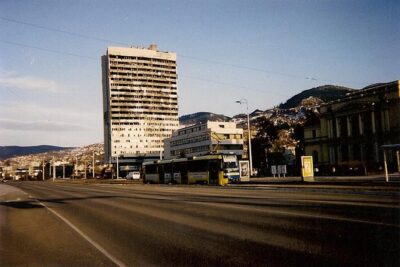
Times of Misfortune – Life Under Siege and the Tunnel of Hope
Read our review →Browse the lists this tour appears in