
Reviewed · SARAJEVO WAR HISTORY TOURS
The Siege of Sarajevo Tour
Sarajevo’s wartime story becomes clearest when you move through the places where it happened. This private tour connects the shelled City Hall, the former sniper-lined boulevard, the Tunnel of Hope, and the Jewish Cemetery into one steady account of the city’s siege.
I like the small private format, which gives you room to ask questions and hear personal stories. I also like the mix of serious history and striking city views, especially from Trebević and Yellow Fortress.
The main drawback is that the Tunnel of Hope admission costs extra, and the subject matter is painful. This is not a light sightseeing outing, so give yourself time afterward to process what you have seen.
Key points to know before booking
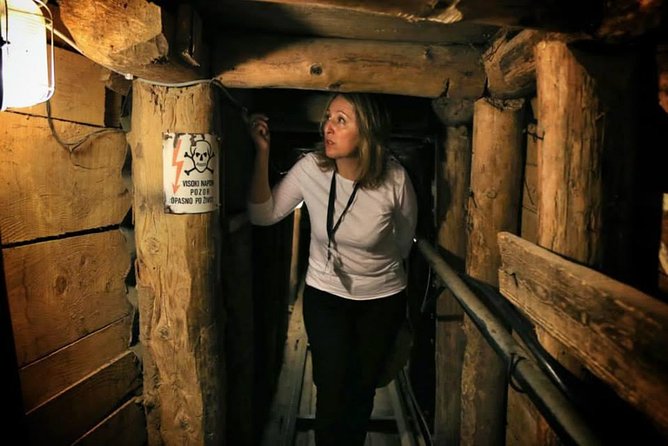
- The Tunnel of Hope is the tour’s emotional center: You watch a short film, walk through part of the tunnel, and see the house that concealed it.
- You cover Sarajevo by road and on foot: A licensed guide and driver take you between sites in an air-conditioned vehicle.
- The Olympic sites add useful context: Asim Ferhatovic Hase Stadium and Trebević show Sarajevo before and during the war.
- The views come with hard history: The Jewish Cemetery and Yellow Fortress explain how high ground shaped the siege.
- Hotel pickup is available: You can also meet at Sarajevo City Hall on Brodac Street.
- The $34.91 price covers a private half-day outing: Bring extra money for the Tunnel museum ticket.
Sarajevo’s siege told through the city itself
I find this tour effective because it does not treat the Bosnian War as an isolated museum topic. You see the streets, hills, public buildings, cemeteries, and sports facilities that formed the setting for daily life during the Siege of Sarajevo.
The tour lasts about four hours. That is long enough to reach sites spread across the city without turning the day into a rushed checklist. Because only your group takes part, you can ask for clarification when a place raises questions, and your guide can adjust the pace within the planned route.
The experience is led by a licensed guide who also drives. One guide associated with the experience is Danijela, whose personal account describes punctual hotel pickup and storytelling that keeps the difficult period at the center of the visit. The personal element matters here. Dates and military facts are useful, but Sarajevo’s siege is easier to understand when you connect them to ordinary movement through the city.
You begin at Sarajevo City Hall, also called Vijećnica. From there, the route moves through central locations before heading toward the Tunnel of Hope, Trebević, the Jewish Cemetery, and Yellow Fortress. You see both the city’s public face and the places that reveal how the siege was fought.
More siege and war history walks in Sarajevo
- Fall of Yugoslavia, Sarajevo War Tour with Tunnel of Hope Museum and Frontlines
★ 5.0 · 1,314 reviews - Tunnel Museum: Bosnian & Yugoslav Wars Tour with War Veteran
★ 5.0 · 551 reviews - Sarajevo War Tour: A Veteran’s Story of the Siege (fees included)
★ 5.0 · 326 reviews
City Hall, Markale, and the streets under fire
Sarajevo City Hall is a strong starting point. The building was first shelled and then burned during the siege, and its rebuilding gives you a visible reminder of damage and recovery. Beginning here also places you near the historic center, where Sarajevo’s layers of cultural and political history are close together.
The route includes the Markale green market. This is not just a food market on the sightseeing map. It is one of the locations that helps you understand how civilians experienced the conflict in public spaces where people went to buy food and carry on with daily life.
You also pass a monument built after the Second World War and the Presidency building. These stops broaden the story beyond one battle or one neighborhood. You see the civic center of a capital city, then learn how the war affected the institutions and public spaces around it.
The main boulevard is another important stop. During the Siege of Sarajevo, sniper positions lined the route, making an ordinary crossing dangerous for civilians. Your guide can explain why this road became such an infamous part of the city’s wartime geography.
This section is mostly about seeing the city with changed eyes. You will not spend a long block of time at every location, so listen closely as you move between stops. The value comes from connecting the buildings and roads to the story rather than treating them as separate photo points.
The Olympic stadium and a city before the war
Asim Ferhatovic Hase Stadium is the first listed stop outside the central sequence. It hosted Olympic events during Sarajevo’s 1984 Winter Olympics, a period when the city presented itself as a modern international host.
The stop lasts about 10 minutes, and admission is free. I see it as a brief but useful pause. The stadium represents a Sarajevo associated with sport, peace, and international attention. Later, Trebević shows how another Olympic venue became part of the front line during the siege.
Do not expect a full stadium tour or a long visit here. The stop is short, but its meaning is larger than its timing. It helps you picture the sharp change between Sarajevo’s Olympic years and the war period that followed.
Entering the Tunnel of Hope
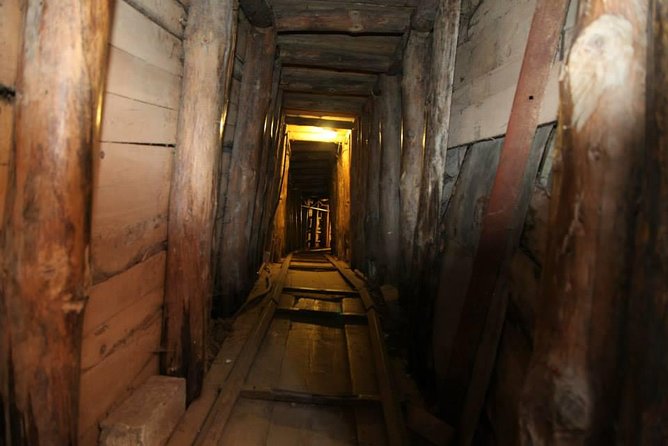
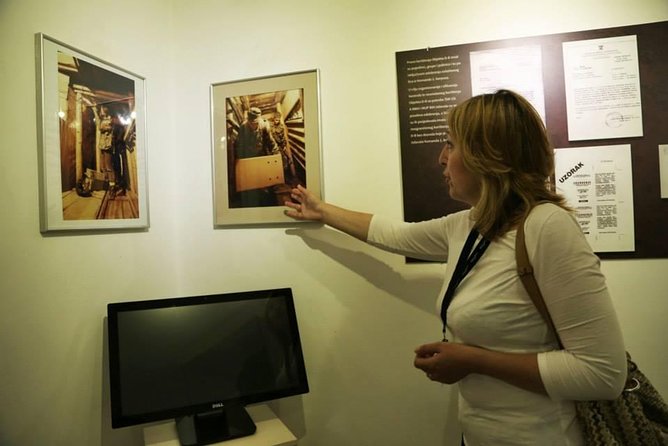
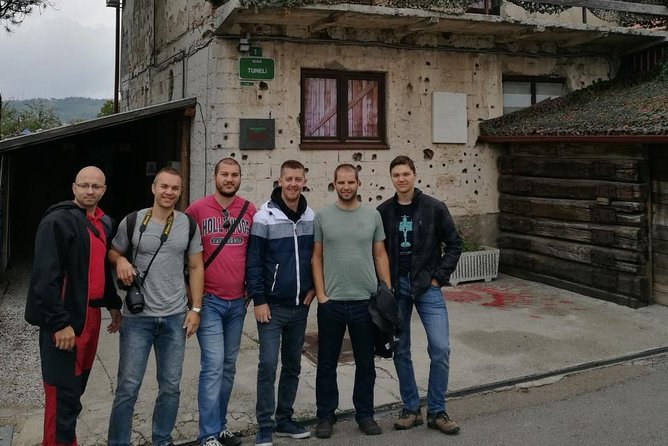
The Sarajevo War Tunnel is the core stop, with about an hour set aside for the grounds, the house that concealed the entrance, and a short section of the tunnel itself. Admission is not included in the tour price, so plan for that additional cost.
You begin with a short video about the Siege of Sarajevo. This gives you a basic frame before you walk through the passage. The tunnel allowed food, supplies, and aid to move into the besieged city, making it one of the most important physical links during the conflict.
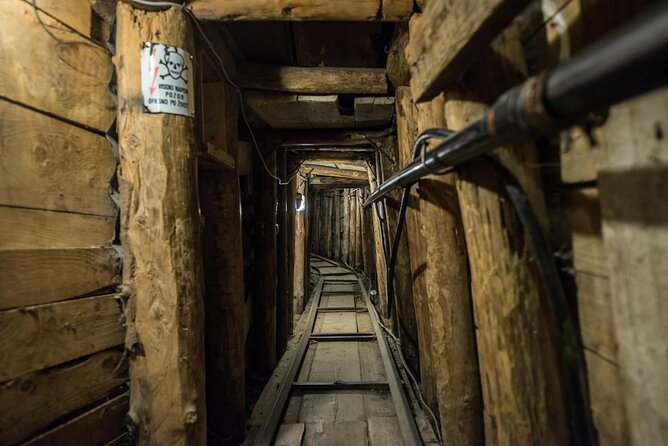
The surviving section is brief, but its size is part of the point. You are not walking through a grand underground attraction. You are seeing a constrained passage built for necessity, where movement itself carried risk and purpose.
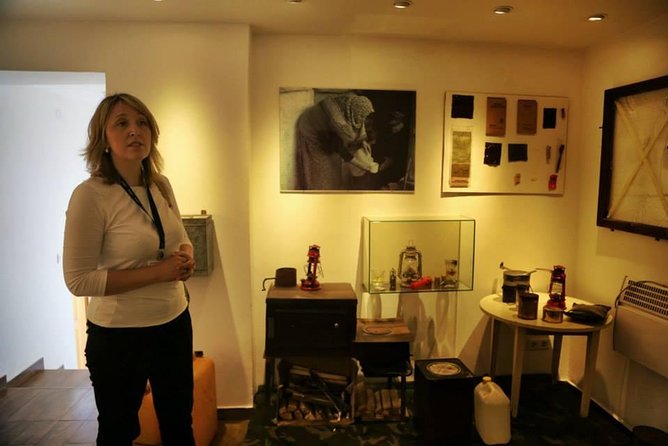
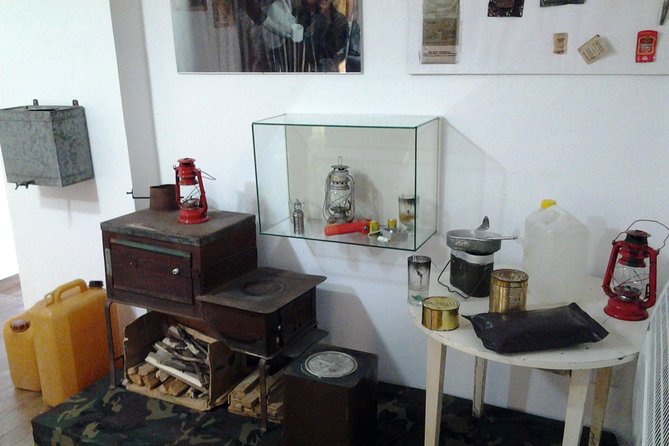
The house that hid the tunnel is now a museum. The grounds and the building help explain how the passage fitted into the surrounding area. A guided visit is especially useful here because the objects and spaces need context. Without explanation, you might see a narrow corridor and a modest house. With the story, you understand how this place supported the city’s survival.
I recommend saving your questions for this stop. Ask about how the tunnel was used, what it carried, and how it affected life inside Sarajevo. The private format gives you a better chance to discuss those points without competing with a large group.
The Tunnel of Hope can be emotionally heavy. It deals with shortages, danger, and the practical mechanics of surviving a siege. If you prefer a relaxed sightseeing day, this may feel intense. If you want a direct connection to the city’s wartime experience, it is the most valuable part of the route.
A few more things to do around Sarajevo
- Sarajevo: Mostar, Konjic, Blagaj Tekke, Pocitelj & Waterfall
★ 4.9 · 1,335 reviews - Sarajevo: Mostar, Konjic, Sufi House, Pocitelj & Kravice Falls
★ 5.0 · 1,179 reviews - ROSES OF SARAJEVO (Official WAR + CITY tour)- Story of a Survivor
★ 5.0 · 770 reviews - Sarajevo: Mostar, Konjic, Počitelj, Sufi House, & Waterfalls
★ 4.9 · 572 reviews
Trebević and the abandoned Olympic bobsleigh track
After the tunnel, you ride up Trebević, the Olympic mountain above Sarajevo. The visit includes the bobsleigh and luge track, where you can walk on part of the abandoned facility.
The stop lasts about 30 minutes and admission is free. The track is a striking contrast to the city center. Built for the Winter Olympics, it later occupied a mountain area used as a first line during the siege. Its damaged, abandoned appearance makes the history visible without needing a large memorial display.
You also get one of the best panoramic views of Sarajevo from the mountain. This changes the way you understand the earlier stops. From above, the city’s compact shape and surrounding heights become clear, and the strategic importance of the hills is easier to grasp.
Wear shoes suitable for walking. The tour data does not specify trail conditions, so you should expect an outdoor stop rather than a polished attraction. The visit is not long, but it combines architecture, Olympic history, wartime geography, and a major city view in one place.
The Jewish Cemetery and the price of high ground
The Jewish Cemetery is one of the most sobering stops. During the conflict, it was used as part of the front lines because its position overlooked much of Sarajevo. Serbian Army snipers used the high ground to fire at civilians in the city.
The cemetery’s stonework was damaged by shelling and shooting. Its tombstones have distinctive forms that are unusual in Sarajevo and across Europe, so the site carries cultural importance as well as military significance.
You spend about 20 minutes here, with no admission charge. That is enough time to take in the setting and hear why the cemetery mattered during the siege. Treat it as a quiet stop. The subject is difficult, and the value is in listening rather than rushing through for photographs.
This is also a good place to remember that Sarajevo’s wartime story affected more than government buildings and military positions. A cemetery became a strategic location, and a place connected to memory became part of the machinery of war.
Yellow Fortress and the view over Kovači Cemetery
The Yellow Fortress is the final major stop. It formed part of the defensive wall around the old city and now serves as one of Sarajevo’s best viewpoints.
From here, you can see Sarajevo spread below and look toward Kovači Cemetery. The cemetery holds Sarajevo’s defenders from the siege and the grave of the first president of independent Bosnia and Herzegovina.
The visit lasts about 20 minutes and is free. The view is attractive, but the guide’s explanation gives it weight. By this point, you have seen the sniper-lined boulevard, the tunnel route, the cemetery front line, and the mountain positions. Yellow Fortress helps tie those pieces together from above.
There is a practical tradeoff. A viewpoint can feel like a lighter ending after the Tunnel and Jewish Cemetery, but the military and political meaning remains present. You get time for a panoramic view without losing the main subject of the tour.
What the $34.91 price really includes
At $34.91 per person, the tour offers solid value if you want a private introduction to Sarajevo’s wartime sites. You are paying for about four hours, a licensed guide and driver, an air-conditioned vehicle, hotel pickup, and bottled water.
The private setup is the key value. A standard group outing might cost less, but this format gives you your own guide and removes the need to follow strangers at every stop. For a difficult subject, that privacy can make it easier to ask direct questions or pause when you need a moment.
The price does not include the War Tunnel museum ticket. Keep that in mind when comparing the total cost with other Sarajevo tours. The other listed stops have free admission, so the Tunnel is the main extra expense.
Pickup is offered at your hotel, or you can start at Sarajevo City Hall, Brodac 1. The activity ends back at the meeting point. Since the route covers central streets, the tunnel area, Trebević, and several hillside sites, included transport saves you from arranging separate taxis.
The experience is booked an average of 119 days ahead, which suggests that advance planning is sensible, especially if your Sarajevo dates are fixed. Confirmation arrives when you book, and free cancellation is available up to 24 hours before the start time. Changes or cancellations inside that window are not refunded.
Who should book this Sarajevo tour?
I would choose this tour if you want the siege explained through real locations rather than only through a museum display. It suits you especially well if you have a half-day available, prefer private touring, and want a guide who can connect military events with everyday civilian life.
It is also a good fit if you are interested in Sarajevo’s Olympic past. The stadium and Trebević track show how a city built for international sport was later marked by war.
I would think twice if your main goal is a carefree city tour. The route includes snipers, shelling, civilian danger, damaged graves, and the mechanics of survival. The scenery is memorable, but the tone is serious from start to finish.
Should you book the Siege of Sarajevo Tour?
Book it if you want a focused, four-hour introduction to the Bosnian War and the Siege of Sarajevo, with the convenience of private transport and hotel pickup. The strongest parts are the Tunnel of Hope, the personal storytelling, and the way Trebević and Yellow Fortress make the city’s wartime geography clear.
The extra museum ticket is a minor planning point, not a reason to skip the tour. Just go in prepared for difficult material, wear comfortable shoes for the outdoor stops, and leave room in your day for a quieter evening afterward.
FAQ
How long does the Siege of Sarajevo Tour last?
The tour lasts approximately four hours.
Where does the tour start?
You can start at Sarajevo City Hall, Brodac 1, Sarajevo 71000, Bosnia and Herzegovina.
Where does the tour end?
The activity ends back at the meeting point.
Is hotel pickup available?
Yes. Hotel pickup is offered and is included as part of the experience.
Is this a private tour?
Yes. Only your group takes part in the activity.
Is transportation included?
Yes. A licensed guide and driver provide transport in an air-conditioned vehicle.
Is the Tunnel of Hope admission included?
No. The ticket for the War Tunnel museum is not included in the tour price.
Which Olympic sites are included?
The route includes Asim Ferhatovic Hase Stadium and the Olympic bobsleigh and luge track on Trebević.
Can most people participate?
The tour information states that most travelers can participate. Service animals are also allowed.
What is the cancellation policy?
You can cancel up to 24 hours before the experience for a full refund. Cancellations or changes made less than 24 hours before the start time are not accepted for a refund.
Just added around Sarajevo
- Private Full Day Safari Tour★ 5.0 · 8 reviews
- Sarajevo Under Siege: A War History Tour★ 5.0 · 10 reviews
- Mysterious Visoko Pyramids Driving and Walking Tour★ 5.0 · 7 reviews
- Walking Tour in Sarajevo★ 5.0 · 3 reviews
- Travnik, Jajce, Pliva Lakes & Mills –Medieval & Ottoman Bosnia Full Day Tour★ 5.0 · 3 reviews
- Secret Tito’s Bunker/Konjic Tour★ 5.0 · 4 reviews
- Sarajevo to/from Zagreb Transfer Day Tour (North-central Bosnia)★ 5.0 · 4 reviews
- Tour of Herzegovina – From Sarajevo★ 5.0 · 3 reviews
Sarajevo War History Tours, compared.
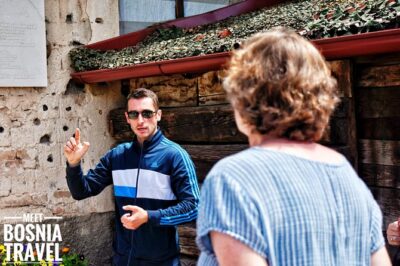
Fall of Yugoslavia, Sarajevo War Tour with Tunnel of Hope Museum and Frontlines
Read our review →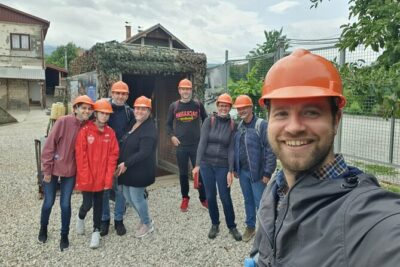
Tunnel Museum: Bosnian & Yugoslav Wars Tour with War Veteran
Read our review →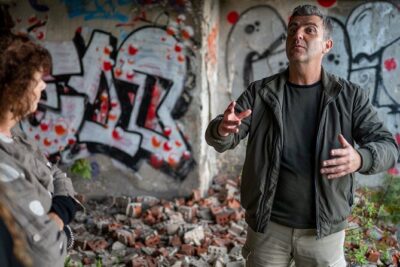
Sarajevo War Tour: A Veteran’s Story of the Siege (fees included)
Read our review →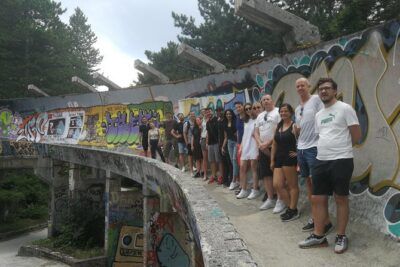
Break-up of Yugoslavia & The War in Mostar: Life Under Siege
Read our review →
Sarajevo Grand Tour: Old Town, War Tunnel, Olympic Sites & More
Read our review →
Times of Misfortune – Life Under Siege and the Tunnel of Hope
Read our review →Browse the lists this tour appears in